


What Should You Know Before Booking a Commercial Stretcher Flight?


Booking a commercial stretcher flight can feel urgent and confusing, so here’s a clear, human guide to help you make the right call before you commit.
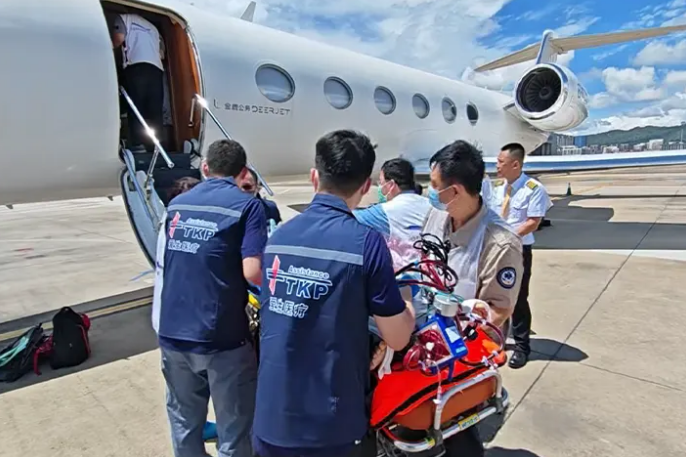
When A Commercial Stretcher Flight Makes Sense
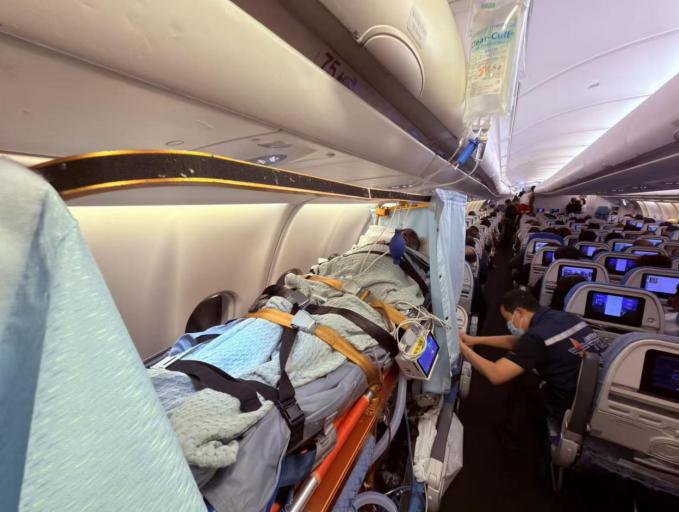
A commercial stretcher flight is a scheduled airline service that installs a dedicated stretcher area after the carrier grants medical approval. A trained medical escort travels bedside-to-bedside, from the departing hospital to the receiving facility. For many families, booking a commercial stretcher flight is the sweet spot: international reach at a lower cost than a chartered air ambulance, yet safer and more practical than a long ground transfer.
From TKP Medical Assistance’s view on the front line, the pain points are rarely about the flight alone. They are about timing and eligibility. Is the patient stable enough to tolerate cabin pressure? Will oxygen and monitoring be allowed onboard? Which forms will the airline accept, and in what language? Add visa bottlenecks, airport infrastructure limits, and opaque pricing, and you see why families feel stuck.
This is where experience counts. TKP Medical Assistance, founded in 2001 in Shenzhen, has supported 10,000+ missions across borders. Over 24 years we have built a flexible route network and opened six branch offices across key regions in China to accelerate local response. Our operations desk watches flights in real time, coordinates with hospitals and embassies, and re-routes quickly when weather, slots, or aircraft types change. If a remote origin has minimal facilities, we select nearby airports that still allow a safe stretcher setup, then connect ground ambulance, high-speed rail, or – when needed – air ambulance to keep care continuous.
❓ Who is a good candidate?
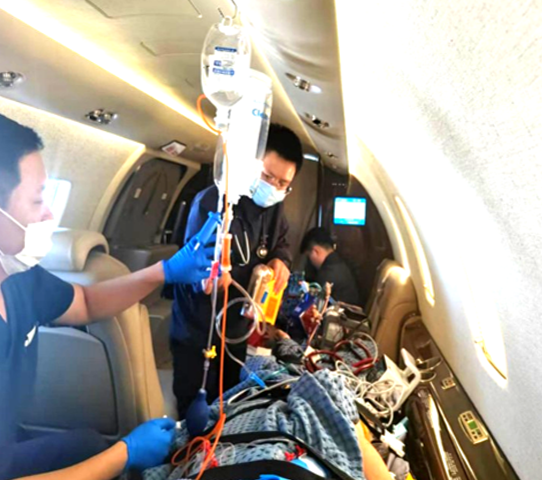
Choose booking a commercial stretcher flight when a patient is post-stabilization, must travel lying flat, and can tolerate cabin conditions with escort support. If the patient is ventilated, hemodynamically unstable, or time-critical, a chartered air ambulance with full ICU capability is the safer path. TKP will review the medical file, the likely equipment plan, and the route risk to recommend the right mode – or a hybrid plan that shortens total time while controlling cost.
What To Prepare Before You Book
Most delays come from missing paperwork, slow approvals, or unclear responsibilities. A little structure up front saves days on the back end.
✅ Medical Records That Tell a Clear Story
Provide discharge summaries, diagnoses, treatment plans, and current medications. English copies help airlines, hospitals, and border officials process faster. Include the attending physician’s contact for clinical clarifications like oxygen flow or mobility limits.
✅ Travel Documents That Actually Work
Passports for the patient and any escorts are essential. Some destinations require a medical or humanitarian visa; expect 24–72 hours in many cases. For minors, add a birth certificate or authorization letter. Keep high-quality scans ready for urgent submissions.
✅ Insurance and Financial Authorization
Share policy details and the insurer’s contact. If insurance will not respond in time, name a payer and set a spending authorization. Certain airlines and hospitals ask for guarantees before they confirm the stretcher or accept the patient.
✅ A Single Decision-Maker
Nominate one reachable representative who can sign forms and answer calls 24/7, plus a secondary contact. Fragmented approvals cause avoidable cancellations and rebooking fees.
✅ Special Requirements Disclosed Early
Tell us about oxygen, suction, infection control, language needs, mobility aids, or pressure-sore risks. Airlines may limit flow rates or require battery-powered devices that meet aviation standards. Early disclosure keeps your booking a commercial stretcher flight timeline realistic.
A note on approvals: cabin layouts and aircraft swaps can restrict stretcher capacity on certain routes. Our planners check equipment compatibility and seat-map constraints before we commit, and we hold alternates when schedules are volatile. The aim is fewer surprises and a predictable hospital handover time.
- Route Planning That Protects the Patient
Good route design is medical care in disguise. TKP aligns outbound schedules with clinical stability windows, favors airports with short ambulance ramps, and limits handovers that add risk. If a direct flight is unavailable, we build a two-leg plan with synchronized ground teams and pre-cleared documentation at each stop. Our 24/7 desk monitors the aircraft and the patient simultaneously and can accelerate or pause the plan based on new lab results or bedside changes.
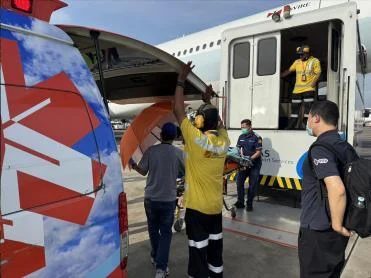
How TKP Medical Assistance Keeps The Journey Safe – And Financially Sensible
Families want two things: safety and clarity. We deliver both by integrating modes, clinical oversight, and approvals into one accountable timeline.
- Integrated Modes, One Timeline
While booking a commercial stretcher flight is often the cost-effective core, the trip rarely starts or ends at the airport. TKP combines ground ambulances, high-speed rail, and – when necessary – air ambulances under a single coordinator. One plan, one set of updates, and no hand-offs that lose information.
- Clinical Supervision From Bedside To Bedside
Our multidisciplinary teams oversee pre-flight assessments, airline paperwork, escort selection, inflight monitoring, and hospital admission at destination. We keep hospitals and insurers informed to avoid administrative stalls that quietly add days and cost.
- Global Reach With Real-Time Control
We work across domestic and international routes, including remote or underserved locations. When weather or airport slots shift, we adjust in real time without compromising the medical plan. That agility is what turns a complex week into a predictable day.
✅ Transparent Mode Selection
• If minutes matter or the patient is unstable, choose a chartered air ambulance with full ICU capability.
• If the patient is stable, needs to lie flat, and flights exist, booking a commercial stretcher flight balances safety and budget.
• If geography is tricky or infrastructure is thin, we blend modes to reduce total risk and time.
✅ What You Can Expect From TKP
• Clear eligibility guidance grounded in clinical review.
• A route that minimizes handovers and exposure.
• Upfront discussion of likely costs and contingencies.
• Embassy and hospital coordination to keep doors open on arrival.
In short, our promise is simple: precise planning, compassionate care, and no guesswork on the steps between the two.
Call To Action – Start Your Case Review Today
Have a patient who may qualify for booking a commercial stretcher flight? Reach out to TKP Medical Assistance for a fast, no-obligation assessment. We will review medical stability, route options, visa needs, and budget parameters, then propose the safest, quickest path from current bedside to receiving hospital. Email or call now to begin pre-clearance and protect your timeline.
Submit Your Request
Recent Posts

Tags
- Air Ambulance
- Bedside To Bedside
- Cross Border Aid
- Emergency Evacuation
- Global Medical Rescue
- How can I ensure the patient's stability while in the air?
- How do I request an air medical transport?
- How is it different from an air ambulance
- how to activate emergency aircraft service
- how to request an air ambulance
- Is air medical transport safe
- Is international transport possible
- Medical Rescue
- Medical Transport
- Patient Repatriation
- Remote Rescue
- Seamless Coordination
- Telemedicine Support
- Tourists And Expats Medical Escort
- What are the benefits of a cross-border medical transfer
- What are the different types of transfers
- What are typical use cases
- What documents do I need to prepare for a transfer?
- What does high-speed rail patient transfer stands for
- What is air ambulance
- What is air medical transport?
- What is cross-border medical transfer
- What is emergency aircraft
- what is high-speed rail patient transfer
- What is medical charter flight
- what is neonatal ICU transfer
- What is patient air transfer
- What medical equipment is available on board the aircraft
- What situations shouldn't use air medical transport?
- What types of air ambulance are there?
- What types of air ambulance exist
- What's the difference between international and domestic transfers?
- what’s the difference between air medical transport and regular ambulance?
- When is emergency air transport necessary
- Which patients require air medical transport?
- who is included in the medical team
- who needs an air ambulance