


How International Medical transportation Transfers Handle Cross-Border Emergencies


International Medical transportation Transfers sound simple until the emergency crosses a border. A loved one is in a foreign hospital, doctors say “transfer now,” and suddenly every minute feels heavy. Different languages, unclear airline rules, and visa or customs checks all stand between the patient and the right ICU bed. Families are asked to decide fast, but the process looks confusing and risky. So how do these missions actually work in real life? And what really happens to the patient from bedside to bedside? In this article, we lift the curtain on cross-border medical transfers.
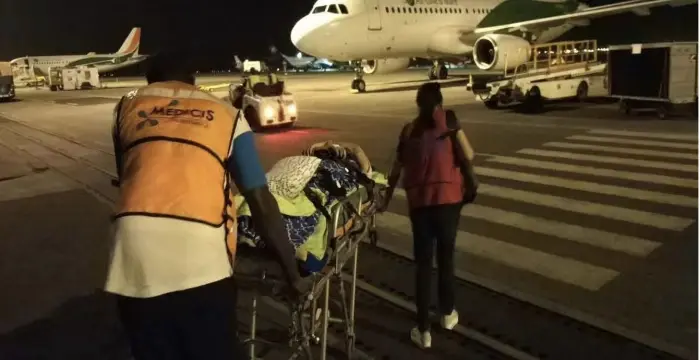
How We Remove Border Friction In Real Emergencies
Cross-border care breaks down in familiar ways: slow airline stretcher approvals, scattered phone trees, visa or customs delays, and different clinical rules at every stop. TKP Medical Assistance fixes those weak links by owning the full chain of care. One case manager. One medical playbook. One route from bed to bed.
We blend transport modes to fit the patient, not the schedule. That means commercial stretcher, dedicated Medical transportation, high-speed rail, and local ground ambulances working as one plan. Our clinicians stabilize before departure, standardize handovers, and keep ICU-level watch during flight. The effect is simple: fewer surprises, shorter timelines, and safer International Medical transportation Transfers for families who cannot afford uncertainty.
Airports are not equal. Some have limited ground support or tight curfews. We plan around these limits. Our route desk selects airfields that accept medical flights with minimal infrastructure, then our 24/7 ops team tracks every leg in real time. If weather shifts or a connection slips, we retime ground moves, switch aircraft, or reroute – without losing clinical control. This is why ad-hoc arrangements struggle, and integrated International Medical transportation Transfers do not.
✅ Integrated Modes, One Clinical Standard
Not every patient needs a jet. Not every case can wait for a scheduled flight. We match mode to acuity and budget while keeping clinical quality consistent:
- Commercial stretcher with airline approval and a full medical escort – a cost-smart option for stable, bedridden patients.
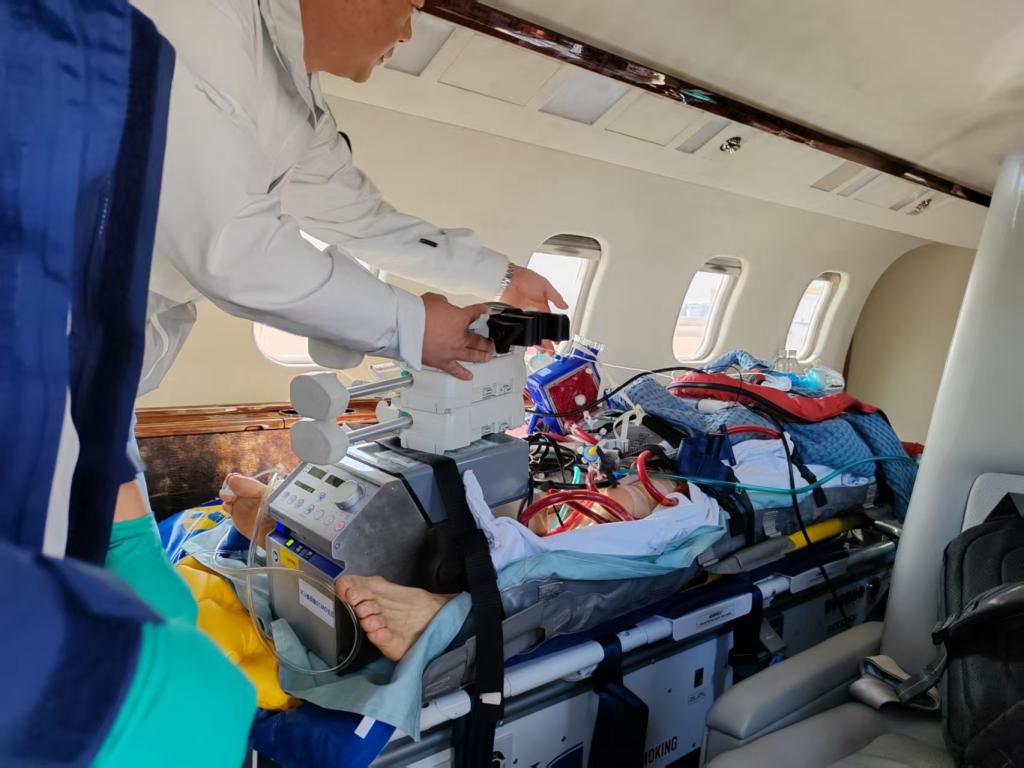
- Medical transportation with ICU-grade monitoring, ventilators, and life support, staffed by intensive-care physicians and flight-trained nurses.
- High-speed rail combined with ambulance pick-up and drop-off for non-flight segments, ideal for neonatal and post-surgery monitoring.
✅ Route Planning That Works In The Real World
Coverage maps look good on paper. Patients need workable paths. We design routes that reduce flight time and risk, using airports that cut transfer friction from remote areas. We coordinate with sending and receiving hospitals and, when required, embassies – so documents, clearances, and clinical updates move with the patient. In short, International Medical transportation Transfers only succeed when medical stability leads and logistics follow.
What A Cross-Border Mission Looks Like
On September 14, 2017, we moved a post-cranial surgery patient in a comatose state from Abidjan → Paris → Beijing. It was a multi-leg commercial stretcher transfer with several ground segments, and it shows how our method keeps stability at the center.
Before departure. We secured airline stretcher approval, confirmed cabin layout for prone positioning, and reserved oxygen and power points for equipment redundancy. Documentation spanned multiple languages and time zones; our team handled it end-to-end so the clinical team could focus on the patient.
In Paris (CDG). A planned 10-hour layover became an ICU-style holding pattern. We used that window for real-time stabilization and a full reassessment before the long-haul sector. The pause reduced escort fatigue, avoided a risky tight connection, and allowed a final “fit-to-fly” check.
In flight. At 30,000 feet, continuous monitoring tracked ventilation, hemodynamics, and neurologic status on a dedicated in-flight stretcher system. Our flight-trained nurses and ICU physician led care and documentation.
On landing. A pre-briefed ambulance team was waiting. Handover happened within minutes using a structured report that mirrored our in-flight charting, closing the loop at the destination facility.
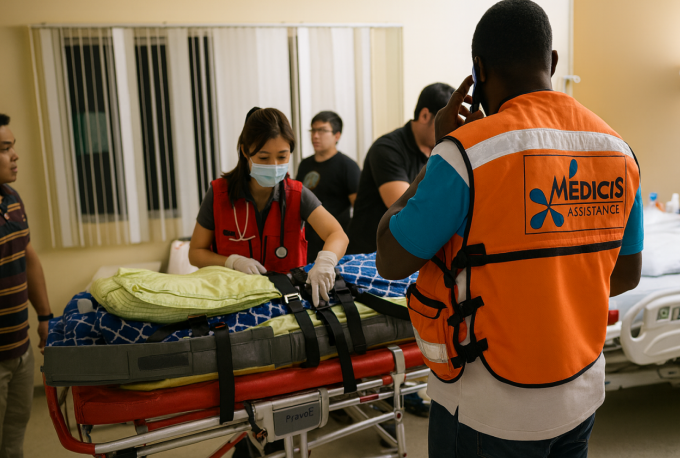
This outcome was not luck. It reflected integrated planning, decisive clinical leadership, and the ability to adjust routes without breaking continuity of care – core principles behind reliable International Medical transportation Transfers.
Where The Hidden Risks Live
Families often worry most about the aircraft. In reality, the biggest risks hide in handovers and paperwork. A missing oxygen uplift, an unclear airline rule, or a stalled immigration checkpoint can erode an otherwise sound plan. We shrink that risk by owning the micro-tasks:
- Bed assignments and lift teams
- Oxygen logistics and equipment redundancy
- Airline, airport, and embassy coordination
- Clear, standardized clinical handovers at each step
How TKP Medical Assistance Delivers Reliability At Scale
International Medical transportation Transfers live or die on coordination. Our operations team runs 24/7 with a single clinical playbook, so each mode – air, rail, or road – feels like one continuous ICU corridor.
Before wheels-up. We complete post-stabilization checks, simulate contingencies, and confirm spares for critical equipment. Documentation is pre-cleared, and communications are mapped so updates flow to families, hospitals, and payers.
During transit. Our medical director holds the authority to retime or reroute for safety, with real-time ops support tracking every leg. Families get clear, plain-language updates. Receiving teams get concise medical data, not clutter.
After arrival. We deliver a structured handover to prevent information loss. That consistency shortens time to definitive care and protects outcomes.
✅ Cost Clarity Without Compromising Care
Payers and hospitals need transparency. For clinically stable patients, commercial stretcher pathways can lower spend while preserving medical oversight. When acuity rises, a dedicated Medical transportation provides high-altitude stability with ventilators, infusion pumps, and advanced monitoring on board. For mid-range routes or limited flight windows, high-speed rail plus ambulance shortens door-to-door time through dense corridors while maintaining continuous monitoring.
Common pain points we remove in cross-border cases:
- Slow or uncertain airline stretcher approvals – handled by our approvals desk
- Fragmented communications – replaced by one medical commander per case
- Airport infrastructure limits – mitigated through smart airport selection and equipment caching
- Documentation and visa bottlenecks – cleared with hospital and embassy liaisons
- Clinical variability – controlled by flight-trained ICU teams and standardized protocols
When minutes matter and borders complicate care, TKP Medical Assistance offers a practical, end-to-end answer. Our promise is straightforward: a stable patient, a predictable route, and one accountable partner from bedside to bedside.
Call To Action
Planning International Medical transportation Transfers today – or building a policy for tomorrow? Contact TKP Medical Assistance’s 24/7 operations center. Get a rapid case review, a clear route proposal, and a medically led transfer plan tailored to your patient, budget, and timeline.
Submit Your Request
Recent Posts
Tags
- Air Ambulance
- Bedside To Bedside
- Cross Border Aid
- Emergency Evacuation
- Global Medical Rescue
- How can I ensure the patient's stability while in the air?
- How do I request an air medical transport?
- How is it different from an air ambulance
- how to activate emergency aircraft service
- how to request an air ambulance
- Is air medical transport safe
- Is international transport possible
- Medical Rescue
- Medical Transport
- Patient Repatriation
- Remote Rescue
- Seamless Coordination
- Telemedicine Support
- Tourists And Expats Medical Escort
- What are the benefits of a cross-border medical transfer
- What are the different types of transfers
- What are typical use cases
- What documents do I need to prepare for a transfer?
- What does high-speed rail patient transfer stands for
- What is air ambulance
- What is air medical transport?
- What is cross-border medical transfer
- What is emergency aircraft
- what is high-speed rail patient transfer
- What is medical charter flight
- what is neonatal ICU transfer
- What is patient air transfer
- What medical equipment is available on board the aircraft
- What situations shouldn't use air medical transport?
- What types of air ambulance are there?
- What types of air ambulance exist
- What's the difference between international and domestic transfers?
- what’s the difference between air medical transport and regular ambulance?
- When is emergency air transport necessary
- Which patients require air medical transport?
- who is included in the medical team
- who needs an air ambulance