


International Patient Transfer: A Continuity-First Guide For Families Under Time Pressure


International Patient Transfer can feel overwhelming for a family, especially when time is limited and the patient’s condition may change without warning. At TKP Medical Assistance, we treat every transfer as a clinical pathway, not a travel booking. That means we lock in realistic timelines, match escorts to medical risk, and keep care continuous from the sending hospital to the receiving team—without gaps in responsibility.
1) Start With the Timeline: Confirm What Must Be True Before Moving
Families often ask, “How fast can we go?” In an International Patient Transfer, the safer question is: “What must be confirmed before we move?” Speed matters, but speed without structure often creates larger delays later—especially at airports, border points, or during hospital handover.
A reliable timeline is built like a chain. If one link is weak, the whole plan becomes unstable. In practice, most cases follow a connected flow:
Clinical review → transport mode selection → route and airport selection → escort staffing → documents and clearances → bedside-to-bedside handover plan.
When these steps are managed as one system, decisions stay consistent. When they are handled by multiple parties without a single owner, families often get conflicting information, duplicated calls, and “last-minute surprises.”
At TKP, coordination runs 24/7/365 with support in English, Mandarin, and Cantonese, so families do not need to repeat the story to every new person. It also helps reduce misunderstandings when multiple hospitals, airlines, and ground teams are involved.
2) Choose the Transport Mode Based on Risk, Not Preference
Not every patient needs the same transfer method. In International Patient Transfer, the “best” option is the one that matches clinical risk—not what seems easiest on paper.
Key factors typically include oxygen demand, airway stability, hemodynamic risk, neurological status, infection control needs, and medication/infusion requirements. The mode should match the level of monitoring and intervention that could be needed during movement.
TKP supports multiple solutions, including air ambulance, commercial stretcher, and high-speed rail (when routes allow). A simple way to think about it:
• If the patient is unstable or needs advanced monitoring, prioritize ICU-level escort capability.
• If the patient is stable but cannot sit, a commercial stretcher may be appropriate.
• If ground speed and comfort are priorities and the route supports it, high-speed rail can be a strong option.
The goal is straightforward: reduce in-transit risk while keeping the plan realistic for the patient’s condition and the receiving hospital’s timing.
3) Plan the Route Like a Medical Pathway, Not a Flight Search
Route planning is where many International Patient Transfer missions succeed or fail. A route can look “short” but still be unsafe if airport infrastructure is limited, connections create monitoring gaps, or delays disrupt medication timing and clinical observation.
A continuity-first route plan checks more than flight duration. It also checks:
• Ground handling capability (ambulance access, stretcher pathways, transfer timing)
• Connection risk (long layovers, limited medical support during transit, unreliable schedules)
• Infrastructure fit (airports that can support complex cases, not just popular hubs)
• Stability buffers (options to adapt if the condition changes)
TKP’s route mapping focuses on flexible access, including airports with fewer infrastructure constraints. That matters when the patient is in a remote area or when local airports cannot support complex ground operations. We also aim to reduce time in transit when clinically appropriate, because shorter transit often means fewer opportunities for deterioration.
For International Patient Transfer planning, we use route principles such as:
• Dynamic scheduling aligned with urgency and patient stability
• Global coverage across domestic and international locations
• Real-time tracking and route adjustments when conditions change
• Close coordination with hospitals and, when needed, embassies for smoother entry and handover
This is how the journey stays clinically continuous—even when geography and logistics are difficult.
4) Match Escorts to Medical Reality: Who Owns Care From Start To Finish
Families naturally focus on “who is on the plane.” The more important question in International Patient Transfer is: who owns the patient’s care through every step—bedside, ambulance, airport, aircraft, and receiving handover.
Escorts are not companions. They are the clinical bridge across facilities, vehicles, and time zones. The escort plan should match the risk profile and expected needs during movement.
ICU-Level Escort Care and What It Actually Covers
TKP is led by experienced ICU medical teams. Escorts are ICU/ER-trained, and each mission is staffed with the appropriate clinicians—doctors and nurses—plus critical medications, monitoring tools, and support equipment based on the patient’s needs.
For families, the benefits are practical and visible:
• Fewer “handoff gaps” where no one is clearly responsible for monitoring
• Faster response to changes in vital signs, airway comfort, anxiety, or pain control
• Clearer bedside-to-bedside communication with the receiving hospital
TKP has completed 10,000+ missions since 2001. That experience matters because real-world transfers rarely follow ideal assumptions. Escort planning needs to fit delays, fatigue risk, variable airport conditions, and changing clinical status—without losing control of the care chain.
5) Protect the Paperwork Window: Clearances Are Part Of Safety
Documents are not “admin tasks.” In International Patient Transfer, paperwork can decide whether the patient moves smoothly or gets stuck at the worst time. The best approach is a checklist with ownership—one person accountable for each item, and buffers for approvals.
Common items often include:
• Medical summary and current clinical status notes
• Fit-to-fly documentation (as required)
• Consent forms and family authorization
• Passport/ID coordination and destination entry requirements
• Receiving hospital acceptance and admission readiness
In some cases, coordination with embassies or border authorities may be needed. That is why one-stop case oversight matters. When responsibility is split across multiple intermediaries, families may receive partial updates that do not match operational reality.
At TKP, we operate as a direct team—no middleman—so families get one accountable coordinator, consistent information, and real-time progress updates during the journey.
6) A Real-World Lesson: Continuity Across Borders and Time Zones
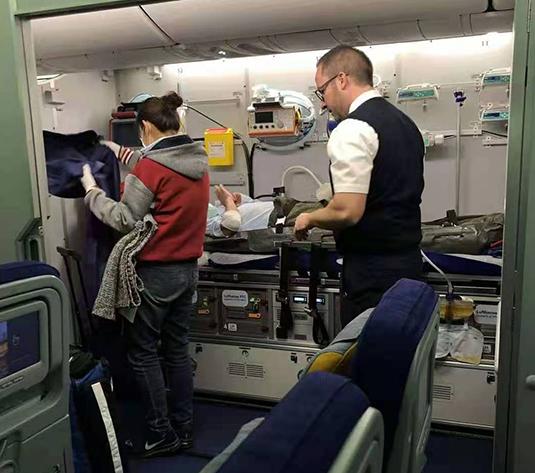
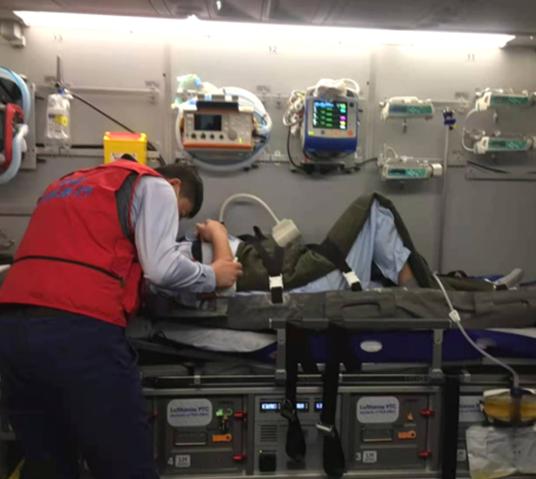
A strong example of continuity planning is a 2019 case involving traumatic brain injury, moved using a Patient Transport Compartment (PTC) solution. The challenge was not only distance. It was the number of handovers and the clinical risk of deterioration over long segments.
In that case, the team coordinated intercontinental stretcher services across airlines and established a 10-hour “transfer ICU” at a major hub airport to support real-time monitoring and condition adjustment. This matters because long transfers can become a chain of small risks—sedation comfort, oxygen stability, neurological changes, and fatigue effects.
When continuity is actively managed, the receiving doctors can focus on treatment instead of trying to reconstruct what happened mid-route. That is the practical definition of a well-run International Patient Transfer: fewer unknowns, fewer gaps, and a cleaner clinical handover.
CTA (Call-to-Action)
If your family is planning an International Patient Transfer—from mainland China to Southeast Asia, Europe, or North America—contact TKP Medical Assistance with the patient’s diagnosis, current location, and urgency level. We will propose a realistic timeline, match the right escort team, and build a continuity-first route plan with clear updates from departure to bedside handover.
Submit Your Request
Recent Posts

Tags
- Air Ambulance
- Bedside To Bedside
- Cross Border Aid
- Emergency Evacuation
- Global Medical Rescue
- How can I ensure the patient's stability while in the air?
- How do I request an air medical transport?
- How is it different from an air ambulance
- how to activate emergency aircraft service
- how to request an air ambulance
- Is air medical transport safe
- Is international transport possible
- Medical Rescue
- Medical Transport
- Patient Repatriation
- Remote Rescue
- Seamless Coordination
- Telemedicine Support
- Tourists And Expats Medical Escort
- What are the benefits of a cross-border medical transfer
- What are the different types of transfers
- What are typical use cases
- What documents do I need to prepare for a transfer?
- What does high-speed rail patient transfer stands for
- What is air ambulance
- What is air medical transport?
- What is cross-border medical transfer
- What is emergency aircraft
- what is high-speed rail patient transfer
- What is medical charter flight
- what is neonatal ICU transfer
- What is patient air transfer
- What medical equipment is available on board the aircraft
- What situations shouldn't use air medical transport?
- What types of air ambulance are there?
- What types of air ambulance exist
- What's the difference between international and domestic transfers?
- what’s the difference between air medical transport and regular ambulance?
- When is emergency air transport necessary
- Which patients require air medical transport?
- who is included in the medical team
- who needs an air ambulance