


ICU Patient Transfer: How ECMO & IABP Support Stays Safe


ICU Patient Transfer is not “just a ride.” For families, it often begins with a hard moment: a doctor says the safest next step is a higher-level hospital, a specialist center, or a facility with advanced equipment. When a patient depends on critical systems like ECMO, IABP, or a ventilator, transport must be treated as a moving ICU. At TKP Medical Assistance, we deliver that level of care from bedside to bedside—planning, coordinating, and operating the transfer with ICU-trained teams and a global flight network.
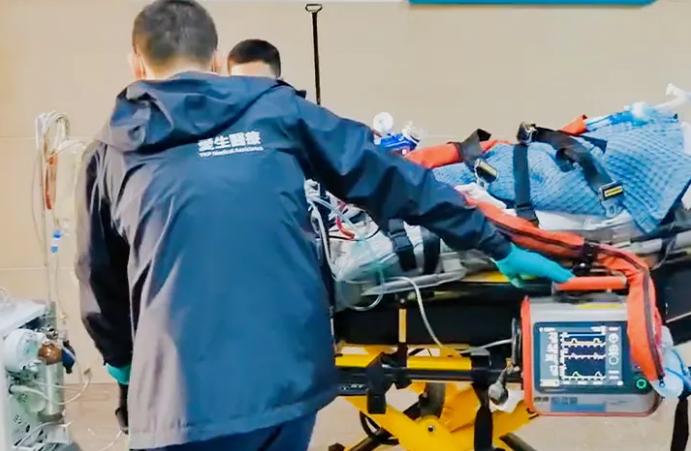
Below is a practical guide to help families understand what “safe” really means during a critical transfer, and how modern ECMO/IABP transport is managed step by step.
What “Safe“ Means in ICU Patient Transfer
Safety in an ICU Patient Transfer is not a single feature. It is a chain of small correct actions, performed without gaps. A stable transfer includes medical stability (airway, breathing, circulation), device stability (tubes, lines, pumps), and operational stability (route, timing, permissions, handovers). If any link is weak, risk increases.
When families hear “transport,” they often imagine speed. In critical care, the priority is controlled stability. The goal is to move the patient while keeping vital parameters within safe ranges, preventing complications, and making sure the receiving hospital is ready to take over care without delay.
In other words: safe transfer is not only about reaching a destination. It is about maintaining ICU-level monitoring and decisions throughout the journey.
Why ECMO & IABP Change the Transfer Plan
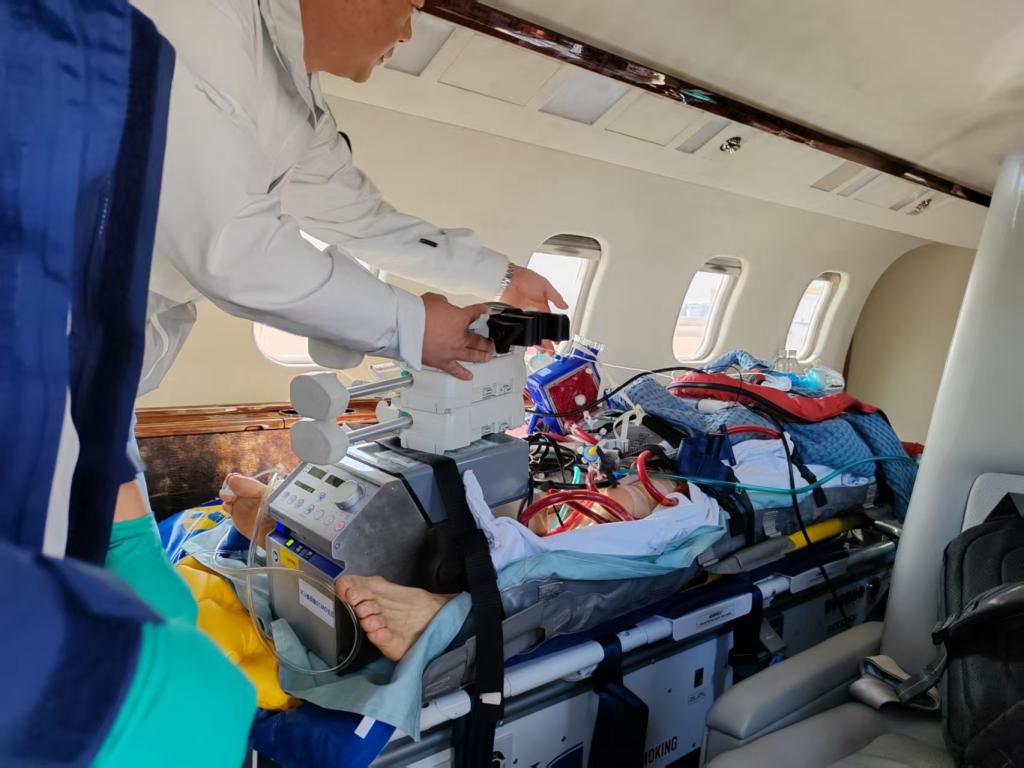
ECMO (Extracorporeal Membrane Oxygenation) and IABP (Intra-Aortic Balloon Pump) are life-sustaining systems used when the heart and/or lungs need advanced support. A patient on ECMO or IABP cannot be transported with a standard ambulance setup or a general escort team. The transport plan must be built around the systems that are keeping the patient alive.
For families, the simplest way to understand this is: the equipment must travel safely, and the team must be able to run it confidently in real time—including during flight segments when the environment changes quickly.
At TKP Medical Assistance, our ICU-trained teams support ECMO/IABP systems through the full transport process, including international flights. This means the same clinical attention continues through loading, transfer, flight, and hospital handover, rather than pausing between “legs” of the journey.
• Full support for ECMO, IABP, ventilators, and other advanced life-sustaining systems
• ICU-level monitoring and clinical decision-making during the entire ICU Patient Transfer
• Suitable for critically ill neonatal, pediatric, and complex adult cases when medically indicated
How a Professional ICU Patient Transfer Is Built Step By Step
Pre-Assessment And Transport Matching
Before any movement happens, a proper ICU Patient Transfer starts with clinical assessment and route selection. This is where many families feel the most uncertainty, because the details are not visible. But this step determines whether the transfer is smooth or stressful.
The team needs to confirm patient condition, current support level, likely risks during movement, and the resources required during each segment. Then the transport mode is matched to the patient’s needs—ground, air, or a combined plan. A safe plan also includes contingency options, because critical care is never “one-path only.”
At TKP Medical Assistance, we work as a direct operator, not a middleman. That matters because assessment, planning, and execution must be consistent. When the planning team and the medical team are the same organization, it reduces miscommunication and speeds up decisions.
• Direct Operation – No Middleman (fewer handoff risks, faster coordination)
• Certified ACLS & BLS Teams (standardized emergency response training)
• Structured bedside-to-bedside handover planning
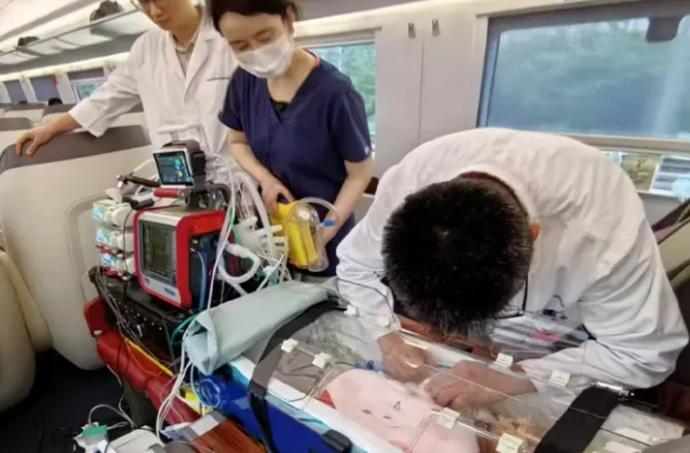
Route Planning for Flights: Speed, Access, and Control
One reason families choose air transfer is time. But in critical transport, time savings must not reduce control. Flight planning for ICU Patient Transfer is a specialized process, especially when ECMO or IABP is involved.
TKP Medical Assistance uses a flexible route network designed to connect patients from remote, underserved, or emergency locations to leading medical facilities worldwide. Importantly, routes can include strategically selected airports, including those with limited infrastructure, to improve access when standard hubs are not practical.
What this means for families is simple: the route is built to reduce unnecessary delays, avoid risky transfers between vehicles, and keep clinical care continuous.
Key route planning elements we apply include:
• Dynamic scheduling based on patient condition and urgency
• Domestic + international coverage when cross-border care is required
• Use of airports with minimal infrastructure needs for remote access
• Optimized routing to reduce time in transit and protect stability
• Coordination with medical institutions and embassies for smooth transfer steps
We also monitor flights in real time and can adjust routes if needed. That capability helps families because it reduces “unknown time” during a stressful day. It also helps clinicians because changes can be managed without losing medical control.
What Sets TKP Medical Assistance Apart for Families
Families do not measure a transfer by the technical terms. They measure it by what they experience: clarity, stability, dignity, and reliable communication. Those outcomes depend on experience, standards, and operational discipline.
TKP Medical Assistance brings over 24 years of transfer experience and works with ICU-led medical teams. Our process follows international clinical standards from pre-assessment to final handover. We are not intermediaries. We are the team that plans, coordinates, and delivers each transfer with clinical expertise and compassion.
We also track what matters most to families: incident history and communication. TKP reports zero major transfer incidents, and we maintain a 24/7 global coordination model to keep the journey controlled and transparent.
• Over 24 Years of Transfer Experience (proven operational routines under pressure)
• Zero Major Transfer Incidents (a safety record families can understand)
• 24/7/365 Global Coordination (support across time zones and urgent timelines)
• Multilingual Staff (EN/CH/CN) (clear updates and fewer misunderstandings)
• Real-time journey tracking and family updates (less uncertainty, more control)
These advantages are not “marketing claims” when you translate them into practical value. They mean fewer delays, fewer communication gaps, faster decisions, and a calmer experience during a medical crisis.
When to Call TKP and What Information Helps Us Move Faster
If a doctor has recommended transfer, time matters—but so does preparation. Families can help speed up safe planning by sharing clear information early. Even small details can prevent delays later, especially for international or neonatal transfers.
A good starting set includes the patient’s diagnosis summary, current vital support (ventilator/ECMO/IABP), recent labs or imaging notes if available, and the intended receiving hospital. If you do not have everything, do not worry. A professional team can guide you. What matters is starting the planning process quickly and accurately.
CTA (Call-to-Action):
If you are arranging an ICU Patient Transfer for a loved one—especially with ECMO or IABP support—contact TKP Medical Assistance. Share the patient’s condition, current life-support systems, and destination hospital. Our ICU-trained teams will recommend a safe transport plan, coordinate bedside-to-bedside handover, and provide real-time updates so your family is informed at every step.
When a patient is critically ill, you should not have to “guess” what safe transport looks like. A well-run ICU Patient Transfer is built on clinical precision, operational reliability, and respectful care—so the journey supports recovery, not additional risk.
Submit Your Request
Recent Posts
Tags
- Air Ambulance
- Bedside To Bedside
- Cross Border Aid
- Emergency Evacuation
- Global Medical Rescue
- How can I ensure the patient's stability while in the air?
- How do I request an air medical transport?
- How is it different from an air ambulance
- how to activate emergency aircraft service
- how to request an air ambulance
- Is air medical transport safe
- Is international transport possible
- Medical Rescue
- Medical Transport
- Patient Repatriation
- Remote Rescue
- Seamless Coordination
- Telemedicine Support
- Tourists And Expats Medical Escort
- What are the benefits of a cross-border medical transfer
- What are the different types of transfers
- What are typical use cases
- What documents do I need to prepare for a transfer?
- What does high-speed rail patient transfer stands for
- What is air ambulance
- What is air medical transport?
- What is cross-border medical transfer
- What is emergency aircraft
- what is high-speed rail patient transfer
- What is medical charter flight
- what is neonatal ICU transfer
- What is patient air transfer
- What medical equipment is available on board the aircraft
- What situations shouldn't use air medical transport?
- What types of air ambulance are there?
- What types of air ambulance exist
- What's the difference between international and domestic transfers?
- what’s the difference between air medical transport and regular ambulance?
- When is emergency air transport necessary
- Which patients require air medical transport?
- who is included in the medical team
- who needs an air ambulance