


Air Ambulance: ICU-Grade Gear For Safer Flights


Air Ambulance is not “just a flight.” For a patient’s family, it is a moving ICU designed to keep a loved one stable from bedside to bedside. At TKP Medical Assistance, we plan and deliver every transfer as a clinical mission, not a travel booking. That means ICU-grade equipment, experienced critical-care teams, and a coordinated route plan that reduces risk and uncertainty—especially when time, distance, and medical complexity are involved.

What “ICU-Grade“ Means in an Air Ambulance
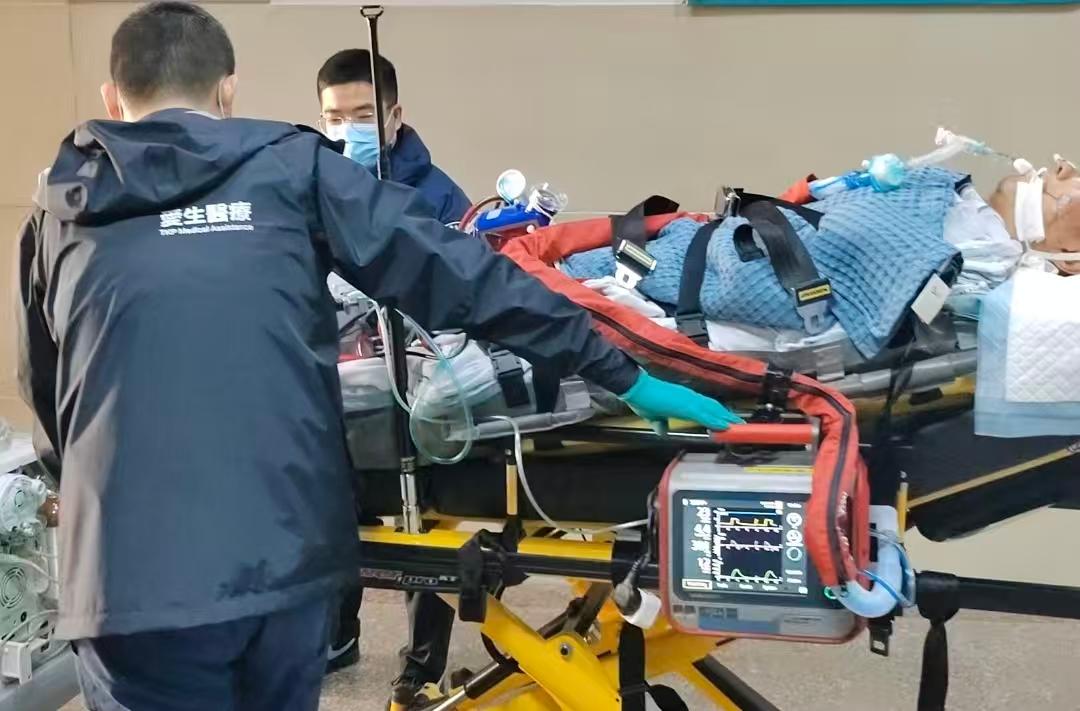
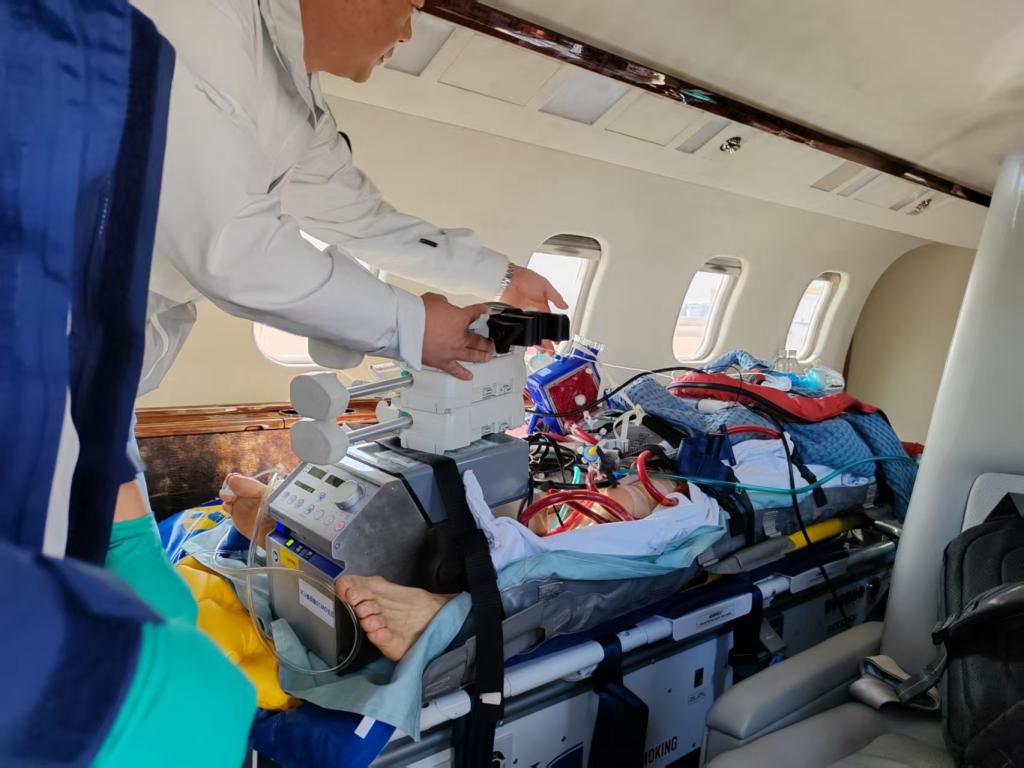
In a hospital ICU, patients are supported by constant monitoring and immediate intervention tools. An Air Ambulance must replicate that capability in a smaller, aviation-safe setup. This is why TKP missions are equipped with portable advanced life support (ALS) or advanced cardiac life support (ACLS) systems, plus transport-ready ICU monitors, oxygen supply, and ventilators. When the case requires it, we also plan for ECMO support.
What families should know is simple: ICU-grade gear is not about “more machines.” It is about predictable safety when a patient’s condition can change quickly during transfer. A stable reading today can shift in minutes due to altitude, fatigue, infection, or underlying cardiopulmonary issues. With an ICU-level setup, the medical team can detect early changes and respond before they become a crisis.
• ICU monitors help track vital signs continuously, not “check once and wait.”
• Ventilators support breathing when a patient cannot maintain safe oxygen levels alone.
• Oxygen systems provide controlled delivery throughout the flight, not a short-term supply.
• ALS/ACLS capability means the team is prepared for time-critical cardiac or airway events.
All TKP equipment is aviation-certified and configured for real flight conditions, not adapted at the last minute. We also customize setups for both adult and pediatric patients, because safe ranges, airway sizing, and monitoring needs are not the same.
The Core Equipment Families Should Ask About
When comparing providers, families often hear broad promises like “advanced medical support.” A better approach is to ask what is actually onboard and how it is used. In an Air Ambulance, the equipment is only as effective as the protocol behind it.
At TKP, the standard mission setup is built around three needs: monitor, support, and intervene.
Monitor: Transport-ready ICU monitors provide continuous information so the team can react early, not late. This is essential for patients with unstable blood pressure, respiratory compromise, cardiac risk, or post-surgical fragility.
Support: Oxygen supply and ventilators allow controlled breathing support, from mild assistance to full ventilation. This is critical when a patient is too weak to breathe effectively, or when long-distance transfer could worsen fatigue.
Intervene: ALS/ACLS systems are designed for emergencies that require rapid, trained response. This is where “ICU-level escort care” becomes more than a slogan—it becomes a structured, practiced workflow.
• Ask whether the provider has ALS or ACLS systems onboard, not only “first aid.”
• Ask if monitors are ICU-grade and designed for transport.
• Ask how ventilator use is planned and who manages it during flight.
Families do not need to memorize technical names. The goal is to confirm that the provider can deliver hospital-standard thinking in an aviation environment.
When ECMO and Specialized Transport Planning Matter
Most transfers do not require ECMO. But for specific severe heart or lung conditions, ECMO can be the bridge that keeps a patient alive long enough to reach definitive treatment. If ECMO is needed, it changes everything: staffing, equipment, medication planning, route selection, and contingency options.
TKP’s role is to match the plan to the patient, not force the patient into a “standard package.” Some cases also involve pediatric considerations, where equipment fit and physiological tolerances require special preparation.
• ECMO readiness when required means planning for the highest-acuity scenarios.
• Adult and pediatric customization reduces avoidable risks caused by mismatched gear.
• Personalized critical transport plans help families understand what will happen step by step.
For families, the practical takeaway is this: if a hospital mentions ECMO, incubators, or high-acuity ventilation, you need a provider who can coordinate these needs as a system—not as separate services stitched together.
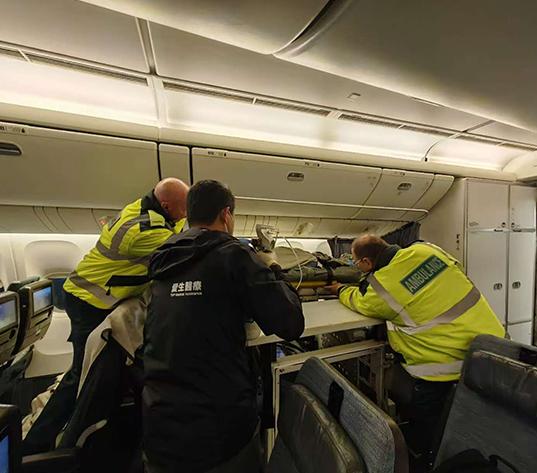
Clinical Standards and Safety: What Protects the Patient in Transit
In critical transport, calm execution is a form of safety. TKP is led by experienced ICU medical teams, and each case follows a clinical workflow from pre-assessment to final handover. The patient is not “handed off” repeatedly to disconnected parties. Instead, care is continuous and coordinated.
This is where experience becomes measurable. TKP has over 24 years of transfer experience and maintains zero major transfer incidents. Those numbers matter to families because they represent repeatable processes, disciplined training, and risk control—not luck.
• Certified ACLS & BLS teams support standardized emergency response.
• Continuous monitoring helps detect changes early and act fast.
• Structured handover supports continuity at the receiving hospital.
A safe Air Ambulance transfer is not only about what happens in the air. It includes how the patient is assessed before departure, how medications and documentation are prepared, and how the receiving facility is aligned for immediate admission.
24/7 Global Coordination and Family Updates
Families often underestimate how much logistics can affect clinical safety. Delays, airport limitations, language barriers, and unclear responsibilities can all create stress—and stress can lead to mistakes. TKP’s global coordination center operates 24/7/365, with multilingual and multidisciplinary staff ready to manage urgent timelines with clarity.
This coordination includes real-world details that reduce friction:
• Multilingual support (EN/CH/CN) for accurate medical and family communication
• Direct operation—no middleman for faster decisions and fewer misunderstandings
• Real-time journey tracking and family updates to reduce anxiety and uncertainty
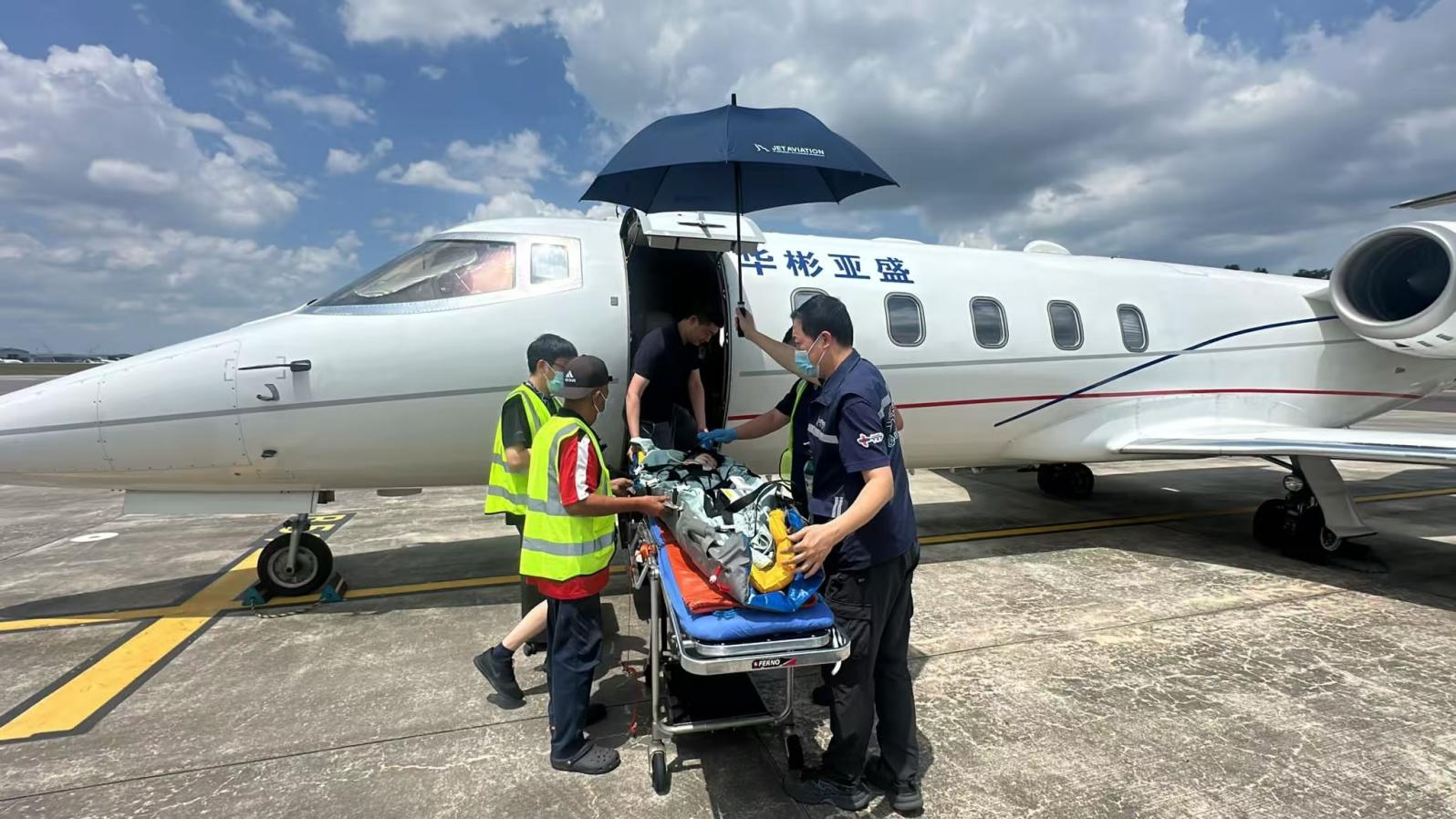
Route planning is also part of clinical safety. TKP uses a flexible network of flight paths, including airports with minimal infrastructure requirements when remote access is needed. Routes are optimized to reduce flight time while protecting patient stability, and the operations team monitors flights in real time so adjustments can be made when conditions change.
In practical terms, families benefit because they receive a single, accountable team that can move quickly and communicate clearly—especially across borders.
Why Families Choose TKP Medical Assistance
When a loved one is critically ill, families want two things: a safe plan and a team they can trust. TKP is not an intermediary. We plan, coordinate, and deliver each Air Ambulance transfer with clinical expertise and compassion. Our model is built for dignity, clarity, and medical reliability—from bedside support on the ground to ICU-level care in the air.
If you are evaluating a transfer, consider what “different” should mean in real life:
• ICU/ER-trained medical escorts with emergency and in-flight care experience
• One-stop, closed-loop case oversight led by a dedicated coordinator
• Global coverage that supports both domestic and international transfers
• Transport planning matched to condition—from ventilators to ECMO when required
CTA (Call-to-Action):
If your family is considering an Air Ambulance transfer, contact TKP Medical Assistance with the patient’s current diagnosis, location, and receiving hospital preference. Our medical coordinator will perform a pre-assessment, recommend the right ICU-grade configuration, and provide a clear transfer plan with real-time updates—so you can focus on your loved one, not the complexity of the journey.
Submit Your Request
Recent Posts
Tags
- Air Ambulance
- Bedside To Bedside
- Cross Border Aid
- Emergency Evacuation
- Global Medical Rescue
- How can I ensure the patient's stability while in the air?
- How do I request an air medical transport?
- How is it different from an air ambulance
- how to activate emergency aircraft service
- how to request an air ambulance
- Is air medical transport safe
- Is international transport possible
- Medical Rescue
- Medical Transport
- Patient Repatriation
- Remote Rescue
- Seamless Coordination
- Telemedicine Support
- Tourists And Expats Medical Escort
- What are the benefits of a cross-border medical transfer
- What are the different types of transfers
- What are typical use cases
- What documents do I need to prepare for a transfer?
- What does high-speed rail patient transfer stands for
- What is air ambulance
- What is air medical transport?
- What is cross-border medical transfer
- What is emergency aircraft
- what is high-speed rail patient transfer
- What is medical charter flight
- what is neonatal ICU transfer
- What is patient air transfer
- What medical equipment is available on board the aircraft
- What situations shouldn't use air medical transport?
- What types of air ambulance are there?
- What types of air ambulance exist
- What's the difference between international and domestic transfers?
- what’s the difference between air medical transport and regular ambulance?
- When is emergency air transport necessary
- Which patients require air medical transport?
- who is included in the medical team
- who needs an air ambulance