


Emergency After Long-Haul Flight: TKP Transfers Patient with Economy Class Syndrome to Mainland ICU


After a 19-hour multi-leg flight from France to Hong Kong, a 60-year-old woman collapsed at the airport with chest pain and respiratory distress. Diagnosed with bilateral deep vein thrombosis and pulmonary embolism—classic signs of Economy Class Syndrome (ECS)—she was admitted to ICU and later transferred to Dongguan for continued treatment under TKP Medical Assistance escort.
Hong Kong-Based Medical Escort Team Responds After In-Flight Deep Vein Thrombosis
I. Long-Haul Flight Leads to Post-Landing Collapse
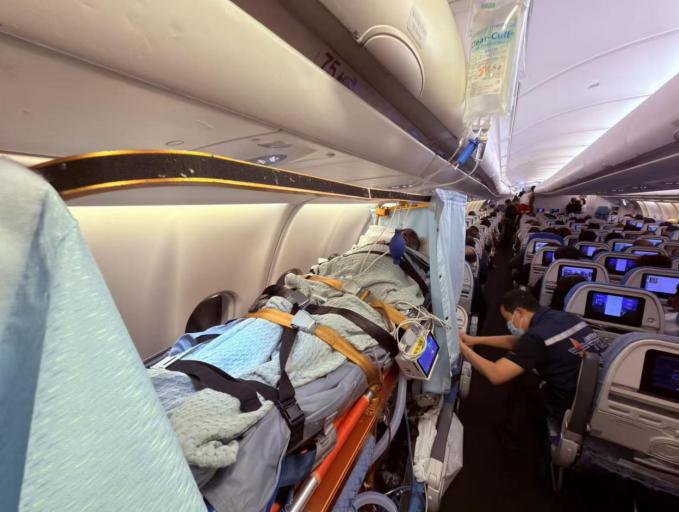
Ms. Chen, a 60-year-old Chinese national living in France, was returning to Hong Kong via a 19-hour route with a stopover in Finland due to changes in air traffic patterns amid the ongoing Russia–Ukraine conflict. Upon landing in Hong Kong, she developed sudden chest tightness, shortness of breath, and collapsed at the airport. Emergency services rushed her to a nearby hospital, where CT scans and Doppler ultrasound confirmed massive bilateral deep vein thrombosis (DVT) and diffuse pulmonary embolism (PE). She was transferred to the ICU for critical care and later escorted to Dongguan by TKP’s specialized medical transport team.
II. What Is Economy Class Syndrome?
Economy Class Syndrome (ECS) refers to venous thromboembolism (VTE) events—typically DVT or PE—triggered by prolonged immobility during air travel, especially flights lasting over 8 hours. Risk factors include advanced age, obesity, dehydration, recent surgery, varicose veins, pregnancy, hormonal medications, cancer, heart disease, and inherited clotting disorders. Fever and infection also heighten the risk due to prothrombotic states. Though rare, ECS can be fatal if emboli travel to the lungs or brain.
III. Prevention Tips for Long-Haul Travelers
To reduce the risk of ECS, travelers should:
Move often: Choose aisle seats, stand up, walk the cabin, or perform in-seat exercises (e.g., ankle circles, calf raises, leg extensions).
Hydrate regularly: Drink 200 ml of water per hour; avoid caffeine and alcohol.
Wear compression stockings: Professionally fitted medical-grade stockings help improve circulation.
Dress comfortably: Avoid tight clothing that restricts lower body movement.
Avoid flying if acutely unwell: Passengers with fever, chest tightness, or limb swelling should consult a doctor before boarding.
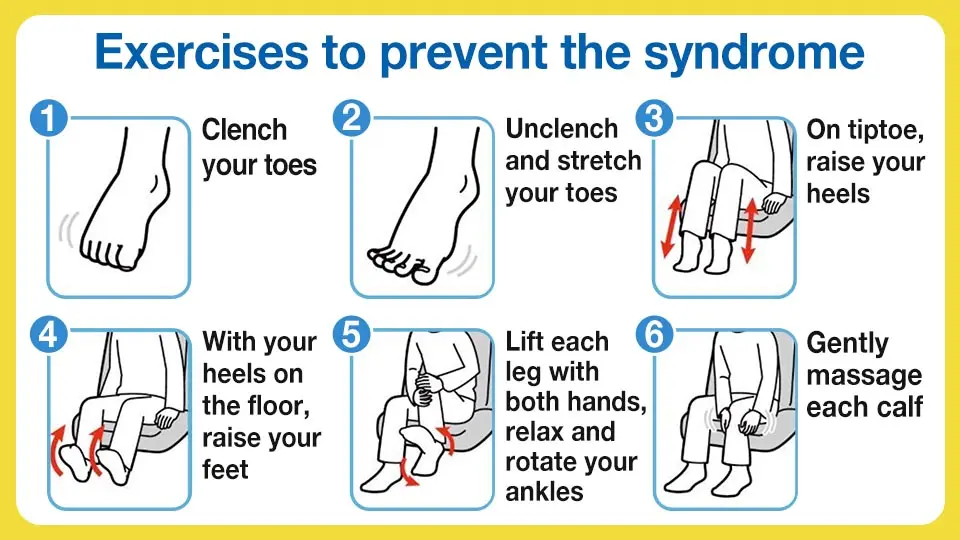
https://www3.nhk.or.jp/nhkworld/en/news/backstories/2958/
IV. Know the Warning Signs
Seek immediate medical attention after air travel if you experience:
Leg pain, swelling, redness, or warmth (potential DVT)
Sudden shortness of breath, chest pain, coughing up blood, dizziness, or fainting (possible PE)
Reduce physical activity if symptoms appear to prevent clot migration. Early recognition and intervention are critical.
Frequently Asked Questions – Cross-Border Medical Rescue
Need help understanding how international medical rescue works? Browse our most common questions to learn about service coverage, response times, documentation requirements, and more. We’re here to support you every step of the way.
Q: Which countries are covered by the cross-border medical rescue service?
A: We cover major countries and regions worldwide to ensure timely rescue
Q: How can I request cross-border medical rescue?
A: Please submit an emergency rescue request through our official website or customer service.
Q:What documents are needed for medical rescue?
A: Patient ID, medical diagnosis report, and emergency contact information are required.
Q: How is the rescue service fee settled?
A: Fees can be paid via insurance claims or direct payment for the service.
Q: How quickly does the rescue response start?
A: In emergencies, rescue operations typically begin within a few hours.
Submit Your Request
Recent Posts
Tags
- Air Ambulance
- Bedside To Bedside
- Cross Border Aid
- Emergency Evacuation
- Global Medical Rescue
- How can I ensure the patient's stability while in the air?
- How do I request an air medical transport?
- How is it different from an air ambulance
- how to activate emergency aircraft service
- how to request an air ambulance
- Is air medical transport safe
- Is international transport possible
- Medical Rescue
- Medical Transport
- Patient Repatriation
- Remote Rescue
- Seamless Coordination
- Telemedicine Support
- Tourists And Expats Medical Escort
- What are the benefits of a cross-border medical transfer
- What are the different types of transfers
- What are typical use cases
- What documents do I need to prepare for a transfer?
- What does high-speed rail patient transfer stands for
- What is air ambulance
- What is air medical transport?
- What is cross-border medical transfer
- What is emergency aircraft
- what is high-speed rail patient transfer
- What is medical charter flight
- what is neonatal ICU transfer
- What is patient air transfer
- What medical equipment is available on board the aircraft
- What situations shouldn't use air medical transport?
- What types of air ambulance are there?
- What types of air ambulance exist
- What's the difference between international and domestic transfers?
- what’s the difference between air medical transport and regular ambulance?
- When is emergency air transport necessary
- Which patients require air medical transport?
- who is included in the medical team
- who needs an air ambulance