


Air Ambulance for Critical Care Patients: Flying ICU Technology Saves Lives Across Borders


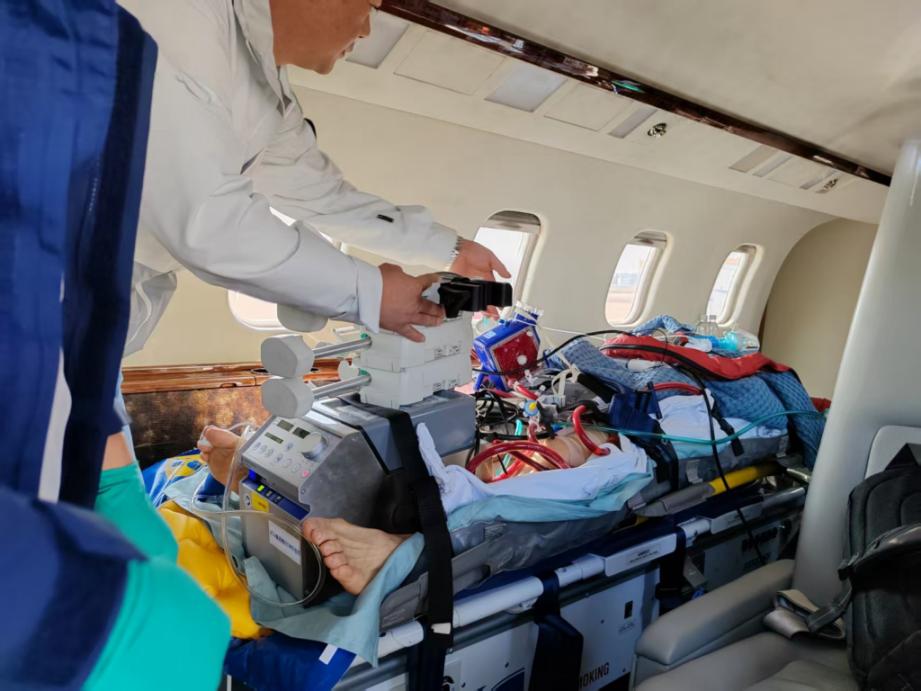
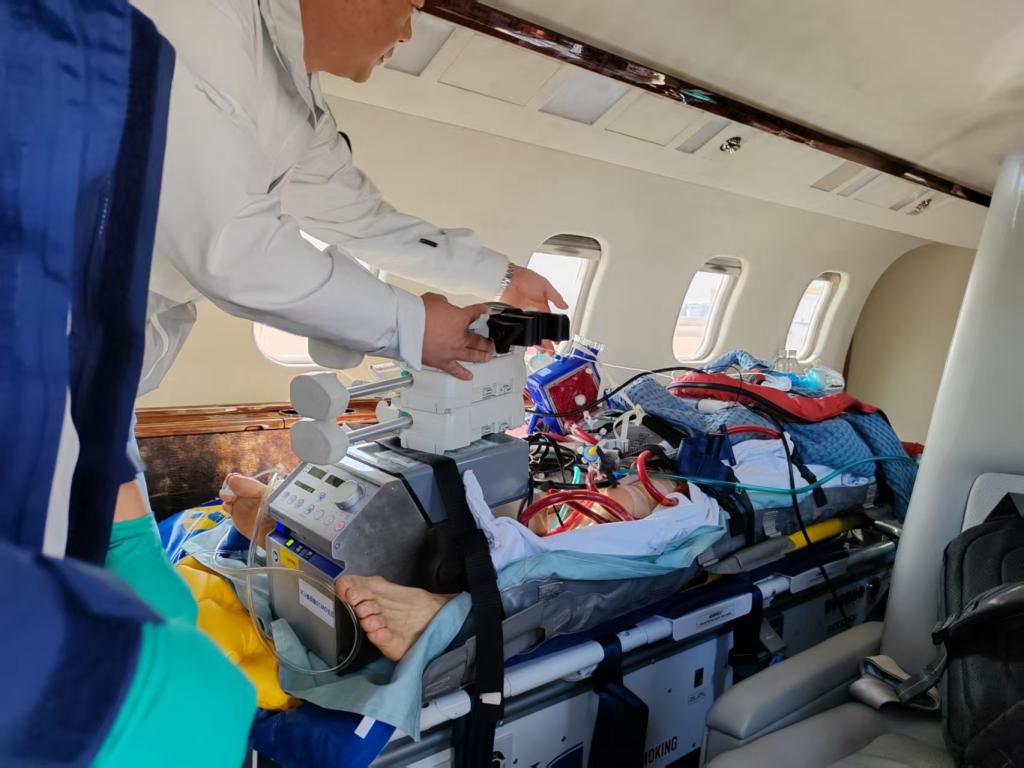
Air Ambulance for Critical Care Patients now means bringing the full ICU into the sky. TKP Medical Assistance has spent over 24 years perfecting this capability with 10,000+ successful missions. Every flight is a flying ICU, equipped with portable ALS systems, transport monitors, and aviation-certified ventilators. Unlike other services, TKP provides specialized intensive care that includes ECMO and IABP support, seamless crossing of continental borders.
How Flying ICU Technology is Beneficial
With critical care patients, the lack of monitoring or intervention will lead to rapid deterioration. Most conventional air ambulances have a limited clinical staff and either have to pick and choose equipment with questionable reliability or have limited power. The flying ICU technology does not make compromises. Patient is on ECMO or other severe pulmonary patients and are too unstable to transport, with the flying ICU technology, they can be safely transferred to a specialized facility even if they are located very far away.
Here’s what sets flying ICU apart from the rest:
•Transport Accredited Life Support Systems: Equipment and devices that includes defibrillators and infusion pumps, and other life support systems, are aviation compliant and transport accredited for both adult and pediatric patients.
•Power and Oxygen Supply Without Interruptions: During circumstances such as aircraft handovers, refueling, or ground handovers, the breaks will not be due to lack of power or oxygen as we have mobile power units and doubled oxygen systems.
•Dual qualified medical crews: Proficient staff members of critical care medical doctors, nurses and respiratory teams, who are not only cross trained, but also proficient in both areas of aviation and emergency medicine.
•Telemetry and EHR Integration: Patient data stream continuously to/from hospitals, and ground teams are prepared for transport before the flying ICU arrives.
TKP Medical Assistance: Flying ICU Across Borders
Reliability and operational competency are the cornerstones of TKP’s reputation. Every transfer is executed with professionalism, kindness, and complete reliability thanks to our round the clock, globally coordinated TKP medical teams and TKP’s coordination with hospitals and insurers. With TKP, you activate a portable, intensive care unit.
Our main service offerings are:
•Complete coverage of ECMO, IABP, and other advanced life support systems: We operate the system during the transport and long international flights, most suitable for critically ill redemia or pediatric patients.
•Transport of very low birth weight and premature manifesting wean: We support our pediatric and neonatal intensive care units during the transport of very low birth weight patients, very ill premature patients, and very ill post surgical patients.
•Real-time route optimization: The transfer route map orders international medical services for patients moving from remote and less accessible communities to health care systems. We facilitate rapid and secure passage via strategically selected—even minimally developed—airports.
•To handle frontier‐crossing travel and embassy coordination: TKP takes care of flight permissions, medical visas, and customs clearance, removing administratively demanding processes from the equation that may compromise client stability.
Real-World Impact: When Every Second Counts
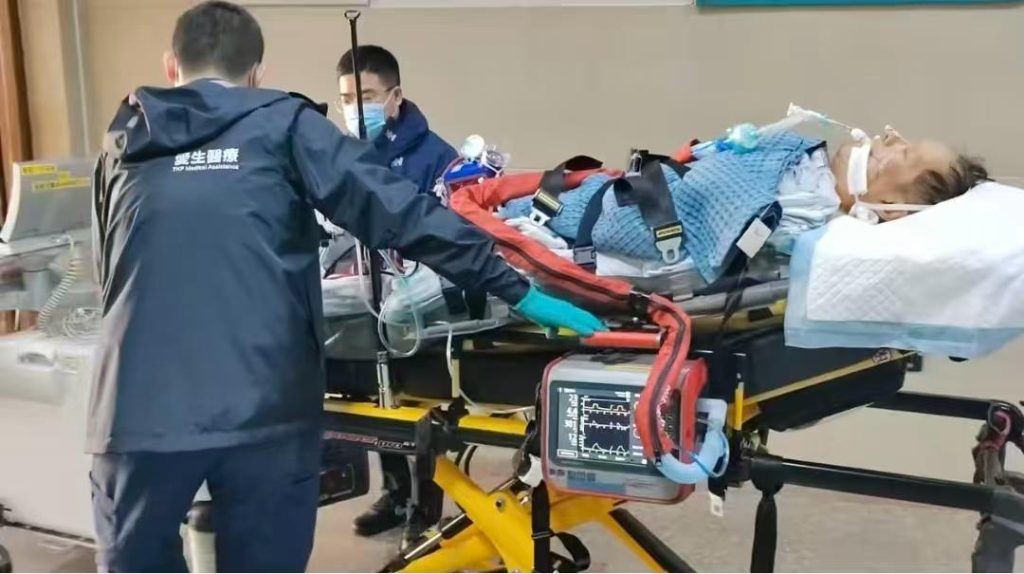
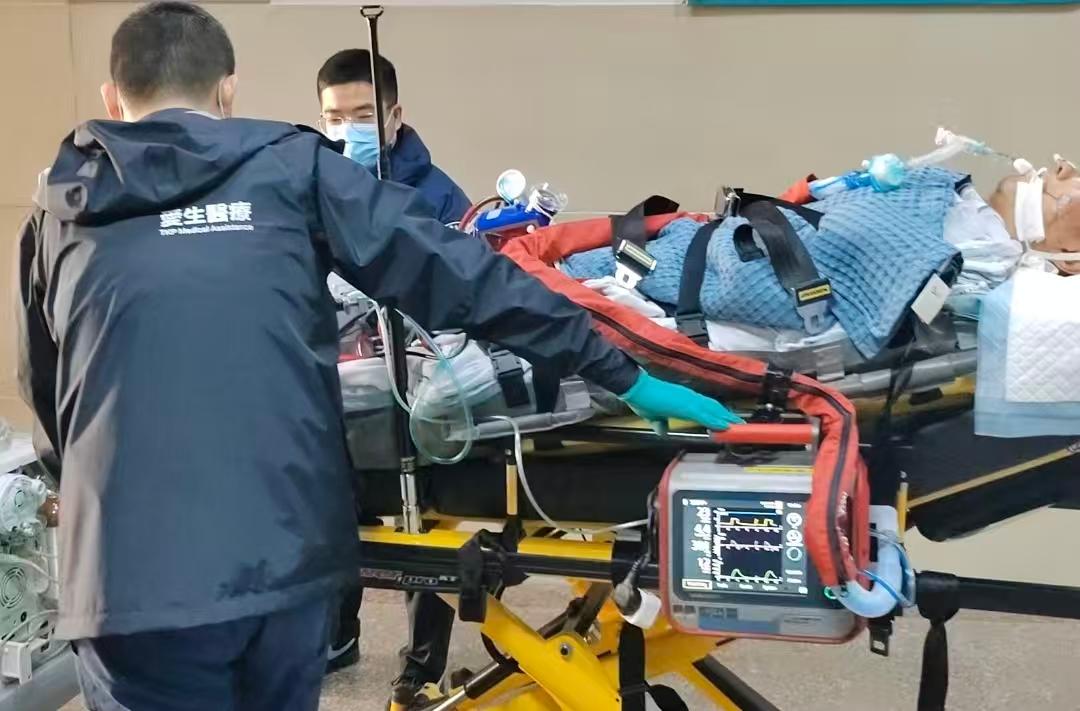
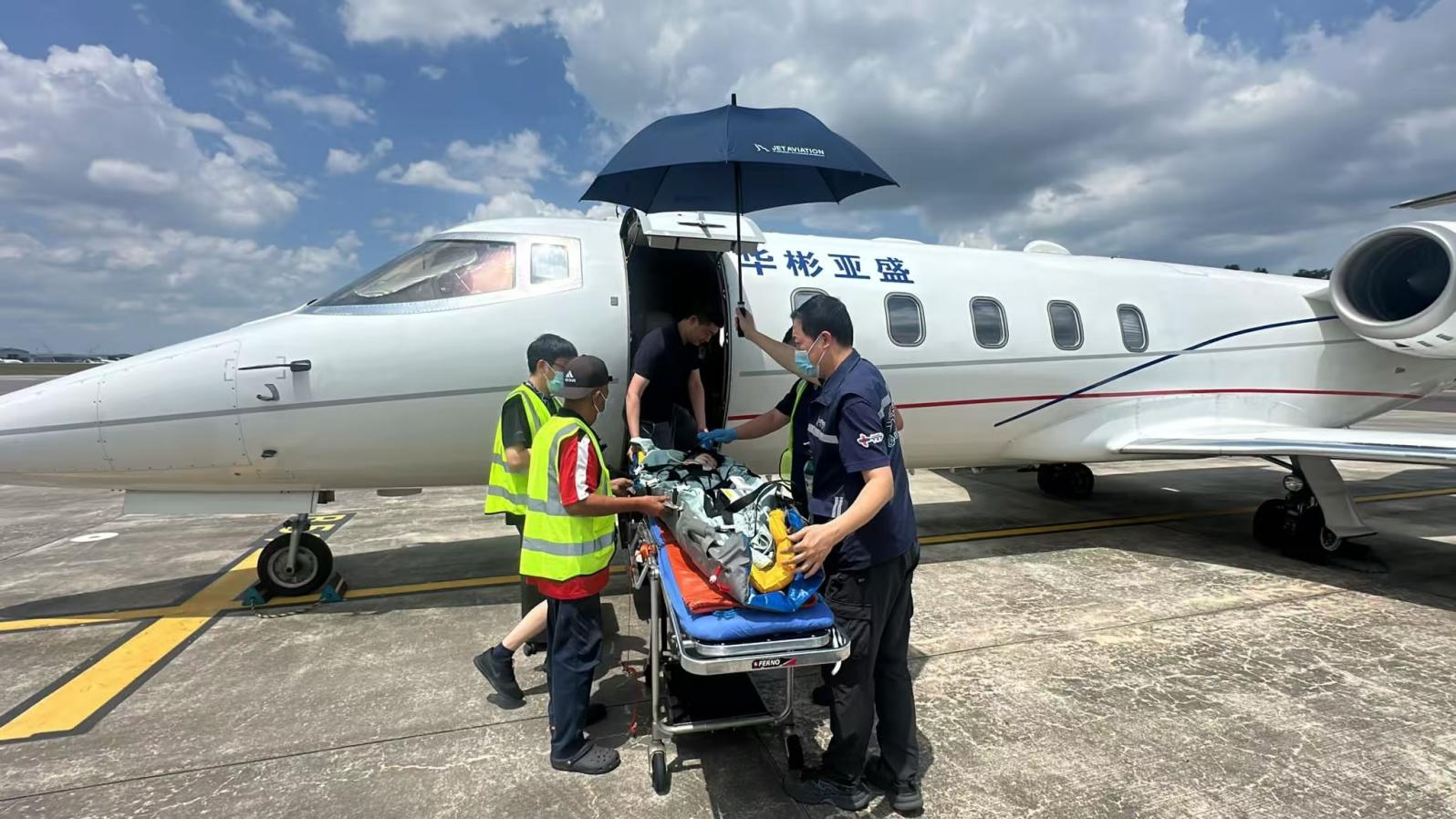
Consider a recent TKP mission from Xiamen to Seoul, South Korea. A patient with severe pulmonary infection required simultaneous ECMO and IABP support to maintain vital signs. From departure to arrival, TKP’s specialist doctors and ICU nurses navigated cross-border challenges while ensuring continuous ECMO and IABP support.
•At the ICU ward: The road team looked at ECMO flow and airway management, then wrapped up for transport.
•On the road: Medical staff kept ECMO flow parameters stable, swapping staff at priority lane intervals, with staff’s primary concern being stable ECMO flow.
•At the tarmac: There was full ECMO handoff support and transport ECMO systems were integrated to the cabin systems.
•At cruising altitude: ECMO support and the team were handoff ported ECMO, transport systems feed the cabin ECMO systems, and the handoff was support ported ECMO.
Transport ported ECMO systems handoff support, transport cabin systems and support integrated-Systems ECMO handoff feed. Intuitive mission handoff support systems, seamless integrated support.
In the Following of 2026 Trends
Rapid development of the Air ambulance industry is redefining the parameters of how care and critical transport of patients is taking place by the year of 2026.
•Air transport of critical patients: 20% reductions in the time needed to transfer patients when utilizing digital command and flight routing services with support of artificial systems and enhanced digital flight command centers [source: Air Medical Transport].
•Telemedical services in support during flight: Use of high-capacity digital satellites to support guidance and direction of in-transit medical flight emergencies [source: IATA Medical Manual].
•The weight of systems support ECMO is under ten (10) kgs, making it ported ECMO systems and support transport cabin, systems and handoff … transport systems support handoff systems.
•Ours is an operations team handoff systems; utilizing satellite digital ECMO to handoff support the ported systems. We utilize the medical device to support handoff systems.
Why Choose TKP?
Choosing an air ambulance service is never easy. Families and hospitals must make fast and irreversible decisions. For over 24 years in the industry, we have completed over 10,000 cases as an air ambulance service. We have built a widespread network of partner hospitals and insurance companies. Leaving the figures aside, at TKP, we treat every case as if our own family member is the patient.
•Always available: Our call center is available 24/7, and our medical teams at the emergency consulting units are ready to take off at a moment’s notice.
•Total case management: We manage the entire transfer process, airway patient exchange, and medical intervention.
•Financial coverage: To ease the financial burden on the family, we partner with international insurance companies.
Final Words: The Sky is No Longer a Barrier to ICU Care
Air ambulances have adapted fully to the new technology. At TKP, we provide other services to ensure safe air care for critical patients. For example, We provide services to fit the technologically air borne Integrated Rescue/ICU Transport ECMO and pedriatic air ambulances. We provide the needed retrieval of neonates ICU to ECMO cross continental retrieval and for ECMO exchange across Asia.
For more information about our services, please reach out to TKP directly. Let us show you why more than 10,000 missions and two decades of innovation make us the partner you can trust when every moment matters.
Common Questions
Q: Which patients are eligible to be transported by Air Ambulance for Critical Care Patients?
A: Patients who are on ECMO support, IABP, require mechanical ventilation, or continuous ICU level care. These patients could be neonates, premature babies, or adults who have cardiac and/or respiratory failure of the most severe degree.
Q: Do you transport ECMO patients internationally?
A: Yes. Each mission comes equipped with the capability to carry and operate ECMO and IABP transportable systems of the aviation type, and dual ICU teams.
Q: How fast can you provide a flying ICU?
A: Usually, we are able to provide a flying ICU within 4 to 6 hours of the initial request. This is primarily because we have a 24/7 active operations center and are able to coordinate with several hospitals, airports, and embassies all over the world.
Q: Is Air Ambulance for Critical Care Patients covered by insurance?
A: Air medical transport is a provision of many international health and travel insurance. TKP is in the process of negotiating with the insurance companies to confirm the benefits and to ensure the client ends with the least extent of payment.
Submit Your Request
Recent Posts
Tags
- Air Ambulance
- Bedside To Bedside
- Cross Border Aid
- Emergency Evacuation
- Global Medical Rescue
- How can I ensure the patient's stability while in the air?
- How do I request an air medical transport?
- How is it different from an air ambulance
- how to activate emergency aircraft service
- how to request an air ambulance
- Is air medical transport safe
- Is international transport possible
- Medical Rescue
- Medical Transport
- Patient Repatriation
- Remote Rescue
- Seamless Coordination
- Telemedicine Support
- Tourists And Expats Medical Escort
- What are the benefits of a cross-border medical transfer
- What are the different types of transfers
- What are typical use cases
- What documents do I need to prepare for a transfer?
- What does high-speed rail patient transfer stands for
- What is air ambulance
- What is air medical transport?
- What is cross-border medical transfer
- What is emergency aircraft
- what is high-speed rail patient transfer
- What is medical charter flight
- what is neonatal ICU transfer
- What is patient air transfer
- What medical equipment is available on board the aircraft
- What situations shouldn't use air medical transport?
- What types of air ambulance are there?
- What types of air ambulance exist
- What's the difference between international and domestic transfers?
- what’s the difference between air medical transport and regular ambulance?
- When is emergency air transport necessary
- Which patients require air medical transport?
- who is included in the medical team
- who needs an air ambulance