


How To Arrange Cross-Border Medical Transport: A Step-by-Step Breakdown of the Full Process


Arranging cross-border medical transport is far more complex than booking a flight or calling an ambulance. It requires clinical precision, logistics coordination, legal compliance, and real-time decision-making — often under extreme time pressure. Whether you are a family member, a hospital case manager, or an insurer, understanding the complete “bed-to-bed” journey helps you act swiftly and avoid critical mistakes. Below, we break down every stage of a professional cross-border medical evacuation, while showing how TKP Medical Assistance — a direct provider with over 24 years of frontline experience — turns complexity into a safe, seamless pathway.
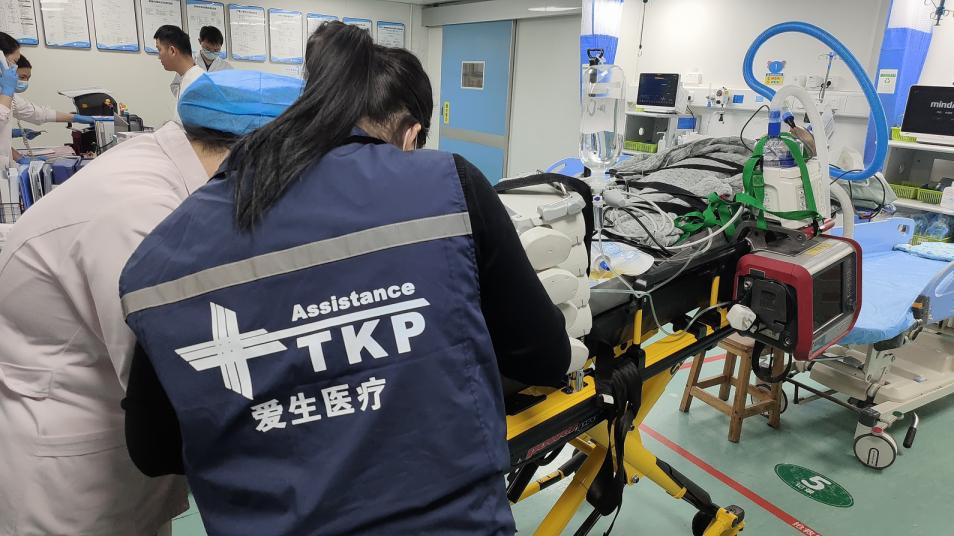
Phase 1: The First Contact – Capturing Every Detail
The process starts when someone reaches out. A reliable provider operates a 24/7/365 coordination center that immediately captures:
•Patient’s current location (hospital, clinic, or even remote site)
•Medical history, diagnosis, and treatment status
•Preferred destination and urgency level
•Insurance or payment information
TKP in action: Their multilingual staff (EN/CH/CN) answers within minutes, not hours. They do not act as intermediaries — they are the team that plans and executes. No critical data is missed because every inquiry follows a structured intake protocol.
Phase 2: Clinical Review – Matching Resources to Patient Condition
Not every patient needs an air ambulance with a full ICU. A dedicated nurse or physician reviews the medical file to determine:
•Stability for transport (e.g., ventilator settings, vasopressor requirements)
•Special equipment needed (isolation pod, incubator, bariatric stretcher)
•Staffing requirements (ICU nurse, critical care doctor, respiratory therapist)
Key question answered: Can the patient safely fly at 35,000 feet, or should ground/sea transport be considered?
TKP‘s clinical team is led by experienced ICU specialists. They adhere to ACLS & BLS protocols and have maintained zero major transfer incidents over decades. This phase produces a clear medical transport plan, not a guess.
Phase 3: Route & Mode Planning – Optimizing the Journey
This is a phase where expert-level knowledge of cross-border logistics is required. The provider explores the air, ground, and rail options to construct a route factoring in the speed and safety requirements, as well as the level of effort required to clear the customs of trading barriers.
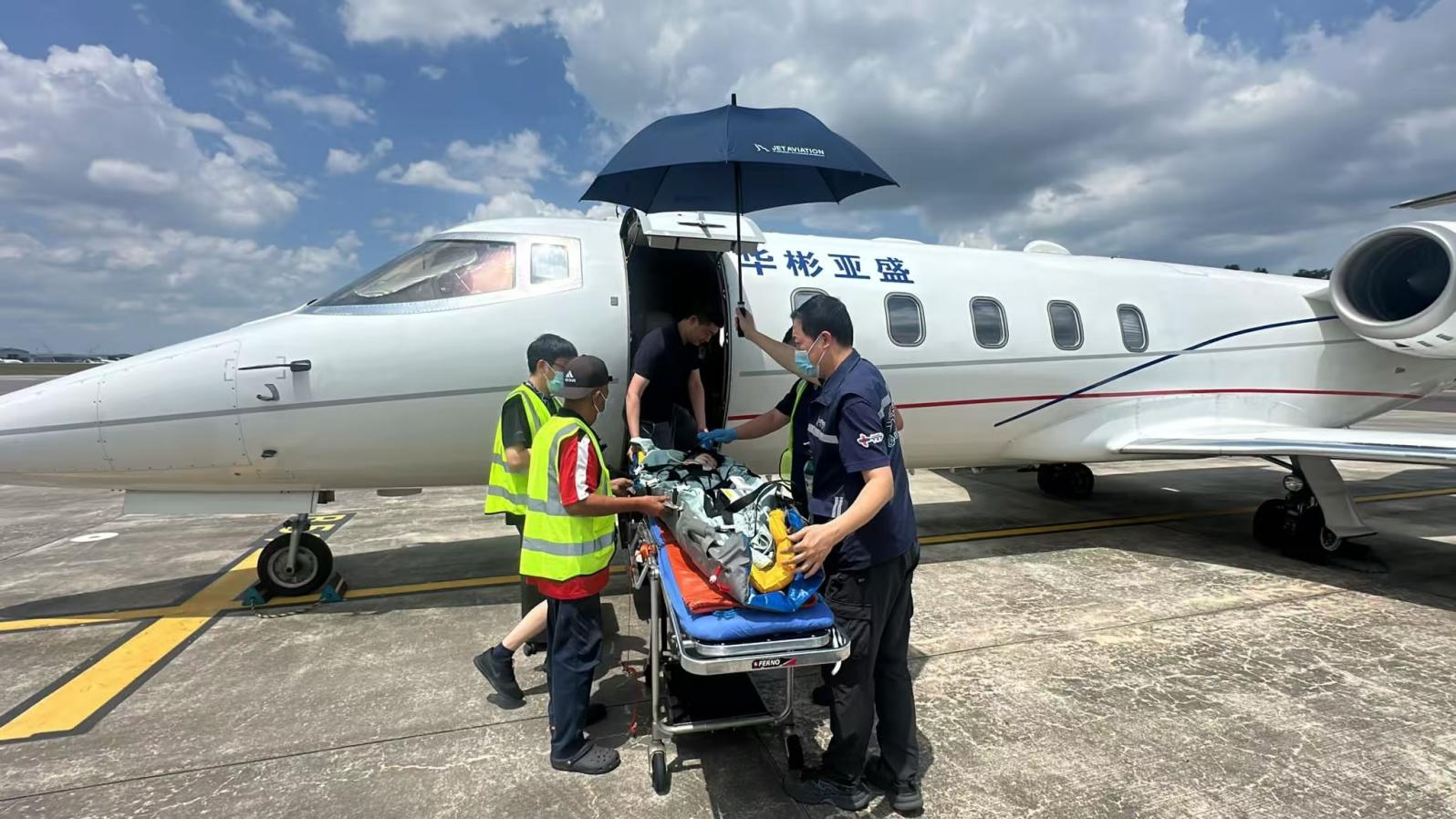
•For critical patients: Dedicated air ambulance (fully equipped ICU in the sky)
•For stable long-distance patients: Commercial flight with a medical escort (airline-approved stretcher or business class)
•For short cross-border hops (e.g., US-Mexico, Germany-Switzerland): Intensive care ground ambulance
Route planning also includes:
•The medical flight’s overflight and landing permissions
•Appropriate stops for fueling that allow for the medical cargo flight
•Connections for the ground ambulances at both the departure and arrival locations
TKP has a flexible network of routes to multiple airfields, including those with very little infrastructure. This provides both the ability and the agility to reach very remote and underserved areas. Their team watches the sky and plans routes not only for various trading concerns, but for any other barriers that may be presented with weather.
Phase 4: Quotation, Consent & Insurance Pre-Authorization
Prior to take off, all of the financial and legal hurdles must be cleared. A transparent provider will:
•Provide a quote that is fixed and includes the aircraft, the medical personnel, the ground transport, and the permits;
•Obtain the signed consent with the transfer of risk form;
•Confirm the pre-authorization of insurance, or provide a collateral guarantee.
Why this matters: A transport provider for medical emergencies will typically quote a price that appears to be all inclusive, but the true costs are rarely shown. TKP provides a complete cost estimate upfront — no surprises. Their team also handles insurance claim submissions as part of the follow-up service.
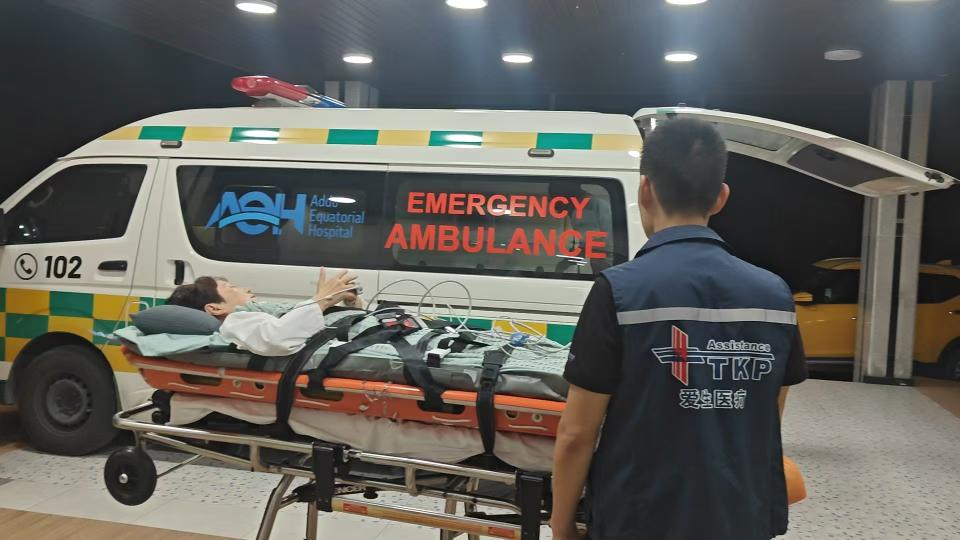
Phase 5: On–site Pickup – The Bedside Handover
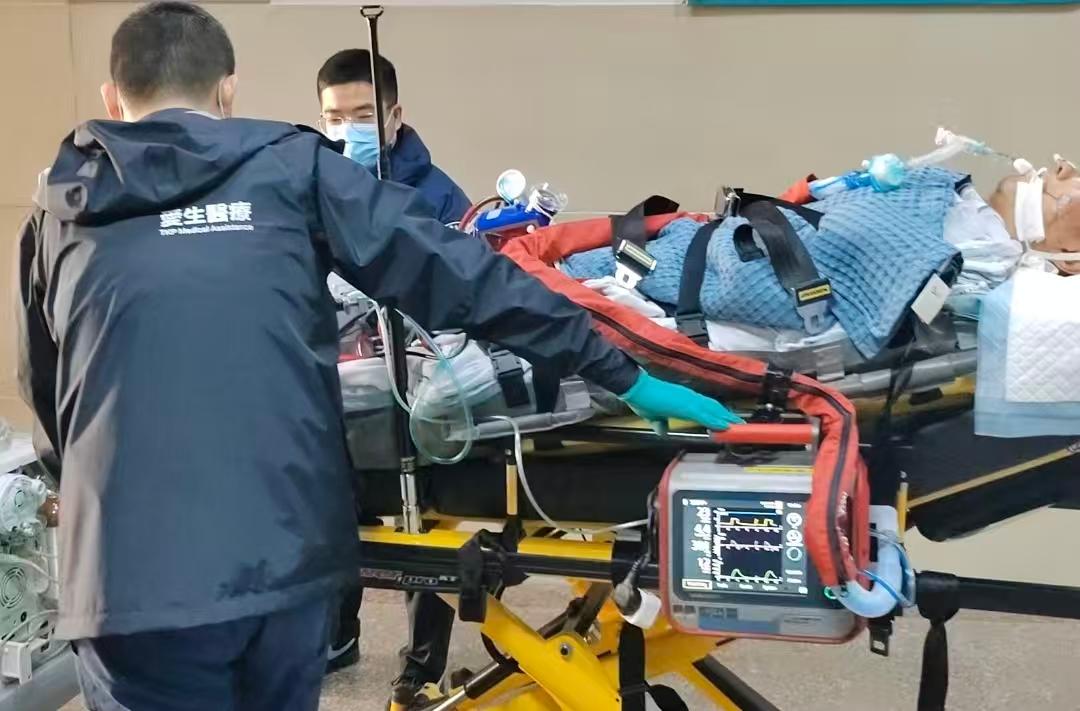
The transport team arrives at the sending hospital with a fully equipped medical kit, life-support systems, and medications. They conduct a formal bedside handover with the local physician, stabilise the patient for travel, and complete a safety checklist.
What happens during handover:
•Verify patient identity and consent
•Transfer monitoring leads and infusion pumps
•Secure airway, IV lines, and chest tubes for movement
•Document baseline vital signs and ventilator settings
TKP’s critical-care attendants and flight nurses are trained for this high-risk moment. They do not rush — every safety check is completed.
Phase 6: In–transit Care – Continuous Clinical Monitoring
During the journey, the patient is never left unattended. The onboard medical team continuously:
•Monitors ECG, SpO₂, ETCO₂, and invasive pressures
•Adjusts sedation, analgesia, and ventilator parameters
•Administers emergency medications if needed
•Communicates with ground coordination for any change in plan
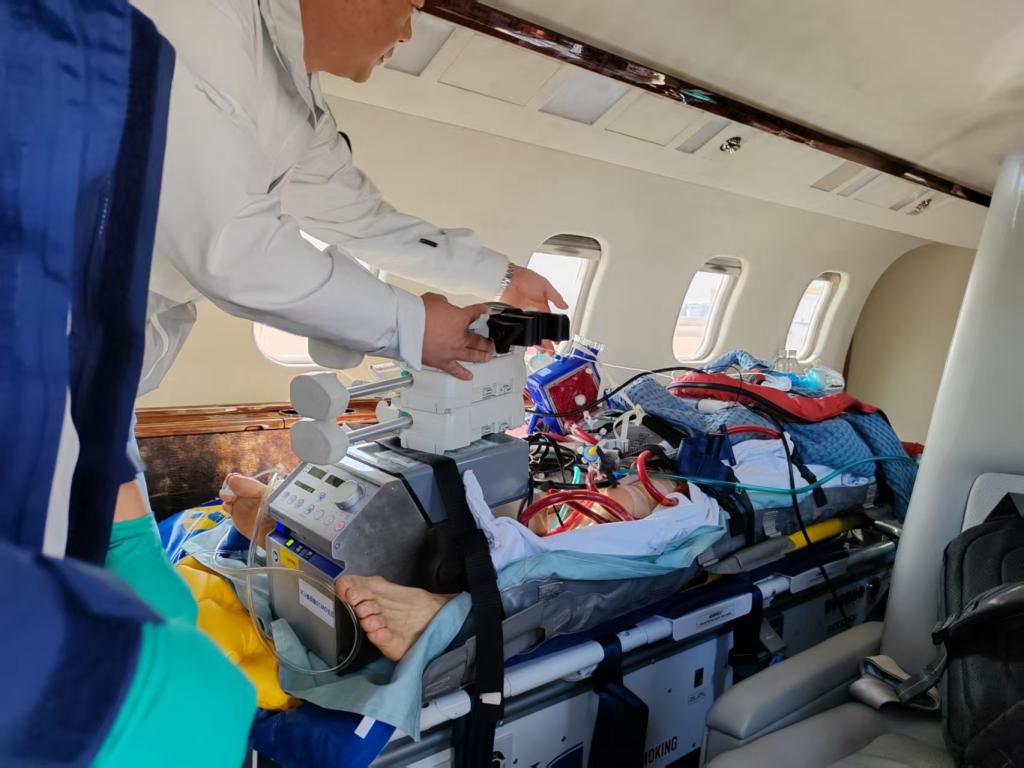
For a commercial flight escort, the nurse carries a portable emergency kit and oxygen. For an air ambulance, the cabin is a certified ICU with defibrillator, ventilator, suction, and multiple infusion pumps.
TKP’s teams provide real-time family updates through their coordination center — so loved ones know the patient’s status even from thousands of miles away.
Phase 7: Destination Handover – No Gaps in Care
Arrival does not end the service. The transport team brings the patient directly to the receiving facility (hospital, rehab center, or home) and conducts a formal handover:
•Present detailed transport medical report
•Hand over remaining medications and equipment
•Brief the receiving physician on events during transit
•Ensure all monitors and lines are re-established
This “bed-to-bed” promise means the family does not have to coordinate admissions or explain the patient’s history again.
Phase 8: Follow–up & Claims – Closing the Loop
After the patient is settled, professional providers do not disappear. They:
•Conduct a patient satisfaction and outcome follow-up
•Submit billing and insurance claims with all supporting documents
•Answer post-transfer questions (e.g., medical repatriation for further treatment)
TKP’s follow-up team handles the paperwork so you can focus on recovery.
Why Choose a Direct Provider Like TKP Medical Assistance?
Many companies claim to offer medical transport but are actually brokers who subcontract to third parties. This introduces delays, miscommunication, and liability gaps. TKP is different:
•Direct operation – No middleman. They own the clinical and logistics chain.
•24+ years of experience – With certified ACLS & BLS teams and zero major incidents.
•Global reach – From remote villages to leading hospitals worldwide.
•Cultural and linguistic sensitivity – English, Chinese, and other languages supported.
Your Next Step: How To Arrange Cross-Border Medical Transport With Confidence
When every minute counts, following the eight-phase framework above ensures nothing is missed. Whether you need an air ambulance for a critically ill relative or a medical escort for a stable patient, the key is to engage a provider who performs every step internally — from clinical review to bedside handover.
TKP Medical Assistance is ready 24/7. They do not just arrange transport; we deliver safety, dignity, and clinical excellence across borders. Contact their global coordination center to kick-start the process.
Frequently Asked Questions (FAQ)
1. How fast can an air ambulance be on standby?
As a large scale service provider, TKP Medical Assistance can deploy a fully equipped air ambulance within 6 – 12 hours for urgent cases and within 24 hours for complex overseas cases.
2. Is cross-border medical transport insured?
It is all dependent on your policy. Many international health plans and top-tier travel insurances (e.g., Allianz, GeoBlue, AXA) include medical evacuation. TKP’s team assists with insurance pre-authorization and claim submission to maximize your coverage.
3. Can a family member accompany the patient during transport?
Yes – in most air ambulances and commercial flight escorts, one family member 5. Is TKP Medical Assistance a broker or a direct provider?
TKP Medical Assistance is a direct provider, not a broker. The direct ownership of the medical personnel, coordination centers, and the logistical backbone empowers them to swiftly customize and offer integrated clinical services.
may be allowed to accompany the patient, subject to aircraft capacity and medical team approval. TKP coordinates this on a case-by-case basis.
4. What are the key papers needed for international patient transport?
The documents needed include a patient’s passport, medical records, consent forms, and properly issued visas. TKP shares a checklist with you on the first call.
5. Is TKP Medical Assistance a broker or a direct provider?
TKP Medical Assistance is certainly a direct provider. They directly operate clinical teams, coordination centers, and the logistics infrastructure which enables them to rapidly tailor and deliver smoothly integrated clinical services.
Submit Your Request
Recent Posts
Tags
- Air Ambulance
- Bedside To Bedside
- Cross Border Aid
- Emergency Evacuation
- Global Medical Rescue
- How can I ensure the patient's stability while in the air?
- How do I request an air medical transport?
- How is it different from an air ambulance
- how to activate emergency aircraft service
- how to request an air ambulance
- Is air medical transport safe
- Is international transport possible
- Medical Rescue
- Medical Transport
- Patient Repatriation
- Remote Rescue
- Seamless Coordination
- Telemedicine Support
- Tourists And Expats Medical Escort
- What are the benefits of a cross-border medical transfer
- What are the different types of transfers
- What are typical use cases
- What documents do I need to prepare for a transfer?
- What does high-speed rail patient transfer stands for
- What is air ambulance
- What is air medical transport?
- What is cross-border medical transfer
- What is emergency aircraft
- what is high-speed rail patient transfer
- What is medical charter flight
- what is neonatal ICU transfer
- What is patient air transfer
- What medical equipment is available on board the aircraft
- What situations shouldn't use air medical transport?
- What types of air ambulance are there?
- What types of air ambulance exist
- What's the difference between international and domestic transfers?
- what’s the difference between air medical transport and regular ambulance?
- When is emergency air transport necessary
- Which patients require air medical transport?
- who is included in the medical team
- who needs an air ambulance