


The True Cost of International Medical Air Transport: What You’re Really Paying For


When a medical emergency happens while traveling, obtaining help often is not the only question. The price tag likely comes to mind as well. Medical Air Transport is one of the most challenging and resource heavy services in the logistics of healthcare. One way to begin to understand the potential costs is to understand the true value the service provides.
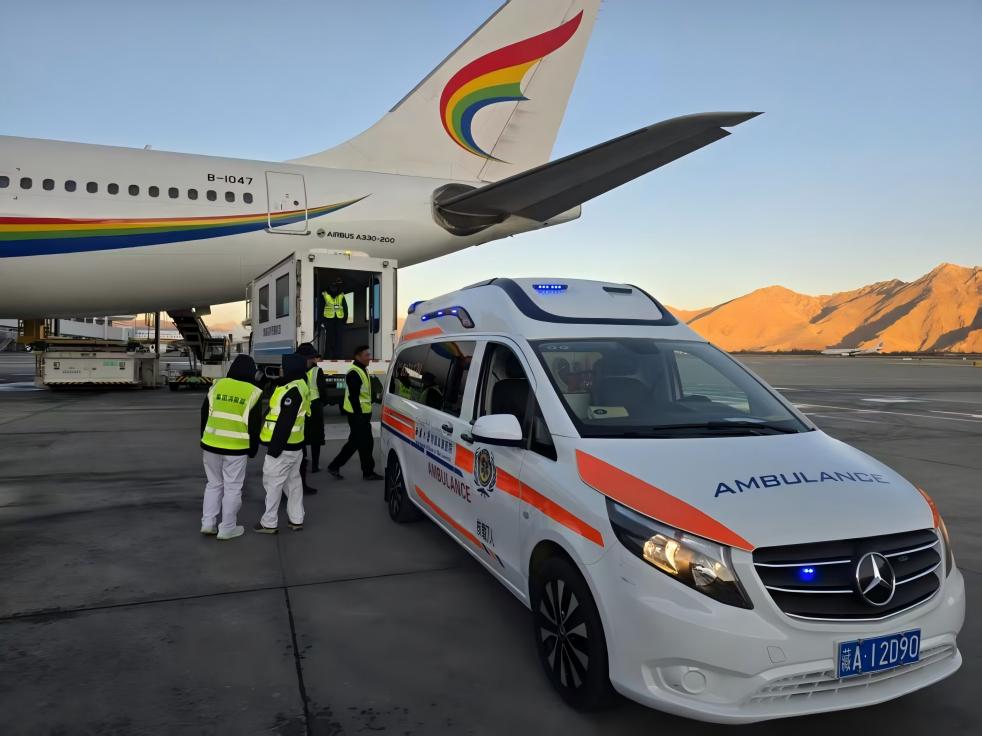
This article examines the extensive costs of medical evacuations, the cause of the price disparity, and the way services TKP Medical Assistance make this possible.
What Affects the Cost of International Medical Air Transport?
International Medical Air Transport is a complicated service that goes far beyond flying a plane. Each individual mission is a coordinated medical operation, and entails an assembled clinical crew, medical equipment, and the logistics and legal requirements to get it done. The value of this service entails the following:
•Costs of Operating a Plane: The costs of fuel, maintenance, and insurance as well as the costs of landing and renting space at an airport are just a few of the many costs that airplane operations require. This service is particularly expensive because of the long range, higher capacity aircraft, that are needed for international travel.
•Specialized Medical Personnel: In addition to the flight crew, this service requires a substantial workforce of highly trained medical personnel. The type of crew required is wholly dependent on the patient and the complexity of the medical need.
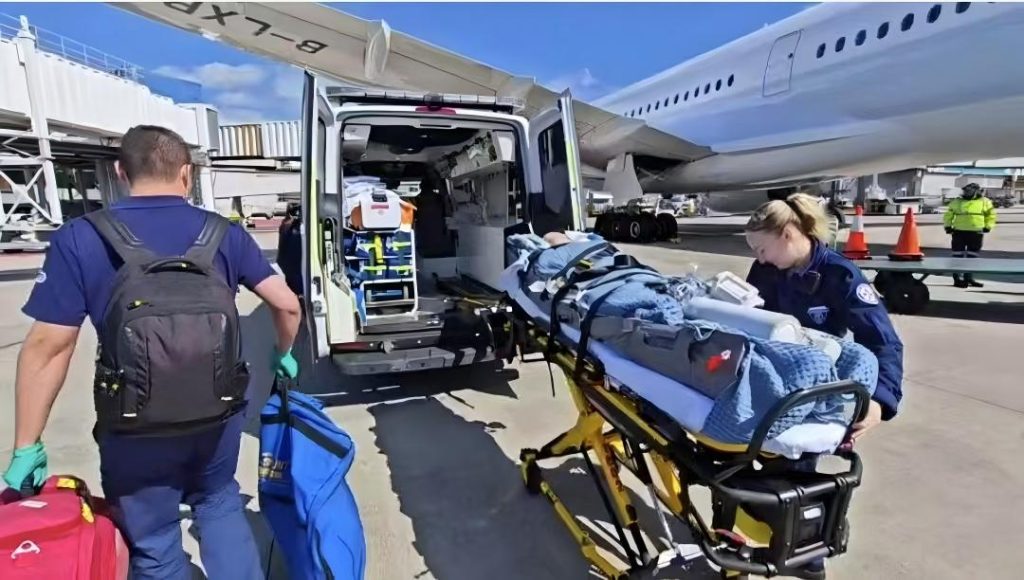
•Medical Equipment: The medical technology on an air ambulance is the equivalent of an entire ICU and includes all of the medical equipment required to stabilize a the patient. Required equipment is also maintained to be ready to be used at a moment’s notice.
•Integrating ground transportation: Medical flights generally incorporate ambulance transport as part of an integrated “bed-to-bed” service. For more challenging transfers, specialized ground vehicles are designed for more remote locations.
•Clearances and permits: For medical flights conducted internationally, flight clearances, diplomatic relations, and numerous foreign national civil aviation regulations must be addressed. As these processes are administrative in nature, they add more time and cost to an operation.
•24/7 service: As opposed to the regular commercial flight schedule, the medical evacuation service must be on standby for immediate use. Short-notice, night, and holiday flights are more costly due to the overtime pay for the crew and an increased logistical burden.
Three Faces of Medical Transport: Recognizing Choices
What is the main cost driver for International Medical Air Transport? The answer is the transport mode selected. Each method offers a different value proposition.
Dedicated Air Ambulance: Optimal Clinical Capability
•What this entails: A private aircraft is at the disposition of the medical team. The aircraft is stocked with ICU-level resources.
•Who this option is for: This transport method is necessary for patients in a critical condition that require constant monitoring either via lifeline support, which may be provided by an onboard medical team, or both. For example, this method is appropriate for patients that are on a ventilator as well as patients that are in a highly unstable condition that support different medicative drips.
•What is the value proposition: The Air Ambulance option offers maximum flexibility and routing control, while providing continuous medical care and the ability to transport patients that are not able to survive a scheduled flight.
Commercial Stretcher with Medical Escort: Affordable Medical Oversight
•What is this option: A dedicated stretcher is fitted on a scheduled international or domestic flight. Medical escorts travel with the patient.
•Who this option is for: This transport method is appropriate for patients that are in a stable condition that require a supine position, but that do not require ICU support.
•What’s the value: Cheaper than chartering a private Air Ambulance, this is also a medically supervised option.
Seated Medical Escort: The Best Value
•What it provides: This service employs a flight nurse or paramedic to manage medications, monitor vitals, and oversee transfers for patients that can sit throughout the flight.
•Who it is for: This option is generally for patients that are medically stable and cleared to fly that can include post surgery patients, patients recovering from a stroke, and patients with stable cardiac conditions.
•The value proposition: The most cost-effective choice for stable travelers, with costs limited to commercial airline tickets and the professional fees of the accompanying medical expert.
Why Costs Vary
International Medical Air Transport costs can range from relatively modest to extraordinarily high—and the difference reflects real operational and clinical factors:
•Distance and routing: Longer distances cost more. A short regional flight is far more economical than a long-haul repatriation from another continent. Additional costs apply for complex routing, airspace fees, or aircraft repositioning.
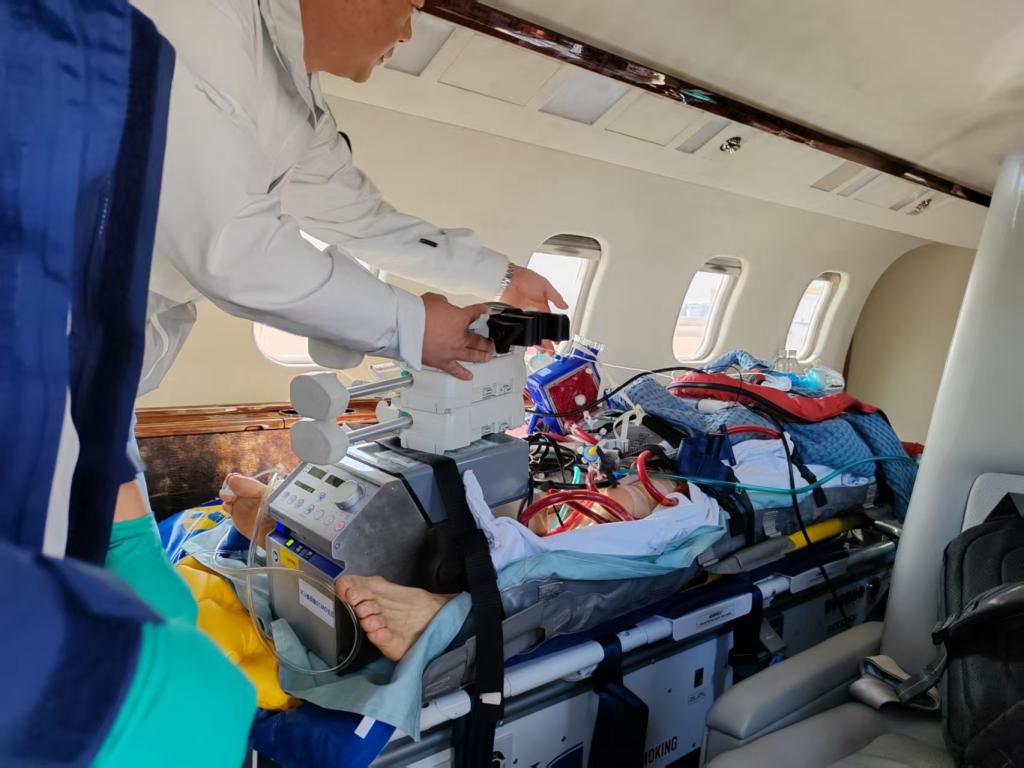
•Patient Acuity: The level of acuity for patients may require different sized medical teams and different medical transport equipment. For example, taking a patient on an ECMO (Extracorporeal Membrane Oxygenation) to the mainland, requires more transport resources than taking a regular patient.
•Destination Infrastructure: Some remote locations that have little existing infrastructure may require more expenditure to access. The costs for landing, permits or clearance to land and transport may vary widely from country to country.
•Urgency and timing: Flights that need to be arranged on a short notice or are outside a standard work schedule will incur greater costs because of the extra burden on workers.
•Staffing composition: The total costs will also be affected by the number of medical staff on board, and their level of expertise, for example, a doctor, a critical care nurse, or a paramedic.
The Role of Insurance: Turning Catastrophic Expense into Manageable Risk
A medical evacuation policy is a necessary safeguard. Without this cover, the cost of International Medical Air Transport can be a massive financial burden.
•The protection it provides: Medical evacuation insurance reimburses the costs that would be incurred for transporting you to the nearest medical facility that is able to offer you the required level and type of treatment. This is key for Expats and International travelers.
•The cost of being uninsured: A complex cross-border air ambulance can reach several hundred thousand dollars. This is an unaffordable cost for the majority of travelers.
•Peace of mind: Insurance is the guarantee that when the time comes, there will be professional and, most importantly, necessary, coordination and resources to meet your needs.
How TKP Medical Assistance Turns Costs into Value
With more than 10,000 successful missions, TKP Medical Assistance has more than two decades of experience demonstrating the value of professional provider services for International Medical Air Transport.
•Clinical excellence as standard: TKP Medical Assistance has comprehensive criteria for medical escorts. Every medical escort must have an extensive background attending to patients in emergency and in-flight situations. TKP Medical Assistance’ physicians and critical care nurses must have more than five years of experience working in frontline critical (ICU) or emergency (ER) situations.
•Seamless global coverage: TKP Medical Assistance’ network provides continuous services from the mainland of China to across Southeast Asia, Europe, and North America.
•Multilingual case coordination: TKP Medical Assistance carries out case coordination in Mandarin, English, Cantonese, Russian, and Spanish.
•One-stop case oversight: A TKP Medical Assistance medical coordinator is responsible for all aspects of the case from the pre-assessment to post transportation case arrival.
•Specialized capabilities: TKP Medical Assistance has the required clinical capabilities to undertake the most complex transport cases. These include transport cases of patients in an Extracorporeal Membrane Oxygenation (ECMO) support circuit, and transport cases of neonates and infants.
Proven track record: Reliably providing services with the clinical standard of teams certified in Advanced Cardiac Life Support (ACLS) and Basic Life Support (BLS) reflects the value TKP Medical Assistance provides to patients and their families.
Making Smart Choices for Medical Transport
Understanding how International Medical Air Transport sets their rates helps you make better choices.
•Be honest about the clinical need: The best option is not always the most expensive, and the least expensive is not always the worst. The transport option selected should be reflective of the clinical condition of the patient.
•Verify provider credentials: Look for an accredited provider who has a track record for certified cases and has full case management, clear pricing and an excellent case record.
•Be informed on your insurance before traveling: Be familiar with your insurance and think about supplemental insurance for the more remote areas with limited medical support services.
•Know the right things to ask: Inquire about team credentials, equipment, and planning. A good provider will answer and elaborate on these points.
Closing Words
International Medical Air Transport costs reflect the care and extensive resources needed to deliver safe care of the highest quality. It is not a transport cost, it is a clinical safety investment during a vulnerable time.
When properly executed, as seen with TKP Medical Assistance, this investment provides value through transport of high quality, seasoned, and specialized medical teams in the first class of medical transport.
As a traveler, expat, or a loved one preparing for the unexpected, it is your right to know what you are paying for in International Medical Air Transport.
Frequently Asked Questions
Q1. Why can’t I just use a normal airline and get a doctor?
Airlines have policies that forbids certain stretcher patients, patients who require supplemental oxygen, and those needing constant monitoring. Medical airline escorts are required for these individuals.
Q2. Is full payment guaranteed with medical evacuation insurance?
Not really. Coverage limits will depend on each policy. The limits on the evacuation benefit, along with repatriation coverage to the insured’s country of citizenship, should be verified.
Q3. Is it possible to organize International Medical Air Transport for a relative, who is in a remote area?
Yes, ground transport of patients from bedside to airport and later to a receiving hospital can be arranged by providers experienced in this sort of work.
Q4. What should I look for in a medical transport provider?
They should have staff with clinical certifications (at a minimum, staff trained in ICU/ER), show missions have been completed, be able to speak multiple languages, and have clear case management.
Q5. Is International Medical Air Transport just for emergencies?
No, it can also be for transports that are planned, like a transfer between hospitals, or medical repatriation after treatment. It can also be used for complex cases that require ECMO or neonatal transport.
Submit Your Request
Recent Posts


Tags
- Air Ambulance
- Bedside To Bedside
- Cross Border Aid
- Emergency Evacuation
- Global Medical Rescue
- How can I ensure the patient's stability while in the air?
- How do I request an air medical transport?
- How is it different from an air ambulance
- how to activate emergency aircraft service
- how to request an air ambulance
- Is air medical transport safe
- Is international transport possible
- Medical Rescue
- Medical Transport
- Patient Repatriation
- Remote Rescue
- Seamless Coordination
- Telemedicine Support
- Tourists And Expats Medical Escort
- What are the benefits of a cross-border medical transfer
- What are the different types of transfers
- What are typical use cases
- What documents do I need to prepare for a transfer?
- What does high-speed rail patient transfer stands for
- What is air ambulance
- What is air medical transport?
- What is cross-border medical transfer
- What is emergency aircraft
- what is high-speed rail patient transfer
- What is medical charter flight
- what is neonatal ICU transfer
- What is patient air transfer
- What medical equipment is available on board the aircraft
- What situations shouldn't use air medical transport?
- What types of air ambulance are there?
- What types of air ambulance exist
- What's the difference between international and domestic transfers?
- what’s the difference between air medical transport and regular ambulance?
- When is emergency air transport necessary
- Which patients require air medical transport?
- who is included in the medical team
- who needs an air ambulance