


The Lifeline in the Cabin – What Equipment Does an Air Ambulance for Critical Care Carry?


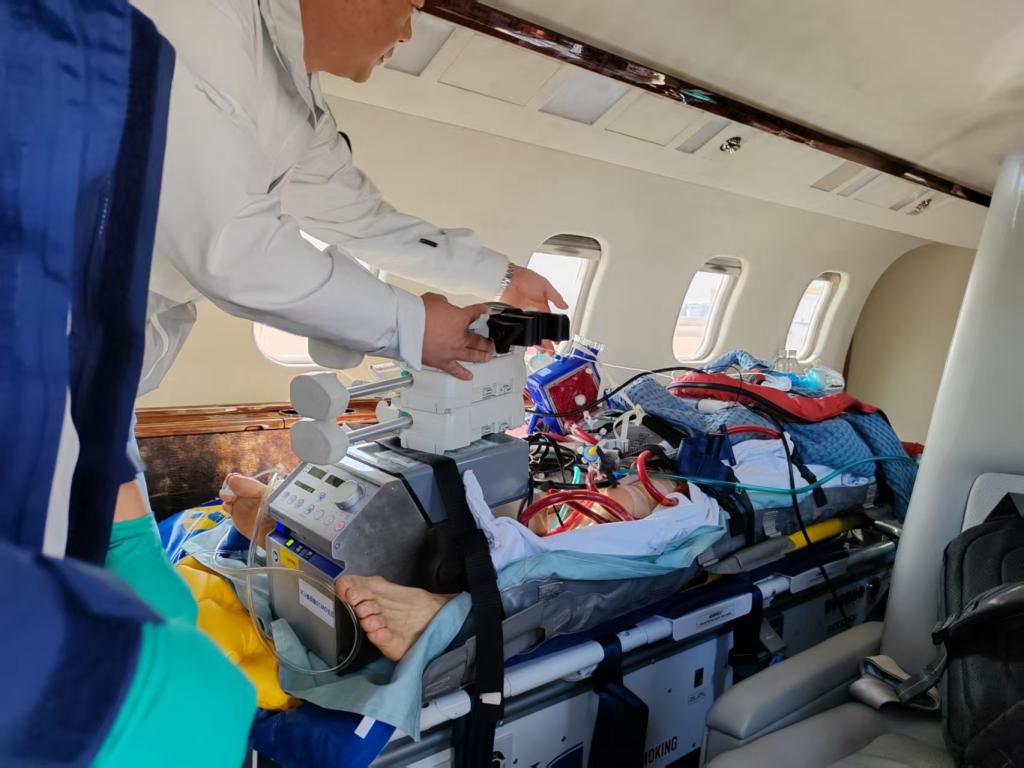
When a patient is too unstable for commercial flight and too far from the right hospital, the Air Ambulance for Critical Care becomes the only bridge between life and the definitive treatment they urgently need. These aircraft are not simply planes with a stretcher inside—they are fully functional flying intensive care units, engineered to deliver hospital-grade critical care at 30,000 feet. Every item of on board equipment is chosen because it is aviation-certified and configured to withstand the unique physiological and environmental conditions brought about by flight.
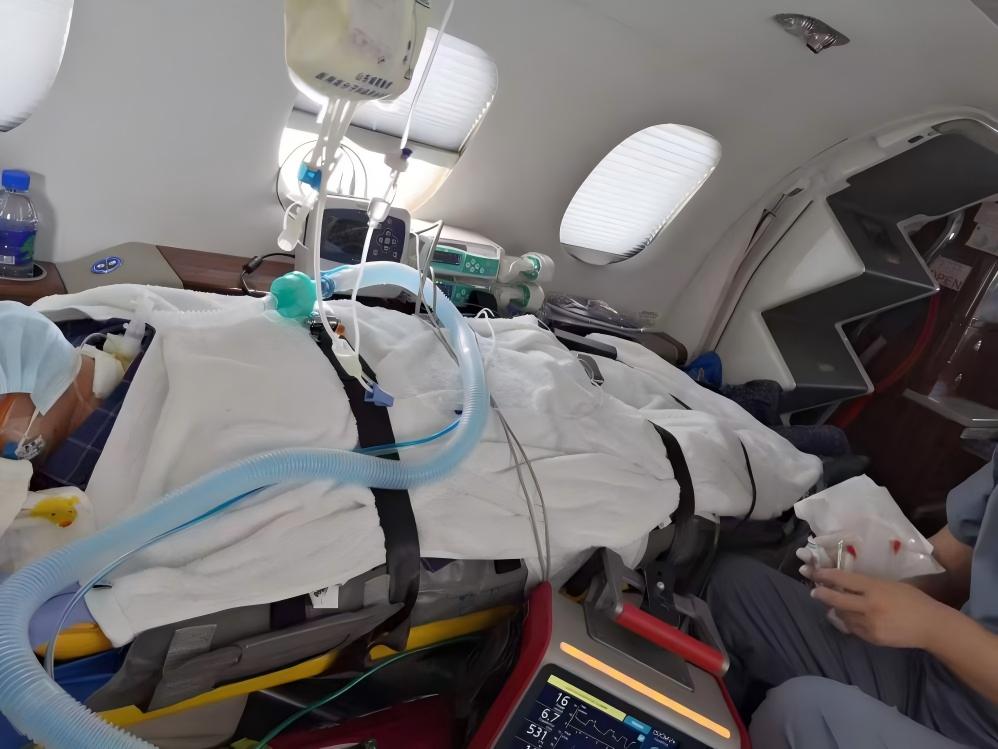
This article will show you a modern day critical care air ambulance and how its medical technology helps keep a patient stable during transport from one medical facility to another.
1. The Central Nervous System – Multiparameter Patient Monitors
At the heart of every Air Ambulance for Critical Care mission is the patient monitor—the device that gives the medical team a continuous, real-time picture of the patient’s physiological status.
•Continuous multi-parameter tracking: These monitors simultaneously display ECG, heart rate, non-invasive blood pressure (NIBP), invasive blood pressure (IBP), oxygen saturation (SpO₂), respiratory rate, and temperature.
•End-tidal CO₂(caphnography) monitoring: This is crucial for ventilated patients, as it provides real-time confirmation of both the adequacy of ventilation and the correct placement of the airway.
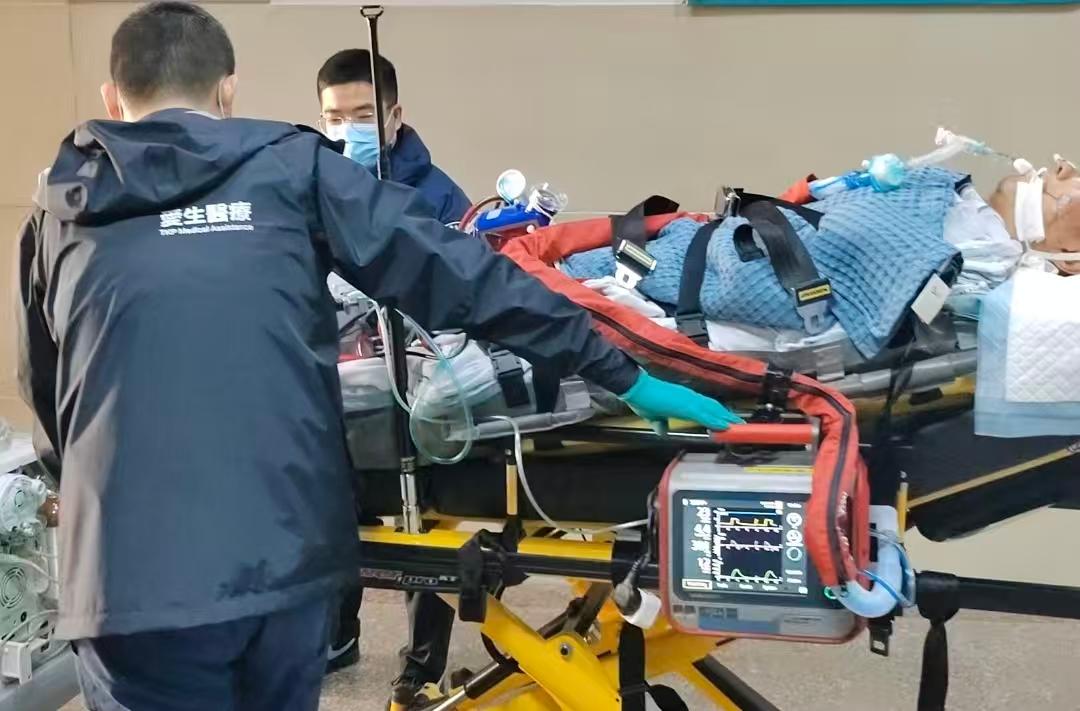
•Zoll X-Series defibrillator-monitor: The Zoll X-Series integrates multiple forms of advanced patient monitoring, defibrillation, and pacing within a single rugged 5.3 kg unit. The Zoll X-Series is excellent for the space-restricted environment of the aircraft cabin.
•Aviation-Grade Defibrillator and Monitor: All patient monitoring equipment must maintain precision and accuracy of measurements during the flight despite the effects of turbulence, pressure changes, and vibration.
2. The Breath of Life – Transport Ventilators and Oxygen Systems
For patients who cannot breathe independently, the ventilator is the single most critical device on board. Modern Air Ambulance for Critical Care operations carry transport ventilators specifically designed for the aeromedical environment.
•Compact ICU-grade performance: Ventilators such as the HAMILTON-T1 combine the full functionality of an ICU ventilator with the compactness and ruggedness required for transport—capable of serving adult, paediatric, and neonatal patients alike.
•Altitude-adaptive ventilation: The Dräger Oxylog 2000 provides multiple ventilation modes including CMV, SIMV, CPAP, and a CPR-mode for delivering consistent tidal volumes at cabin altitudes up to 15,000 feet.
•Independent oxygen and power supply: Most transport ventilators are self-sufficient compared to other aircraft systems, thanks to integrated turbines and supporting oxygen cylinders which provide uninterrupted ventilation even with fluctuations in aircraft power.
•Redundant oxygen reserves: In the critical care flight environment, oxygen is carried in separate containers having flow rates determined by the mission.
3. Precision Delivery – Infusion Pumps and IV Systems
Critically ill patients require the uninterrupted transfer of continuously administered medications like vasopressors, sedatives, analgesics, or antiarrhythmics.
•Modular multi-line infusion systems: BBraun Perfusor Compact offers a unique mode that allows the clinician to pre-set the infusion rate and is equipped with a braking system for reliable infusion, even in adverse conditions.
•Multiple simultaneous infusions: The patient transport unit is equipped with a minimum of two infusion pumps to allow delivery through different IV lines.
•Syringe pump compatibility: Infusion pumps are paired with syringe pumps to facilitate, and deliver, ultra-precise medication dosages.
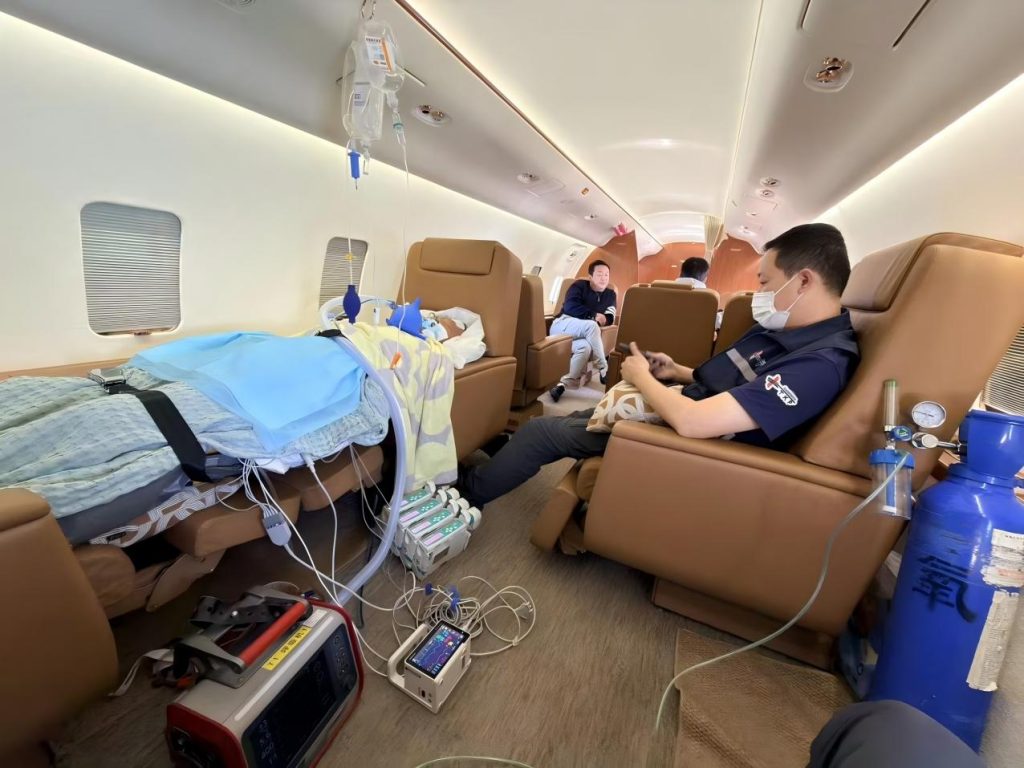
4. The Safety Net – Defibrillators and Resuscitation Equipment
Air Ambulance for Critical Care must be equipped to respond to the most time critical calls, including cardiac emergencies.
•Advanced defibrillation with CPR feedback: Zoll X-Series and Corpuls3 provide biphasic defibrillation, external pacing and real time feedback on Chest Compression CPR.
•Mechanical CPR support: The LUCAS device performs excellent CPR in spite of the barrier of fatigue presented by human workers. This characteristic is specifically useful for the long transports that are frequently required for out-of-hospital cardiac arrest cases.
•Complete resuscitation kit: Resuscitation kits at the BLS and ACLS levels containing all of the required materials for advanced airway management, intraosseous access, and emergency drugs are all definitely close at hand.
5. Beyond the Basics – Blood Gas Analysis and Point-of-Care Testing
In-flight clinical decisions must be made quickly and accurately. Portable diagnostic tools bring the lab to the cabin.
•Hand-held blood gas analyzers: The Abbott i-STAT offers the unprecedented capability of measuring sodium, potassium, and haemoglobin, and determining pH, PCO₂ and PO₂ to facilitate the immediate adjustment of therapeutic interventions.
•Non-invasive haemoglobin monitoring: Masimo Pronto-7 device offers the opportunity of measuring total haemoglobin in a non-invasive and painless manner and offers measurement of blood oxygen saturation in addition to the measurement of pulse rate which eliminates the requirement and need of drawing blood in a non-invasive manner.
•Portable ultrasound: Ultralight (<2 kg) portable ultrasound can be used to assess cabin airspace for internal bleeding and cardiac ultrasound during transport.
6. Advanced Life Support – ECMO, IABP, and Mechanical Circulatory Support
The highest tier of Air Ambulance for Critical Care capability involves transporting patients dependent on mechanical circulatory or respiratory support—some of the most fragile patients in healthcare.
•ECMO (Extracorporeal Membrane Oxygenation): This heart-lung bypass technology provides temporary cardiac and respiratory support for patients with severe failure. TKP Medical Assistance provides the complete process of ECMO transport, including international flights. The ECMO transport system, Maquet Cardiohelp, was designed to be transportable and convenient for travel.
•IABP (Intra-Aortic Balloon Pump): The IABP system is a minimally invasive pump and a mechanical device that gives the heart a rest and helps move blood to the aorta and out of the heart. It provides the needed hemodynamic support to a patient who is recovering from a heart attack.
•Full-system integration: TKP’s critical care teams switch seamlessly between ECMO, IABP, and a wide range of other advanced medical equipment. TKP ensures complete transport support of critical care from the moment the patient is collected to the moment the patient is delivered to the destination.
7. Specialized Populations – Neonatal and Pediatric Transport
Transport of children who are critically ill or of neonates who were born prematurely requires specialized equipment and personnel.
•Transport incubators: The BabyPod II and the TR203 Transport Incubator are examples of portable, lightweight, shockproof transport incubators that need no additional energy source and help maintain a controlled environment for the infant.
•Pediatric-specific ventilators and monitors: Specialized pediatric and neonatal ventilation and monitoring protocols are used.
•Specialist team composition: TKP Medical Assistance staffs each neonatal mission with paediatric specialists and tailored equipment, and has been trusted by leading institutions such as Guangzhou Women and Children’s Medical Centre for repeated cross-border neonatal transfers.
8. Aviation-Certified Design – Why Equipment Must Be Flight-Ready
Not every hospital device can be used in an aircraft. The unique conditions of flight—cabin pressure changes, vibration, noise, limited space, and variable power supply—demand equipment that is specifically designed and certified for aeromedical use.
•FAA and aviation certification: All medical equipment on a professional Air Ambulance for Critical Care must meet stringent aviation standards. TKP Medical Assistance makes certain aviation-certified equipment is planned and manufactured for actual flight situations as opposed to being modified for the purpose at the last minute.
•Self-contained power and oxygen: Our transport systems utilize power supply units (PSUs) and oxygen cylinders. Our systems provide up to six hours of autonomy irrespective of aircraft supply.
•Secure mounting and patient safety: All devices including, but not limited to: Monitors, Infusion Pumps, Incubators, are safely mounted to the transport system to absorb shock caused by turbulence and extreme maneuvers.
TKP Medical Assistance: Your Trusted Partner in Cross-Border Medical Evacuation
Behind every piece of equipment is a team trained to use it. TKP Medical Assistance has completed over 10,000 missions since its founding in 2001, including air ambulance, commercial stretcher, and high-speed rail transfers. Every mission is staffed with ICU/ER-trained physicians and nurses, and equipped with portable ALS/ACLS systems, transport-ready ICU monitors, oxygen supply, ventilators, and—when required—ECMO and IABP support.
Headquartered in Shenzhen with six branch offices across China and trusted partners in Hong Kong, Southeast Asia, and Europe, TKP provides 24/7 rapid response and seamless continuity of care across borders.
From pre-assessment to bedside-to-bedside delivery, every case follows a closed-loop model led by a dedicated medical coordinator—ensuring that the lifeline in the cabin never fails.
Contact TKP Medical Assistance at info@tkpma.cn to discuss a personalised transfer plan.
Frequently Asked Questions (FAQ)
Q1: What is an Air Ambulance for Critical Care?
A: This is a transport aircraft that has been engineered to become a flying ICU, outfitted with advanced medical equipment, including monitors, ventilators, pumps, infusion systems, and other myriad life-support devices designed to transport critically injured and stabilized patients across distance between hospitals.
Q2: What type of patients would require this level of air transport?
A: Any patient that is requiring the use of a ventilator, a continuous infusion of vasoactive support, is on ECMO, IABP, etc., or patients that after trauma or a cardiac event, respiratory failure, needs to receive specialized care that is not available locally.
Q3: Is the onboard equipment comparable to that of a hospital ICU?
A: While it may not be exactly the same as what a hospital may offer, the air transport unit is able to deliver comparable clinical capability. All devices, however, are aviation certified, compact, shock resistant, and designed to operate under frequent and rapid changes and limitations of an aviation environment.
Q4: How does TKP Medical Assistance make sure every device is operational during flight?
A: TKP deploys only aviation certified equipment with backup power and oxygen systems, and performs thorough pre-flight inspections, and each mission is assigned to ICU staff who are accustomed to operating the systems.
Q5: Can a patient on ECMO or IABP be transported internationally by air?
A: Yes, TKP assures the uninterrupted operation of all associated life support systems, including IABP, ventilators, ECMO, etc., for the entire duration of international transport, long haul or otherwise.
Submit Your Request
Recent Posts
Tags
- Air Ambulance
- Bedside To Bedside
- Cross Border Aid
- Emergency Evacuation
- Global Medical Rescue
- How can I ensure the patient's stability while in the air?
- How do I request an air medical transport?
- How is it different from an air ambulance
- how to activate emergency aircraft service
- how to request an air ambulance
- Is air medical transport safe
- Is international transport possible
- Medical Rescue
- Medical Transport
- Patient Repatriation
- Remote Rescue
- Seamless Coordination
- Telemedicine Support
- Tourists And Expats Medical Escort
- What are the benefits of a cross-border medical transfer
- What are the different types of transfers
- What are typical use cases
- What documents do I need to prepare for a transfer?
- What does high-speed rail patient transfer stands for
- What is air ambulance
- What is air medical transport?
- What is cross-border medical transfer
- What is emergency aircraft
- what is high-speed rail patient transfer
- What is medical charter flight
- what is neonatal ICU transfer
- What is patient air transfer
- What medical equipment is available on board the aircraft
- What situations shouldn't use air medical transport?
- What types of air ambulance are there?
- What types of air ambulance exist
- What's the difference between international and domestic transfers?
- what’s the difference between air medical transport and regular ambulance?
- When is emergency air transport necessary
- Which patients require air medical transport?
- who is included in the medical team
- who needs an air ambulance