


When Your Loved One Needs a Medical Patient Transfer: Family Tips


Hearing that your family member needs to be moved to another department, another hospital, or even another country can feel overwhelming. A Medical Patient Transfer is far more than a simple ride—it is a carefully orchestrated clinical process that carries real risks alongside real benefits. Research shows that nearly all hospitalized patients experience at least one intrahospital transfer during their stay, yet up to 70% of transports involve some form of adverse event—from changes in heart rate and blood pressure to oxygen desaturation and arrhythmias. In some studies, the incidence of adverse events during or within 24 hours of transport approaches 80%.
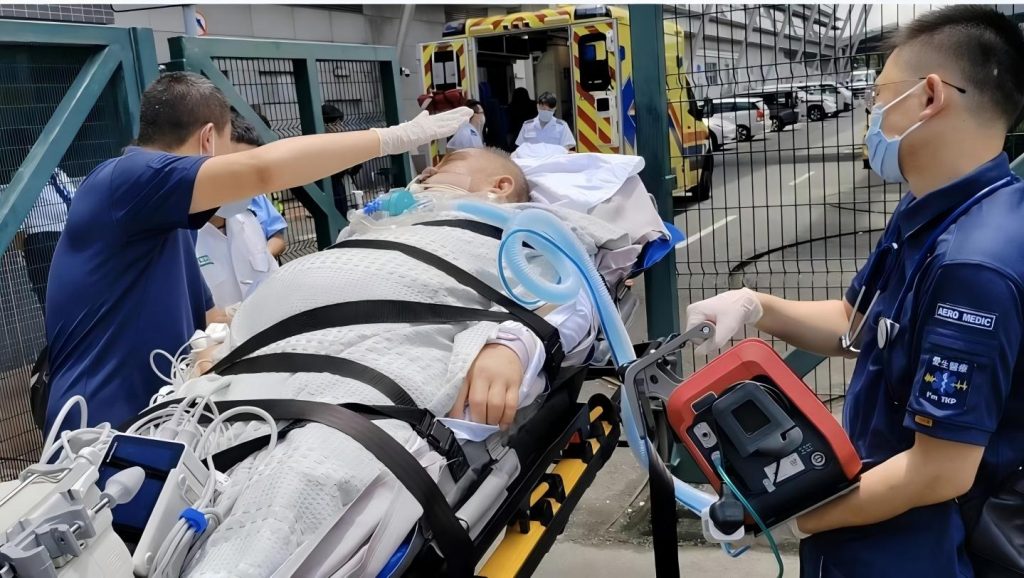
Gaining insight into the sequence of events associated with a Medical Patient Transfer will help you to better advocate for your family members. This guide details each step in a patient transfer process in order for you to be better prepared to offer assistance and know what to expect.
What is a Medical Patient Transfer?
A Medical Patient Transfer is the movement of a patient from one medical care location to another, where medical supervision is still directing the care. Medical Patient Transfers can be categorized into three primary types.
• Transferred within the Same Hospital: The patient is moved to a different department or unit within the same hospital.
• Transfer between hospitals: Patients are moved to a different hospital because the next hospital has a particular medical specialty that the current hospital lacks.
• Cross-border or international transfer: Moving a patient across regions or countries, usually to provide the patient with medical care that is not available nearby.
Gaps in patient care must be avoided in every Medical Patient Transfer, and that is the primary objective of all types of patient transfers.
Why Transfers Carry Risk—and What That Means for Your Family
Risks are particularly concerning for patients who are transferred from an ICU. The adverse outcomes of a Medical Patient Transfer are typically classified as:
• Cardiovascular events: The most common reported outcomes include hypertension, hypotension, arrhythmia, and cardiac arrest.
• Respiratory events: This may include airway compromise and decreased saturation levels with the presence of hypercapnia or hypocapnia, particularly with patients on a ventilator.
• Neurological events: This includes the well-documented risks of increased pressure in the cranial cavity, agitation, and altered levels of consciousness.
• Event related to equipment: more than a third of adverse events in some studies can be attributed to faulty monitors, lines or tubes dislodged due to contact or broken oxygen cylinders.
We do not wish to scare you with statistics; we wish to prepare you. With the proper equipment and a sufficiently trained team to communicate clearly, the risks of adverse events is greatly minimized when a Medical Patient Transfer is carried out.
Before the Transfer: What You Can Do
Preparation is the cornerstone of a safe Medical Patient Transfer. Here is what you, as a family member, can do before the journey begins:
• Understand the “why.” Ask the treating physician to explain the medical necessity of the transfer. What specific benefit will the receiving facility provide? Is the benefit worth the risk of moving the patient?
• Give informed consent. When a patient cannot sign a transfer consent form, someone else must do it on their behalf. It is important to understand the potential risks and benefits involved as well as any alternatives prior to giving consent.
• It is important to gather necessary documentation and avoid delays and miscommunications. To do this, bring a list of current medications and allergies, as well as ID and insurance cards, and any prior hospital documentation.
• Transfers that take a longer time will require different items to provide comfort. These may include personal items, warm and comfortable clothing, and a yhermos along with some wipes and a pillow.
• You should verify that the transfer to the new hospital is accepted, that the reason for the transfer is known, and that a bed is available, along with the surgical and ICU staff.
Keeping calm will also help those around you to be calm. Anxiety is a learned behavior. explain the procedure to help reduce their anxiety, and reassure them that the journey will be monitored by medical professionals.
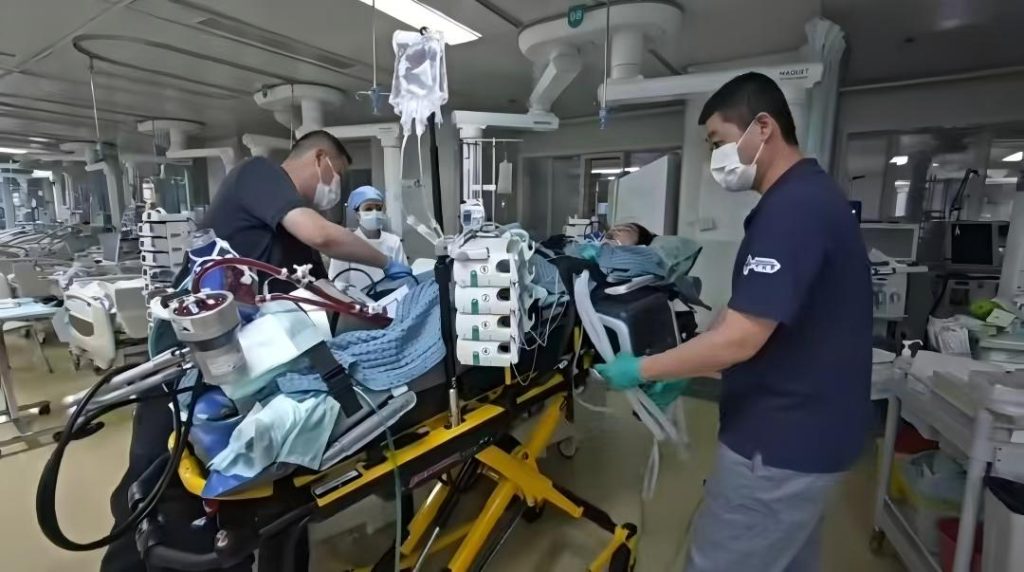
What to Expect During a Transfer
There will be a dedicated staff for each transport and the procedures will include:
• Ongoing monitoring. For the duration of the transport the staff will monitor vitals, level of consciousness, and the various parameters of transport that may be invasive for a critically ill patient.
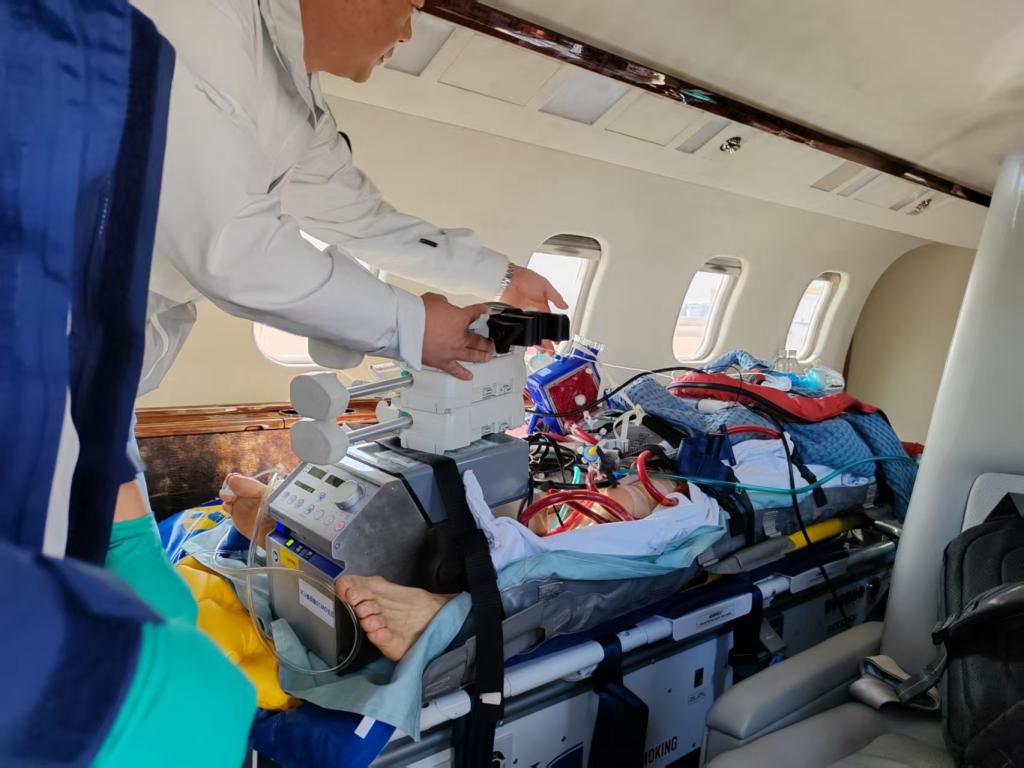
• Support for air and breathing. For patients that have been intubated or have a tracheostomy, the staff will ensure that the airway is controlled and the transport staff will have a portable suction along with a ventilator.
• Support for circulation. The IV line will be maintained and medications will be given, if necessary, during the transport.
• Preparedness for emergencies. The group is equipped with emergency drugs and supplies for the management of acute complications such as seizures, arrhythmias and respiratory distress.
What you can do as a family member. If you travel with the patient, your main task is to stay calm and to listen and follow instructions given by the medical team. Do not follow the ambulance. It will delay your arrival and is an unsafe thing to do. Instead, make your way to the receiving hospital safely and allow the clinical team to focus on their work.
After Arrival: The Handoff and Beyond
The Medical Patient Transfer does not end when the ambulance stops. A proper clinical handoff is critical to patient safety:
• Verbal and written handoff. The transport team will share with the receiving team both verbally and in writing the condition of the patient and the treatments done during transport, as well as any changes or occurrences that happened along the way.
• Family update. A clinician will usually provide you with an update on your loved one’s condition and the new plan, and will answer any questions you may have, after the handoff.
• Settle in. Provide the receiving team with any paperwork you brought, verify your contact info, and know how to contact the clinical team.
Additional information when the Transfer Crosses Borders
International Medical Patient Transfer can be complicated because everything has to come into place. A visa has to be issued, the records have to be medically documented and translated, insurance has to be arranged prior to the journey, and the transport has to be done in accordance with the regulations of flight. That is why experienced service providers are particularly important.
About TKP Medical Assistance
For families wanting to arrange a Medical Patient Transfer across borders, TKP Medical Assistance, a provider based in Shenzhen, China, offers clinically guided services along with 24+ years experience and over 10,000 missions. Their staff includes physicians and critical care transport nurses with over 5 years of experience moving patients from ICU and ER.
TKP Medical Assistance offers services such as the transport of patients who require Extracorporeal Membrane Oxygenation and neonatal transport in an incubator, along with all of the required documents and other logistics such as transport and scheduling. Families can reach TKP Medical Assistance at info@tkpma.cn to plan their transfer or receive a consultation for their case.
FAQs
Q1: What is a Medical Patient Transfer?
It is the movement of a patient from one care setting to another, be it one part of a hospital to another, from one hospital to another, or even from one country to another, and it is done with the utmost care to supervise the patient medically and to monitor the patient medically throughout the transfer.
Q2: Can family members stay with the patient during the transfer?
Usually, but not always. It depends on the patient’s condition, the mode of transfer ( ambulance vs air ambulance) and the transfer provider’s guidelines. Always check with the transport team prior to departure.
Q3: What do I need to take with me to prepare for the transfer of my loved one?
You should take important personal papers and cards (insurance, ID, medication/allergy information), a change of clothes, a warm blanket, and toiletries, but keep it to a small, manageable pack to avoid clutter in the transport vehicle.
Q4: Is there a consent form I need to sign for the transfer?
Yes there is. If the patient is unable to provide consent, a family member or legally appointed guardian will need to provide consent by signing the consent for transfer after the risks, benefits and alternatives are discussed.
Q5: How is the patient monitored during the journey?
Transport teams use portable ICU-affiliated monitors to track heart rate, blood pressure, oxygen saturation, respiratory rate and in some cases, transport monitors will be used to track invasive lines for trans critically ill patients.
Submit Your Request
Recent Posts
Tags
- Air Ambulance
- Bedside To Bedside
- Cross Border Aid
- Emergency Evacuation
- Global Medical Rescue
- How can I ensure the patient's stability while in the air?
- How do I request an air medical transport?
- How is it different from an air ambulance
- how to activate emergency aircraft service
- how to request an air ambulance
- Is air medical transport safe
- Is international transport possible
- Medical Rescue
- Medical Transport
- Patient Repatriation
- Remote Rescue
- Seamless Coordination
- Telemedicine Support
- Tourists And Expats Medical Escort
- What are the benefits of a cross-border medical transfer
- What are the different types of transfers
- What are typical use cases
- What documents do I need to prepare for a transfer?
- What does high-speed rail patient transfer stands for
- What is air ambulance
- What is air medical transport?
- What is cross-border medical transfer
- What is emergency aircraft
- what is high-speed rail patient transfer
- What is medical charter flight
- what is neonatal ICU transfer
- What is patient air transfer
- What medical equipment is available on board the aircraft
- What situations shouldn't use air medical transport?
- What types of air ambulance are there?
- What types of air ambulance exist
- What's the difference between international and domestic transfers?
- what’s the difference between air medical transport and regular ambulance?
- When is emergency air transport necessary
- Which patients require air medical transport?
- who is included in the medical team
- who needs an air ambulance