


Travel Insurance Air Medical Rescue vs. Regular Health Insurance: Corporation Guide


When your company sends employees overseas—whether for short-term assignments, long-term expatriation, or emergency response—you assume a duty of care. But here is a question that too many risk managers overlook: If a staff member falls seriously ill in a foreign country, will your corporate health insurance physically bring them home?

The answer, in most cases, is a firm no. This is where Travel Insurance Air Medical Rescue becomes not just a benefit, but a strategic corporate necessity. Companies need to understand how typical corporate group health insurance and tailored medical evacuation insurance differ to better protect their employees and their bottom line.
What is Covered by Standard Corporate Health Insurance?
Most corporate groups provide their employees with access to corporate group medical plans. These plans provide cover for routine care and emergency care network region. Group plans cover hospital admissions and surgeries, specialist consultations, and prescription drugs.
Important limitations when it comes to global operations:
•Services are geographically restricted: treatment that is rendered outside of the network region of the policy is likely to be disallowed, or if reimbursed, will be done at a significantly reduced cost.
•The focus is entirely on payment for medical services—not on logistics or transportation.
•Even international plans with worldwide coverage typically do not include air ambulance, medical repatriation, or cross-border transfer coordination.
•Claims processing assumes local providers and familiar billing systems; overseas invoices create administrative nightmares.
In short: your group health insurance helps pay hospital bills where the employee is. It does not help you move that employee to a better hospital, nor does it bring them back to your home country for continued care and family support.
What Travel Insurance Air Medical Rescue Adds for Your Workforce
Travel insurance for business travellers—or specialised riders attached to corporate policies—includes a critical component: emergency medical evacuation and repatriation. This is the operational lifeline that transforms a paper promise into a real-world rescue.
What this coverage actually delivers for your organisation:
•Global transport coordination: Arranges and funds air ambulances, medically equipped commercial flights, or ground ambulances to move the patient from the point of illness to the nearest adequate facility—or all the way home.
•24/7 emergency activation: A dedicated assistance centre responds within minutes, assesses the medical situation, and deploys resources without waiting for business hours.
•Bed-to-bed service: The provider manages every handover—from the foreign hospital bed, to the aircraft, to the receiving institution in the home country.
•Repatriation of mortal remains: In the worst case, the policy covers the dignified return of deceased employees, supporting both legal compliance and family care.
Unlike regular insurance, Travel Insurance Air Medical Rescue is not about paying doctors—it is about physically moving your people to safety when local care fails or when the employee’s condition demands a higher level of treatment.
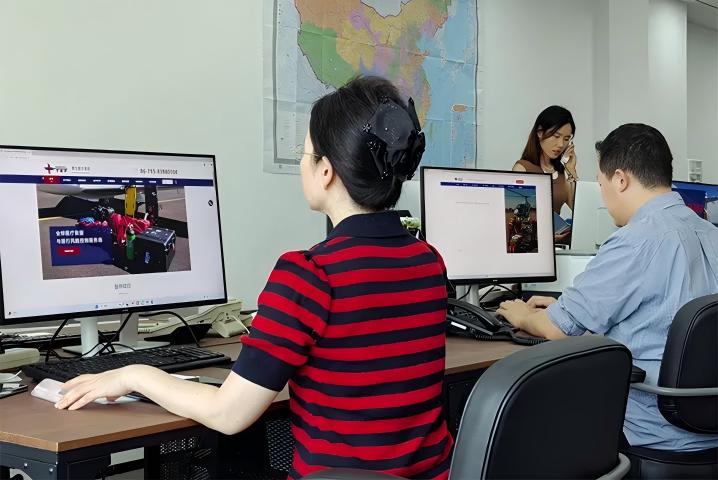
The Critical Difference: Payment vs. Physical Movement
For corporate risk and HR leaders, this distinction is non-negotiable:
| Aspect | Regular Corporate Health Insurance | Travel Insurance Air Medical Rescue |
| Primary function | Reimburses medical treatment costs | Arranges and funds emergency medical transport |
| Geographic scope | Domestic or limited network | Worldwide, including remote locations |
| What it covers | Hospital stays, surgeries, medicines | Air ambulance, medical escorts, ground transfers, repatriation |
| Who coordinates | Employee or local HR | Professional assistance company with global infrastructure |
| Cost predictability | Premiums fixed, but out-of-pocket abroad may be high | Relatively low premium, covers potentially catastrophic transport costs |
| Duty of care | Partial—helps with bills | Full—ensures employee is moved to safety and home |
Why Your Company Cannot Afford to Rely on Regular Insurance Alone
Consider a real-world scenario: Your senior engineer is on a project in a developing country. They suffer a sudden stroke. The local hospital stabilises them but lacks neurosurgical expertise. The family is panicking. Your local HR has no idea how to arrange an air ambulance.
What regular health insurance will do: It may pay the local hospital bill (if covered), but it will not organise evacuation. The family or your company would have to find a provider, negotiate costs, and pay upfront—often exceeding $150,000 for a long-haul repatriation.
What Travel Insurance Air Medical Rescue will do: Activate your insurer’s assistance partner—such as TKP Medical Assistance—which immediately deploys a multilingual coordination team, assesses the medical necessity, dispatches an appropriate aircraft, and coordinates with receiving hospitals. All costs are covered within policy limits, and your company faces no financial surprise.
The financial reality:
•Domestic U.S. air ambulance: $35,000 – $70,000.
•International evacuation: $100,000 – $250,000+.
•Complex cases (multiple legs, ICU escort): can exceed $500,000.
A yearly corporate travel insurance rider with adequate evacuation cover: typically a fraction of a single evacuation cost.
Beyond money, there is reputational risk. Employees expect their employer to bring them home. Failing to do so damages trust and retention.
The Corporate Duty of Care and Legal Implications
Many countries and jurisdictions impose a legal duty on employers to protect the health and safety of their workers, including those abroad. The UK’s Health and Safety at Work Act, the US OSHA guidelines, and different EU directives are applicable to international assignments. Though not prescribing the provision of evacuation insurance, they require taking reasonable measures to reduce foreseeable risks.
What it means for you:
It may be considered inadequate to provide only basic health insurance, if it does not include evacuation from a remote work site.
In case of a grave incident, courts and other authorities will evaluate if your company had a sufficient emergency action plan that included provision for medical evacuation.
The damage to your company’s standing that results from an improper response to a medical emergency will exceed the money saved on the insurance premium.
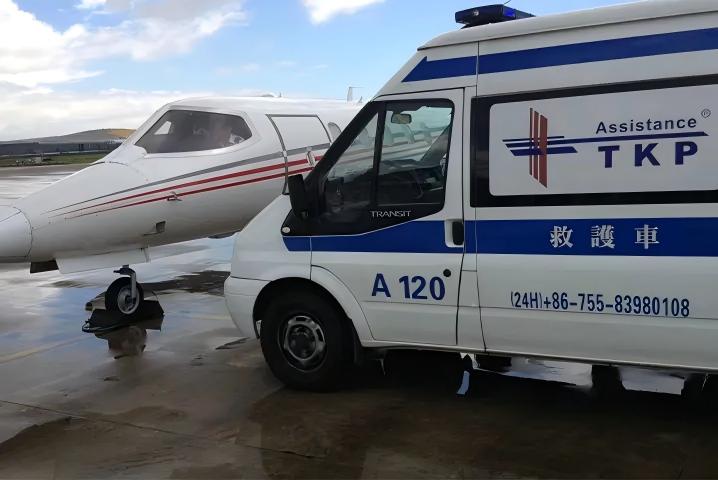
How Professional Assistance Providers Bridge the Gap
This is where specialist partners like TKP Medical Assistance are important. With over 20 years of cross-border medical expertise and a track record of thousands of successful missions, TKP serves as the operational engine behind many leading insurers and corporate programmes.
TKP‘s corporate and insurance solutions include:
•Medical claims assistance: Streamlined processing of international claims, reducing administrative burden for your HR team.
•Health management and remote consultation: Proactive support for overseas employees, including telehealth and pre-trip medical advice.
•Medical transfer and evacuation: Full-service air, land, and rail solutions—from bedside to bedside—executed by a multilingual coordination desk.
•Global partnerships with insurers and assistance networks: TKP collaborates with your current insurance networks to balance claims and operations.
•24/7 Emergency response: A coordination center that is activated within minutes to provide real time situational awareness updates to your organization and the employee’s family.
•Flexible coverage: Unique plans that will cover your organization’s profile, the employee’s geographic spread, and finances.
How the Process Works for Your Corporate Client or Your Team:
Reach Out: your HR or insurance business partner will reach out to the TKP coordination team.
•Receive a Customized Solution: A plan is proposed that outlines the scope of services and timelines along with the medical instructions.
•Implementation: The proposed plan is put into action with full service from evacuation, staff on demand, and claims support.
Outside of emergency response, TKP offers solutions that include the coordination of medical services, management of the health needs of expatriates, and advisory services for insurers concerning the design of business products. Their commitment is to deliver professional, timely, and human-centred care—wherever and whenever your employees need it.
What Corporations Should Look for in a Policy
When evaluating travel insurance or evacuation riders for your workforce, focus on these essential criteria:
•Evacuation benefit limit: At least $100,000 per person; for remote or high-risk areas, consider $500,000 or unlimited.
•Destination flexibility: Cover all countries of operation including conflict countries and countries with less comprehensive structures.
•Definition of “medical necessity”: ensure it is inclusive of repatriation for extended recovery, not solely for life-threatening emergencies.
•Pre-authorisation and direct billing: The assistance provider should manage all logistics and payments, your company should not need to pay large amounts up front.
•Exclusions: Take note of adventure sports, pre-existing conditions and high altitude activities that may impact your employee population.
• Provider reputation: Partner only with established firms, like TKP Medical Assistance that have a proven capacity to assist with operations and have a multilingual staff.
Conclusion: A Strategic Investment, Not a Cost
For corporations, the choice between regular health insurance and Travel Insurance Air Medical Rescue is not about replacing one with the other—it is about complementing them. Regular insurance pays the medical bills. Air medical rescue brings your people home. One is passive; the other is active. One is local; the other is global.
The bottom line for your organisation:
•Without evacuation cover, you expose your company to catastrophic financial losses and legal liability.
•Without a reliable assistance partner, even the best insurance policy is just a piece of paper.
•With the right combination—a robust group health plan, a travel policy with medical evacuation, and a proven provider like TKP Medical Assistance—you fulfil your duty of care, protect your brand, and ensure that every employee knows: if something goes wrong, my company will get me out.
Reach out to TKP Medical Assistance at [info@tkpma.cn] to create a personalized medical transfer and evacuation plan for your worldwide employees. Because when minutes matter, your people deserve more than a hospital bill—they deserve a way home.
Frequently Asked Questions (FAQs)
Q1: Can we add air medical rescue as a rider to our existing group policy?
A: Yes. Many underwriters include evacuation riders as options. Some underwriters will also offer stand-alone travel insurance that will integrate with your current group policy.
Q2: Who organizes the evacuation in this instance — the insurer or a third party?
A: The insurer usually contracts a specialized assistance provider (for example, TKP Medical Assistance) that manages the 24/7 coordination and transport for the evacuation.
Q3: Are evacuation policies silent on pre-existing medical conditions?
A: There is no general answer to this. Many policies specifically exclude pre-existing medical conditions unless they are specifically covered — this will have to be researched.
Q4: How do you evacuate an employee if the destination has no airport?
A: Integrated solutions are offered by the provider to utilize helicopters as well as ground ambulances and rail transport to move the patient to the nearest airfield.
Q5: How do we contact TKP Medical Assistance for service?
A: Just send an email to [info@tkpma.cn]. The coordination team will contact you regarding the request and offer a solution within the framework of the medical protocols with options for the complete service.
Submit Your Request
Recent Posts


Tags
- Air Ambulance
- Bedside To Bedside
- Cross Border Aid
- Emergency Evacuation
- Global Medical Rescue
- How can I ensure the patient's stability while in the air?
- How do I request an air medical transport?
- How is it different from an air ambulance
- how to activate emergency aircraft service
- how to request an air ambulance
- Is air medical transport safe
- Is international transport possible
- Medical Rescue
- Medical Transport
- Patient Repatriation
- Remote Rescue
- Seamless Coordination
- Telemedicine Support
- Tourists And Expats Medical Escort
- What are the benefits of a cross-border medical transfer
- What are the different types of transfers
- What are typical use cases
- What documents do I need to prepare for a transfer?
- What does high-speed rail patient transfer stands for
- What is air ambulance
- What is air medical transport?
- What is cross-border medical transfer
- What is emergency aircraft
- what is high-speed rail patient transfer
- What is medical charter flight
- what is neonatal ICU transfer
- What is patient air transfer
- What medical equipment is available on board the aircraft
- What situations shouldn't use air medical transport?
- What types of air ambulance are there?
- What types of air ambulance exist
- What's the difference between international and domestic transfers?
- what’s the difference between air medical transport and regular ambulance?
- When is emergency air transport necessary
- Which patients require air medical transport?
- who is included in the medical team
- who needs an air ambulance