


Cross-Border Medical Emergency Transfer Services: Regulations & Documentation


Cross-border patient transfer is not simply a matter of arranging an ambulance and booking a flight. In professional Medical Emergency Transfer Services, every mission must align the patient’s clinical condition, transport capability, aviation requirements, travel documentation, receiving-hospital acceptance and continuity of care.
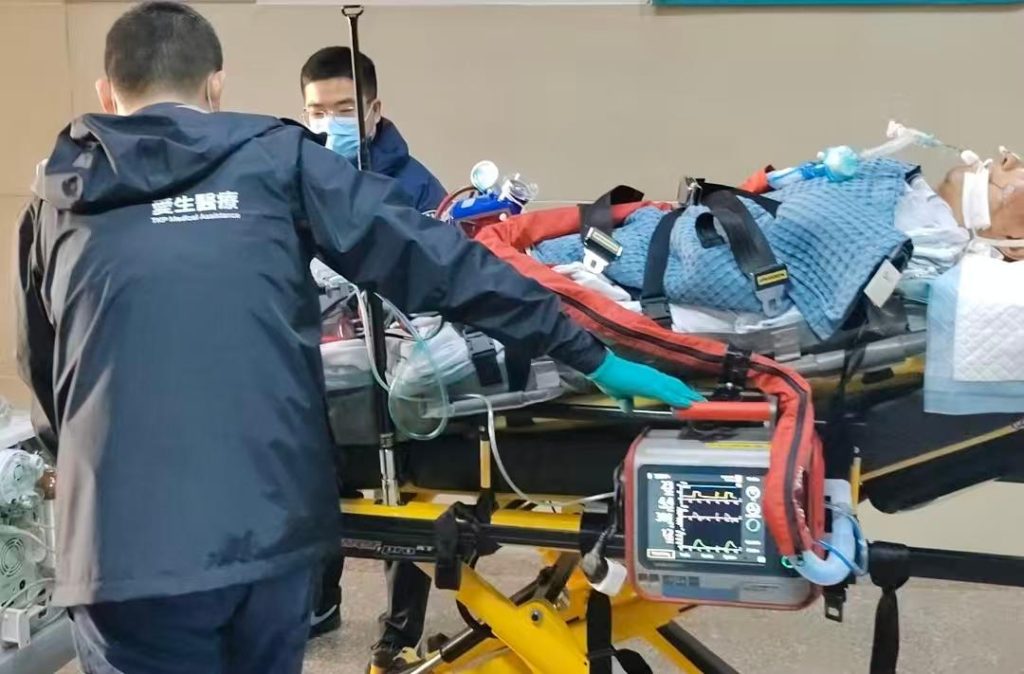
At TKP Medical Assistance, we approach international patient transfer as a bedside-to-bedside medical operation. The objective is not only to move the patient between two locations, but to maintain an appropriate level of care throughout the entire journey.
What Do Cross-Border Medical Emergency Transfer Services Involve?
International Medical Emergency Transfer Services typically involve several parties:
• Sending hospital and treating physician
• Medical transport or escort team
• Airline or air ambulance operator
• Ground ambulance providers
• Receiving hospital and accepting physician
• Insurance or assistance company, where applicable
• Immigration, airport or other authorities when required
The complexity increases significantly when the patient requires oxygen, continuous monitoring, intravenous medication, mechanical ventilation or intensive-care support.
Transport choice should be made considering the patient’s clinical situation rather than distance or convenience.
1. Clinical Assessment Precedes Transport Choice
The medical team evaluates a patient’s clinical status to determine the level of stability of the patient to undertake transportation and the clinical support that is required during the journey.
Various factors relating to the patient’s case are considered including:
• Reason for transport
• Current level of consciousness and vital signs
• Condition of the patient’s airway and respiratory system
• Saturation level and setting of the ventilator
• Type and volume of IV fluids
• Adaptive aids and support required by the patient
• Contagious nature of the patient
• Transport risks
After evaluating these, the medical team decides what kind of support is required during the journey and what kind of transport service should be used.
If a patient is stable enough to be transported and supported using a commercial stretcher, that does not necessarily mean that other limitations (such as duration of travel, presence of turbulence, or patient accessibility to medical support during travel) would also be supported using a commercial stretcher.
2. Transport Mode Changes the Operational Requirements
Different transport modes create different medical and regulatory requirements.
| Transport Mode | Typical Patient Profile | Key Operational Considerations |
| Medical Escort | Stable patient able to travel seated | Mobility, medication, oxygen and airline medical clearance |
| Commercial Stretcher | Patient unable to sit for long periods | Stretcher installation, escort team, airline approval and ground handling |
| Air Ambulance | Critical or time-sensitive patient | ICU-level equipment, medical crew, oxygen, flight planning and airport access |
| Ground Ambulance | Shorter regional transfer or airport connection | Road time, monitoring requirements and ambulance capability |
| Multimodal Transfer | Complex international routing | Precise coordination between air, road, rail and hospitals |
At TKP Medical Assistance, transport selection is made by matching the patient’s medical needs with the practical capability of each transport option.
3. Documentation Is Part of the Clinical Process
There is a common misconception that document management in medical emergency transfer services is an administrative function. However, documentation is vital for service providers to make appropriate decisions.
Examples of documentation are:
• Reports and summaries written by medical personnel
• Diagnoses and interventions
• Vital signs
• Medications and fluid infusions
• Laboratory tests and results
• Radiological and other imaging studies and reports
• Requirements for oxygen and ventilator support
• Notes written by nurses
Other types of documentation include:
• Legal and travel documents of the patient and/or escort
• Consent forms
• Insurance GOPs and authorizations
• Contact information of escorts
• Forms required for commercial air transport
• DNA and other requests for medical clearance
Aids and equipment required for the medical condition of the patient. Additional information may be required for:
• Supplemental oxygen
• Portable medical equipment
• Lithium batteries
• Stretchers
• Wheelchair assistance
• Medical escorts
Requirements vary by airline, route and patient condition, which is why documentation should be reviewed before the transport schedule is finalized.
4. Receiving-Hospital Acceptance Is a Critical Control Point
One of the most important elements of cross-border Medical Emergency Transfer Services is confirming that the destination hospital is genuinely ready to receive the patient.
This normally involves more than obtaining the hospital address.
The transfer coordinator may need to confirm:
• Acceptance by a receiving physician
• Appropriate specialty availability
• ICU or ward bed availability
• Required medical equipment
• Admission timing
• Patient registration or financial clearance
• Exact receiving department and handover contact
A transport should not be considered operationally complete simply because an aircraft or ambulance is available.
Transport availability and hospital readiness must be synchronized.
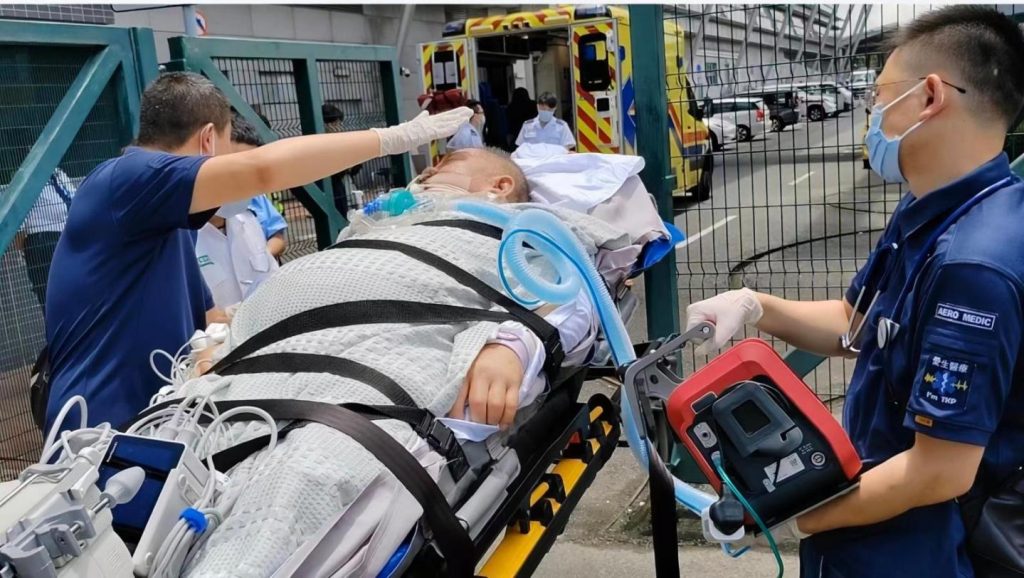
5. Bedside to Bedside Transfer
Because of the complex and uncertain nature of international patient transport, TKP Medical Assistance considers it best practice to ensure the journey is managed as a single uninterrupted clinical pathway.
The transport process consists of the following steps:
1. Evaluation of patient’s medical record to verify patient’s current condition and status.
2. Verification of bed and receiving physician and hospital.
3. Decision on the most appropriate means of transport (land, air or sea) and the type of vehicle or craft.
4. Clearances, both medical and legal.
5. Transfer of patient from transporting hospital to the means of transport.
6. Transfer of patient to the receiving medical personnel.
In addition to the aforementioned steps, several other procedures are performed to ensure patient’s safety, and comfort, and continued care during long distance transport.
There are many services and apparatuses which assist the medical transport personnel to provide continuous care to the patient during transport.
6. Why Transfers Are Sometimes Delayed
Cross-border medical transfers are often time-sensitive, but several operational dependencies can affect departure.
Common causes include:
• Incomplete or outdated medical records
• Pending receiving-hospital acceptance
• Lack of an appropriate hospital bed
• Airline medical approval still under review
• Passport or visa issues
• Changes in the patient’s condition
• Additional oxygen or equipment requirements
• Ground ambulance availability
• Insurance authorization or GOP delays
A common misunderstanding is that one approval automatically clears the entire journey.
It does not.
For example, hospital discharge approval does not mean that an airline has accepted the patient, and insurance approval does not confirm that a destination ICU bed is available.
7. ICU and High-Risk Medical Transfers
Critical-care Medical Emergency Transfer Services require a higher level of planning.
Depending on the case, the transport team may need:
• Continuous ECG, SpO₂ and blood-pressure monitoring
• Mechanical ventilation
• Infusion and syringe pumps
• Advanced airway management equipment
• Sufficient oxygen reserves
• Emergency medication
• Defibrillation capability
• Specialized ICU physicians or nurses
Ventilated, neonatal, cardiovascular and other high-dependency patients must be evaluated individually.
The transport platform, medical team and receiving facility should all be capable of supporting the anticipated level of care.
Coordinating Medical Emergency Transfer Services with TKP Medical Assistance
International medical transport encompasses more than just the passenger transport. It involves thorough clinical evaluation, documentation, coordination with various departments of the referral and receiving hospitals, adequate medical staffing and management of various transfers.
At TKP Medical Assistance, we offer Medical Emergency Transfer Services, which comprises of stretcher transportation by commercial airlines, medical escorts, air and ground ambulances, and critically ill/injured patient transport services, among others, from the origin to the destination hospital.
If you are assessing an international patient transfer and need to clarify the appropriate transport method, medical requirements or hospital coordination process, the TKP Medical Assistance team can review the case and help define the next practical steps.
FAQs
Q1. What Medical Emergency Transfer Services does TKP Medical Assistance provide?
TKP coordinates air ambulance flights, commercial airline stretcher transfers, medical escorts, ground ambulances and selected multimodal medical transfers. The transport method is selected according to the patient’s clinical condition, route and required level of care.
Q2. Does TKP provide bedside-to-bedside Medical Emergency Transfer Services?
Yes. Depending on the agreed service scope, TKP can coordinate pickup from the sending hospital, ground ambulance transport, the main air or land transfer and final handover to the receiving hospital.
Q3. What information does TKP need to assess a patient transfer?
TKP normally needs the latest medical report, diagnosis, current vital signs, treatment requirements, medications, oxygen or ventilator needs, departure location and receiving-hospital information. Critical-care cases may require additional ICU data.
Q4. Can TKP transfer ventilated or ICU patients internationally?
Yes. TKP evaluates critical-care cases individually and can arrange ICU-level transfer support with appropriate medical teams, monitoring, ventilation, oxygen and infusion equipment according to clinical requirements.
Q5. Can a bedridden patient travel without a dedicated air ambulance?
In suitable cases, yes. A clinically stable patient who cannot remain seated may be eligible for a commercial airline stretcher, subject to airline medical approval, route availability and medical assessment.
Submit Your Request
Recent Posts


Tags
- Air Ambulance
- Bedside To Bedside
- Cross Border Aid
- Emergency Evacuation
- Global Medical Rescue
- How can I ensure the patient's stability while in the air?
- How do I request an air medical transport?
- How is it different from an air ambulance
- how to activate emergency aircraft service
- how to request an air ambulance
- Is air medical transport safe
- Is international transport possible
- Medical Rescue
- Medical Transport
- Patient Repatriation
- Remote Rescue
- Seamless Coordination
- Telemedicine Support
- Tourists And Expats Medical Escort
- What are the benefits of a cross-border medical transfer
- What are the different types of transfers
- What are typical use cases
- What documents do I need to prepare for a transfer?
- What does high-speed rail patient transfer stands for
- What is air ambulance
- What is air medical transport?
- What is cross-border medical transfer
- What is emergency aircraft
- what is high-speed rail patient transfer
- What is medical charter flight
- what is neonatal ICU transfer
- What is patient air transfer
- What medical equipment is available on board the aircraft
- What situations shouldn't use air medical transport?
- What types of air ambulance are there?
- What types of air ambulance exist
- What's the difference between international and domestic transfers?
- what’s the difference between air medical transport and regular ambulance?
- When is emergency air transport necessary
- Which patients require air medical transport?
- who is included in the medical team
- who needs an air ambulance