


How to Choose an Emergency Aircraft for Medical Evacuation


Choosing an Emergency Aircraft for Medical Evacuation is not simply a question of aircraft size, speed, or published range. For a critically ill patient, aircraft selection is a clinical and operational decision: the aircraft must support the care that keeps the patient stable while also completing the planned route safely and efficiently.

At TKP Medical Assistance, we approach aircraft selection from the patient outward. We first identify the patient’s clinical dependencies, anticipated in-flight risks, and required medical interventions. Only then can the transport team match those requirements with an appropriate aircraft, medical configuration, crew, and flight plan.
What Must an Emergency Aircraft for Medical Evacuation Provide?
An Emergency Aircraft for Medical Evacuation should function as part of a continuous medical transport system—not simply as an aircraft carrying a stretcher.
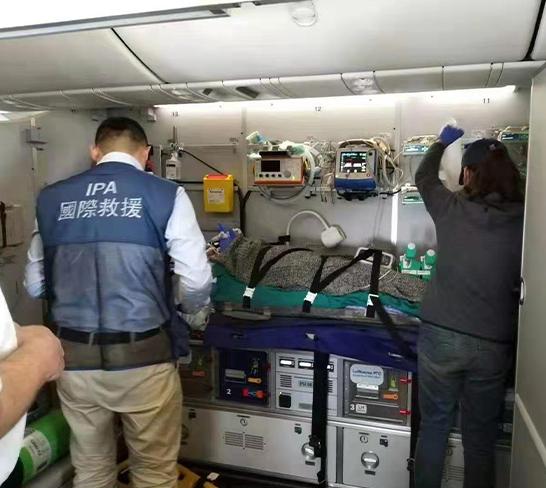
For critical-care missions, the required capability may include:
• Continuous ECG, SpO₂ and blood-pressure monitoring
• Mechanical ventilation and capnography
• Medical oxygen with sufficient mission reserve
• Infusion pumps for continuous medication delivery
• Suction and airway-management equipment
• Emergency drugs and defibrillation capability
• Secure mounting and aviation-compatible power for medical devices
• Sufficient working space for the medical team
The correct configuration depends on what support the patient cannot safely be without during transport.
Start With Clinical Stability, Not the Aircraft
A patient’s condition in a hospital bed does not automatically predict how that patient will tolerate loading, ambulance movement, takeoff, reduced cabin pressure, prolonged flight, or repeated transfers.
Before selecting an Emergency Aircraft for Medical Evacuation, the transport team should review more than a single set of vital signs.
Key clinical information includes:
• Current diagnosis and reason for transfer
• Cardiovascular and respiratory trends
• Oxygen requirement and SpO₂ response
• Airway status and ventilator settings
• Vasoactive or continuous medication requirements
• Neurological status and sedation
• Recent surgery, trauma, drains, or invasive lines
• Likely deterioration scenarios during transport
For ventilated patients, for example, FiO₂, PEEP, respiratory rate, tidal volume, EtCO₂ and recent blood-gas results may materially affect the transport plan.
The objective is not simply to ask whether the patient is “stable.” It is to understand what is currently keeping the patient stable.
Seven Factors That Determine Aircraft Selection
1. Medical Acuity and Intervention Frequency
A patient requiring basic oxygen and monitoring has different requirements from one needing invasive ventilation, multiple infusions, or continuous hemodynamic management.
Higher-acuity patients generally require greater access to the patient, more medical equipment, additional oxygen capacity, and an appropriately trained critical-care team.
2. Medical Equipment, Power and Oxygen
Medical equipment cannot be treated as generic luggage.
The aircraft must support the physical dimensions, secure installation, electrical requirements, battery endurance, and oxygen consumption of the planned medical configuration.
For long missions, oxygen planning should consider:
• Patient flow or ventilator consumption
• Expected flight duration
• Ground sectors
• Technical delays
• Operational reserve
Published aircraft range alone is therefore insufficient when evaluating an Emergency Aircraft for Medical Evacuation.
3. Usable Mission Range
Maximum advertised aircraft range and actual medical-mission range are not always the same.
Payload—including patient, crew, medical equipment, oxygen and baggage—can influence aircraft performance and fuel planning. Weather, routing, reserve requirements and airport limitations may also affect whether a direct flight is possible.
A technical fuel stop may be acceptable for some patients but undesirable for others because it increases mission time and adds another operational phase.
4. Cabin Pressure and Flight Environment
A pressurized aircraft does not necessarily maintain sea-level atmospheric pressure.
At typical cabin altitudes, inspired oxygen pressure is reduced. Trapped gas can also expand as ambient pressure decreases. These factors can be relevant in patients with significant pulmonary disease, chest trauma, residual pneumothorax, certain neurological conditions, or recent procedures.
When clinically indicated, the medical and aviation teams may need to consider the expected cabin altitude and whether an alternative flight profile is required.
5. Cabin Geometry and Patient Access
Cabin size matters because medical staff must be able to work—not because a larger aircraft is automatically better.
The team should evaluate:
• Stretcher loading geometry
• Access to the patient’s head and airway
• Space beside the patient for intervention
• Equipment placement and visibility
• Crew seating during critical flight phases
A technically suitable aircraft can still be unsuitable if the medical team cannot safely access the patient.
6. Airports and Runways
Airports are designed to support different kinds of airplanes.
The factors that determine the route a plane takes to a particular airport may include the length of the runways at the airport, the hours the airport is open, the kind of aviation fuel available at the airport, and the laws of the political jurisdiction where the airport is located. Some small airplanes may be able to use a nearby airport to transport a patient to a hospital.
7. Medical Crew Requirements
The crew should match the patient’s clinical risk.
Depending on the case, this may involve:
• Critical-care physician
• ICU or emergency nurse
• Paramedic
• Respiratory-care capability
• Additional specialist support
Aircraft capacity must accommodate the patient, team and equipment as one integrated system.
Comparing Common Medical Evacuation Aircraft
| Factor | Turboprop | Light/Midsize Medical Jet | Long-Range Medical Jet |
| Typical mission | Regional transfer | Medium/long-distance transfer | International/intercontinental transfer |
| Speed | Moderate | High | High |
| Airport flexibility | Often strong | Moderate to strong | More airport-dependent |
| Cabin workspace | Usually more limited | Moderate | Generally greater |
| Direct-flight capability | Limited on long routes | Route-dependent | Stronger for long sectors |
| Best decision driver | Airport access and regional range | Balance of speed, range and medical space | Long range and complex mission requirements |
There is no universally “best” Emergency Aircraft for Medical Evacuation. The correct aircraft is the one that satisfies the patient’s clinical requirements while remaining operationally suitable for the route.
How TKP Approaches Aircraft Selection
For critical cases, we structure planning around four questions:
What support keeps the patient stable?
Ventilation, oxygen, medication, monitoring, positioning or other continuous support must be identified.
What may deteriorate during transport?
The team prepares for foreseeable respiratory, circulatory, neurological or equipment-related complications.
What must the aircraft support?
Range, payload, cabin environment, oxygen, electrical supply and medical working space are assessed together.
Can the entire transfer remain continuous?
An air ambulance mission includes hospital discharge, ground ambulance transfer, aircraft loading, flight, arrival handling and handover to the receiving hospital.
This bed-to-bed perspective is essential because clinical risk does not begin at takeoff or end at landing.
Choosing the Right Aircraft Starts With the Patient
An Emergency Aircraft for Medical Evacuation should ultimately be selected according to the patient’s actual medical dependencies—not simply aircraft availability or headline performance.
Clinical stability, equipment, oxygen requirements, cabin environment, usable range, airport compatibility and medical crew capability all need to be considered as one system.
For hospitals, families, insurers or assistance organizations evaluating a complex medical transfer, TKP Medical Assistance can help review the clinical and logistical requirements and coordinate an appropriate transport pathway.
FAQs
Q1. What does TKP Medical Assistance provide for medical evacuation?
TKP Medical Assistance supports the planning and coordination of medical evacuation cases, including clinical assessment, aircraft selection, medical crew requirements, and transfer logistics.
Q2. How does TKP Medical Assistance choose an Emergency Aircraft for Medical Evacuation?
Aircraft selection is based on the patient’s condition, required medical equipment, oxygen needs, flight distance, cabin environment, airport accessibility, and medical crew requirements.
Q3. Can TKP Medical Assistance coordinate transport for critically ill patients?
Yes. Critical cases can be assessed individually to determine the level of monitoring, life-support equipment, medical personnel, and aircraft configuration required during transport.
Q4. Does TKP Medical Assistance arrange international medical evacuation?
TKP Medical Assistance can coordinate international medical transfers by bringing together the medical, aviation, ground transport, and receiving-facility requirements of the case.
Q5. Can TKP Medical Assistance arrange medical equipment onboard the aircraft?
Medical equipment is planned according to the patient’s clinical needs and may include oxygen, ventilators, monitoring systems, infusion pumps, suction equipment, and emergency-care devices.
Submit Your Request
Recent Posts


Tags
- Air Ambulance
- Bedside To Bedside
- Cross Border Aid
- Emergency Evacuation
- Global Medical Rescue
- How can I ensure the patient's stability while in the air?
- How do I request an air medical transport?
- How is it different from an air ambulance
- how to activate emergency aircraft service
- how to request an air ambulance
- Is air medical transport safe
- Is international transport possible
- Medical Rescue
- Medical Transport
- Patient Repatriation
- Remote Rescue
- Seamless Coordination
- Telemedicine Support
- Tourists And Expats Medical Escort
- What are the benefits of a cross-border medical transfer
- What are the different types of transfers
- What are typical use cases
- What documents do I need to prepare for a transfer?
- What does high-speed rail patient transfer stands for
- What is air ambulance
- What is air medical transport?
- What is cross-border medical transfer
- What is emergency aircraft
- what is high-speed rail patient transfer
- What is medical charter flight
- what is neonatal ICU transfer
- What is patient air transfer
- What medical equipment is available on board the aircraft
- What situations shouldn't use air medical transport?
- What types of air ambulance are there?
- What types of air ambulance exist
- What's the difference between international and domestic transfers?
- what’s the difference between air medical transport and regular ambulance?
- When is emergency air transport necessary
- Which patients require air medical transport?
- who is included in the medical team
- who needs an air ambulance