


Critical Care Air Ambulance: How Telemedicine Supports ICU Care


A Critical Care Air Ambulance must do more than move a patient quickly. It must preserve the clinical functions keeping that patient stable—ventilation, circulation, monitoring, medication delivery and the ability to intervene if the condition deteriorates.
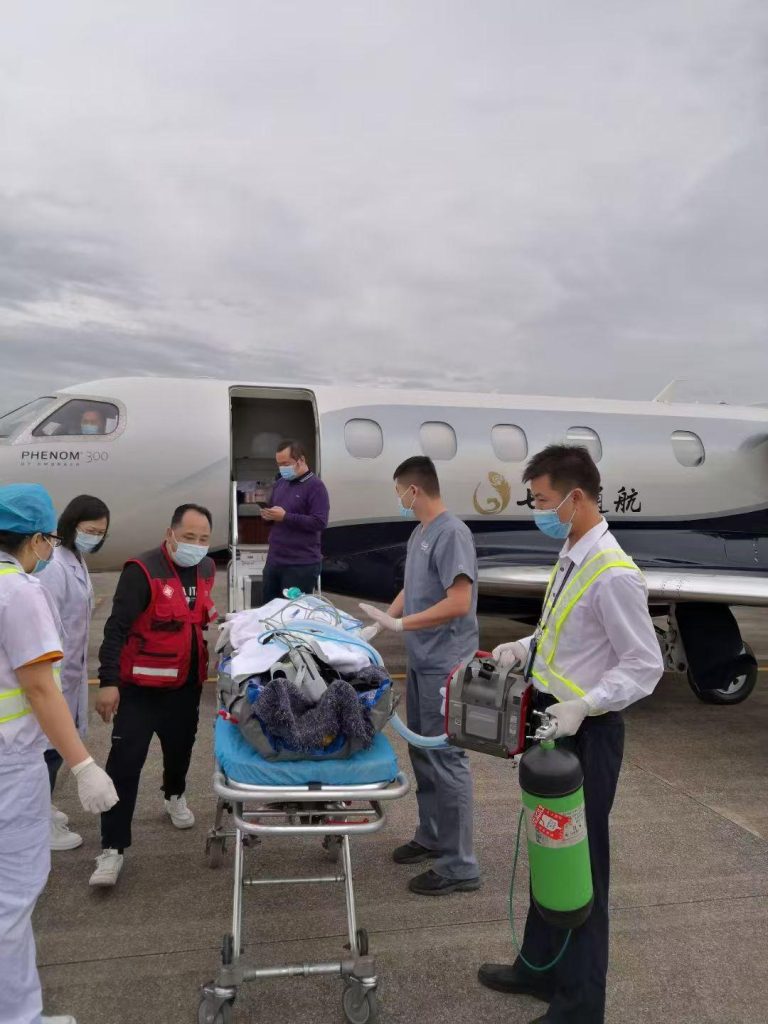
At TKP Medical Assistance, we view telemedicine as an additional clinical resource within this system. A remote intensivist, neurologist, cardiologist or ECMO specialist may support the flight team when communication is available, but remote advice never replaces qualified clinicians beside the patient.
What Telemedicine Adds to a Critical Care Air Ambulance
Telemedicine in a Critical Care Air Ambulance may allow the onboard team to communicate with specialists at the referring hospital, receiving ICU or another clinical center.
Depending on the communication system and available bandwidth, information may include:
• ECG, heart rate and rhythm trends
• SpO₂ and oxygen requirements
• Non-invasive or invasive blood pressure
• EtCO₂ and respiratory trends
• Ventilator settings and airway pressures
• Vasoactive and sedative infusion requirements
• Laboratory results, imaging and clinical records
• Video or voice-based clinical consultation
The key word is support. The remote physician contributes additional expertise; the onboard team remains responsible for immediate bedside assessment and intervention.
Where Remote ICU Support Has Clinical Value
For complex Critical Care Air Ambulance missions, the value of telemedicine is often greatest when clinical trends are changing rather than when a patient is completely stable.
| Clinical Situation | Onboard Responsibility | Possible Remote Specialist Input |
| Worsening oxygenation | Assess airway, ventilation and patient directly | Review ventilator strategy and respiratory trends |
| Increasing vasopressor requirement | Manage circulation and infusion therapy | Discuss hemodynamic pattern and treatment priorities |
| Neurological deterioration | Examine pupils, GCS, ventilation and circulation | Neurology/neurosurgical consultation |
| ECMO-supported transport | Manage patient, circuit and emergencies | ECMO/perfusion specialist consultation |
| Complex destination needs | Stabilize patient during transport | Prepare receiving ICU, cath lab, OR or specialist team |
This distinction matters. A remote specialist can interpret information, but cannot physically correct an obstructed airway, replace a disconnected infusion, manage sudden bleeding or perform CPR.
Telemedicine Does Not Turn an Aircraft Into an ICU
The technology is only one component.
A functional Critical Care Air Ambulance requires several clinical systems to operate together:
Respiratory Support
For ventilated patients, planning should consider:
• Airway security and difficult-airway risk;
• FiO₂, PEEP, tidal volume and minute ventilation;
• EtCO₂ and oxygenation trends;
• Suction and secretion management;
• Oxygen consumption for the entire mission;
• Backup manual ventilation.
Cabin pressure also matters. A pressurized aircraft does not reproduce sea-level ICU conditions. Changes in oxygen partial pressure and gas expansion may alter the risk profile of patients with significant pulmonary disease, pneumothorax or other gas-containing spaces.
Hemodynamic and Medication Support
A Critical Care Air Ambulance patient receiving norepinephrine or other vasoactive medication requires more than an infusion pump.
The medical team must evaluate:
• Dose trend, not only the current dose;
• Vascular-access reliability;
• Blood-pressure monitoring;
• Sufficient drug volume for delays;
• Pump battery endurance;
• Independent backup infusion capability.
Resource Continuity
TKP plans critical transfers around the patient’s dependencies rather than a generic equipment list.
If interruption of a ventilator, oxygen source, infusion pump or life-support system could immediately destabilize the patient, an appropriate contingency must be available.
What Happens When the Connection Fails?
No Critical Care Air Ambulance should depend on continuous internet or satellite connectivity for safe clinical management.
Communication may be affected by:
• Route and geographic coverage;
• Aircraft communication architecture;
• Satellite availability;
• Bandwidth or latency;
• Hardware or power failure.
For this reason, telemedicine should be treated as an additional layer of expertise—not a single point of failure.
Before departure, the onboard team should already have defined treatment thresholds, emergency medication, sufficient oxygen and power, backup equipment and an escalation plan.
Which Patients May Benefit Most?
Remote specialist input may be particularly useful when a Critical Care Air Ambulance is transporting patients with:
• Invasive mechanical ventilation;
• Unstable cardiovascular physiology;
• Multiple vasoactive infusions;
• Severe neurological injury;
• Complex pediatric or neonatal disease;
• ECMO or IABP support;
• Rapidly evolving multisystem disease.
However, telemedicine does not determine whether a patient is fit to fly. That decision requires assessment of current stability, clinical trajectory, airway, oxygen demand, circulation, medication dependency, equipment requirements, flight duration and destination capability.
A Critical Care Air Ambulance Is a Bed-to-Bed System
From our perspective at TKP Medical Assistance, the aircraft is only one link in the transfer.
Referring ICU → Ground Ambulance → Airport → Critical Care Air Ambulance → Destination Ambulance → Receiving ICU
Every transition creates risk.
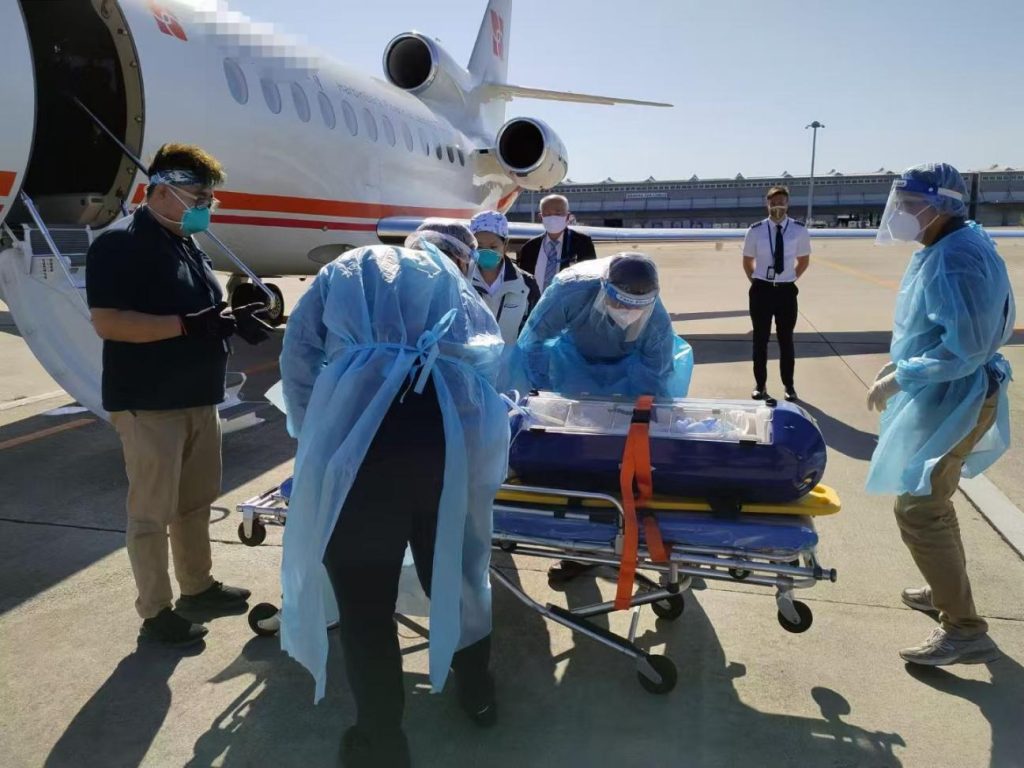
Clinical records must travel with the patient. Ventilation and infusions must continue during equipment changes. Lines, drains and airway devices must remain secure. The receiving team needs to understand not only the diagnosis but also what happened during transport.
Telemedicine can strengthen this chain by allowing earlier communication when the patient’s condition changes.
For example, the receiving hospital may need time to prepare:
• An ICU ventilator;
• ECMO personnel and equipment;
• An operating theatre;
• Interventional cardiology;
• Neurosurgical support;
• Isolation resources.
How TKP Approaches Critical Care Air Ambulance Planning
At TKP Medical Assistance, we begin with a clinical question:
What is keeping this patient stable, and what cannot be interrupted during transport?
The answer determines the medical team, equipment, oxygen, power requirements, transfer mode and route.
Our published Critical Care Air Ambulance capabilities include ICU/ER-trained medical personnel, transport ventilators, multiparameter monitoring, infusion support and case-specific arrangements for ECMO, IABP, pediatric and neonatal transfers.
Telemedicine can strengthen that system, but safe critical-care transport still depends on the people and equipment physically accompanying the patient.
Frequently Asked Questions
• Can a remote ICU physician manage a Critical Care Air Ambulance patient?
A remote physician can provide consultation and help interpret clinical information, but hands-on treatment remains the responsibility of the onboard medical team.
• Can telemedicine support an ECMO flight?
Potentially. Remote ECMO expertise may provide additional consultation, but the Critical Care Air Ambulance must still have appropriate onboard personnel, equipment, power and contingency capability.
• What if satellite communication is unavailable?
The onboard team must remain capable of managing the patient independently according to the pre-flight clinical and emergency plan.
Connected Expertise, Continuous Care
Telemedicine is changing what is possible during long-distance critical-care transport, but connectivity alone does not make a flight safer.
A properly planned Critical Care Air Ambulance combines experienced clinicians, ICU-level monitoring, ventilation, medication delivery, adequate oxygen and power, communication and independent backup plans.
For hospitals, insurers, assistance companies or families evaluating a complex international transfer, TKP Medical Assistance can review the patient’s current clinical dependencies and help determine an appropriate bed-to-bed Critical Care Air Ambulance configuration.
FAQs
Q1. What is a Critical Care Air Ambulance?
A Critical Care Air Ambulance is configured to transport critically ill patients who require ICU-level monitoring, ventilation, medication, or advanced life-support during flight.
Q2. Does TKP Medical Assistance provide Critical Care Air Ambulance transfers?
Yes. TKP Medical Assistance coordinates international critical-care transfers based on the patient’s medical condition, equipment needs, route, and receiving hospital requirements.
Q3. Can TKP arrange air transport for ventilated patients?
Yes. Ventilated patients can be transferred when the medical team, ventilator, oxygen supply, monitoring, and contingency resources are appropriately planned for the mission.
Q4. Can telemedicine be used during a TKP Critical Care Air Ambulance flight?
Telemedicine may be used when suitable communication technology is available, allowing the onboard team to consult remote specialists or coordinate with hospitals.
Q5. Does telemedicine replace the onboard ICU doctor or nurse?
No. Remote consultation supports the flight team, but hands-on assessment, emergency procedures, and equipment management remain the responsibility of onboard clinicians.
Submit Your Request
Recent Posts


Tags
- Air Ambulance
- Bedside To Bedside
- Cross Border Aid
- Emergency Evacuation
- Global Medical Rescue
- How can I ensure the patient's stability while in the air?
- How do I request an air medical transport?
- How is it different from an air ambulance
- how to activate emergency aircraft service
- how to request an air ambulance
- Is air medical transport safe
- Is international transport possible
- Medical Rescue
- Medical Transport
- Patient Repatriation
- Remote Rescue
- Seamless Coordination
- Telemedicine Support
- Tourists And Expats Medical Escort
- What are the benefits of a cross-border medical transfer
- What are the different types of transfers
- What are typical use cases
- What documents do I need to prepare for a transfer?
- What does high-speed rail patient transfer stands for
- What is air ambulance
- What is air medical transport?
- What is cross-border medical transfer
- What is emergency aircraft
- what is high-speed rail patient transfer
- What is medical charter flight
- what is neonatal ICU transfer
- What is patient air transfer
- What medical equipment is available on board the aircraft
- What situations shouldn't use air medical transport?
- What types of air ambulance are there?
- What types of air ambulance exist
- What's the difference between international and domestic transfers?
- what’s the difference between air medical transport and regular ambulance?
- When is emergency air transport necessary
- Which patients require air medical transport?
- who is included in the medical team
- who needs an air ambulance