


International Air Ambulance Service Standards in 2026–2027


An International Air Ambulance Service is not simply a charter flight with medical equipment. It is a transport system in which aviation authority, clinical governance, medical-device integration and cross-border logistics must work together.

At TKP Medical Assistance, we approach each mission from the patient outward: define the clinical dependency first, then select the aircraft, equipment, medical team, route and ground support. No single certificate proves that an International Air Ambulance Service is safe in every respect.
CAMTS, EN 13718 and AOC: Three Different Functions
| Framework | Main Question | Operational Focus |
| CAMTS | Is the medical transport program built around defined quality standards? | Clinical governance, staffing, training, safety and quality systems |
| EN 13718 | Is the air-ambulance medical environment technically suitable? | Medical devices, power, gas interfaces, fixation, restraint and cabin conditions |
| AOC | Is the operator authorized for the relevant commercial air operation? | Aircraft operation, manuals, management systems and regulatory oversight |
They complement each other, but they are not interchangeable.
CAMTS: Medical Governance, Not an Aviation Licence
CAMTS accreditation addresses the medical-transport system rather than the aircraft alone. Its standards cover medical direction, qualifications, training, patient care, safety, quality improvement and operational policies.
For an International Air Ambulance Service, this creates practical questions: Who accepts the patient for transport? Who sets escalation thresholds? How is deterioration managed? How are adverse events reviewed?
CAMTS currently lists the 12th Edition Medical Transport Accreditation Standards as the current edition. Its published timetable targets January 1, 2027 for the 13th Edition Transport Standards, while noting that target dates may change.
CAMTS should not be described as universally mandatory. It is an accreditation framework; legal requirements still depend on jurisdiction and mission structure.
EN 13718: Engineering the Medical Environment
EN 13718-1:2014+A1:2020 addresses medical devices used in air ambulances. EN 13718-2:2015+A1:2020 covers operational and technical requirements for the air ambulance itself. Both remain listed as current by standards bodies.
For an International Air Ambulance Service, the important issue is what happens when ICU equipment moves into an aviation environment. EN 13718-2 covers areas including:
• Variable atmospheric pressure, temperature, ventilation and noise
• Electrical power for medical devices
• Electromagnetic interference and mechanical vibration
• Fixation of medical devices and patient restraint
• Interfaces for medical gases and other equipment
These requirements translate directly into mission planning. A transport team must determine whether ventilators and pumps remain suitable for the cabin environment, whether monitoring can continue during loading and unloading, whether equipment is restrained for turbulence and acceleration, and whether oxygen capacity includes delays and contingency reserve.
TKP’s published International Air Ambulance Service workflow starts with the patient’s clinical requirements and then matches aircraft, route and medical configuration to the case.
AOC: Who Is Operating the Aircraft?
An Air Operator Certificate (AOC) addresses aviation authority. EASA defines an AOC as the certificate allowing an operator to perform specified commercial air transport operations; in Europe, oversight normally rests with the competent national aviation authority unless transferred to EASA.
An AOC does not prove ICU capability or medical quality.
When reviewing an International Air Ambulance Service, clarify:
• Who is the actual aircraft operator?
• Under which AOC is the flight conducted?
• Is the aircraft suitable for route, payload and airport limitations?
• Who holds responsibility for medical care, and who for flight operations?
This distinction is especially important when the medical coordinator and aircraft operator are different organizations.
From Standard to Mission: Five Checks That Matter
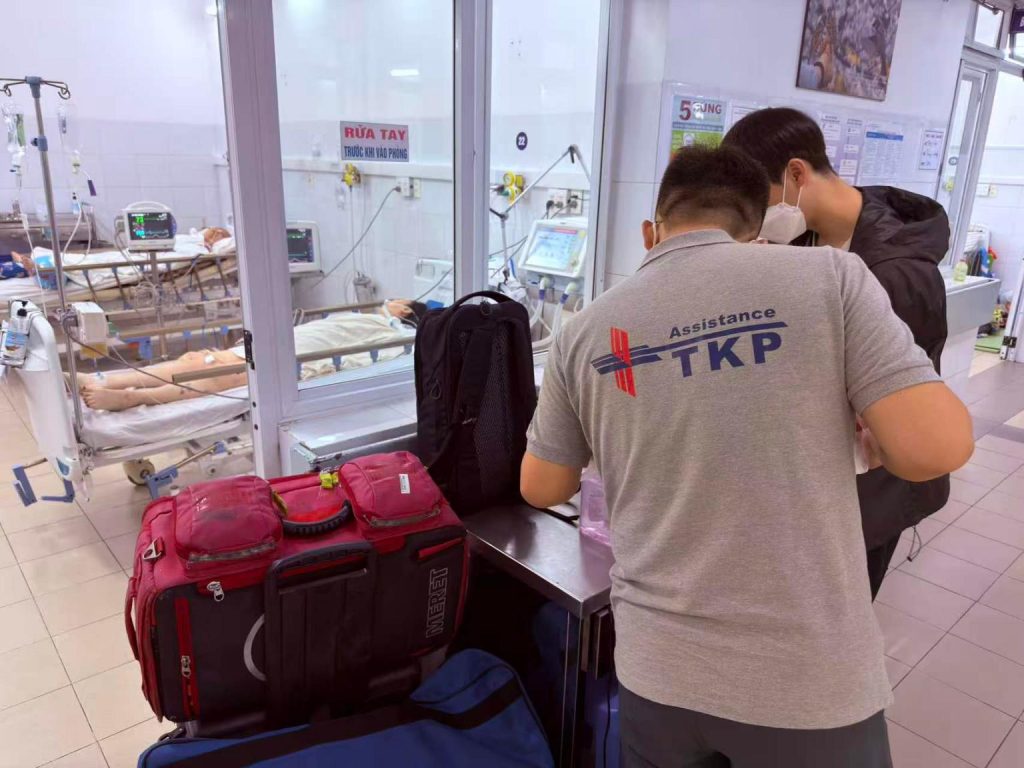
1. Clinical Fitness
Review diagnosis, airway, ventilation, hemodynamics, oxygen requirement, infusions, recent instability and the effect of the planned cabin altitude.
2. Aircraft, Range and Payload
Published maximum range is not usable medical-mission range. Patient weight, crew, oxygen, equipment, fuel reserve and technical stops all affect the flight plan.
3. Equipment, Power and Oxygen
Critical devices need secure mounting, adequate battery endurance and reliable in-flight power. Oxygen calculations should cover expected consumption, reserve and possible delays—not only scheduled airborne time.
4. Cross-Border Coordination
The sending hospital, receiving hospital, ground ambulances, airports and aircraft operator must be synchronized. Permits, documentation and entry requirements may affect departure.
5. Bed-to-Bed Continuity
An International Air Ambulance Service mission does not end at landing. Monitoring and treatment must continue through unloading, ground transfer and formal handover to the receiving team.
What Should Hospitals, Insurers and Families Verify?
Before selecting an International Air Ambulance Service, focus on verifiable details:
• Operator: Who operates the aircraft and under what authority?
• Clinical lead: Who accepts medical responsibility during transport?
• Configuration: What monitoring, ventilation, infusion and rescue capability will actually be onboard?
• Redundancy: What is the backup plan for equipment, oxygen or airport changes?
• Destination: Is the receiving bed and clinical handover confirmed?
• Coordination: Who controls the complete bed-to-bed pathway?
These questions often reveal more about mission readiness than a single certificate or accreditation logo.
What Changes in 2027?
The key published milestone is the planned effective date of the 13th Edition CAMTS Transport Standards on January 1, 2027. Because CAMTS states that target dates can change, providers and purchasers should verify the final edition in force at the time of assessment.
EN 13718 and AOC requirements should also be checked against the applicable jurisdiction rather than treated as static global rules.
TKP Medical Assistance: Standards Applied to the Mission
From TKP Medical Assistance’s perspective, a professional International Air Ambulance Service is a controlled clinical pathway: patient assessment, operator verification, aviation-suitable medical equipment, oxygen and power planning, qualified medical staffing, route coordination and receiving-hospital handover.
Standards provide the framework. Safe execution depends on how those requirements are translated into the individual patient’s mission.
If you are planning an international medical transfer, TKP Medical Assistance can help review the clinical and operational requirements and coordinate the journey from bedside to bedside. Learn more about TKP’s International Air Ambulance Service capabilities at TKP Medical Assistance.
FAQs
Q1. What does TKP Medical Assistance provide for international patient transfers?
TKP Medical Assistance coordinates International Air Ambulance Service, commercial-flight stretcher transfers, medical escorts, ground ambulances and selected rail medical transfers according to the patient’s clinical and logistical requirements.
Q2. Can TKP arrange an International Air Ambulance Service for ICU patients?
Yes. TKP evaluates critically ill patients individually and can arrange ICU-level transport with appropriate medical personnel, monitoring, ventilation, oxygen and infusion support when clinically required.
Q3. What information does TKP need before planning a medical flight?
TKP typically needs the latest medical report, diagnosis, current condition, medications, oxygen or ventilator requirements, departure location and receiving-hospital information.
Q4. Does TKP provide bed-to-bed international medical transfers?
Yes. Depending on the agreed mission scope, TKP can coordinate the pathway from the referring hospital through ground and air transport to clinical handover at the receiving facility.
Q5. What medical equipment can TKP arrange during an air ambulance mission?
Depending on patient needs, TKP can arrange transport ventilators, multiparameter monitoring, infusion pumps, suction, oxygen and emergency medical equipment. Advanced support such as ECMO may also be arranged when clinically indicated.
Submit Your Request
Recent Posts


Tags
- Air Ambulance
- Bedside To Bedside
- Cross Border Aid
- Emergency Evacuation
- Global Medical Rescue
- How can I ensure the patient's stability while in the air?
- How do I request an air medical transport?
- How is it different from an air ambulance
- how to activate emergency aircraft service
- how to request an air ambulance
- Is air medical transport safe
- Is international transport possible
- Medical Rescue
- Medical Transport
- Patient Repatriation
- Remote Rescue
- Seamless Coordination
- Telemedicine Support
- Tourists And Expats Medical Escort
- What are the benefits of a cross-border medical transfer
- What are the different types of transfers
- What are typical use cases
- What documents do I need to prepare for a transfer?
- What does high-speed rail patient transfer stands for
- What is air ambulance
- What is air medical transport?
- What is cross-border medical transfer
- What is emergency aircraft
- what is high-speed rail patient transfer
- What is medical charter flight
- what is neonatal ICU transfer
- What is patient air transfer
- What medical equipment is available on board the aircraft
- What situations shouldn't use air medical transport?
- What types of air ambulance are there?
- What types of air ambulance exist
- What's the difference between international and domestic transfers?
- what’s the difference between air medical transport and regular ambulance?
- When is emergency air transport necessary
- Which patients require air medical transport?
- who is included in the medical team
- who needs an air ambulance