


What Determines the Cost of Long-Distance Patient Air Transfer?


The cost of a Long-Distance Patient Air Transfer cannot be calculated from distance alone. In professional air medical transport, the final quotation reflects a combination of clinical requirements, aircraft operation, medical staffing, route planning, equipment, oxygen autonomy, airport handling, ground ambulances, and cross-border coordination.
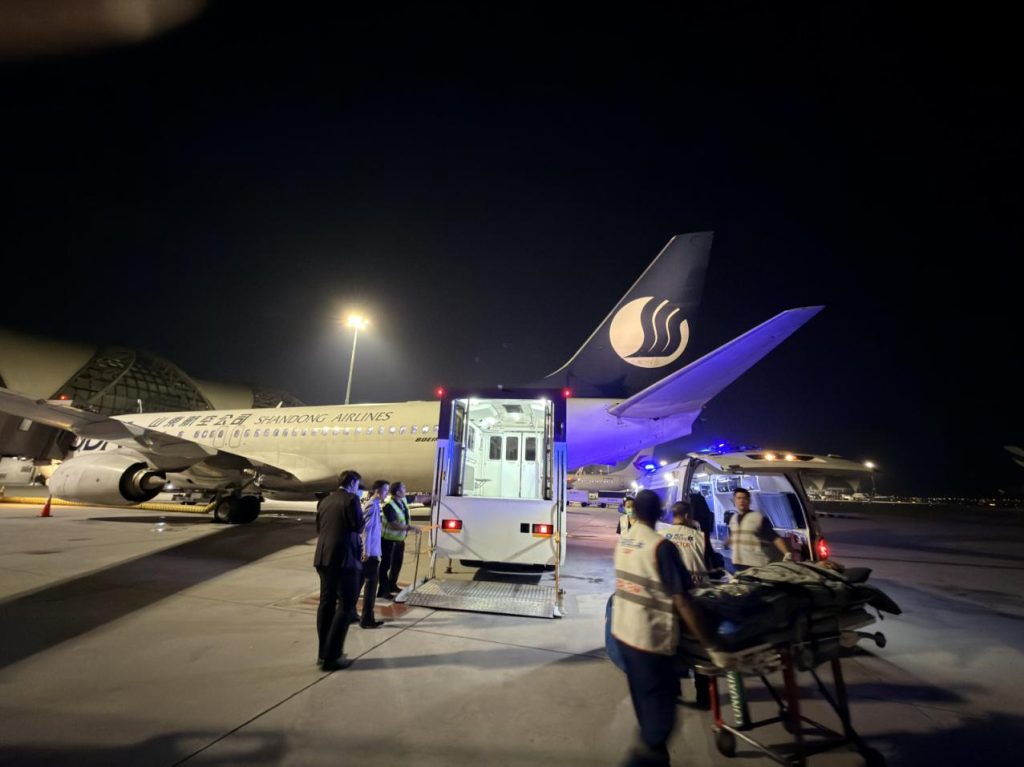
At TKP Medical Assistance, we approach each Long-Distance Patient Air Transfer as an individual medical mission rather than a standard flight booking. Two patients travelling between the same cities may require very different aircraft, medical teams, equipment, routing, and transfer timelines.
Why Is Long-Distance Patient Air Transfer Pricing Case-Specific?
A long-range medical mission usually consists of several interconnected components:
•Patient medical assessment and fit-to-fly evaluation
•Aircraft selection and positioning
•Medical crew configuration
•In-flight monitoring and treatment requirements
•Oxygen and battery planning
•Ground ambulance coordination
•Airport handling and permits
•Technical stops and fuel planning
•Receiving hospital confirmation
•Bed-to-bed handover
This means the real cost of Long-Distance Patient Air Transfer depends on the complete operational chain, not only the airborne sector.
1. Patient Acuity Determines the Medical Configuration
The patient’s clinical condition is often the first factor considered.
A stable, non-ventilated patient may require monitoring and basic medical support. By contrast, an ICU patient may require continuous ventilation, vasoactive medication, infusion pumps, invasive monitoring, or advanced airway management.
Clinical factors that may affect the mission include:
•Oxygen dependence
•Mechanical ventilation
•Hemodynamic instability
•Recent surgery
•Neurological condition
•Cardiac monitoring requirements
•Multiple intravenous medications
•Isolation precautions
•Neonatal or pediatric requirements
A patient who is described as “stable” in hospital is not automatically suitable for air transport. Cabin altitude, reduced atmospheric pressure, prolonged transfer time, vibration, limited working space, and restricted access to hospital-level backup must all be considered.
For this reason, medical review is an essential part of planning a Long-Distance Patient Air Transfer.
2. Selecting an Aircraft Goes Beyond Choosing the Fastest Aircraft
There are a number of constraints for a given medical flight. This is often called ‘mission profiling.’
Some of these constraints may include:
•Adequate range
•Sufficient cabin size
•Stretcher access
•Total aircraft weight (or”payload”)
•Medical equipment/oxygen
•Electrical power
•Runway length at airport
If the mission requires flying over a large distance, a smaller, more economical aircraft may require more stops. A larger, more expensive aircraft may be able to fly the distance without having to make stops.
Aircraft positioning is important to consider. If the aircraft has to fly from its home base to pick up the patient (and then fly to the destination airport), this adds to the total distance flown by the aircraft.
Patient home base → Aircraft base → Departure airport → Destination airport → Aircraft base
The patient may only be flown from the home base to the destination base, but the total flight for the crew may encompass multiple flight segments.
3. Flight Distance Is Only One Part of the Calculation
Flight hours are important, but the geographical distance between two hospitals does not equal the aircraft’s total operating distance.
A Long-Distance Patient Air Transfer may be affected by:
•Airspace restrictions
•Weather deviations
•Airport operating hours
•Aircraft positioning
•Crew duty limitations
•Fuel availability
•Destination airport suitability
•Required technical stops
This is why quotations based only on “price per kilometre” can be misleading.
4. Direct Flight or Technical Stop?
For long-range missions, one important planning decision is whether the aircraft can operate nonstop.
A technical stop may be required for fuel, crew limitations, aircraft range, or operational reasons. It does not necessarily indicate a medical problem.
Technical stops may add:
•Additional flight time
•Landing and handling fees
•Ground time
•Fuel uplift
•Crew duty considerations
•Additional oxygen consumption
•Additional battery and medication reserves
For ventilated or oxygen-dependent patients, these factors must be included in the clinical plan before departure.
5. Medical Crew Requirements
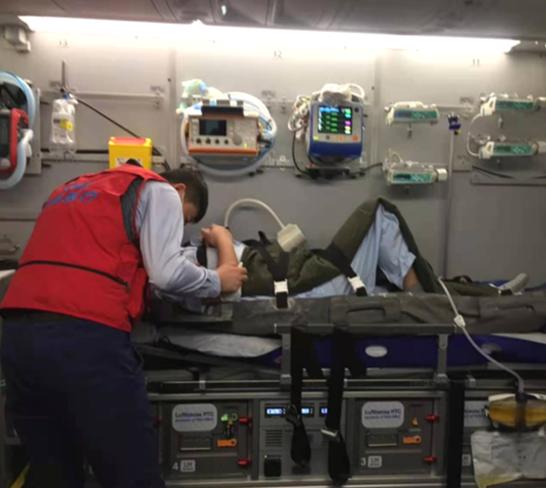
Medical staffing should reflect the patient’s expected needs throughout the complete transfer.
Depending on the case, a Long-Distance Patient Air Transfer may involve:
•Paramedic or flight nurse
•Physician and nurse team
•Critical care physician
•ICU nurse
•Pediatric or neonatal specialist
•Other specialist personnel
The main question is not simply how many medical staff are onboard. The key issue is whether the team can safely manage foreseeable complications throughout the mission.
6. Oxygen, Ventilation and Medical Equipment
Medical equipment is another important cost and planning factor.
Typical equipment may include:
•Transport ventilator
•Multiparameter monitor
•Infusion pumps
•Portable suction
•Defibrillator
•Oxygen system
•Emergency medication
•Backup batteries
For a Long-Distance Patient Air Transfer, reserves must be calculated for the entire mission duration, not only scheduled flight time.
This may include:
Hospital transfer + Ambulance transport + Airport handling + Flight + Technical stops + Destination ambulance + Hospital handover
For high-flow oxygen or ventilated patients, oxygen autonomy can become an important aircraft-selection and routing consideration.
7. Bed-to-Bed Time Matters More Than Flight Time
A common mistake is to compare only airborne time.
A complete medical transfer normally follows this sequence:
Sending Hospital → Ground Ambulance → Airport → Aircraft → Destination Airport → Ground Ambulance → Receiving Hospital
An eight-hour flight may therefore represent a significantly longer clinical transport period.
At TKP Medical Assistance, we consider the complete bed-to-bed journey when coordinating a Long-Distance Patient Air Transfer, because the patient requires continuity of care throughout every stage.
8. Cross-Border Coordination and Airport Costs
There are costs associated with medical transport that the average airline passenger will never see.
| Element of Operation | Importance |
| Airport Handling | Enables processing of crew and patient |
| Landing Fees | Revenue source for airport |
| Ambulance Access | May take time to arrange |
| Permits | International flights may require overflight permits |
| Immigration/Customs | Clearance for crew and patient may be required at multiple locations |
| Hospital Acceptance | Confirmation that receiving facility is prepared to accept patient |
| Medical Clearance | Legal and medical documentation may be necessary |
Variation in rules and requirements is high.
9. Urgency and Aircraft Availability
Urgent missions are not necessarily subject to a simple “emergency surcharge.” However, short-notice requests can change the operational setup.
Factors may include:
•Aircraft location
•Crew availability
•Airport slots
•Permit processing
•Ground ambulance availability
•Hospital discharge timing
A rapidly changing patient condition may also require reassessment before departure.
What Should a Long-Distance Patient Air Transfer Quote Include?
A professional quotation should clearly define the scope of service.
| Cost Component | What to Confirm |
| Aircraft | Type and planned routing |
| Positioning | Whether positioning sectors are included |
| Medical crew | Qualifications and staffing level |
| Equipment | Ventilator, monitor, pumps and oxygen |
| Ground ambulances | Origin and destination transfers |
| Technical stops | Planned operational stops |
| Airport charges | Handling and landing fees |
| Permits | Route and airport clearances |
| Waiting time | Conditions for delays |
| Transfer scope | Flight-only or full bed-to-bed service |
Comparing quotations is therefore not simply a matter of comparing the lowest total price. The medical configuration and service scope should also be comparable.
Can Costs Be Reduced Without Compromising Safety?
In selected cases, a dedicated air ambulance may not be the only option.
Depending on the patient’s clinical condition, alternatives may include:
•Commercial airline stretcher
•Medical escort on a scheduled flight
•Ground and air transport combination
•Different departure or destination airports
However, cost reduction should never result from removing clinically necessary medical support.
The safest transport mode should be selected first; financial optimisation can then be considered within those medical limits.
Planning a Long-Distance Patient Air Transfer
The cost of Long-Distance Patient Air Transfer reflects far more than aircraft distance. Patient condition, aircraft range, medical staffing, oxygen requirements, route complexity, technical stops, ground ambulances, and international coordination all contribute to the final mission plan.
At TKP Medical Assistance, our role is to coordinate these clinical and logistical elements as one continuous transport process.
If you are planning a Long-Distance Patient Air Transfer, TKP Medical Assistance can review the patient’s medical requirements, proposed route, transport options, and bed-to-bed logistics before an appropriate solution is arranged.
FAQs
Q1. What information does TKP Medical Assistance need to quote a Long-Distance Patient Air Transfer?
TKP normally needs the latest medical report, diagnosis, current treatment, oxygen or ventilator requirements, departure location, destination, and receiving-hospital details.
Q2. Does TKP Medical Assistance provide bed-to-bed patient transfers?
Yes. TKP can coordinate ground ambulances, air transport, airport handling, medical teams, and handover at the receiving hospital as one transfer pathway.
Q3. Can TKP arrange Long-Distance Patient Air Transfer for critically ill patients?
Yes, subject to individual medical assessment. TKP provides critical-care transport options for patients requiring ventilation, continuous monitoring, infusion support, or other ICU-level care.
Q4. Can TKP transport mechanically ventilated patients?
Yes, when medically appropriate. Transport planning may include a ventilator, oxygen, multiparameter monitoring, infusion pumps, suction, and emergency equipment.
Q5. Does TKP provide ECMO-supported medical transport?
TKP reports capabilities for ECMO and IABP-supported transfers when clinically indicated and when the required specialist team, equipment, oxygen, and power redundancy can be arranged.
Submit Your Request
Recent Posts


Tags
- Air Ambulance
- Bedside To Bedside
- Cross Border Aid
- Emergency Evacuation
- Global Medical Rescue
- How can I ensure the patient's stability while in the air?
- How do I request an air medical transport?
- How is it different from an air ambulance
- how to activate emergency aircraft service
- how to request an air ambulance
- Is air medical transport safe
- Is international transport possible
- Medical Rescue
- Medical Transport
- Patient Repatriation
- Remote Rescue
- Seamless Coordination
- Telemedicine Support
- Tourists And Expats Medical Escort
- What are the benefits of a cross-border medical transfer
- What are the different types of transfers
- What are typical use cases
- What documents do I need to prepare for a transfer?
- What does high-speed rail patient transfer stands for
- What is air ambulance
- What is air medical transport?
- What is cross-border medical transfer
- What is emergency aircraft
- what is high-speed rail patient transfer
- What is medical charter flight
- what is neonatal ICU transfer
- What is patient air transfer
- What medical equipment is available on board the aircraft
- What situations shouldn't use air medical transport?
- What types of air ambulance are there?
- What types of air ambulance exist
- What's the difference between international and domestic transfers?
- what’s the difference between air medical transport and regular ambulance?
- When is emergency air transport necessary
- Which patients require air medical transport?
- who is included in the medical team
- who needs an air ambulance