


Pediatric Air Ambulance vs. Neonatal Transport: Key Differences You Need to Know


When a critically ill infant or child needs to be moved across cities or continents, time and specialized care are everything. But not all pediatric medical flights are the same. Pediatric air ambulance and neonatal transport serve different age groups, require distinct equipment, and involve unique physiological challenges. Understanding these differences can save lives – and help healthcare providers and families make the right choice.
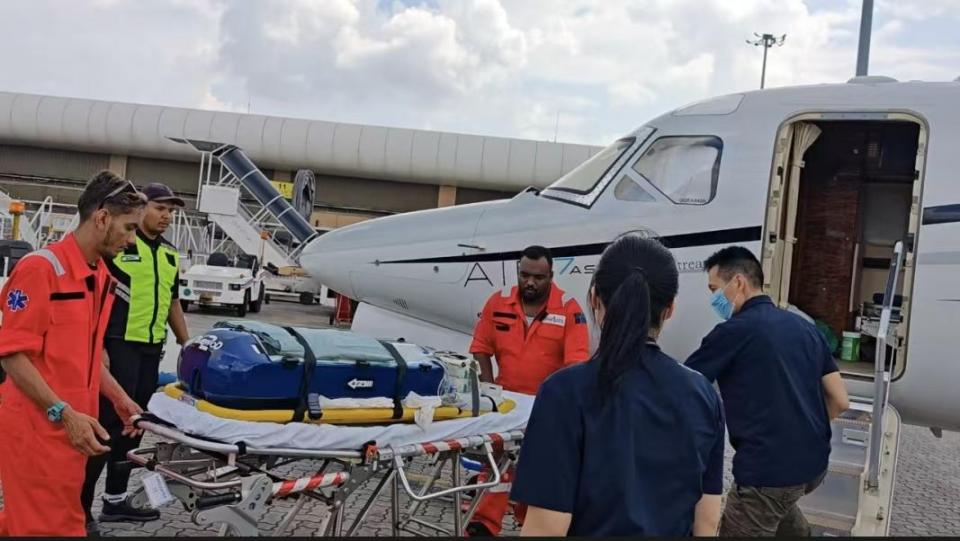
Below, we break down the essential distinctions, and show how TKP Medical Assistance bridges both worlds with advanced capabilities, global route networks, and specialized neonatal teams.
1. Age Definitions: Where Do We Draw the Line?
The most fundamental difference lies in the patient’s age.
| Transport Type | Age Range | Typical Conditions |
| Neonatal Transport | Birth to 28 days (or up to 44 weeks post-conceptual age, depending on protocols) | Prematurity, respiratory distress syndrome, congenital heart defects, neonatal sepsis, surgical emergencies (e.g., gastroschisis) |
| Pediatric Air Ambulance | 29 days up to 18 years (sometimes up to 21 years) | Traumatic injuries, severe asthma, diabetic ketoacidosis, post-operative complications, pediatric cancers |
Why it matters: A one-week-old with a diaphragmatic hernia needs a mobile NICU. A 5-year-old with a skull fracture needs a pediatric ICU setup. Mixing the two can lead to equipment mismatches and increased risk.
2. Specialized Equipment: More Than Just a Smaller Bed
Neonatal transport requires transport incubators (isolette) that control temperature, humidity, and oxygen levels with extreme precision. Pediatric air ambulances use pediatric ICU stretchers with child-sized cots, but no incubator.
Neonatal–specific gear:
•Incubator with integrated ventilator and cardio-respiratory monitor
•Servo-controlled radiant warmer
•Portable nitric oxide delivery system
•Miniaturized IV pumps (0.1 mL/hr accuracy)
Pediatric–specific gear:
•Child-sized defibrillator pads and cuffs
•Pediatric Broselow color-coded emergency system
•Non-invasive cardiac output monitors
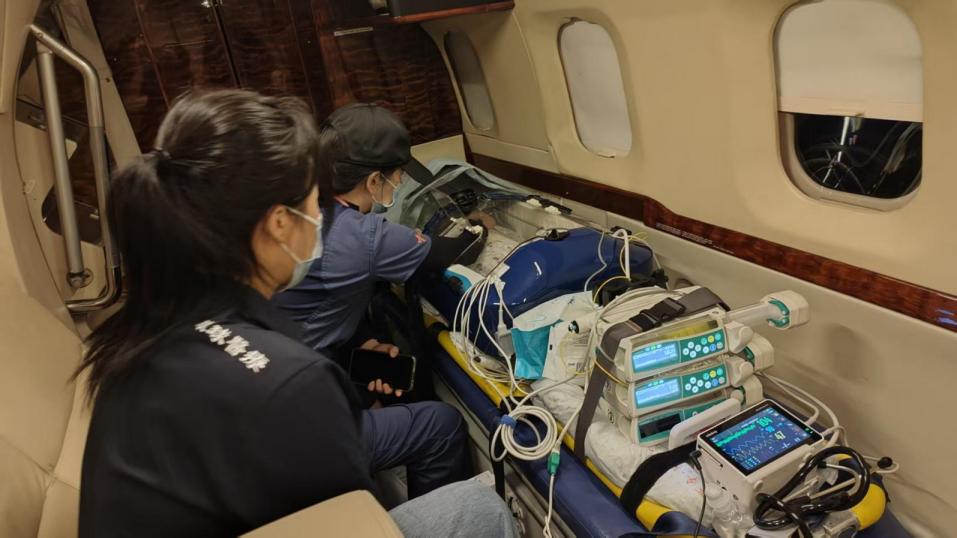
TKP Medical Assistance equips every mission with portable advanced life support (ALS) or ACLS systems, plus transport-ready ICU monitors, oxygen supply, and ventilators – including ECMO when required. All devices are aviation-certified and customizable for both premature infants and older children.
3. Team Composition: Neonatal vs. Pediatric Specialists
A neonatal transport team is built around neonatal intensive care nurses (NICU RNs) and respiratory therapists trained in high-frequency ventilation and surfactant administration. Pediatric teams often include PICU nurses and pediatric emergency physicians.
Team differences breakdown:
•Neonatal: A team may consist of a neonatal physician or a neonatal advanced practice nurse. There is a focus on preventing intraventricular hemorrhage through safe and gentle handling and thermoregulation.
•Pediatric: There is a higher likelihood of the presence of pediatric anesthesiologists or pediatric trauma surgeons and requires larger therapeutic dosages and the placement of more invasive lines.
TKP’s ICU-trained teams bridge the divide in neonatal and pediatric critical care in support of the ECMO/IABP systems in transit on long-haul flights.
4. Physiological Weaknesses: Temperature and Pressure
Neonatal Risks:
•Thermoregulation: Preterm babies have a decrease in brown fat and body mass, which leads to a relatively increased body surface area. Thus, preterm babies experience a faster increase of oxygen consumption by 10% when the temperature drops by 1°C.
•Fragile brain: Preterm babies experience intraventricular hemorrhage (IVH) due to rapid changes in vibration and acceleration.
•Control of glucose: There is a rapid onset of low blood glucose.
Pediatric Concerns:
•Anatomy of airways: A relatively smaller trachea in children means that mild edema can lead to critical
•Circulatory changes: Blood pressure drops more quickly with dehydration or sepsis.
•Altitude effects: Older children can tolerate higher cabin altitudes, but those with sickle cell or cyanotic heart disease need pressurization below 5,000 ft.
Even the cladding materials for walls inside the aircraft’s patient compartment are carefully chosen – they must be non-toxic, fire-resistant, and easy to disinfect, while also dampening noise and vibration. TKP ensures every interior surface meets stringent medical-grade standards.
5. Family Presence and Logistics
All the pediatric air ambulances can typically accommodate at least one parent traveling with the child and provide a seat with a safety briefing. Most neonatal transports, however, usually do not allow parents due to the confined and sterile environment surrounding the incubator and the need for rapid interventions.
The following are practical differences:
•Neonatal: Family can be permitted to travel on a different aircraft or separately, written consent and bonding policies differ by country.
•Pediatric: Parents usually fly alongside, provided they do not interfere with care.
TKP coordinates with medical institutions and embassies to arrange parental travel, visas, and ground transportation – a seamless “bed-to-bed” solution.
6. Transfer Route Map: How Global Logistics Differ
Neonatal transports often require short, direct routes because incubators have limited battery life (usually 2-4 hours). Pediatric missions can tolerate technical stops for refueling, allowing longer intercontinental transfers.
TKP Medical Assistance‘s advantage:
Their Transfer Route Map offers a comprehensive and responsive network of flight paths that connect patients from remote, underserved, and emergency locations to medical centers around the world. By using a deliberate selection of airports – including those with little or no infrastructure – rapid, safe, and efficient transfers are facilitated in the face of geographical constraints.
Real Time Flight Planning:
•Capability to change flight schedules to accommodate different medical priorities
•Worldwide coverage
•Access to under served airstrips with rudimentary infrastructure
•Balancing flight time versus the risk to patient health
•Strong collaboration with medical institutes and embassies
•Dedicated team to ensure safe and timely arrival of patients and maintain continuity of patient care.
7. Why TKP Medical Assistance Excels in Both Domains
TKP does not force a one-size-fits-all approach. Instead, they maintain separate protocols for neonatal and pediatric cases, backed by:
•Full support for ECMO, IABP, and other advanced life-sustaining systems, including during international flights
•Specialization in premature infants, postoperative neonates, and pediatric patients with complex conditions
•Trusted by leading hospitals such as Guangzhou Women and Children’s Medical Center for repeated neonatal transfers across provinces and borders
Every TKP mission is equipped with portable ALS/ACLS systems, transport-ready ICU monitors, oxygen supply, and ventilators – all adapted for the patient’s exact age and weight. Their aircraft interiors use advanced cladding materials for walls to reduce vibration transmission and maintain stable temperatures, a critical factor for both preterm infants and immunocompromised children.
Summary Table: Quick Comparison
| Feature | Neonatal Transport | Pediatric Air Ambulance |
| Age | 0–28 days (up to 44 weeks PCA) | 29 days – 18 years |
| Primary equipment | Transport incubator | Pediatric ICU stretcher |
| Core team | NICU RN + RT | PICU RN + pediatrician |
| Parent on board | Usually no | Yes (1 parent) |
| Flight duration | Prefer <4 hours (battery-limited) | Up to 12+ hours with tech stops |
| Thermoregulation | Strict servo-control | Less critical but monitored |
| ECMO capability | Rare, but TKP offers it | Available with adult-size systems adapted |
Final Takeaway
Choosing between a dedicated neonatal transport and a pediatric air ambulance is not a matter of price – it is a matter of life-saving precision. The wrong team or equipment can turn a short flight into a catastrophic event.
TKP Medical Assistance offers both specialized services under one roof, with global route intelligence, ECMO-ready teams, and a proven track record with top children’s hospitals. Whether you need a 50-mile helicopter hop for a premature twin or a transatlantic flight for a child on a ventricular assist device, TKP provides the infrastructure and clinical excellence to get the job done – safely, swiftly, and with compassion.
Need to arrange a pediatric or neonatal air ambulance? Contact TKP Medical Assistance for a customized transfer plan and route map tailored to your patient’s unique medical needs.
Frequently Asked Questions (FAQ)
Q1: Can a neonatal transport team handle a 2-year-old child in an emergency?
No. Neonatal teams are specifically trained for infants under 28 days (or up to 44 weeks post-conceptual age). A 2-year-old requires pediatric ICU equipment, different drug dosages, and airway management skills that neonatal specialists do not routinely practice. Always request the appropriate transport type.
Q2: Are parents allowed to fly inside the air ambulance with their premature baby?
Usually not. The incubator environment is sterile and confined, and space is limited for emergency procedures. Some providers, including TKP Medical Assistance, may allow a parent on board if the clinical condition is stable and there is an extra seat. Ask your transport coordinator for a case-by-case evaluation.
Q3: How far in advance do I need to book a neonatal air ambulance?
Ideally as soon as the need is identified. For non-emergency transfers (e.g., repatriation), 24–48 hours may be sufficient. For true emergencies, TKP can arrange a mission within hours using their dynamic flight scheduling and extensive airport network.
Q4: What is the difference in cost between neonatal and pediatric air ambulance?
Neonatal transport is often slightly more expensive due to the specialized incubator, additional thermoregulation equipment, and higher staff-to-patient ratio. However, both can range from 12,000 to over200,000 depending on distance, aircraft type, and required life support (ECMO, IABP, etc.). Always verify insurance coverage and ask for a detailed quote.
Q5: Does the aircraft cabin really use special materials for safety?
Yes. Reputable providers like TKP Medical Assistance ensure that all interior surfaces – including the cladding materials for walls – are fire-resistant, non-toxic, easy to disinfect, and help reduce vibration and noise. This is especially important for premature infants because they are extremely susceptible to the external environment.
Submit Your Request
Recent Posts


Tags
- Air Ambulance
- Bedside To Bedside
- Cross Border Aid
- Emergency Evacuation
- Global Medical Rescue
- How can I ensure the patient's stability while in the air?
- How do I request an air medical transport?
- How is it different from an air ambulance
- how to activate emergency aircraft service
- how to request an air ambulance
- Is air medical transport safe
- Is international transport possible
- Medical Rescue
- Medical Transport
- Patient Repatriation
- Remote Rescue
- Seamless Coordination
- Telemedicine Support
- Tourists And Expats Medical Escort
- What are the benefits of a cross-border medical transfer
- What are the different types of transfers
- What are typical use cases
- What documents do I need to prepare for a transfer?
- What does high-speed rail patient transfer stands for
- What is air ambulance
- What is air medical transport?
- What is cross-border medical transfer
- What is emergency aircraft
- what is high-speed rail patient transfer
- What is medical charter flight
- what is neonatal ICU transfer
- What is patient air transfer
- What medical equipment is available on board the aircraft
- What situations shouldn't use air medical transport?
- What types of air ambulance are there?
- What types of air ambulance exist
- What's the difference between international and domestic transfers?
- what’s the difference between air medical transport and regular ambulance?
- When is emergency air transport necessary
- Which patients require air medical transport?
- who is included in the medical team
- who needs an air ambulance