


How to Ensure Continuous Care After Air Ambulance Repatriation


Air Ambulance Repatriation is a life-saving bridge that brings patients home from overseas after a serious illness or injury. The challenges of the journey are by no means over when the Aircraft arrives at its destination. Ineffectively managed transfers can result in medication mistakes, the loss of medical files, and potentially fatal further delays in the provision of emergency care. The question is, how can you advise the risks of a hazardous, potentially lethal “care gap” once home? This article provides analysis and evidence based insights on the challenges posed by the Air Ambulance Repatriation in the seamless handover of health care.
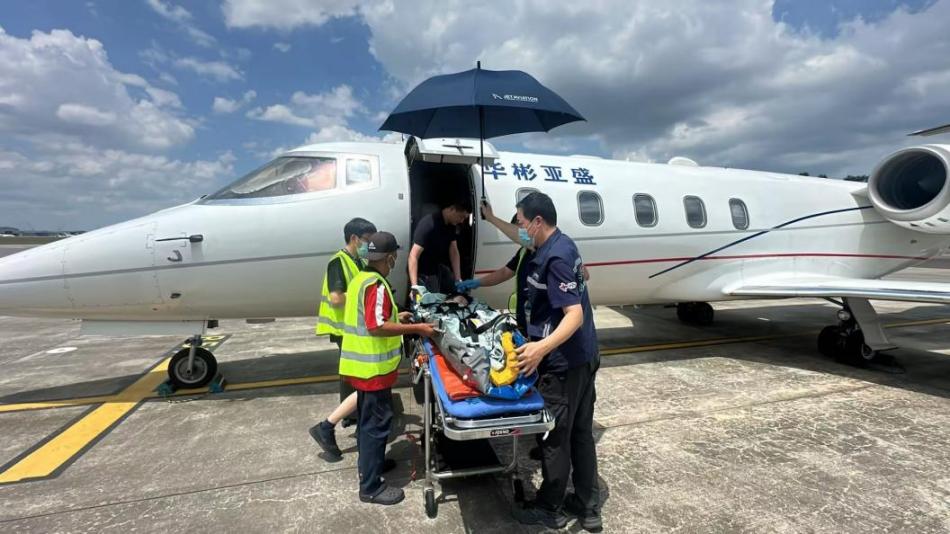
The Importance of the Post Repatriation Handover
It is a common assumption amongst families that once an air ambulance takes off with a patient on board, every thing is in order. This is far from the truth. Transferring a patient from an international medical escort to a domestic hospital’s care is one of the most fragile moments within the entire Repatriation process. The failure of this process can result in patients experiencing:
1.Missing or repeated diagnostic tests
2.An interruption to essential medication, including anticoagulants and sedatives
3.The loss of an airway or ventilation during a ground transfer
4. No acceptance from the local hospital on account of inadequate transfer paperwork
To achieve a successful Air Ambulance Repatriation, a comprehensive, multi-layered handover system must be developed and implemented that preserves clinical continuity from the Air Ambulance door to the ICU bed.
Building Blocks of a Seamless Medical Handover
A seamless medical handover is not just an oral report, rather it is the totality of the following four elements:
1. Complete Clinical Report
•In the native and destination languages, a pre flight medical report
•A 15 or 30 minute interval record of vitals during the flight
•A report on meds, inclusive of times, doses and routes
•Documented transfer images and lab results with pre arrival digital sharing, if possible
2. Direct Communication Between Medical Teams
•A conference call or video handover involving the air ambulance doctor, the receiving intensivist, and the case manager
•Use of standardized tools like SBAR (Situation, Background, Assessment, Recommendation)
3. Bedside-to-Bedside Transport Continuity
•No “gap” where the patient is unattended – the air ambulance crew stays until the local team formally accepts care
•Ground ambulance equipped with ICU-level monitors if the hospital helipad is unavailable
4. Patient & Family Briefing
•Explain what to expect in the first 24 hours (new tests, medication changes)
•Provide a written after-care plan
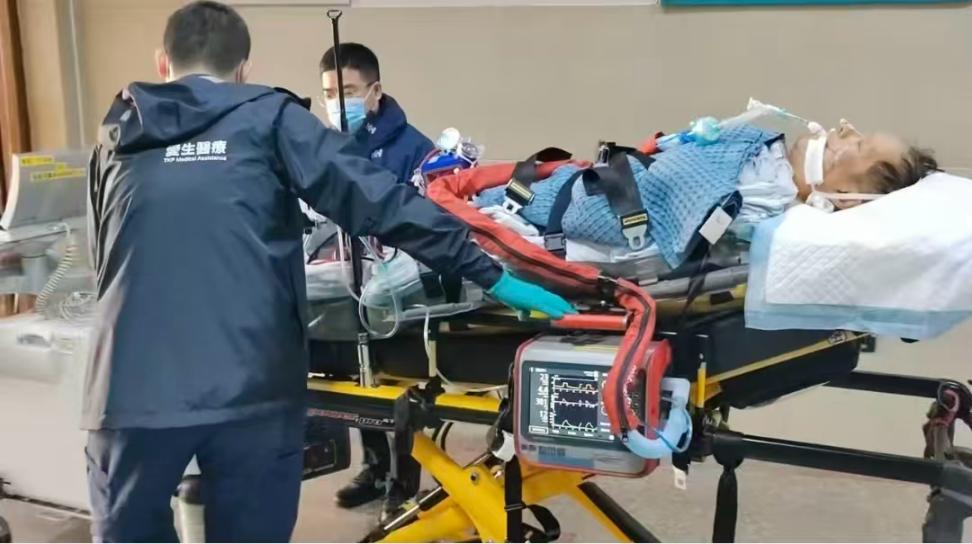
The Role of Professional Medical Transport Services in Smooth Transitions
This is where experienced Medical Transport Services make all the difference. Our dedicated team specializes in safe and efficient cross-border emergency and non-emergency medical transfers using multiple modes. Whether it’s a complex Air Ambulance Repatriation or a simpler domestic transfer, we ensure continuous, high-quality care throughout the journey – and that includes the handover.
Our service offerings directly support post-repatriation handover :
•Commercial stretcher transport with airline approval – Ideal for stable patients who have already been repatriated via air ambulance but need onward ground or rail transfer without losing medical escort.
•Air ambulance services with full onboard medical escort – For critically ill patients, our flight ICU team personally hands over the patient to the receiving hospital’s intensivist.
•Integrated transport via high-speed rail and ambulance – Perfect for post-repatriation transfers across cities (e.g., from an international airport to a specialized neuro-rehab center), where high-speed rail offers a smoother, faster alternative to road.
By combining these modalities, we eliminate “blind spots” where care might otherwise drop off.
Step-by-Step: What Actually Happens During a Post-Repatriation Handover?
An example Air Ambulance Repatriation handover scenario goes like this:
- Pre-arrival notification (2 hours before landing)
A digital handover package, including the patient’s vitals, medications, and alerts, is sent to the designated receiving hospital’s ED and ICU by our operations center.
- Landing and aircraft-side assessment
The receiving team meets the air ambulance on the tarmac. A quick bedside check is performed – airway, breathing, circulation, lines, drains.
- Controlled transfer to ground ambulance
If the hospital is off-airport, a ground ambulance with a critical care paramedic accompanies the patient. The air ambulance nurse stays in the ambulance.
- Hospital arrival – formal sign-out
At the ICU, the air ambulance doctor completes a 10-minute structured handover using the SBAR format. All original flight records are signed over.
- Post-handover follow-up (24 hours)
Our case manager calls the receiving nurse to confirm that all therapies have been resumed and no transfer-related adverse events occurred.
This documented process has been shown to reduce medical errors during handover by over 60%.
Why Multi-Modal Transport Strengthens Post-Repatriation Care
Not every patient repatriated by air ambulance needs to go directly to a hospital. Some require:
•High-speed rail medical transfers for intercity rehabilitation (less vibration than road, faster than air for medium distances)
•Commercial stretcher transport for stable patients moving from the arrival airport to a long-term care facility
Our Medical Transport Services integrate these options seamlessly. For example, after an Air Ambulance Repatriation from Asia to Europe, a patient with spinal injury may travel by high-speed rail from the airport city to a specialized rehab center 300 km away – with the same medical escort and monitoring equipment throughout.
The Bottom Line
Families often focus on the flight itself, but the hours after landing are equally critical. A fragmented handover can undo all the benefits of a timely Air Ambulance Repatriation. By choosing a provider that emphasizes structured communication, multi-modal transport, and bedside-to-bedside continuity, you ensure that your loved one returns home not just safely – but to continuous, uninterrupted care.
Need a reliable partner for cross-border repatriation? TKP Medical Assistance delivers end-to-end solutions, from the first distress call to the final handshake with your local doctor. Contact us to learn how our integrated Medical Transport Services – including air ambulance, commercial stretcher, high-speed rail, and ground ambulance – can protect your patient at every mile, including the most critical one: the handover.
Frequently Asked Questions (FAQ)
- How long does the post-repatriation handover usually take?
A professional bedside-to-bedside handover typically takes 15–30 minutes, including verbal report, chart review, and physical assessment. In a typical bedside-to-bedside handover, there is a verbal report, chart review, and handover physical assessment which take about 15 to 30 minutes. The transfer of the patient from the aircraft to their hospital bedside can take 1 to 2 hours and depends on the distance of the ground transport.
2. Are there any specific documents I need to prepare for the handover?
Yes. You must present a copy of the flight’s medical record, a copy of the patient’s medication list, a copy of any pertinent lab or imaging studies, and the signed acceptance letter from the hospital. Your air ambulance provider should provide these documents in both the language of the origin and destination.
3. Is it possible for a family member to remain with the patient during the handover?
Most of the time, one family member is allowed to remain with the patient for the ground transport and the patient’s first admission to the hospital, if it does not interfere with the provision of emergency medical care. Please consult the medical escort well in advance.
4. What will happen if the local hospital will not accept the patient?
If a medical transport service is reliable, they should have determined hospital acceptance before leaving the origin. An unexpected refusal should prompt the escort team to stabilize the patient and the Operations team will have to contact other hospitals to find one who is accepting. This should highlight the importance of pre-handover coordination.
5. Will repatriation and ground transport insurance cover the handover, and will the other services be reimbursed?
For possible ground and transport insurance, hospital admission insurance, and other handover related services, repatriation insurance is very likely, and will cover the services, but should double check their coverage for “local transport” and “post-evacuation care” prior to repatriation.
Submit Your Request
Recent Posts


Tags
- Air Ambulance
- Bedside To Bedside
- Cross Border Aid
- Emergency Evacuation
- Global Medical Rescue
- How can I ensure the patient's stability while in the air?
- How do I request an air medical transport?
- How is it different from an air ambulance
- how to activate emergency aircraft service
- how to request an air ambulance
- Is air medical transport safe
- Is international transport possible
- Medical Rescue
- Medical Transport
- Patient Repatriation
- Remote Rescue
- Seamless Coordination
- Telemedicine Support
- Tourists And Expats Medical Escort
- What are the benefits of a cross-border medical transfer
- What are the different types of transfers
- What are typical use cases
- What documents do I need to prepare for a transfer?
- What does high-speed rail patient transfer stands for
- What is air ambulance
- What is air medical transport?
- What is cross-border medical transfer
- What is emergency aircraft
- what is high-speed rail patient transfer
- What is medical charter flight
- what is neonatal ICU transfer
- What is patient air transfer
- What medical equipment is available on board the aircraft
- What situations shouldn't use air medical transport?
- What types of air ambulance are there?
- What types of air ambulance exist
- What's the difference between international and domestic transfers?
- what’s the difference between air medical transport and regular ambulance?
- When is emergency air transport necessary
- Which patients require air medical transport?
- who is included in the medical team
- who needs an air ambulance