


Cross-Border Medical Air Transport: The Art of Transporting Life Across Borders


When a critical illness or traumatic injury strikes far from home, like while traveling, working abroad, or living in a remote area, the right medical care often requires an air race set against time. Medical Air Transport is different from logistical challenges and becomes a life-saving endeavor. However, transporting a critically ill patient across international borders is far more than a flight booking. It requires a complex coordination of real-time efforts harmonizing aviation and intensive care medicine with legal clearance.
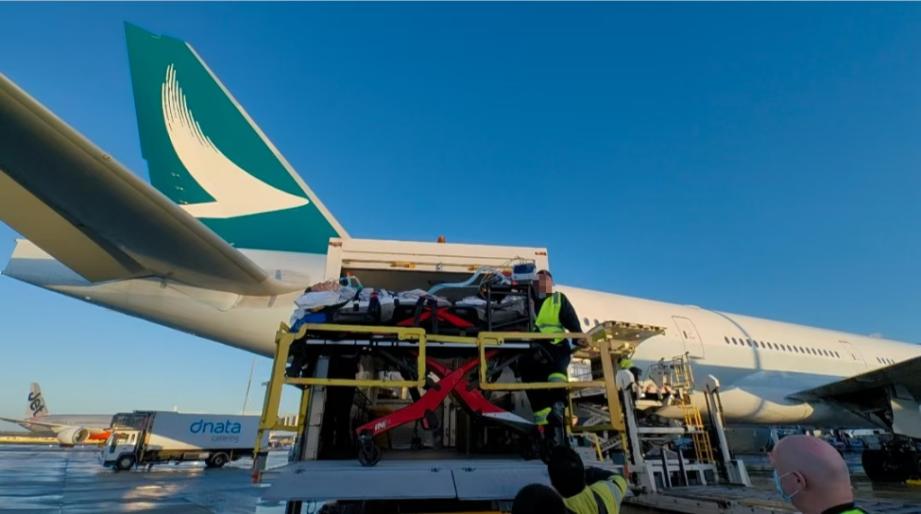
What Is Cross-Border Medical Evacuation?
Cross-border Global Medical Evacuation refers to the organized transfer of a patient from a foreign or remote location to their home country or to a specialized medical facility elsewhere. Unlike routine ambulance rides, these operations involve:
•International flight permits and overflight rights
•Customs and immigration facilitation for both patient and medical crew
•Ground ambulance handovers at departure and arrival airports
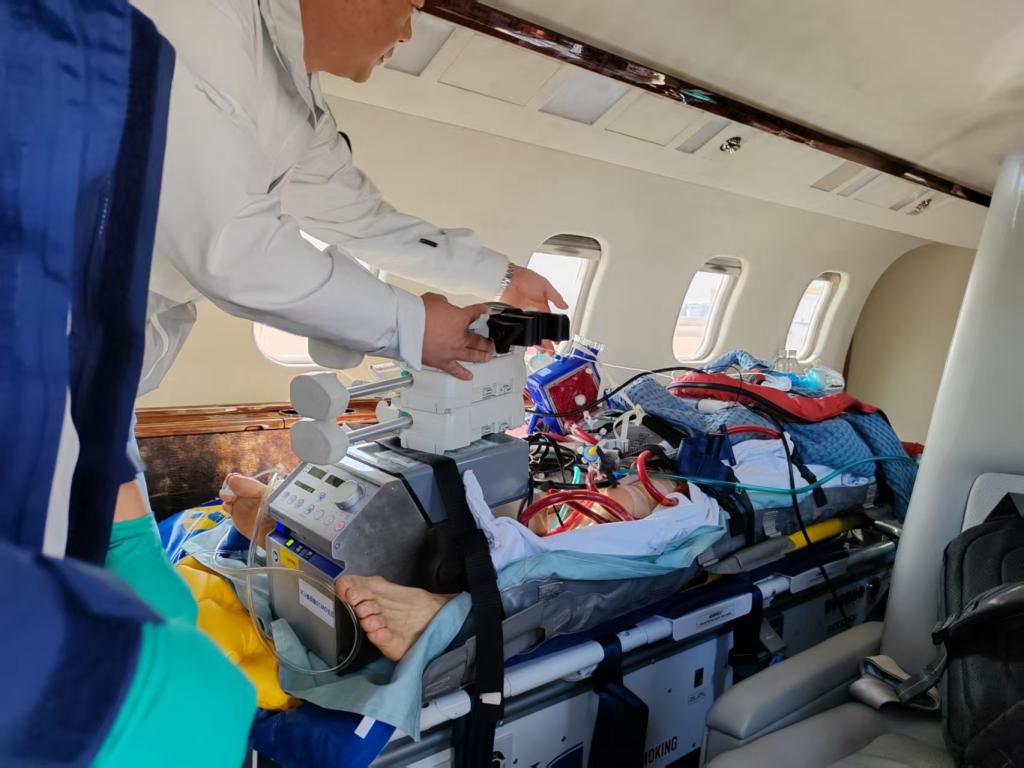
•Continuous in-flight intensive care, often in a miniaturized “flying ICU”
Every minute counts. And every decision – from the choice of aircraft to the route taken – directly impacts the patient’s survival and recovery.
The Hidden Complexity: More Than Just an Airplane
Many people think of Medical Air Transport as just putting some sort of stretcher inside a private jet. In fact, every mission is a complex, high-stakes operation and multiple parties are involved:
•Medical personnel: ICU doctors, critical care nurses, respiratory therapists
•Aviation dispatchers: flight dispatchers, fuelers, landing slot controllers
•Ground transport: ambulance crews, wheelchair escorts, and interpreters
•Administrative contacts: hospital administrators, embassies, insurance case workers
One delay in any of these links can compromise the entire transport. That is why seasoned operators are dedicated to a mission as a bed-to-bed, end-to-end service.
TKP Medical Assistance: 24 Years of Bridging Borders
TKP Medical Assistance is the first name for many for cross-border patient transport. In 2001, their office opened in Shenzhen, China. With 24 years of experience, this organization transformed from a regional operator to a global Medical Air Transport Company. To optimize rapid local responses and seamless transport coordination, they have expanded to six branch offices in Southern, Eastern, Central, and Southwestern China.
•By the Numbers – A Snapshot of Expertise
•24+ years of unbroken service
•71,000+ medical consultations globally
•60+ wholly owned staff members
•10,000+ evacuations
•20+ operational support and defense partners worldwide
These are not just statistics. Each figure tells a story of a family reunited or an hour of a critical situation that was saved.
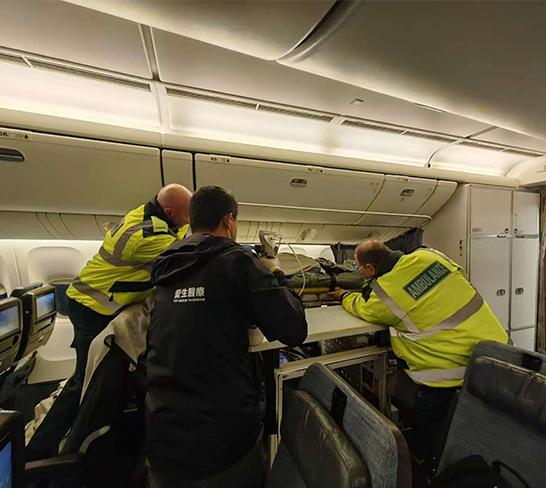
The Art of Route Planning: Connecting the Unconnected
Global Medical Evacuation route mapping is an undervalued, yet vital, skill. Most patients do not end up in a capital city with a large, modern airport. Many emergent situations occur in remote, underserved, or politically unstable locations which have poor or no transportation infrastructure. TKP Medical Assistance has constructed a route map with flexible, extensive transfer pathways to link even the most remote situations with advanced medical care.
Important Aspects of Their Route Planning
•Dynamic flight planning – routes are reformulated in real-time based on the patient’s current condition and level of urgency.
•Global coverage – routes seamlessly connect domestic travel in China to international travel throughout Asia, Europe, North America, and beyond.
•Access to airports with limited infrastructure – they frequently work from very small airstrips that are not serviced by commercial airline.
•Improved flight paths – decreased travel time and less psychological trauma for the patient.
•High level of engagement with hospitals and embassies – for expedited clearance to land and waivers for medical visas, and uninterrupted medical transfer to another hospital.
Every route is monitored live by a dedicated operations center. If weather conditions worsen or a patient’s condition changes mid-flight, alternative landing sites are activated immediately.
The Flying Intensive Care Unit (ICU)
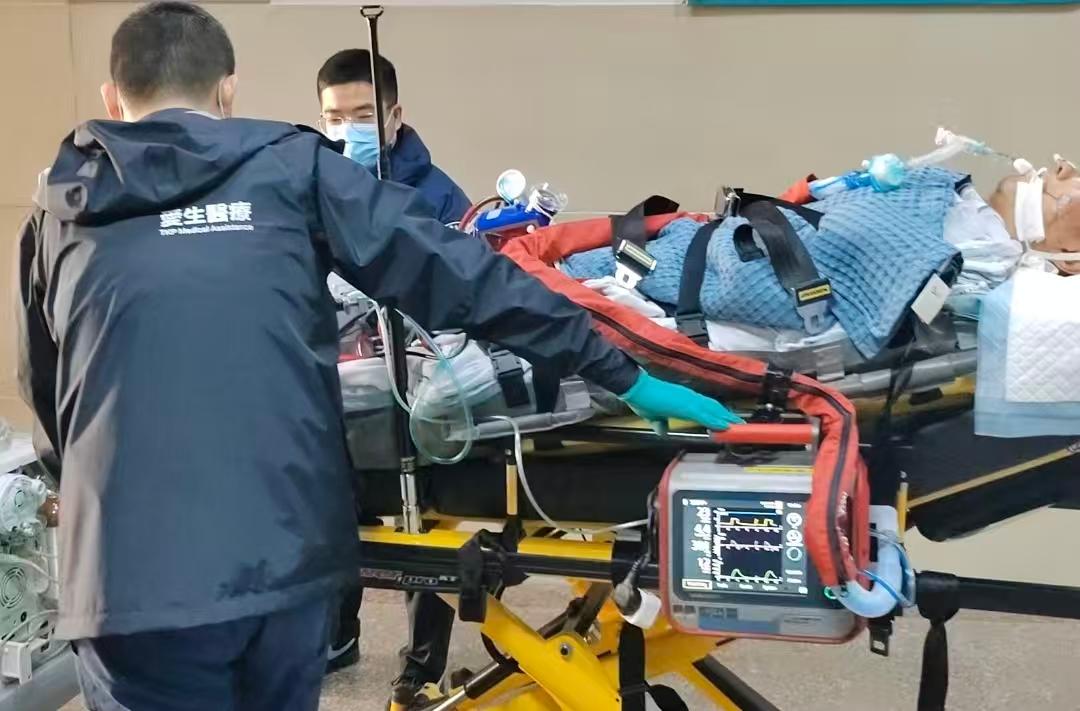
A Medical Air Transport mission is not just a ride – it is a mobile intensive care unit at 35,000 feet. TKP Medical Assistance equips every mission with portable advanced life support (ALS) or advanced cardiac life support (ACLS) systems. Their standard onboard medical kit includes:
•Transport-ready ICU monitors (continuous ECG, SpO2, invasive blood pressure)
•Critical care ventilators with neonatal, pediatric, and adult modes
•Multiple oxygen supply systems (compressed and liquid, with in-flight refill capability)
•Infusion pumps for precise drug delivery (vasopressors, sedatives, antiarrhythmics)
•Extracorporeal membrane oxygenation (ECMO) – available for the most critically unstable patients, including those with severe cardiac or respiratory failure
All equipment is aviation-certified (compliant with RTCA/DO-160 standards) and customized for both adult and pediatric patients – from a 2 kg newborn to a bariatric adult.
The Bed-to-Bed Journey: A Step-by-Step Process
To understand the true value of professional Global Medical Evacuation, it helps to walk through a typical mission arranged by TKP Medical Assistance:
•Initial call & medical assessment – A case manager collects the patient’s diagnosis, current vital signs, and location details. Within 30 minutes, a critical care physician determines if air transport is safe and necessary.
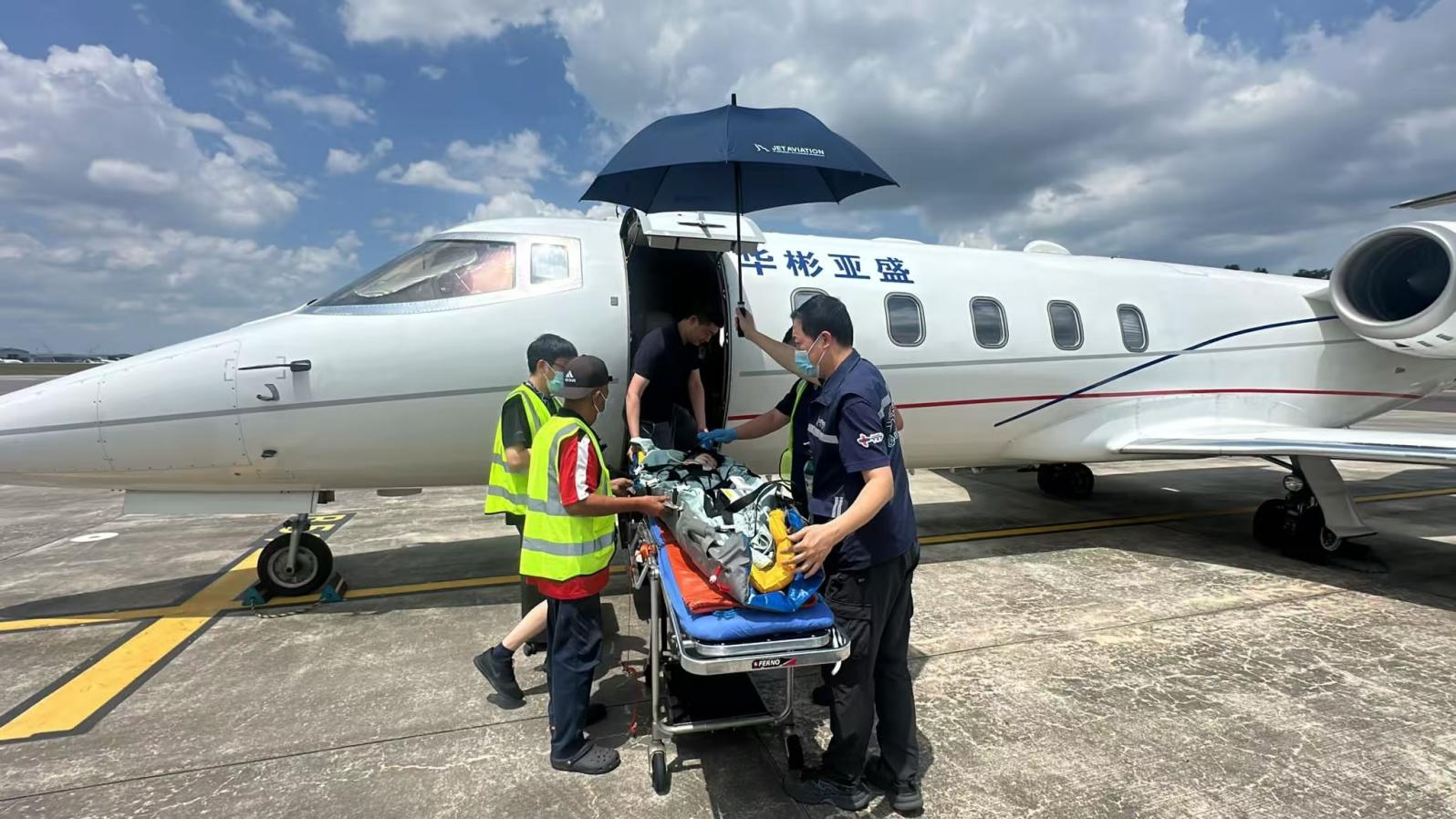
•Ground ambulance pickup – A mobile ICU team stabilizes the patient at the originating hospital and transports them to the departure airport.
•Flight Coordination – Dispatchers handle the securing of landing permits, arrange fuel stops, and deal directly with air traffic control.
•In-Flight Critical Care – Treatment and monitoring continue once the patient is on board the customized aircraft.
•Cross-Border Transfers – The patient is taken directly to the ICU of the receiving hospital, bypassing the emergency department, thanks to a dedicated ambulance that ferried the aircraft after landing.
From bedside to bedside – no detail is overseen.
Why Choose a Qualified Provider Like TKP?
There’s a breadth of skill levels among Medical Air Transport Operators. Why should our TKP Medical Assistance clients care?
•Around the Clock Multilingual Coordination – English, Mandarin, Cantonese, etc.
•Consistent Pricing – Everything is detailed and costs stated are pre-approved. No surprises.
•Embassies and Insurance – Reimbursements and necessary documents are prepared by the team.
•Pediatrics and Neonatal – The most vulnerable patients receive the highest level of care.
Conclusion: When Distance Must Not Mean Danger
Cross-Border Medical Air Transport is one of the most specialized and demanding transports in modern medicine. It is a combination of medical excellence and innovation, law, and an unparalleled commitment to client care. TKP Medical Assistance has dedicated more than twenty years to perfecting this art – one patient, one path, one goal.
Whether you are a traveling executive, an expatriate family, or a hospital administrator seeking a reliable evacuation partner, remember: In a medical emergency away from home, the standard of your transport can be the difference between the loss of a patient and the saving of a life. Choose experience. Choose Global Medical Evacuation with TKP Medical Assistance.
*Need immediate assistance or want to learn more about our Medical Air Transport services? Contact TKP Medical Assistance – operating 24/7/365 from our Shenzhen headquarters and six regional offices across China.*
Frequently Asked Questions (FAQ)
- Will my insurance cover Global Medical Evacuation?
Many travel insurance policies and international health plans include emergency evacuation benefits. TKP’s coordination team works directly with your insurer to verify coverage and handle paperwork – no upfront payment required in many cases.
- Can a family member fly with the patient?
Yes. Most missions allow one accompanying family member to travel in the cabin. Seating arrangements and additional passengers can be discussed during case planning.
- What medical conditions can be safely transported by air?
From post-surgical patients and cardiac cases to patients on ventilators, ECMO, or with multi-organ failure – TKP Medical Assistance has transported over 10,000 cases, including neonatal, pediatric, and bariatric patients. A pre-flight medical assessment determines fitness for travel.
- How much does cross-border Medical Air Transport cost?
Costs vary widely based on distance, aircraft type, medical team size, and equipment needed (e.g., ECMO). A typical international medical evacuation ranges from 25,000 to 150,000+. TKP provides a free, no-obligation quote within hours of receiving the patient’s medical report.
Submit Your Request
Recent Posts
Tags
- Air Ambulance
- Bedside To Bedside
- Cross Border Aid
- Emergency Evacuation
- Global Medical Rescue
- How can I ensure the patient's stability while in the air?
- How do I request an air medical transport?
- How is it different from an air ambulance
- how to activate emergency aircraft service
- how to request an air ambulance
- Is air medical transport safe
- Is international transport possible
- Medical Rescue
- Medical Transport
- Patient Repatriation
- Remote Rescue
- Seamless Coordination
- Telemedicine Support
- Tourists And Expats Medical Escort
- What are the benefits of a cross-border medical transfer
- What are the different types of transfers
- What are typical use cases
- What documents do I need to prepare for a transfer?
- What does high-speed rail patient transfer stands for
- What is air ambulance
- What is air medical transport?
- What is cross-border medical transfer
- What is emergency aircraft
- what is high-speed rail patient transfer
- What is medical charter flight
- what is neonatal ICU transfer
- What is patient air transfer
- What medical equipment is available on board the aircraft
- What situations shouldn't use air medical transport?
- What types of air ambulance are there?
- What types of air ambulance exist
- What's the difference between international and domestic transfers?
- what’s the difference between air medical transport and regular ambulance?
- When is emergency air transport necessary
- Which patients require air medical transport?
- who is included in the medical team
- who needs an air ambulance