


Documents Required for Patient Air Transfer For Medical Treatment Abroad


Documentation for Patient Air Transfer For Medical Treatment Abroad is not simply an administrative checklist. It is the evidence used to determine whether the patient can tolerate the journey, which transport mode is clinically appropriate, what support is required in flight, and whether the receiving hospital can continue care immediately after arrival.
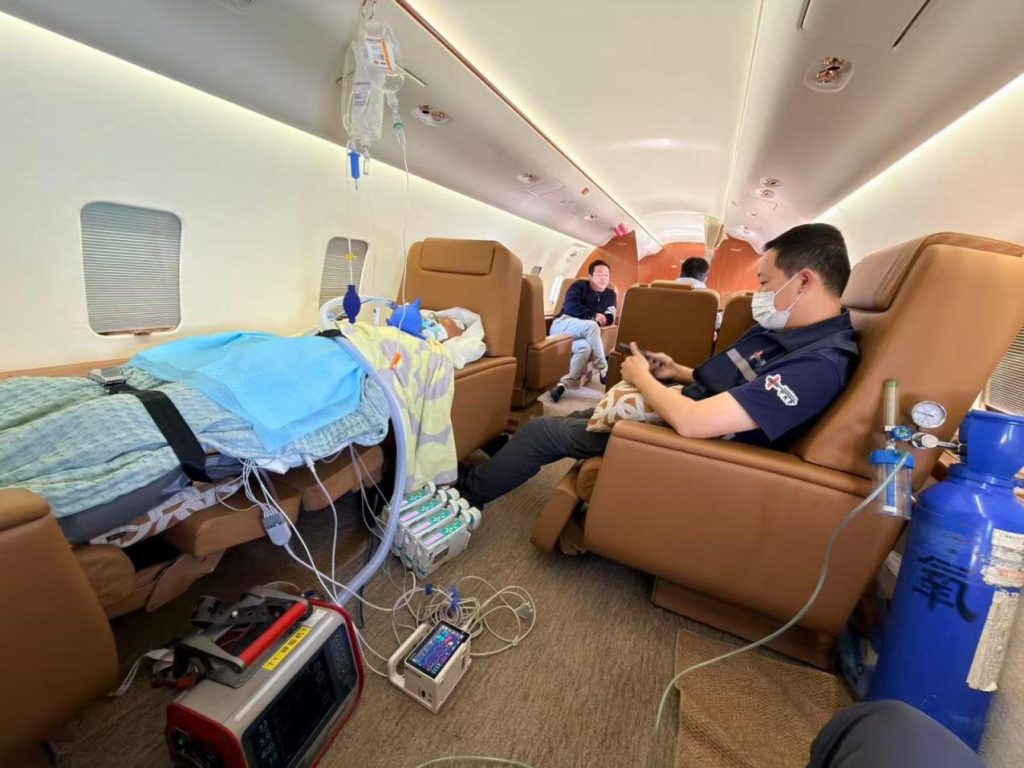
At TKP Medical Assistance, we organize the transfer file around four separate approvals:
• Clinical acceptance: Is the patient fit to move under defined conditions?
• Aviation acceptance: Can the airline or aircraft operator accommodate those conditions?
• Destination acceptance: Is a hospital, physician and bed confirmed?
• Administrative acceptance: Are immigration, medication, insurance and consent requirements complete?
Approval in one area does not replace approval in another.
Required Documents Vary by Transport Mode
The first step in Patient Air Transfer For Medical Treatment Abroad is selecting the appropriate transport method. The documentation burden changes substantially between a seated passenger, a commercial stretcher patient and an ICU-level air ambulance case.
| Transport Method | Typical Clinical Profile | Key Documentation |
| Commercial flight with medical escort | Stable, able to sit, limited risk of deterioration | Fit-to-fly certificate, MEDIF if requested, mobility and oxygen plan |
| Commercial airline stretcher | Stable but unable to remain seated | MEDIF, stretcher confirmation, escort plan, handling arrangements |
| Fixed-wing air ambulance | Critical, ventilated or clinically high-risk | Detailed ICU summary, operator acceptance, equipment plan and cross-border clearances |
A lower-cost option is not appropriate simply because the patient appears “stable.” The assessment must consider the entire bedside-to-bedside mission, including ambulance journeys, airport waits, transfers, security procedures and possible transit stops.
Build a Current Clinical Transfer File
For Patient Air Transfer For Medical Treatment Abroad, a discharge summary written several days earlier may not be sufficient. The transport team needs a time-stamped clinical picture that reflects the patient’s condition at mission planning.
Essential Clinical Records
The file should include:
• Primary diagnosis and reason for transfer
• Relevant medical and surgical history
• Recent procedures and complications
• Current neurological status, including GCS where applicable
• Heart rate, blood pressure, respiratory rate, temperature and SpO₂ trends
• Recent laboratory, imaging and microbiology results
• Allergies and infection or isolation status
• Medication names, concentrations, doses, routes and schedules
• Mobility, positioning and pressure-area requirements
• Patient height and weight for loading and stretcher planning
• Contact details for the current treating physician
Documents should show the date, local time, measurement units, issuing facility and responsible clinician. Records should be supplied in English or supported by a reliable clinical translation.
Additional ICU Information
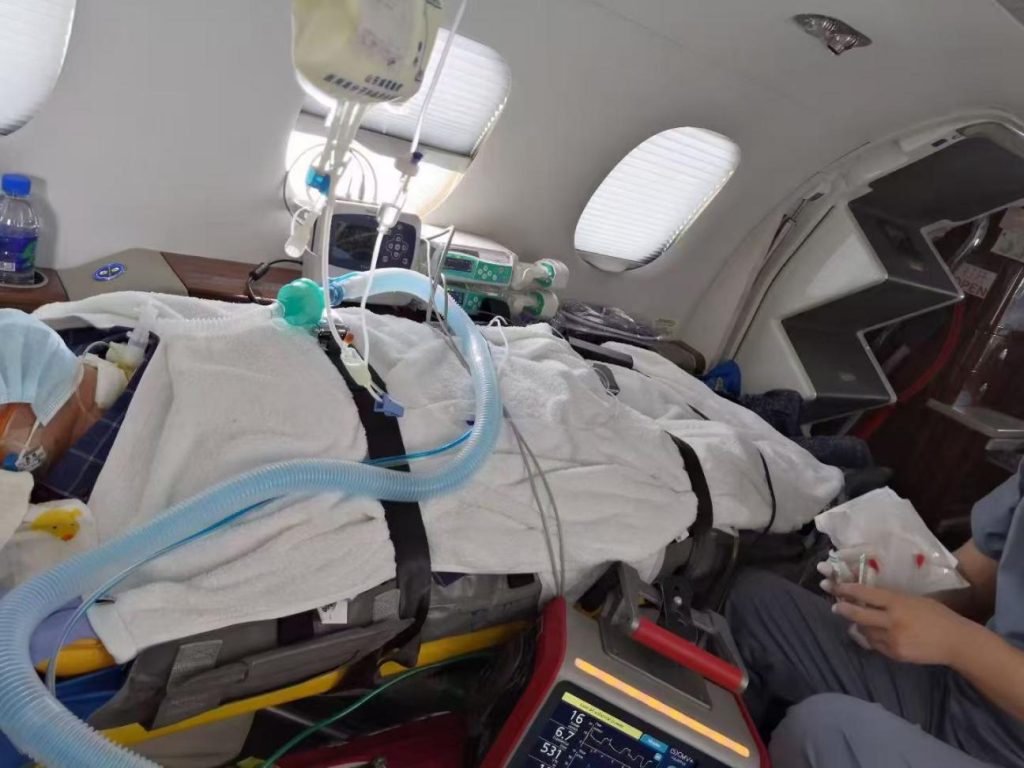
A critical-care transfer file should document the support that must continue without interruption:
• Airway type, size, position and last confirmation
• Ventilator mode, respiratory rate, tidal volume, PEEP and FiO₂
• Oxygen delivery method and current flow
• Vasoactive, sedative and other continuous infusion rates
• Central lines, arterial lines, drains and catheters
• Recent blood gas results and hemodynamic trends
• Suction, positioning and emergency intervention requirements
• Anticipated deterioration risks during ground and air sectors
These details allow TKP Medical Assistance to match the medical team, oxygen reserves, monitors, ventilator, infusion pumps and contingency equipment to the actual clinical risk.
Fit-to-Fly and MEDIF Are Not the Same
These documents are frequently confused during Patient Air Transfer For Medical Treatment Abroad.
| Document | Decision It Supports | Important Content |
| Fit-to-fly certificate | Treating physician’s clinical opinion | Diagnosis, stability, travel conditions and required support |
| MEDIF | Commercial airline medical review | Assistance, oxygen, stretcher, equipment and infection information |
| Medical escort plan | In-transit care capability | Escort qualifications, monitoring, medication and contingency plan |
| Operator acceptance | Final mission feasibility | Aircraft access, range, equipment, crew and clinical risk |
A fit-to-fly letter stating only that the patient is “stable” provides limited operational value. It should specify whether the patient can sit upright, tolerate cabin conditions, transfer between surfaces and travel with the proposed oxygen or monitoring plan.
MEDIF formats, review procedures and submission windows vary by airline. Even after the treating doctor signs the form, the carrier’s medical department can request clarification or decline transport. If the patient’s condition changes, the clinical documents may need to be updated and reassessed.
Confirm the Receiving Hospital Before Departure
Hospital acceptance is a critical control point. A flight should not be finalized without a workable destination handover.
The acceptance documentation should identify:
• Hospital, department and receiving physician
• Confirmed bed or admission pathway
• Working diagnosis and proposed treatment
• Required arrival time or admission window
• Clinical prerequisites for acceptance
• Admission contact available during arrival
• Deposit, insurance or payment-guarantee status
Hospital acceptance does not constitute aviation clearance. Equally, an approved flight is not a complete transfer plan if the destination hospital has not confirmed responsibility for the patient.
Check Cross-Border and Medication Documents
Administrative requirements for Patient Air Transfer For Medical Treatment Abroad depend on nationality, destination, transit points and patient capacity.
The case file may require:
• Valid passport and destination visa
• Transit visa or entry authorization
• Consent from a parent, guardian or legal representative
• Medical transport and information-sharing consent
• Physician letter for prescription medication
• Generic drug names, doses and indications
• Permission for narcotics or controlled substances
• Medical oxygen and equipment declarations
• Battery specifications for powered medical devices
• Vaccination, laboratory or infection-control records
Medication should normally remain in original labelled containers. Controlled drugs can be restricted even when legally prescribed in the departure country. Requirements should therefore be checked for every destination and transit jurisdiction, not only the final country.

Separate Financial Approval From Medical Approval
Insurance authorization confirms funding responsibility; it does not prove that the patient is fit to fly.
A complete financial file should define:
• Policy and claim references
• Medical-necessity assessment
• Prior authorization or guarantee of payment
• Approved transport mode and medical team
• Ground ambulance and airport-handling coverage
• Exclusions, deductibles and cancellation terms
• Responsibility for additional costs if the condition changes
For planned treatment abroad, the family should also confirm whether reimbursement requires pre-authorization from the insurer or national healthcare system.
Use a Controlled Pre-Departure Workflow
At TKP Medical Assistance, the document process for Patient Air Transfer For Medical Treatment Abroad follows operational checkpoints:
- Collect identification, itinerary and hospital contacts.
- Review current clinical records and missing information.
- Select the medically appropriate transport mode.
- Obtain receiving-hospital acceptance.
- Complete airline or operator medical review.
- Verify visas, medication and equipment restrictions.
- Confirm financial authorization and patient consent.
- Obtain a final clinical update before mobilization.
- Issue the verified file to the escort and receiving team.
Each document should be tracked by version, issue time, issuing clinician and status—pending, approved, updated or superseded.
Preventable Documentation Delays
Common causes of delay include:
• Old medical summaries that omit recent deterioration
• Conflicting oxygen or medication information
• Unsigned MEDIF sections
• Fit-to-fly letters without defined travel conditions
• Verbal hospital acceptance without an admission contact
• Unchecked transit-visa requirements
• Undeclared controlled medication or lithium batteries
• Failure to repeat clinical review after a new procedure
Coordinating the Complete Transfer File
Successful Patient Air Transfer For Medical Treatment Abroad depends on one verified information pathway connecting the sending hospital, medical team, aircraft operator, insurer and receiving facility.
TKP Medical Assistance can review the initial medical file, identify missing documentation, coordinate aviation clearance, confirm the receiving hospital and organize continuous bedside-to-bedside transport. Early case review helps resolve documentation gaps before they become clinical or operational delays.
FAQs
Q1. What documents are need to assess a patient transfer?
TKP Medical Assistance normally requests the patient’s medical summary, current clinical observations, medication list, recent test results, passport details, current hospital information and intended receiving facility. Additional records may be required for ventilated or high-risk patients.
Q2. Can TKP Medical Assistance issue a fit-to-fly certificate?
The current treating physician usually completes the fit-to-fly assessment. TKP Medical Assistance can review the information for transport planning, identify missing clinical details and coordinate with the airline or aircraft operator. Final aviation acceptance remains with the carrier or operator.
Q3. Does TKP Medical Assistance coordinate airline MEDIF approval?
Yes. For eligible commercial airline transfers, TKP Medical Assistance can help collect, review and coordinate the required MEDIF documentation. The airline’s medical department makes the final decision and may request updated information.
Q4. How does TKP select the appropriate air transfer method?
TKP evaluates clinical stability, ability to sit, oxygen requirements, monitoring needs, risk of deterioration, route length and airport handling. The resulting plan may use a seated medical escort, commercial airline stretcher or fixed-wing air ambulance.
Q5. Is receiving-hospital acceptance required before departure?
A confirmed destination hospital, department and receiving physician are normally essential. TKP Medical Assistance can coordinate admission details and the clinical handover, but bed availability and final acceptance are controlled by the receiving facility.
Submit Your Request
Recent Posts


Tags
- Air Ambulance
- Bedside To Bedside
- Cross Border Aid
- Emergency Evacuation
- Global Medical Rescue
- How can I ensure the patient's stability while in the air?
- How do I request an air medical transport?
- How is it different from an air ambulance
- how to activate emergency aircraft service
- how to request an air ambulance
- Is air medical transport safe
- Is international transport possible
- Medical Rescue
- Medical Transport
- Patient Repatriation
- Remote Rescue
- Seamless Coordination
- Telemedicine Support
- Tourists And Expats Medical Escort
- What are the benefits of a cross-border medical transfer
- What are the different types of transfers
- What are typical use cases
- What documents do I need to prepare for a transfer?
- What does high-speed rail patient transfer stands for
- What is air ambulance
- What is air medical transport?
- What is cross-border medical transfer
- What is emergency aircraft
- what is high-speed rail patient transfer
- What is medical charter flight
- what is neonatal ICU transfer
- What is patient air transfer
- What medical equipment is available on board the aircraft
- What situations shouldn't use air medical transport?
- What types of air ambulance are there?
- What types of air ambulance exist
- What's the difference between international and domestic transfers?
- what’s the difference between air medical transport and regular ambulance?
- When is emergency air transport necessary
- Which patients require air medical transport?
- who is included in the medical team
- who needs an air ambulance