


Patient Transfer Company Guide to Transporting Highly Infectious Patients Safely


Transporting a patient with a suspected or confirmed highly infectious disease is not simply an ambulance or flight operation. It is a controlled clinical pathway in which patient stability, transmission risk, medical capability, infection prevention, crew protection, route feasibility and receiving-hospital readiness must be managed together.
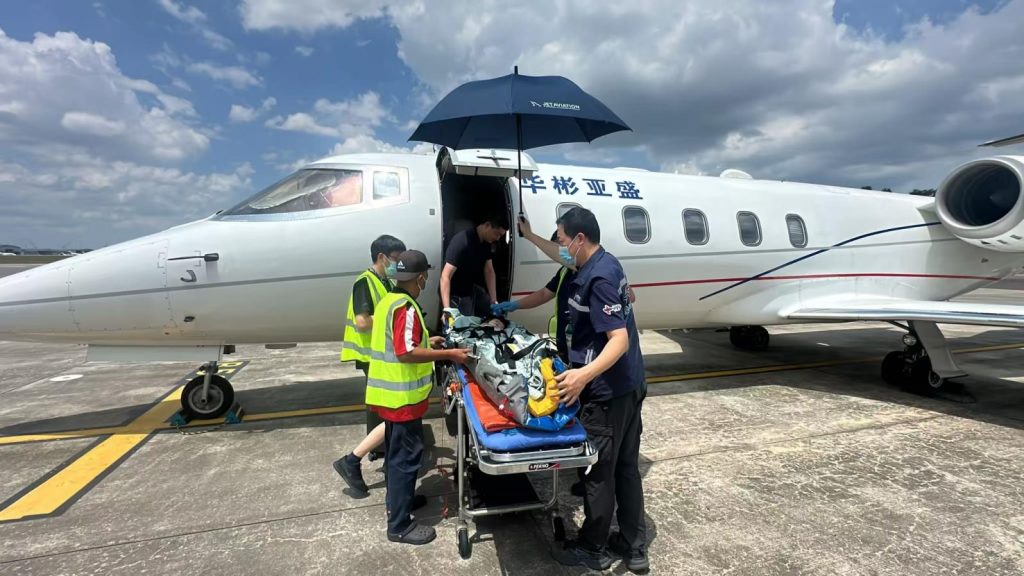
At TKP Medical Assistance, we see the role of a Patient Transfer Company as coordinating this entire chain—from pre-transfer medical review to bedside-to-bedside handover. For infectious cases, however, precautions and transport configuration must always be assessed individually.
Why Infectious Patient Transfer Requires a Different Risk Model
A routine transfer asks whether a patient can travel safely. An infectious transfer adds a second question: can the journey be completed without creating unacceptable exposure risk?
A Patient Transfer Company therefore manages two safety systems simultaneously:
Patient safety: airway, oxygenation, ventilation, circulation, medication, monitoring and deterioration risk.
Infection safety: transmission route, PPE, source control, isolation strategy, contamination control and decontamination.
These systems interact. Emergency airway or other interventions may also increase exposure risk.
1. Start With Clinical and Infection-Risk Assessment
Before selecting a vehicle or aircraft, a Patient Transfer Company should establish a current transfer profile.
| Assessment Area | Key Decision |
| Clinical stability | Can the patient tolerate loading, movement and total journey time? |
| Respiratory support | Is oxygen or mechanical ventilation required? |
| Deterioration risk | What interventions may be needed en route? |
| Infection status | Is the pathogen suspected or confirmed, and how is it transmitted? |
| Isolation requirement | What transmission-based precautions are required? |
| Destination readiness | Has the receiving hospital accepted the patient? |
Air medical transport adds constraints: limited space, finite supplies and possible diversion delays. CDC guidance for high-risk viral hemorrhagic fever transport emphasizes clinical stability, trained personnel and pre-planned infection-control measures.
From our perspective, transport mode should be the result of the clinical assessment—not the starting point of the discussion.
2. Match the Transport Mode to the Risk
A professional Patient Transfer Company should not automatically select the fastest option. The transport mode must follow the patient’s clinical requirement and infection-control profile.
•Ground ambulance: Regional or interfacility transfer.
•Dedicated air ambulance: Long-distance or critical-care transfer.
•Commercial stretcher: Only when the patient’s condition, infection-control requirements, airline rules and regulations permit.
•Multimodal transfer: Coordinated ground, air or rail segments within one bedside-to-bedside pathway.
At TKP Medical Assistance, we work across air ambulance, commercial stretcher, high-speed rail and ground ambulance services, allowing the transfer plan to be adapted to the individual case.
3. Infection Control Must Be Built Into the Mission
PPE is only one layer. A Patient Transfer Company must also control people, equipment, waste and potentially contaminated surfaces throughout the transfer.
Depending on the pathogen and applicable guidance, the operational plan may include:
•Defined clean and contaminated zones
•Appropriate PPE and controlled donning/doffing
•Removal of non-essential equipment from the patient area
•Minimizing sharps, splash-generating and aerosol-generating procedures where clinically possible
•Segregation of contaminated equipment and waste
•Spill response and environmental decontamination
•Post-transfer cleaning and disinfection
For selected high-risk infections, portable isolation or biocontainment may be required. CDC guidance for viral hemorrhagic fever air transport, for example, recommends a portable isolation unit when available and describes separation between clean and contaminated areas.
This is why an infectious transfer should never be reduced to a simple question of “Does the crew have PPE?”
4. Critical Care Must Remain Continuous
Infection control cannot replace critical care.
Before departure, the Patient Transfer Company and medical team should confirm:
•What serious deterioration is reasonably foreseeable?
•Can it be managed with the clinicians and equipment onboard?
•Is there sufficient oxygen, medication, battery capacity and consumables for the planned journey plus operational delays?
•Can emergency procedures be performed without compromising infection-control barriers?
At TKP Medical Assistance, our critical-care transfer planning can include ICU-level monitoring, transport ventilation and advanced life-support capability. Our wider critical-care experience also includes complex transfers involving ECMO and IABP support.
For an infectious patient, however, critical-care capability and infection-control requirements must be engineered into the same transport plan.
5. Cross-Border Transfer Is a Coordination Exercise
International infectious transfer may involve far more parties than the patient and medical crew:
•Referring hospital
•Receiving hospital
•Patient Transfer Company
•Ground ambulance teams
•Aircraft operator
•Airport authorities
•Public-health authorities
•Civil aviation authorities
•Immigration or customs
•Insurance and assistance organizations
Before activation, four dimensions should align:
- Medical feasibility
- Infection-control feasibility
- Transport and route feasibility
- Regulatory and receiving-facility acceptance
CDC guidance for certain viral hemorrhagic fever transfers specifically requires coordination with public health, civil aviation, ground transport, healthcare facilities and, where applicable, immigration and customs authorities.
For a cross-border Patient Transfer Company, this coordination is not secondary logistics—it is part of clinical risk management.
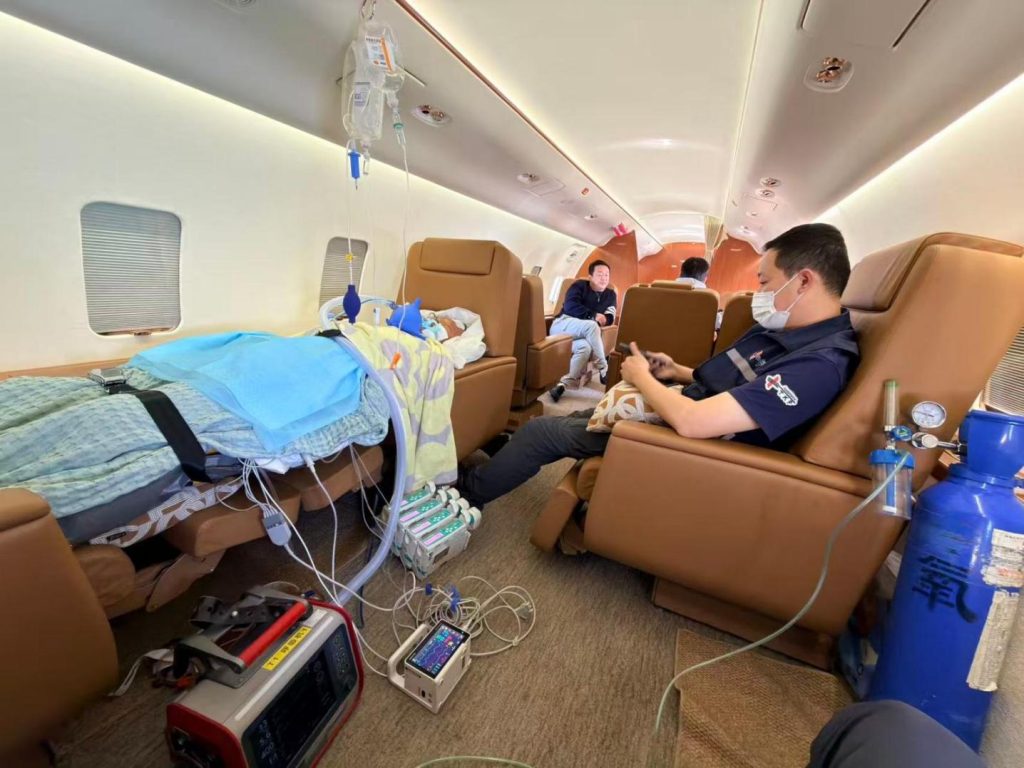
6. Bedside-to-Bedside Handover Is Part of the Safety Plan
A transfer does not begin at takeoff or end at landing.
Referring hospital → Ground ambulance → Airport → Aircraft → Destination ambulance → Receiving hospital
Every transition is a potential failure point. A Patient Transfer Company should maintain continuity of:
•Medical information
•Monitoring and oxygen support
•Medication and equipment
•Infection precautions
•Clinical responsibility
The final handover should document clinical status, medications, interventions during transport, infection precautions and any exposure incident. Cleaning, disinfection and waste handling then follow the relevant pathogen-specific and transport-environment requirements.
How to Evaluate a Patient Transfer Company
Before selecting a provider, ask practical questions:
•Who reviews the medical records and approves the transfer plan?
•How is infection risk assessed?
•Which clinicians will accompany the patient?
•What happens if the patient’s condition deteriorates?
•Who coordinates the sending and receiving hospitals?
•Who manages cross-border and aviation requirements?
•How are diversion, delay and equipment contingencies handled?
•How is bedside-to-bedside continuity maintained?
A credible Patient Transfer Company should be able to explain these decisions clearly—not simply provide a flight time and quotation.
TKP Medical Assistance: One Coordinated Clinical Pathway
At TKP Medical Assistance, we manage cross-border patient transfer as one clinical and logistical pathway—from medical assessment and resource activation to in-transit care and hospital handover. Our operations include multiple transport modes and 24/7 international coordination.
For a suspected or confirmed highly infectious disease, feasibility must still be determined individually according to diagnosis, transmission risk, clinical stability, isolation requirements, transport configuration and applicable regulations.
If your hospital, assistance organization or family is assessing a complex international transfer, TKP Medical Assistance can review the available medical information and help clarify the medically and operationally appropriate next steps.
FAQs:
Q1. What does TKP Medical Assistance do?
TKP Medical Assistance is a Patient Transfer Company specializing in cross-border medical transport and medical evacuation. It coordinates air ambulance, commercial stretcher, medical escort, ground ambulance and high-speed rail transfers according to the patient’s clinical condition and route.
Q2. Can TKP arrange international patient transfers?
Yes. TKP coordinates international and cross-border patient transfers, including medical assessment, transport planning, ground arrangements, in-transit care and receiving-hospital handover.
Q3. Can TKP transport ICU or ventilated patients?
Yes, subject to medical assessment. TKP can arrange critical-care teams, transport ventilators, ICU monitoring, oxygen, infusion pumps and other equipment according to the patient’s clinical requirements.
Q4. Does TKP provide bedside-to-bedside patient transfer?
Yes, depending on the agreed mission scope. TKP can coordinate the pathway from the referring hospital through ground and air transport to final handover at the receiving hospital.
Q5. Can TKP transport a patient with an infectious disease?
Potentially, but every case requires individual assessment. The patient’s diagnosis, transmission risk, clinical stability, isolation requirements, transport configuration and applicable regulatory requirements must be reviewed before feasibility is confirmed.
Submit Your Request
Recent Posts


Tags
- Air Ambulance
- Bedside To Bedside
- Cross Border Aid
- Emergency Evacuation
- Global Medical Rescue
- How can I ensure the patient's stability while in the air?
- How do I request an air medical transport?
- How is it different from an air ambulance
- how to activate emergency aircraft service
- how to request an air ambulance
- Is air medical transport safe
- Is international transport possible
- Medical Rescue
- Medical Transport
- Patient Repatriation
- Remote Rescue
- Seamless Coordination
- Telemedicine Support
- Tourists And Expats Medical Escort
- What are the benefits of a cross-border medical transfer
- What are the different types of transfers
- What are typical use cases
- What documents do I need to prepare for a transfer?
- What does high-speed rail patient transfer stands for
- What is air ambulance
- What is air medical transport?
- What is cross-border medical transfer
- What is emergency aircraft
- what is high-speed rail patient transfer
- What is medical charter flight
- what is neonatal ICU transfer
- What is patient air transfer
- What medical equipment is available on board the aircraft
- What situations shouldn't use air medical transport?
- What types of air ambulance are there?
- What types of air ambulance exist
- What's the difference between international and domestic transfers?
- what’s the difference between air medical transport and regular ambulance?
- When is emergency air transport necessary
- Which patients require air medical transport?
- who is included in the medical team
- who needs an air ambulance