


Medical Transport Charter Flight for ICU Patients: How Critical Care Works in the Air


For an ICU patient, a Medical Transport Charter Flight is not simply an aircraft with a stretcher. It is a temporary critical-care environment built around the patient’s clinical dependencies. At TKP Medical Assistance, we plan from the bedside outward: what is keeping the patient stable, what cannot be interrupted, what may worsen in transit, and what resources must remain available if the mission runs longer than expected.
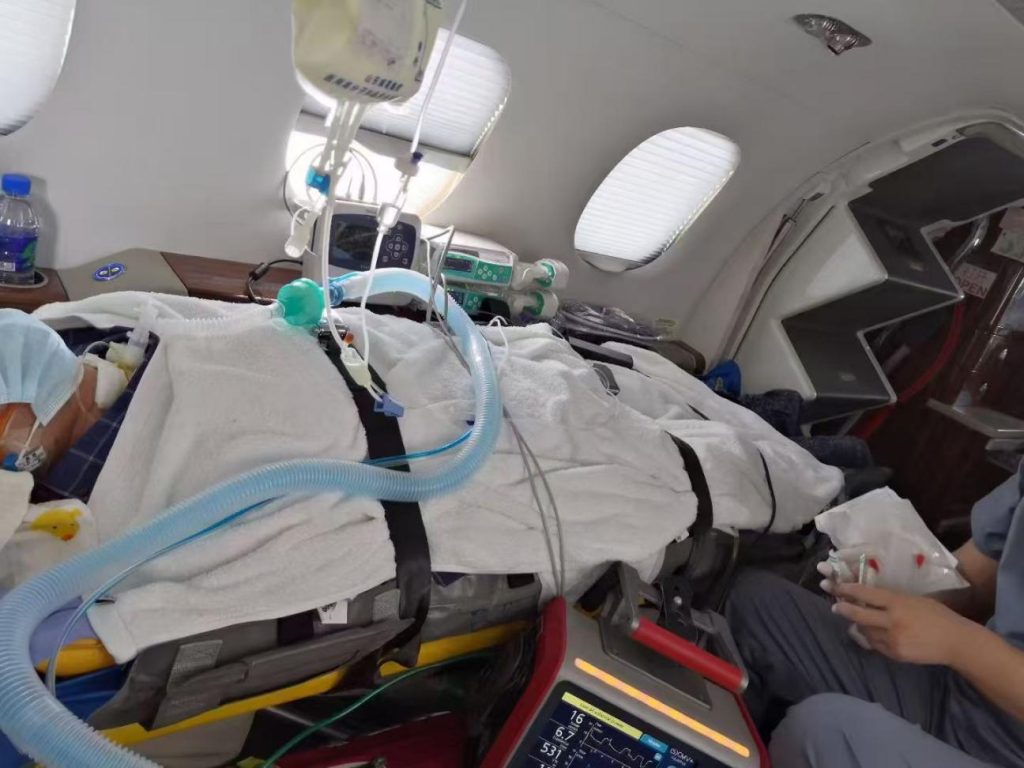
Start With Clinical Dependency, Not the Aircraft
Before confirming a Medical Transport Charter Flight, the transport team needs a current clinical picture—not only a diagnosis. For high-acuity patients, we review:
• Airway: Airway type, tube position, secretion burden and difficult-airway risk.
• Breathing: SpO₂ trend, blood gases, ventilator mode, FiO₂, PEEP, tidal volume and EtCO₂.
• Circulation: Blood-pressure trend, rhythm, lactate, vascular access and vasopressor dose.
• Neurology: GCS, sedation and seizure risk.
• Therapy continuity: Critical infusions, drains, chest tubes and isolation requirements.
The key question is not whether the patient looks “stable” at one moment, but whether the same level of support can be maintained through loading, airport handling, flight and ICU handover. TKP uses this clinical-dependency approach when planning critical-care transfers.
What ICU Functions Must Continue in the Air?
A Medical Transport Charter Flight should preserve the functions the patient depends on.
| Clinical function | In-flight capability |
| Detection | ECG, SpO₂, blood pressure, EtCO₂ and trend monitoring |
| Respiratory support | Ventilator, oxygen, suction and airway rescue |
| Circulatory support | Infusion pumps, vasoactive drugs and defibrillation |
| Treatment continuity | Sedation, analgesia and critical medications |
| Resource continuity | Oxygen, batteries, power and consumable reserves |
| Coordination | Structured handovers and receiving-bed confirmation |
Equipment alone is not enough. A ventilator has limited value if oxygen reserves are inadequate, batteries are insufficient, or no manual ventilation backup is available.
Why Cabin Physiology Changes the Risk
Even in a pressurized aircraft, cabin pressure is lower than at sea level. The Aerospace Medical Association notes that typical cabin pressure may correspond to roughly 5,000–8,000 feet. Lower barometric pressure reduces oxygen partial pressure and can cause trapped gas to expand. The FAA likewise identifies reduced barometric pressure as the basis of altitude-related hypoxia.
For critically ill patients, this may matter when there is limited respiratory reserve, severe anemia, low cardiac output, pneumothorax, recent thoracic surgery or other trapped-gas concerns. Before a Medical Transport Charter Flight, oxygen demand, chest-drain function, ventilation strategy and the planned flight profile may therefore need reassessment.
Transport Equipment Must Match the Patient
At TKP Medical Assistance, we do not begin with a fixed “ICU kit.” We build each Medical Transport Charter Flight around clinical dependency:
• Ventilated patient: Transport ventilator, capnography, suction, oxygen reserve and backup airway plan.
• Vasoactive therapy: Reliable syringe pumps, secure vascular access and hemodynamic monitoring.
• Major trauma: Accessible chest drains, immobilization and preparation for respiratory or circulatory deterioration.
• Neonatal, pediatric, ECMO or IABP support: specialist personnel plus system-specific power, fixation and contingency planning.
TKP’s capabilities include ICU and neonatal transport as well as selected ECMO/IABP-supported cases, with medical teams and equipment configured according to clinical requirements.
The Equipment Transition Is a Clinical Procedure
A high-risk moment occurs before takeoff: moving the patient from hospital systems to transport equipment.
For a Medical Transport Charter Flight, our pre-departure checks focus on:
• Stability on the transport ventilator and oxygen source;
• Correct alarm limits and visible monitoring;
• Uninterrupted infusions during pump changes;
• Secure airway, lines, drains and catheters;
• Functioning suction and accessible emergency medications;
• ndependent backup ventilation, oxygen and power.
A patient stable on an ICU ventilator should not automatically be assumed stable on a different transport system. TKP’s published critical-care process specifically treats the transition onto transport equipment as part of clinical preparation rather than a simple loading procedure.
Bed-to-Bed Time Matters More Than Flight Time
A Medical Transport Charter Flight is only one sector of a larger clinical pathway:
Referring ICU → Ground Ambulance → Airport → Medical Aircraft → Arrival Airport → Ground Ambulance → Receiving ICU
Every transition introduces potential delay and clinical risk. Oxygen reserves, battery endurance, medication quantity and staffing must therefore cover the complete bed-to-bed mission, not only scheduled airborne time.
At TKP, planning can also include technical fuel stops, airport restrictions, cross-border procedures, ground ambulance coordination and receiving-hospital readiness. An aircraft may be available while the medical transfer itself is not yet operationally ready.
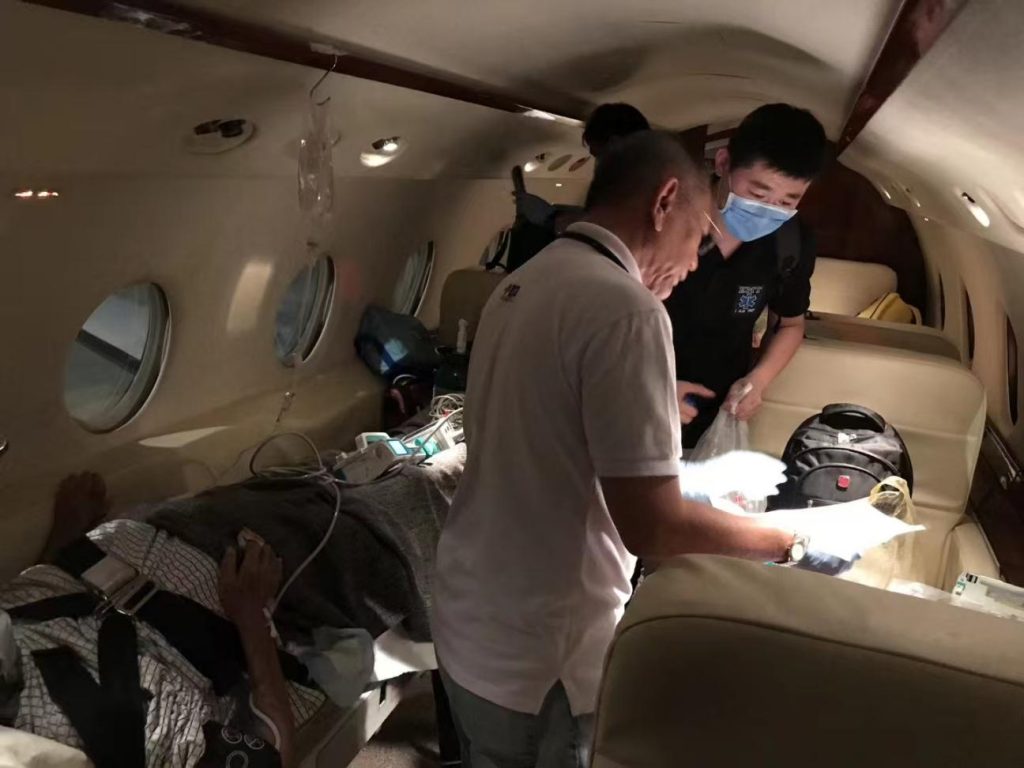
When Is a Dedicated Medical Transport Charter Flight Appropriate?
Not every patient needs a charter. A stable patient may sometimes be suitable for a commercial flight with medical escort, an airline stretcher or, for appropriate regional cases, critical-care ground transport.
A dedicated Medical Transport Charter Flight becomes more relevant when the patient requires:
• Invasive ventilation or substantial oxygen support;
• Titrated vasoactive or sedative infusions;
• Continuous advanced monitoring;
• Frequent airway or clinical intervention;
• Extensive medical equipment;
• A controlled transport environment with minimal interruption of treatment.
The transport mode should follow the patient’s physiology and treatment requirements—not distance alone. TKP therefore assesses commercial stretcher, medical escort, ground and dedicated air-ambulance options according to the clinical situation.
What Should Families and Hospitals Ask?
Before accepting a Medical Transport Charter Flight plan, ask practical questions:
• Who reviews the current medical record and accepts the transport risk?
• What aircraft and cabin configuration will actually be used?
• Which medical professionals will accompany the patient?
• What oxygen, battery and medication reserves are planned?
• What backup exists for ventilation, airway or equipment failure?
• Are ground ambulances and hospital handovers included?
• Is the receiving bed and required specialty service confirmed?
These questions reveal more about mission quality than aircraft type alone. A medically appropriate aircraft without sufficient oxygen, qualified personnel, ground coordination or receiving-hospital readiness does not constitute a complete critical-care transfer plan.
A Medical Flight Is a Continuity-of-Care Mission
For TKP Medical Assistance, a Medical Transport Charter Flight is successful when critical care remains continuous from the sending bedside to the receiving bedside. Aircraft, crew, equipment, ground transport and destination readiness must function as one integrated system.
TKP Medical Assistance has coordinated cross-border medical transfers since 2001 and reports more than 10,000 cases handled, supported by ICU-trained teams, 24/7 coordination and multimodal transfer capabilities.
If an ICU patient may require a Medical Transport Charter Flight, families, hospitals and assistance partners can share the latest clinical information with TKP Medical Assistance for an initial case review and a discussion of the most appropriate bed-to-bed transfer pathway.
FAQs
Q1. What information does TKP need to assess a Medical Transport Charter Flight?
TKP typically needs the latest medical report, diagnosis, recent vital signs, medications, oxygen requirements, ventilator settings, vascular access, drains, departure location and receiving-hospital details.
Q2. Can TKP arrange a Medical Transport Charter Flight for ventilated ICU patients?
Yes. TKP assesses ventilated patients individually and plans the appropriate ventilator support, oxygen supply, monitoring, medications and medical team according to clinical requirements.
Q3. Does TKP provide ICU-level care during the flight?
TKP can coordinate ICU-level transport with ICU/ER-trained medical personnel, monitoring, ventilators, infusion pumps, oxygen and critical medications when clinically required.
Q4. Does TKP arrange the entire bed-to-bed transfer?
Yes. TKP can coordinate ground ambulances, airport transfers, the medical flight and clinical handover at the receiving facility as one continuous transport pathway.
Q5. Can TKP transport patients requiring ECMO or IABP support?
TKP reports experience coordinating selected critical-care transfers involving ECMO and IABP support. These cases require specialist assessment, equipment planning and appropriately trained personnel.
Submit Your Request
Recent Posts


Tags
- Air Ambulance
- Bedside To Bedside
- Cross Border Aid
- Emergency Evacuation
- Global Medical Rescue
- How can I ensure the patient's stability while in the air?
- How do I request an air medical transport?
- How is it different from an air ambulance
- how to activate emergency aircraft service
- how to request an air ambulance
- Is air medical transport safe
- Is international transport possible
- Medical Rescue
- Medical Transport
- Patient Repatriation
- Remote Rescue
- Seamless Coordination
- Telemedicine Support
- Tourists And Expats Medical Escort
- What are the benefits of a cross-border medical transfer
- What are the different types of transfers
- What are typical use cases
- What documents do I need to prepare for a transfer?
- What does high-speed rail patient transfer stands for
- What is air ambulance
- What is air medical transport?
- What is cross-border medical transfer
- What is emergency aircraft
- what is high-speed rail patient transfer
- What is medical charter flight
- what is neonatal ICU transfer
- What is patient air transfer
- What medical equipment is available on board the aircraft
- What situations shouldn't use air medical transport?
- What types of air ambulance are there?
- What types of air ambulance exist
- What's the difference between international and domestic transfers?
- what’s the difference between air medical transport and regular ambulance?
- When is emergency air transport necessary
- Which patients require air medical transport?
- who is included in the medical team
- who needs an air ambulance