


ICU Patient Transport Handover Protocols: Preventing Clinical Information Loss


In ICU Patient Transport, moving the patient is only one part of the mission. The clinical picture must move with them.
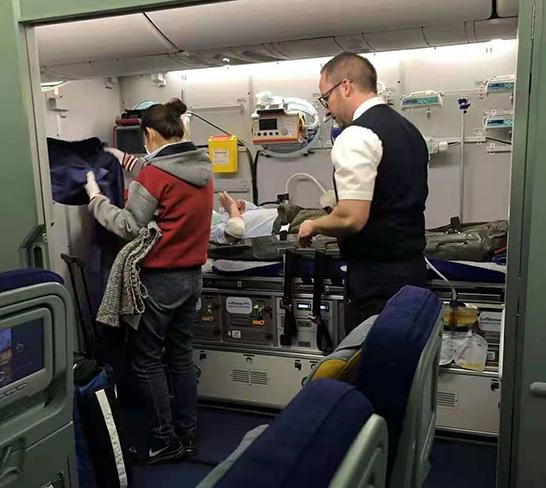
A ventilated patient may leave the referring ICU with vasoactive infusions, invasive monitoring, drains, sedation and tightly controlled ventilator settings. By the time the patient reaches the receiving ICU, care may have passed through several teams and equipment platforms. A poorly structured handover can therefore create a clinical gap even when the transport itself is technically successful.
At TKP Medical Assistance, we approach ICU Patient Transport as a continuous bedside-to-bedside clinical pathway. Handover is not a single conversation at departure; it is a repeated process of transferring information, responsibility and treatment priorities throughout the journey.
What Must an ICU Transport Handover Achieve?
A handover should allow the receiving clinician to answer four questions immediately:
• What is wrong with the patient?
• What is currently keeping the patient stable?
• What has changed recently?
• What could deteriorate next, and what is the response plan?
For ICU Patient Transport, this goes beyond diagnosis and medical history. The handover must describe the patient’s current physiological dependencies.
The Clinical Information That Should Travel With the Patient
A practical handover can be organized around the systems that cannot safely be interrupted.
| Clinical domain | Information to communicate |
| Airway | Airway type, tube size/depth, difficult-airway history, airway security |
| Ventilation | Mode, FiO₂, PEEP, tidal volume, respiratory rate, EtCO₂, recent blood gas |
| Circulation | Rhythm, BP/MAP trend, perfusion, arterial access, fluid status |
| Infusions | Drug, concentration, dose/rate, route, pump requirement and remaining volume |
| Neurology | GCS, pupils, sedation target, analgesia, seizure risk |
| Lines & drains | Central/arterial lines, chest drains, urinary and surgical drains |
| Recent events | Deterioration, procedures, arrhythmias, desaturation or treatment escalation |
| Contingency | Anticipated complications, escalation triggers and rescue strategy |
A phrase such as “the patient is stable” is not enough. In critical care, stability may depend on PEEP, norepinephrine, sedation and continuous monitoring. Those dependencies must be explicit.
Handover Starts Before the Stretcher Moves
One of the most important phases of ICU Patient Transport is the transition from hospital equipment to transport equipment.
This may involve changing from:
• An ICU ventilator to a transport ventilator;
• Wall oxygen to a transport oxygen system;
• Hospital infusion pumps to transport pumps;
• Bedside monitoring to a mobile ICU monitor.
At TKP, this transition is treated as a clinical procedure rather than a logistics task. Ventilation, alarms, infusion continuity, airway connections, lines, drains, suction, oxygen supply and backup resources should be verified before departure.
A patient who was stable on the ICU ventilator should not automatically be assumed stable on the transport configuration.
Use Structured, Closed-Loop Communication
Frameworks such as SBAR or I-PASS can provide a useful structure, but ICU Patient Transport requires additional transport-specific information.
A high-quality handover should include:
Situation
Patient identity, diagnosis, transfer indication and current severity.
Background
Relevant history, procedures, complications and clinical trajectory.
Current Assessment
Airway, ventilation, circulation, neurological status, medications and organ support.
Risks and Recommendations
Expected deterioration, intervention thresholds and contingency plans.
Transport Status
Oxygen reserve, battery capacity, medication supply, equipment configuration and estimated journey requirements.
The receiving clinician should have an opportunity to clarify uncertainties and repeat back critical information. Written records support the process, but they should not replace real-time clinician-to-clinician communication.
The 60-Second Pre-Departure Check
Immediately before an ICU Patient Transport begins, the team should reconfirm:
• Airway: Secure, accessible and rescue equipment available.
• Breathing: Ventilator settings correct; SpO₂ and EtCO₂ appropriate.
• Circulation: Hemodynamic target defined; vasoactive infusions running correctly.
• Medication: Concentrations and rates verified; sufficient supply available.
• Lines/drains: Secure, visible and functioning.
• Resources: Adequate oxygen, battery power and consumables, including contingency reserve.
• Destination: Receiving unit, bed and responsible clinical team confirmed.
This final review is important because a patient’s condition may have changed since the original referral or medical report.
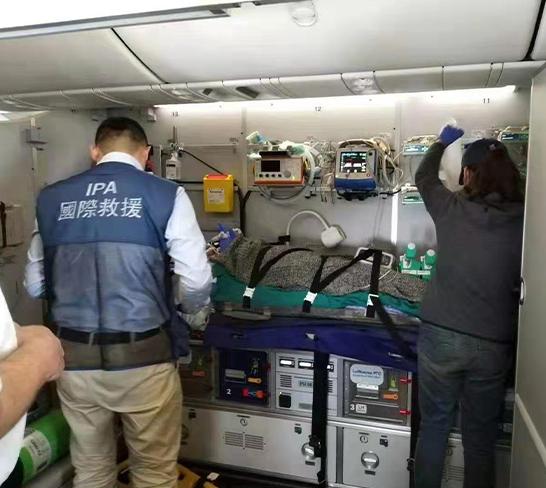
Handover Must Remain Dynamic During Transport
The departure report is only the baseline.
During ICU Patient Transport, the clinical record should document significant events with timestamps, including:
• Ventilator or oxygen changes;
• Vasoactive dose adjustments;
• Fluid or medication administration;
• Desaturation, hypotension or arrhythmia;
• Procedures or emergency interventions;
• Equipment or line problems.
The final receiving-ICU handover should therefore answer not only “How was the patient before departure?” but also “What happened during transport?”
Why International ICU Patient Transport Adds Complexity
International transfers create additional handover points: referring hospital, ground ambulance, airport, flight medical team, destination ambulance and receiving ICU.
There may also be differences in language, medication naming, units of measurement, documentation formats and time zones. Longer missions increase the importance of oxygen calculations, medication reserves, power redundancy and updated clinical records.
For this reason, TKP plans international ICU Patient Transport around the complete patient dependency profile rather than simply selecting an aircraft or ambulance. Depending on the case, this may include mechanical ventilation, continuous monitoring, multiple infusion pumps, oxygen planning and advanced support such as ECMO or IABP.
Common Handover Problems—and Better Practice
| Avoid | Prefer |
| “Patient stable” | Describe current support and physiological trends |
| Old discharge summary | Current, time-stamped clinical update |
| Drug name only | Drug + concentration + dose/rate + route |
| Ventilator mode only | Full relevant ventilator settings and recent gas exchange |
| Verbal handover only | Verbal handover plus structured documentation |
| No transport update | Time-stamped record of in-transit changes |
| No contingency discussion | Defined risks, triggers and response plan |
Information Continuity Is Clinical Continuity
Safe ICU Patient Transport depends on more than equipment. Ventilation, circulation support and medication may be technically continuous, but care is not truly continuous unless the next team understands what the patient needs and what has changed.
TKP Medical Assistance coordinates critical-care transfers as a bedside-to-bedside process, bringing together clinical assessment, transport planning, ICU-level equipment, medical personnel and communication with referring and receiving hospitals.
For hospitals, insurers, case managers or families considering a complex ICU Patient Transport, an early clinical review can help identify the patient’s dependencies, handover risks and transport requirements before the mission begins.
FAQs
Q1. Does TKP Medical Assistance provide ICU Patient Transport?
Yes. TKP coordinates ICU Patient Transport for critically ill patients, including cross-border transfers, with medical teams and equipment selected according to the patient’s condition.
Q2. Can TKP transport mechanically ventilated ICU patients?
Yes, subject to clinical assessment. TKP can arrange transport ventilators, oxygen, capnography, monitoring, suction and backup airway support for suitable cases.
Q3. What information does TKP need before ICU Patient Transport?
TKP typically reviews the diagnosis, latest medical report, vital signs, laboratory results, ventilator settings, medications, infusion rates, lines, drains and receiving-hospital details.
Q4. Does TKP provide bedside-to-bedside ICU Patient Transport?
Yes. Depending on the agreed scope, TKP can coordinate the pathway from the referring hospital through ground and air transport to handover at the receiving facility.
Q5. What medical equipment can TKP provide during ICU transport?
Depending on clinical requirements, equipment may include ICU monitors, transport ventilators, oxygen systems, infusion pumps, suction, defibrillation equipment and ALS/ACLS supplies.
Submit Your Request
Recent Posts


Tags
- Air Ambulance
- Bedside To Bedside
- Cross Border Aid
- Emergency Evacuation
- Global Medical Rescue
- How can I ensure the patient's stability while in the air?
- How do I request an air medical transport?
- How is it different from an air ambulance
- how to activate emergency aircraft service
- how to request an air ambulance
- Is air medical transport safe
- Is international transport possible
- Medical Rescue
- Medical Transport
- Patient Repatriation
- Remote Rescue
- Seamless Coordination
- Telemedicine Support
- Tourists And Expats Medical Escort
- What are the benefits of a cross-border medical transfer
- What are the different types of transfers
- What are typical use cases
- What documents do I need to prepare for a transfer?
- What does high-speed rail patient transfer stands for
- What is air ambulance
- What is air medical transport?
- What is cross-border medical transfer
- What is emergency aircraft
- what is high-speed rail patient transfer
- What is medical charter flight
- what is neonatal ICU transfer
- What is patient air transfer
- What medical equipment is available on board the aircraft
- What situations shouldn't use air medical transport?
- What types of air ambulance are there?
- What types of air ambulance exist
- What's the difference between international and domestic transfers?
- what’s the difference between air medical transport and regular ambulance?
- When is emergency air transport necessary
- Which patients require air medical transport?
- who is included in the medical team
- who needs an air ambulance