


Who Coordinates International Patient Transfer By Air?


An aircraft may be available while the patient transfer remains impossible. The sending hospital may consider the patient stable, but the receiving hospital has not confirmed a bed; the insurer may approve repatriation but exclude ground ambulances; or the selected aircraft may lack sufficient payload for the required oxygen and equipment.
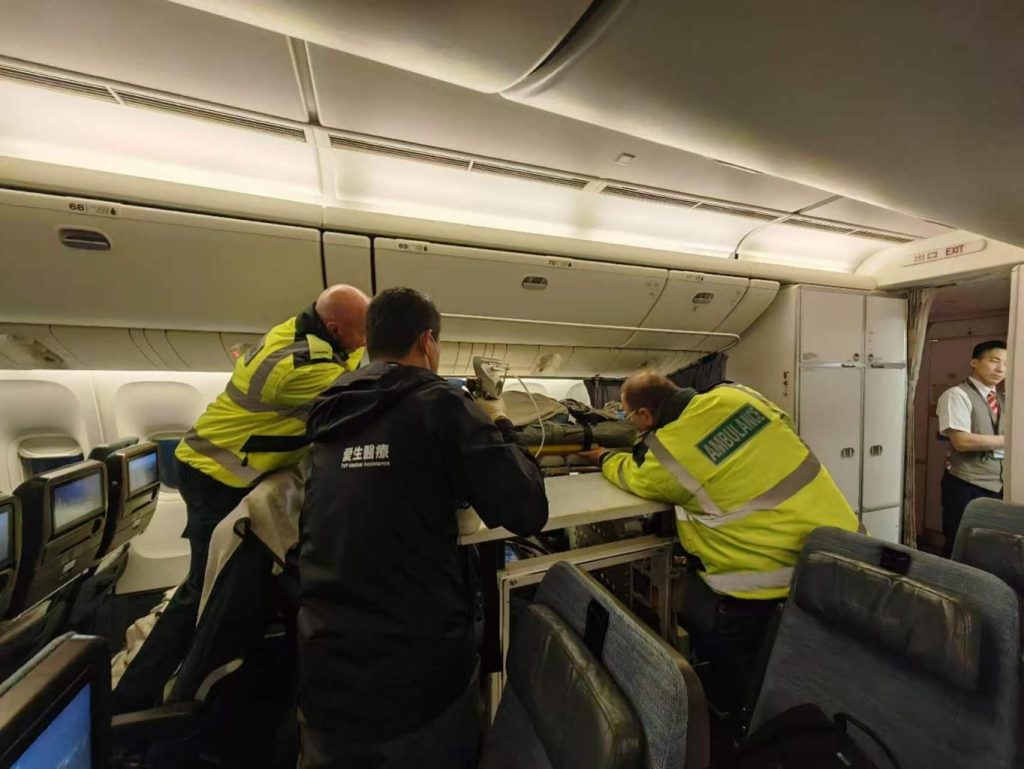
For this reason, International Patient Transfer By Air needs one accountable coordinator—but several independent decision-makers. At TKP Medical Assistance, we manage the mission as a continuous clinical pathway, not as a collection of separate bookings.
Who Has Authority to Approve the Transfer?
No single party can authorize every part of International Patient Transfer By Air.
| Party | Technical responsibility | Required output |
| Sending hospital | Stabilization, current treatment and discharge readiness | Medical summary, imaging, laboratory results and physician handover |
| Receiving hospital | Definitive treatment and admission capacity | Named physician, department, bed and acceptance letter |
| Insurer | Coverage, medical necessity and financial authorization | Guarantee of payment and approved service scope |
| Transport medical team | Fit-to-fly assessment and in-transit care plan | Crew, equipment, medication and contingency requirements |
| Aircraft operator | Flight safety, payload, range and permits | Operational approval and confirmed itinerary |
| Lead coordinator | Integration of every workstream | One bed-to-bed mission plan and responsibility matrix |
The insurer can authorize payment but cannot determine clinical fitness. A sending doctor can approve transfer from the hospital but cannot approve the aircraft configuration. The lead coordinator keeps these decisions synchronized and identifies unresolved dependencies before mobilization.
Turning Clinical Data Into a Flight Configuration
Planning International Patient Transfer By Air requires more than a discharge summary. TKP’s medical review considers trends rather than a single set of observations:
• Airway status, ventilator mode, PEEP and FiO₂
• Oxygen flow and target saturation
• Blood pressure, rhythm and vasoactive infusions
• Glasgow Coma Scale, seizures and sedation
• Recent surgery, bleeding risk, drains and trapped gas
• Infection status and isolation precautions
• Patient weight, dimensions, positioning and mobility
• Likely deterioration and required rescue interventions
Cabin Pressure Changes the Risk
Transport-category aircraft may operate with a cabin pressure altitude equivalent to as much as 8,000 feet under normal conditions, according to FAA certification requirements. The lower partial pressure of oxygen can worsen hypoxaemia, while pressure reduction can expand trapped gas.
A patient may therefore be stable at sea level but require additional oxygen, drainage review or delayed travel after thoracic, abdominal, cranial or ophthalmic procedures. “Stable for transfer” and “fit for the proposed flight” are not interchangeable.
Comparing International Patient Transfer By Air Solutions
| Decision | Options | Best-fit criteria | Main risk |
| Coordination | Hospital-, insurer- or assistance-provider-led | Number of countries, suppliers and approvals | Fragmented responsibility |
| Flight mode | Dedicated fixed-wing medical aircraft, commercial stretcher or seated escort | Acuity, positioning and intervention probability | Selecting primarily by price |
| Medical team | Critical-care doctor and nurse, specialist team or medical escort | Expected in-transit interventions | Inadequate competence for deterioration |
| Route | Direct flight or technical stop | Range, payload, oxygen and crew-duty limits | Treating direct flight as automatically safer |
| Scope | Bed-to-bed, airport-to-airport or flight-only | Buyer’s ability to manage local services | Uncovered handovers |
A commercial stretcher can be appropriate when the patient is stable but must remain supine. Mechanical ventilation, multiple vasoactive infusions, invasive monitoring, ECMO or IABP support require a different level of aircraft, equipment and clinical staffing.
How TKP Coordinates Complex Missions
TKP Medical Assistance reports more than 10,000 transfers since 2001, supported by six branch offices in China and partner coordination across Asia, Europe and other regions. Its published capabilities include ICU and ER-trained personnel, commercial stretcher transfers, fixed-wing critical-care transport, ECMO, IABP, pediatric support, mobile power and dual oxygen sources.TKP Medical Assistance
Case Timeline: Xiamen–Seoul ECMO Transfer
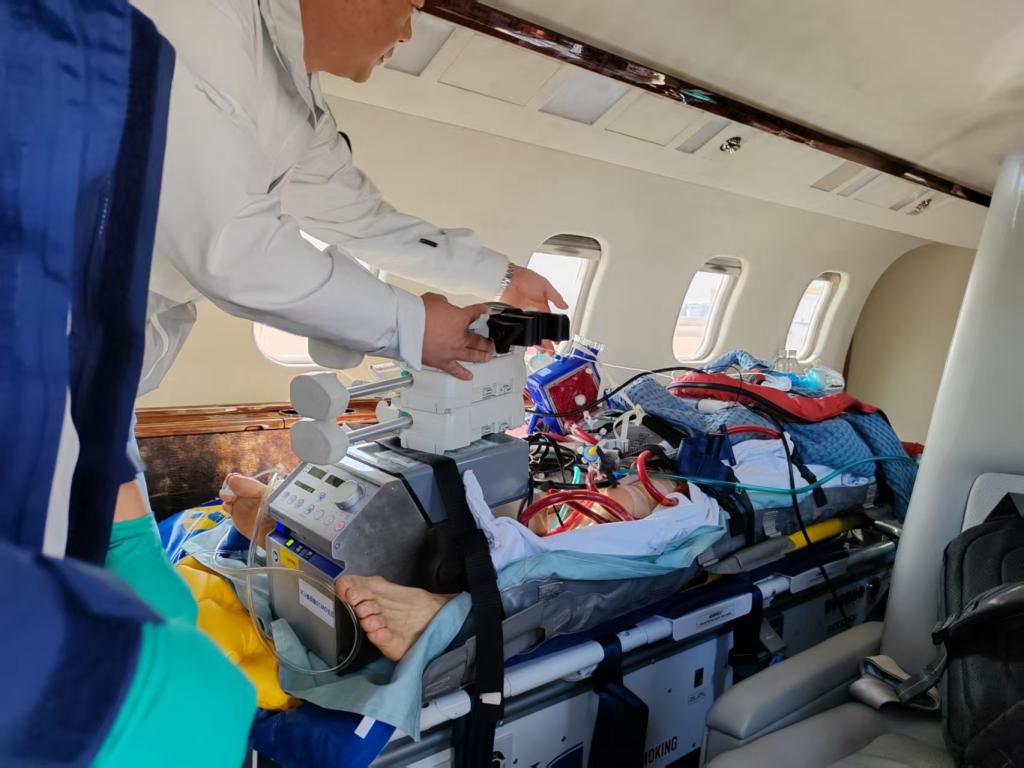
On 14 March 2025, TKP Medical Assistance coordinated an International Patient Transfer By Air from Xiamen to Seoul for a patient with severe pulmonary infection requiring simultaneous ECMO and IABP support.
| Stage | Clinical and Operational Process |
| ICU preparation | Specialists assessed ECMO flow, secured the airway and prepared the patient for movement. |
| Ground transfer | ICU staff continuously monitored ECMO parameters while mobile power maintained life-support operation. |
| Aircraft loading | ECMO and IABP systems were transitioned to the onboard configuration without interrupting circulatory support. |
| In flight | Doctors and ICU nurses monitored ECMO flow, cardiac support and vital signs while rotating duties. |
| Seoul handover | The receiving team accepted the patient with complete treatment and transport records. |
Key requirements included:
• Continuous ECMO and IABP operation
• Redundant power and oxygen planning
• Cross-border hospital and flight coordination
This case demonstrates how clinical, equipment and logistics teams must work as one system.
Transfer Route Map and Case Preparation
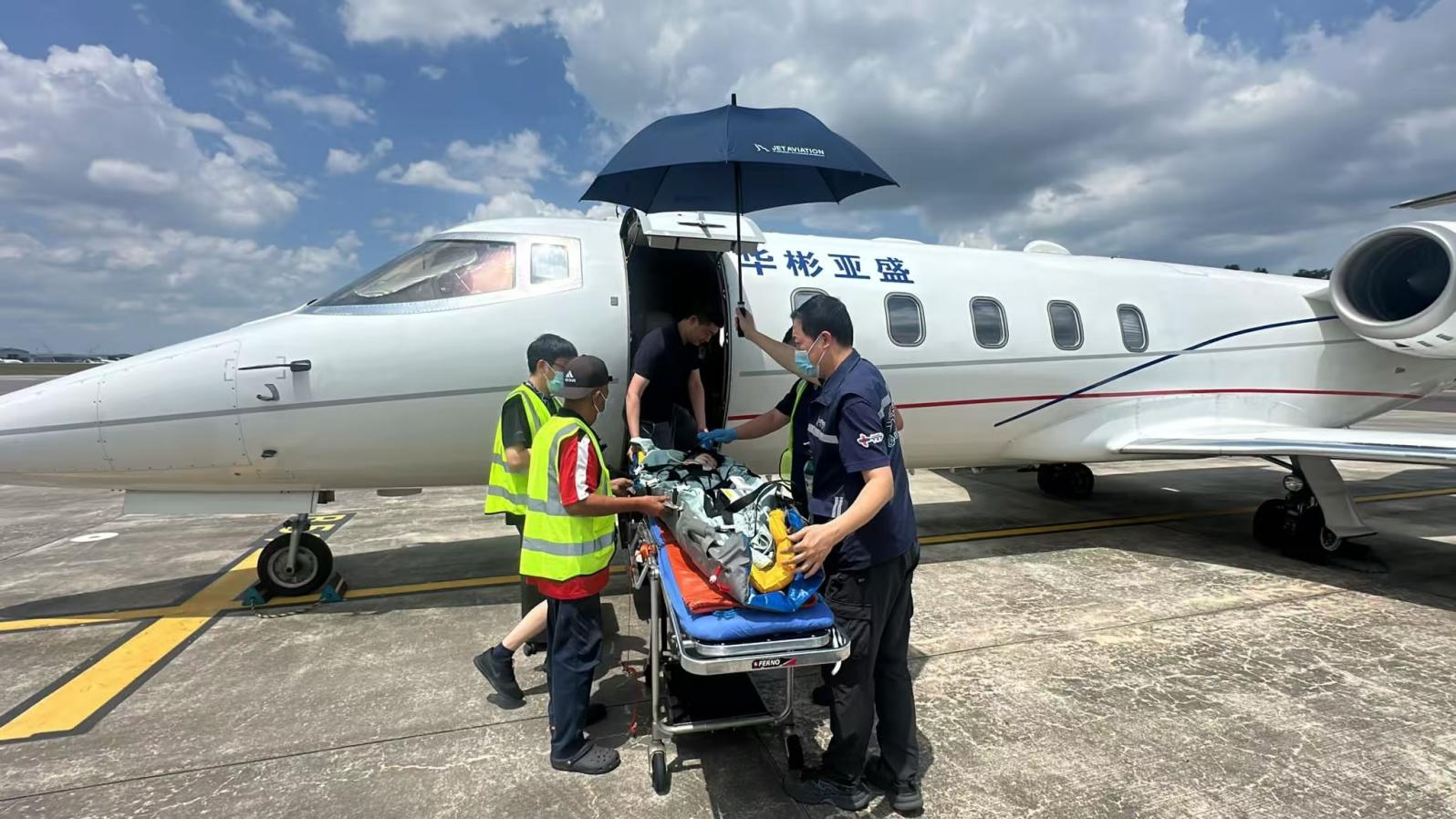
TKP Medical Assistance develops each International Patient Transfer By Air route around patient acuity, urgency, airport capability and receiving-hospital access. Our operations team coordinates dynamic scheduling, real-time route monitoring, remote-airport access and communication with hospitals and embassies.
Families can accelerate assessment by preparing recent medical records, an English clinical summary, passport and visa documents, insurance or payment information, receiving-hospital details and an authorized family representative.
If these elements are available, TKP Medical Assistance can identify missing approvals and build a clinically matched bed-to-bed plan for International Patient Transfer By Air.
FAQs
Q1. How does TKP work with the sending and receiving hospitals?
TKP obtains current clinical information from the sending physician, develops the transport care plan and confirms the receiving physician, department, bed and admission arrangements.
Q2. What information does TKP need to assess a patient?
TKP typically requires recent medical reports, diagnosis, vital signs, imaging, laboratory results, medication lists, airway status, oxygen requirements and the treating physician’s contact details.
Q3. How does TKP select the appropriate transport solution?
The decision is based on patient stability, required position, oxygen consumption, ventilation, in-transit intervention risk, route length, payload and receiving-hospital access.
Q4. Can TKP arrange commercial airline stretcher transfers?
Yes. A commercial stretcher may be considered for a stable patient who must remain supine but does not require continuous ICU-level intervention. Airline medical approval remains mandatory.
Q5. Does TKP support critically ill patients?
TKP’s published capabilities include ICU transport, mechanical ventilation, advanced monitoring, ECMO, IABP, pediatric care and neonatal transport. Each case requires an individual medical assessment.
Submit Your Request
Recent Posts

Tags
- Air Ambulance
- Bedside To Bedside
- Cross Border Aid
- Emergency Evacuation
- Global Medical Rescue
- How can I ensure the patient's stability while in the air?
- How do I request an air medical transport?
- How is it different from an air ambulance
- how to activate emergency aircraft service
- how to request an air ambulance
- Is air medical transport safe
- Is international transport possible
- Medical Rescue
- Medical Transport
- Patient Repatriation
- Remote Rescue
- Seamless Coordination
- Telemedicine Support
- Tourists And Expats Medical Escort
- What are the benefits of a cross-border medical transfer
- What are the different types of transfers
- What are typical use cases
- What documents do I need to prepare for a transfer?
- What does high-speed rail patient transfer stands for
- What is air ambulance
- What is air medical transport?
- What is cross-border medical transfer
- What is emergency aircraft
- what is high-speed rail patient transfer
- What is medical charter flight
- what is neonatal ICU transfer
- What is patient air transfer
- What medical equipment is available on board the aircraft
- What situations shouldn't use air medical transport?
- What types of air ambulance are there?
- What types of air ambulance exist
- What's the difference between international and domestic transfers?
- what’s the difference between air medical transport and regular ambulance?
- When is emergency air transport necessary
- Which patients require air medical transport?
- who is included in the medical team
- who needs an air ambulance