


How a Critical Care Patient Transfer Flight Maintains ICU-Level Care in the Air


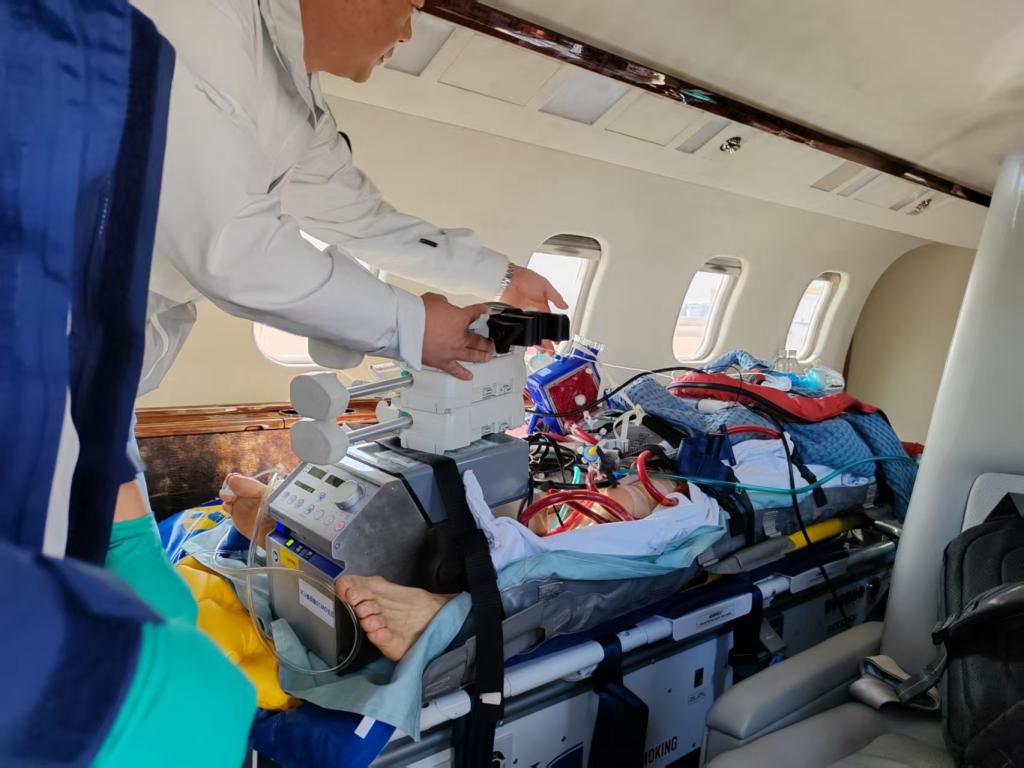
A Critical Care Patient Transfer Flight is not defined by how many medical devices are carried onboard. The real standard is whether essential ICU functions—ventilation, monitoring, circulation support, medication delivery and emergency intervention—remain continuous from the referring bed to the receiving ICU.
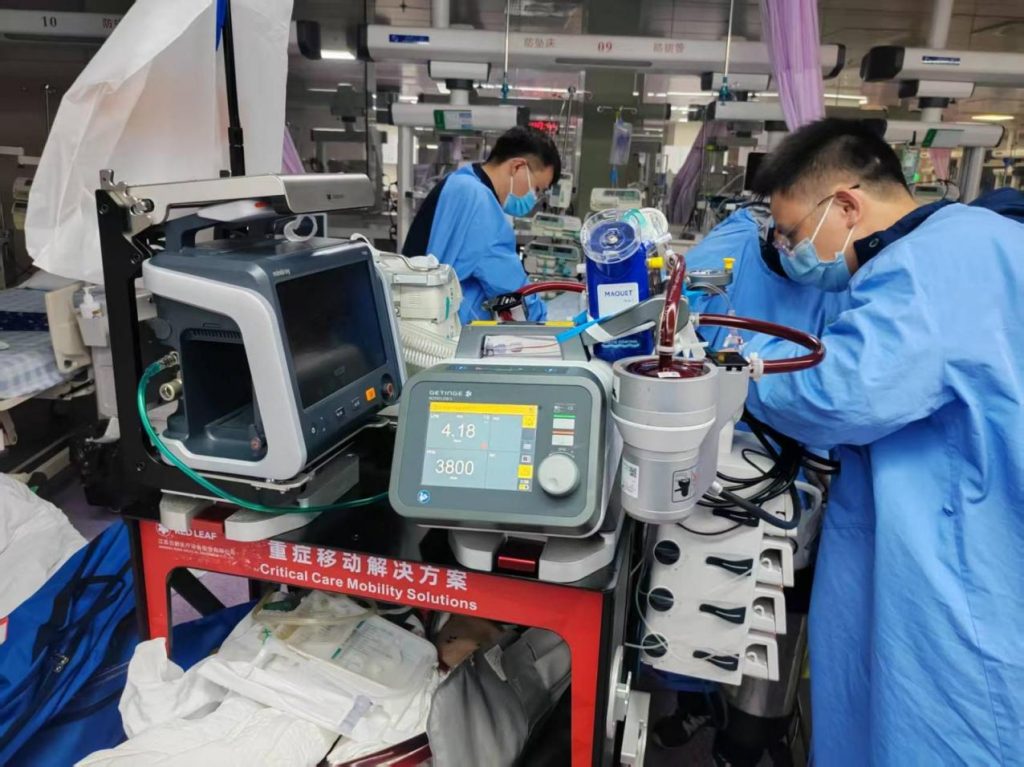
At TKP Medical Assistance, we begin with a clinical dependency map rather than a standard equipment list. It identifies what is keeping the patient stable, which support cannot be interrupted and what resources are required if the mission lasts longer than planned.
What a Critical Care Patient Transfer Flight Must Preserve
ICU-level transport requires six connected capabilities:
| Clinical Function | Required In-Transit Capability |
| Detection | Continuous ECG, SpO₂, blood pressure, EtCO₂ and trend monitoring |
| Respiratory support | Controlled ventilation, oxygen, suction and airway rescue |
| Circulatory support | Infusion pumps, vasoactive drugs, fluids and defibrillation |
| Treatment continuity | Uninterrupted sedation, analgesia and critical medication |
| Resource continuity | Sufficient oxygen, power, batteries and consumables |
| Clinical coordination | Structured handovers, documentation and receiving-bed confirmation |
One missing element can weaken the entire system. A ventilator, for example, provides limited protection if oxygen duration is insufficient, alarms cannot be heard or no independent backup ventilation method is available.
Build the Plan Around the Patient‘s Dependencies
Before confirming a Critical Care Patient Transfer Flight, our medical team reviews the diagnosis, recent clinical trajectory and current organ support.
Respiratory Dependency
The assessment should include:
•Airway type and difficult-airway risk
•Ventilator mode and trigger performance
•FiO₂, PEEP, tidal volume and minute ventilation
•Peak or plateau pressure trends where available
•SpO₂, waveform EtCO₂ and recent blood-gas results
•Suction, humidification and secretion-management needs
•Pneumothorax, chest drains or recent thoracic procedures
NIV and high-flow oxygen should not automatically be regarded as simpler solutions. Both may consume substantial oxygen, and their failure during transport may require urgent airway intervention.
Hemodynamic and Medication Dependency
Patients receiving vasoactive drugs may need continuous pressure monitoring, several infusion pumps and rapid access to vascular lines. The team should review dose trends rather than only the current dose: an increasing requirement may indicate limited physiological reserve.
Sedation, analgesia, antiarrhythmics, anticonvulsants and emergency boluses must be calculated for the complete mission. The 2026 Intensive Care Society guidance recommends carrying sufficient infusion and bolus medication for at least twice the planned transfer duration.
Advanced Support
ECMO, IABP, neonatal incubator and complex pediatric cases require more than additional hardware. The Critical Care Patient Transfer Flight must include personnel who currently operate the system and can manage alarms, circuit problems, power changes and emergency equipment replacement.
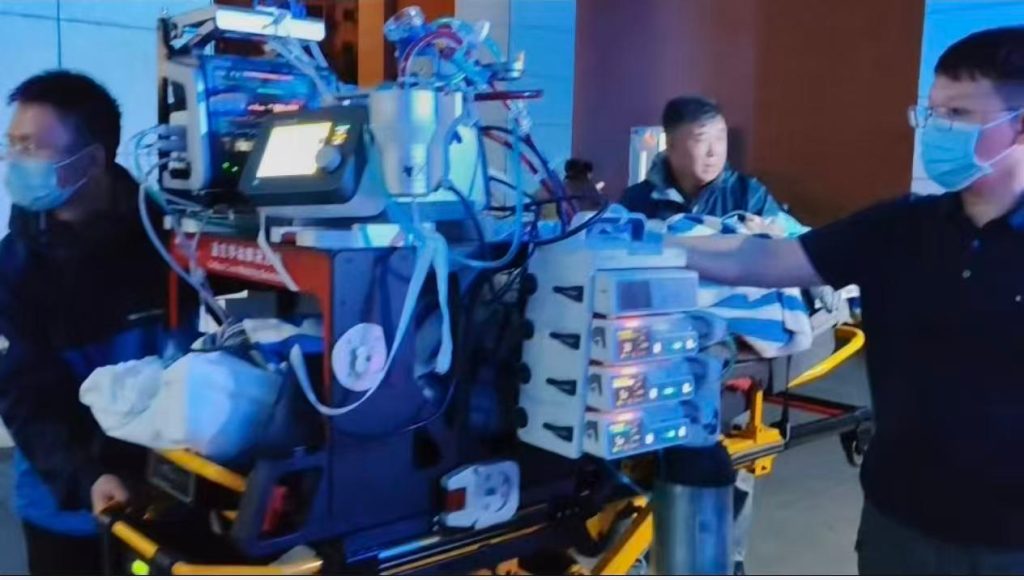
Complete the Equipment Transition Before Departure
Switching from hospital equipment to transport equipment is a clinical procedure. For ventilated patients, current transfer guidance recommends establishing the patient on the transport ventilator approximately 20–30 minutes before departure and reassessing gas exchange after 10–15 minutes.
At TKP, the transition check addresses:
•Stability on the actual transport ventilator
•Correct alarm thresholds and waveform capnography
•Continuous infusion during pump changes
•Secure and visible lines, drains and airway connections
•Functioning suction and manual ventilation
•Accessible emergency medication
•Independent backup power, oxygen and ventilation
If the primary and backup devices use the same electrical outlet or oxygen source, they do not provide complete redundancy.
Compare Transport Plans by Intervention Capability
The correct Critical Care Patient Transfer Flight plan is determined by clinical dependency, resource duration and access to definitive treatment.
| Option | Appropriate Context | Main Limitation |
| Continue local stabilization | A reversible threat can be treated promptly | Delay may postpone definitive care |
| Urgent dedicated fixed-wing transfer | Continuous ventilation, infusion or intervention is required | Requires patient-specific medical configuration |
| Commercial stretcher with escort | Patient has low anticipated intervention needs | Reduced workspace, oxygen and operational control |
| Direct flight | Fuel, oxygen, power and crew reserves are adequate | Requires sufficient uninterrupted reserves |
| Technical stop | Fuel, medical gas or crew limits require it | Adds time and another clinical transition |
| Single equipment set | Interruption would not immediately threaten the patient | Limited recovery after device failure |
| Independent redundancy | Treatment interruption could be critical | Adds weight, space and integration requirements |
Distance alone should not determine the option. The decisive question is what the patient may need before the next hospital becomes available.
Verify Aircraft Integration and Maintenance
Before every Critical Care Patient Transfer Flight, equipment should be checked within the actual aircraft configuration—not only on a hospital bench.
Important evidence includes:
•Approved stretcher and equipment fixation
•Aircraft AC/DC compatibility and electrical load
•Oxygen system connections and cylinder security
•Battery-health and functional-test records
•Current calibration and preventive maintenance
•Device placement that preserves clinical access
•Cleaning, infection-control and consumable checks
Relevant references may include EURAMI Fixed Wing Standards V6.0, EN 13718-1 and EN 13718-2, IEC 60601-1-12 and ISO 80601-2-84. Provider accreditation, aircraft approval, device compliance and staff credentials should be verified separately.
What Makes TKP Different
Specialized Teams, Clinical Standards
Every medical escort is ICU/ER-trained, with experience in emergency and in-flight care.
Seamless Global Coverage
Our network supports coordinated transfers from mainland China to Southeast Asia, Europe and North America.
ICU-Level Escort Care
Each case is matched with ICU-trained doctors, nurses, critical medication and appropriate monitoring.
Multilingual Case Coordination
Mandarin, English and Cantonese support enables accurate communication among hospitals, patients and families.
One-Stop Case Oversight
A dedicated medical coordinator manages the case from pre-assessment through receiving-hospital handover.
Personalized Critical Transport Plans
ECMO, IABP, pediatric incubator and other advanced systems are planned according to actual clinical dependency.
Founded in 2001, TKP Medical Assistance has completed more than 10,000 medical transport missions. With headquarters in Shenzhen and six branch offices across China, we provide 24/7 coordination for air ambulance, commercial stretcher and multimodal transfers. An early TKP case review can help hospitals, families and insurers define the appropriate team, equipment, route and continuity plan before a Critical Care Patient Transfer Flight is activated.
FAQs
Q1. How does TKP assess whether a patient is suitable for a Critical Care Patient Transfer Flight?
TKP reviews the diagnosis, recent clinical changes, vital-sign trends, respiratory support, medication, mobility and destination. The referring physician, receiving hospital and transport medical team contribute to the final plan.
Q2. What medical information should be provided for TKP’s assessment?
Useful information includes the medical summary, current vital signs, laboratory results, imaging, ventilator settings, medication list, infusion rates, allergies and details of invasive lines or drains.
Q3. Can TKP transport mechanically ventilated patients?
Yes. TKP can arrange ICU-level support for ventilated patients, subject to individual assessment. Planning covers the transport ventilator, oxygen demand, EtCO₂ monitoring, suction, airway equipment and backup ventilation.
Q4. What equipment may be used during a TKP critical care transfer?
Depending on the patient, equipment may include ICU monitors, transport ventilators, oxygen systems, infusion pumps, suction, defibrillation equipment and ALS/ACLS supplies. Equipment is configured for the actual clinical dependency.
Q5. Does TKP support ECMO, IABP or neonatal transfers?
TKP can coordinate ECMO, IABP, pediatric and neonatal transport when clinically indicated. These missions require specialist personnel, compatible equipment, sufficient power and medical gas, and an appropriate aircraft configuration.
Submit Your Request
Recent Posts
Tags
- Air Ambulance
- Bedside To Bedside
- Cross Border Aid
- Emergency Evacuation
- Global Medical Rescue
- How can I ensure the patient's stability while in the air?
- How do I request an air medical transport?
- How is it different from an air ambulance
- how to activate emergency aircraft service
- how to request an air ambulance
- Is air medical transport safe
- Is international transport possible
- Medical Rescue
- Medical Transport
- Patient Repatriation
- Remote Rescue
- Seamless Coordination
- Telemedicine Support
- Tourists And Expats Medical Escort
- What are the benefits of a cross-border medical transfer
- What are the different types of transfers
- What are typical use cases
- What documents do I need to prepare for a transfer?
- What does high-speed rail patient transfer stands for
- What is air ambulance
- What is air medical transport?
- What is cross-border medical transfer
- What is emergency aircraft
- what is high-speed rail patient transfer
- What is medical charter flight
- what is neonatal ICU transfer
- What is patient air transfer
- What medical equipment is available on board the aircraft
- What situations shouldn't use air medical transport?
- What types of air ambulance are there?
- What types of air ambulance exist
- What's the difference between international and domestic transfers?
- what’s the difference between air medical transport and regular ambulance?
- When is emergency air transport necessary
- Which patients require air medical transport?
- who is included in the medical team
- who needs an air ambulance