


Air vs. Ground Patient Transfer: Choosing the Safer Bed-to-Bed Route


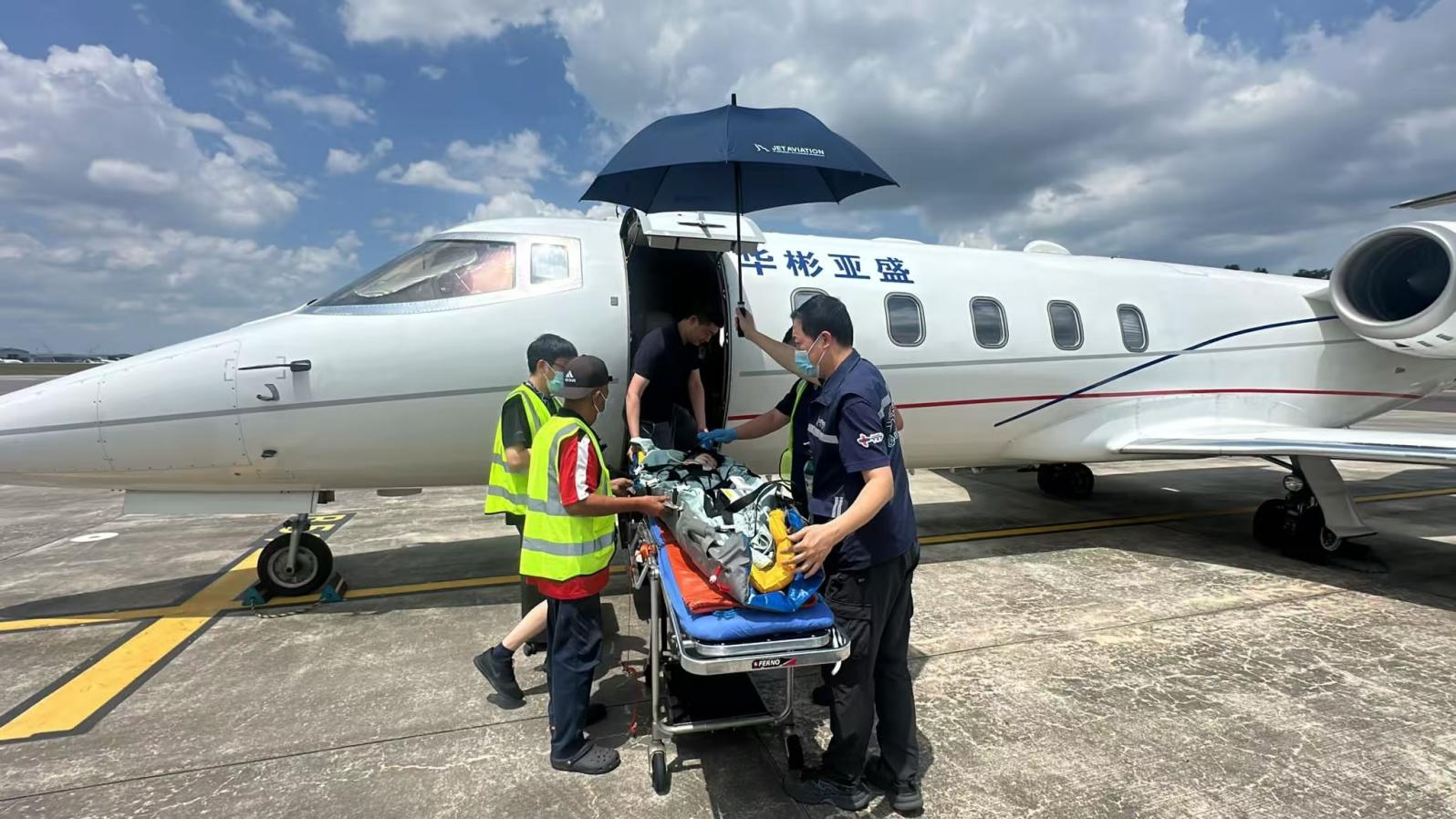
Air vs. Ground Patient Transfer is not simply a comparison between aircraft speed and driving distance. The correct choice depends on the patient’s stability, required care level, total bed-to-bed time, route conditions, equipment capacity, regulatory approvals and contingency planning.

A flight may shorten the longest leg but add airport transfers and handling. Ground transport offers fewer handovers but may expose the patient to longer travel, road vibration and traffic uncertainty. The safest option is the one that maintains the required level of care throughout the complete journey.
Start With Clinical Need, Not Distance
Before comparing transport modes, the referring clinician, receiving hospital and medical transport team should confirm:
•Whether the patient is adequately stabilized for transfer
•Which treatments must continue without interruption
•Whether ventilation, oxygen, vasoactive medication or invasive monitoring is required
•What deterioration is reasonably foreseeable
•Whether the destination hospital has accepted the patient and confirmed an appropriate bed
A “fit to fly” statement does not replace a transfer risk assessment. The 2026 Intensive Care Society guidance recommends documented risk assessment, continuous monitoring, appropriate escort competencies, checklists and formal clinical handover. It also notes that road journeys exceeding three to four hours require specific care planning, although this is not a universal threshold for choosing air transport.
How Air and Road Environments Change Clinical Risk
The technical principles behind Air vs. Ground Patient Transfer differ considerably.
In a pressurized aircraft cabin, reduced barometric pressure lowers available oxygen pressure. Healthy passengers usually tolerate this, but patients with respiratory disease, cardiac disease or severe anemia may require additional assessment and support, according to the UK Civil Aviation Authority. Pressure changes can also expand trapped gas, making recent surgery, pneumothorax and certain gastrointestinal conditions relevant to flight planning.
Ground transport avoids cabin-pressure changes but introduces prolonged vibration, acceleration, braking, road temperature and traffic delays. A ground team may be able to stop for an intervention, while access to the patient inside a moving vehicle remains limited.
In both modes, handovers create risk. Every transition between hospital bed, ambulance, airport and aircraft may affect tubes, medication records, equipment connections and clinical accountability.
Compare the Complete Transfer, Not One Travel Leg
| Decision Factor | Fixed-Wing Air Ambulance | Commercial Flight With Escort | ICU Ground Ambulance |
| Best-fit profile | Critical or time-sensitive patients needing advanced support | Stable, approved patients needing monitoring or stretcher positioning | Stable or critical patients on feasible regional routes |
| Total time | Fast long-distance leg, but includes two ground transfers and airport handling | Depends on airline schedule, medical clearance and boarding arrangements | Depends on distance, borders, traffic and driver requirements |
| Clinical access | Case-specific ICU equipment and medical team | Restricted by cabin space and airline policies | Continuous team presence, with limited access while moving |
| Main constraints | Weather, airport access, payload, landing slots and possible fuel stops | MEDIF approval, seat or stretcher availability, oxygen and device rules | Road duration, vibration, congestion and cross-border permissions |
| Relative cost | Usually highest | Often lower for stable patients | Often economical regionally, but long-distance staffing can increase cost |
A direct fixed-wing flight reduces elapsed time and transitions, but aircraft range, oxygen load or operational limits may require a technical stop. That stop extends exposure and demands additional reserve calculations.
A continuous ground journey reduces airport handovers. However, an integrated ground–air–ground route may be safer when it substantially reduces travel time. For selected stable regional patients, high-speed rail combined with medical ground transport may also be evaluated.

Match the System to the Patient
A responsible Air vs. Ground Patient Transfer decision should align four variables: patient acuity, required intervention, total route time and platform capability.
•Stable, seated patient: Commercial flight with a medical escort may be sufficient.
•Stable but bedridden patient: An airline-approved commercial stretcher may balance positioning needs and cost.
•Ventilated or hemodynamically unstable patient: A fixed-wing air ambulance or properly equipped ICU ground ambulance may be required, depending on total route time.
•Complex cross-border journey: A multimodal plan may be appropriate, provided one clinical plan governs every leg.
No distance alone determines the answer. Airport proximity, road quality, border procedures, available aircraft, receiving-bed timing and the patient’s tolerance for delay must be considered together.
Secure the Stretcher, Oxygen, Power and Monitoring
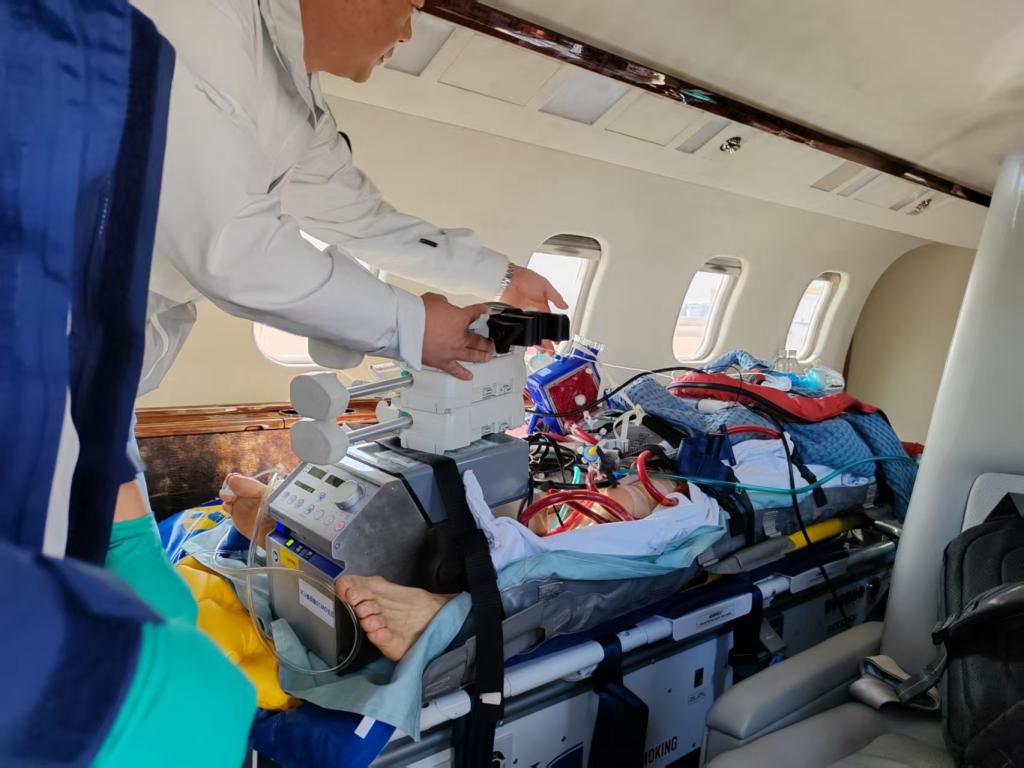
Medical equipment must be suitable for transport conditions, securely mounted and accessible to the clinical team. Before departure, the provider should verify:
•Stretcher, patient and equipment restraint systems
•Ventilator settings, circuits and backup ventilation
•Oxygen supply for planned time, expected delays and reserve
•Battery endurance for monitors, ventilators, pumps and suction
•Medication quantities and backup infusion capacity
•Visibility of monitors and access to the airway and vascular lines
•Functional checks, service records and equipment compatibility
Commercial aircraft oxygen and batteries require carrier-specific approval. Applicable dangerous-goods and operator rules must therefore be checked rather than assumed.
Verify What the Standards Actually Prove
For European operations, EN 1789:2020+A1:2023 addresses road ambulance design, testing and equipment. EN 13718-1 and EN 13718-2 cover medical devices and operational requirements for air ambulances. Transport ventilators may be assessed against ISO 80601-2-84:2023.
These standards do not replace:
•Aircraft operator certificates and maintenance records
•Local ambulance and cross-border operating permissions
•Airline medical clearance
•Professional licenses and transfer-specific competencies
•Medical liability and transport insurance
CAMTS, EURAMI or similar accreditation should only be stated after checking its current certificate, scope and expiry date.
Closing Words: Read the Quote as a Risk Plan
A comparable Air vs. Ground Patient Transfer quotation should identify the transport mode, medical team, equipment, both ground legs, airport handling, documentation, technical stops, exclusions and cancellation conditions.
It should also explain what happens if the patient deteriorates, oxygen or equipment becomes unavailable, the road closes, the flight is delayed or the receiving bed changes. The lowest initial price is not necessarily the lowest complete cost.
For families, hospitals and insurers evaluating a cross-border transfer, TKP Medical Assistance outlines its process from clinical review and route planning through resource activation, in-transit care and destination handover. Review how TKP Medical Assistance organizes a patient transfer to understand what information is needed for a clinically matched, bed-to-bed plan.
FAQs
Q1. How Does TKP Decide Between Air and Ground Patient Transfer?
TKP Medical Assistance reviews the patient’s stability, required medical support, total bed-to-bed time, road conditions, airport access and regulatory requirements. The recommended mode is based on clinical suitability rather than distance alone.
Q2. What Information Does TKP Need for an Initial Assessment?
Families or hospitals should provide the diagnosis, recent medical summary, vital signs, medication list, oxygen requirements, mobility status and details of any ventilator, infusion or monitoring support. The proposed destination and receiving-hospital information are also important.
Q3. Does TKP Arrange Bed-to-Bed Patient Transfers?
Yes. TKP can coordinate the journey from the sending hospital or residence to the final receiving facility, including ground ambulances, fixed-wing air transport, commercial flight arrangements and clinical handover.
Q4. Can TKP Arrange a Commercial Flight Stretcher?
TKP can evaluate stable, bedridden patients for commercial stretcher transport. This option requires airline medical approval and is not normally suitable for patients who need frequent emergency intervention or unrestricted ICU-level access.
Q5. Can TKP Transport Ventilated or Critically Ill Patients?
TKP assesses critically ill patients individually and selects the medical personnel, monitoring, ventilator support, oxygen and medications required for the journey. The final plan depends on the patient’s stability and the capabilities of the selected platform.
Submit Your Request
Recent Posts

Tags
- Air Ambulance
- Bedside To Bedside
- Cross Border Aid
- Emergency Evacuation
- Global Medical Rescue
- How can I ensure the patient's stability while in the air?
- How do I request an air medical transport?
- How is it different from an air ambulance
- how to activate emergency aircraft service
- how to request an air ambulance
- Is air medical transport safe
- Is international transport possible
- Medical Rescue
- Medical Transport
- Patient Repatriation
- Remote Rescue
- Seamless Coordination
- Telemedicine Support
- Tourists And Expats Medical Escort
- What are the benefits of a cross-border medical transfer
- What are the different types of transfers
- What are typical use cases
- What documents do I need to prepare for a transfer?
- What does high-speed rail patient transfer stands for
- What is air ambulance
- What is air medical transport?
- What is cross-border medical transfer
- What is emergency aircraft
- what is high-speed rail patient transfer
- What is medical charter flight
- what is neonatal ICU transfer
- What is patient air transfer
- What medical equipment is available on board the aircraft
- What situations shouldn't use air medical transport?
- What types of air ambulance are there?
- What types of air ambulance exist
- What's the difference between international and domestic transfers?
- what’s the difference between air medical transport and regular ambulance?
- When is emergency air transport necessary
- Which patients require air medical transport?
- who is included in the medical team
- who needs an air ambulance