


Cross-Border Medical Transport Services Cost Guide: What Determines the Final Quote?


Two patients travelling between the same cities may receive very different quotations. This is because Cross-Border Medical Transport Services are not priced by distance alone. The final quote reflects the patient’s condition, required medical support, transport mode, complete bedside-to-bedside duration, route complexity, permits and contractual risk.
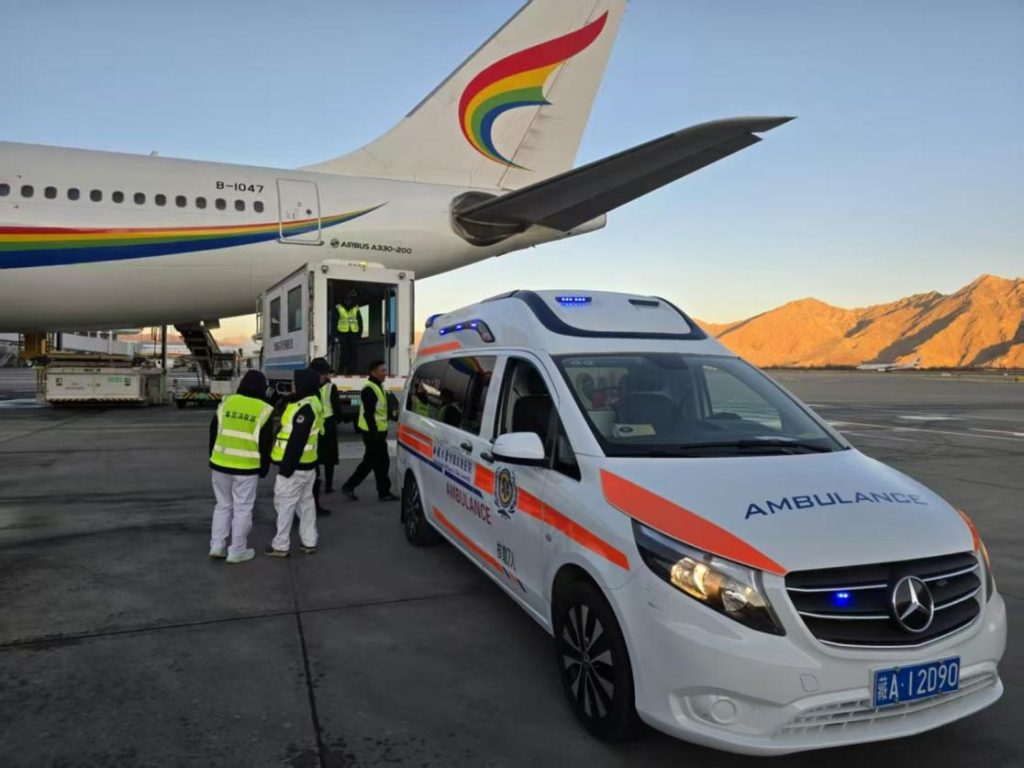
A reliable quotation should therefore function as a clinical and operational plan—not merely a transport price.
Why Identical Routes Produce Different Quotes
The quoted cost normally combines:
• Transport platform and aircraft positioning
• Medical team and specialist capability
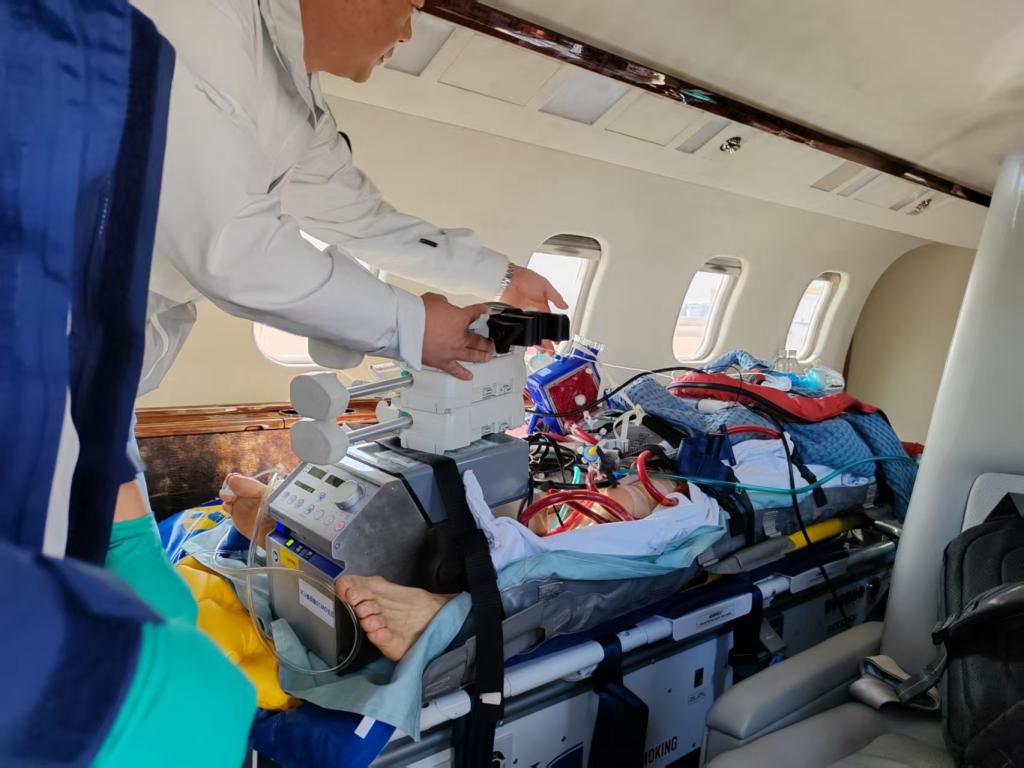
• Stretcher, oxygen, ventilator and monitoring equipment
• Ground ambulances at origin and destination
• Airport handling, permits and possible technical stops
• Waiting, cancellation and route-change conditions
• Insurance documentation and payment arrangements
A low initial price may cover only the flight. Another quote may include the entire journey from the sending hospital to the receiving bedside. Buyers must establish the scope before comparing totals.
Patient Acuity Determines the Medical Configuration
Before pricing Cross-Border Medical Transport Services, the provider should review the medical report, current vital signs and treatment plan. Important parameters include:
• Glasgow Coma Scale and neurological status
• SpO₂, prescribed oxygen flow and FiO₂
• Ventilator settings and airway stability
• Blood pressure and vasoactive infusions
• Number of pumps, drains and monitoring channels
• Infection or isolation requirements
• Patient weight, height and mobility
• Risk of deterioration during prolonged transport
“Stable in hospital” does not automatically mean fit to fly. Hospital stability may depend on resources that cannot be reproduced on a commercial flight.
The required level of care may range from a medical escort to ALS, ICU or specialist transport. More personnel are not automatically better; the crew composition should match the expected interventions.
Comparing the Main Transport Options
| Transport option | Suitable context | Main cost drivers | Important limitation |
| Seated commercial medical escort | Stable patient who can sit and needs supervision | Tickets, escort, oxygen and airline clearance | Limited space and treatment capability |
| Commercial airline stretcher | Stable patient who must remain lying down | Multiple blocked seats, stretcher installation, escort and MEDIF | Limited airline and route availability |
| Fixed-wing air ambulance | Urgent, unstable or ICU-dependent patient | Dedicated aircraft, positioning, medical crew and ICU equipment | Higher operating cost |
| Ground ICU or high-speed rail | Selected regional routes and sufficiently stable patients | Journey time, medical vehicle, team hours and transfers | Long duration may increase clinical exposure |
The lowest-cost option is only appropriate when it meets the patient’s medical needs. A commercial stretcher should not be presented as a substitute for ICU-level care.
Route Design Costs More Than Distance
Distance is only the beginning of route planning. Cross-Border Medical Transport Services must account for aircraft or team positioning, airport opening hours, runway capability, available slots, border formalities and ground ambulance access.
A direct flight may reduce journey time and clinical transitions but require a larger aircraft. A technical stop may allow a smaller aircraft to complete the route, while adding:
• Extra landing and handling fees
• Longer oxygen and battery requirements
• Additional crew-duty time
• Another period of patient movement or operational uncertainty
The nearest airport is not always the least expensive choice. A major airport with better handling capability may reduce waiting and simplify medical loading, even if the ground journey is slightly longer.
Calculate Resources for the Entire Bedside-to-Bedside Journey
Medical resources should be calculated against total mission time:
Tmission=Tpickup+Tground+Tairport+Tflight/stops+Thandover
Oxygen, medication, battery capacity and staff duty time must cover this complete period plus an appropriate reserve. Calculating oxygen only from scheduled flight time can create a serious planning gap when ground traffic, airport procedures or weather cause delays.
Bedside-to-bedside Cross-Border Medical Transport Services should also confirm:
• Origin and destination ground ambulance levels
• Sending-hospital discharge timing
• Receiving physician and confirmed bed
• Responsibility at every handover
• Alternative arrangements if the planned route becomes unavailable
Medical Equipment Must Operate as One Installed System
A ventilator or monitor being suitable for hospital use does not automatically make it suitable for air transport. The complete configuration should be checked for:
• Aviation-compatible mounting and restraint
• Stretcher and loading-system compatibility
• Approved electrical connections
• Battery autonomy and backup power
• Oxygen-cylinder security and regulator compatibility
• Access to the patient during transport
• Pre-departure function tests
• Cleaning, disinfection and maintenance status
The quotation should also state what backup equipment is provided and what happens if a device fails during the mission.
Clearances and Standards Can Change the Final Cost
Commercial travel may require airline-specific MEDIF approval. This is separate from a visa, hospital discharge letter or general medical certificate.
Depending on the route and service model, buyers may need to verify:
• The aviation operator’s valid operating authority
• Current medical and professional licences
• EN 13718-1 and EN 13718-2 considerations for air-ambulance equipment and operation
• EN 1789 requirements for applicable road ambulances
• Medical-device approvals in the relevant jurisdiction
• Oxygen and battery carriage requirements
• Data handling under GDPR, HIPAA or local privacy laws
• CAMTS or EURAMI accreditation scope, when claimed
CAMTS or EURAMI accreditation can support quality assessment, but neither should be described as a universal government licence. Certificate scope and validity matter more than displaying a logo.
Normalize Quotes Before Selecting a Provider
A procurement-ready quotation for Cross-Border Medical Transport Services should identify:
• Transport mode, route and estimated duration
• Medical team and equipment configuration
• Aircraft positioning and technical stops
• Both ground ambulance legs
• Airport handling, permits and documentation
• Taxes, currency and payment schedule
• Waiting, cancellation and quotation-validity terms
• Included services and explicit exclusions
Buyers should also ask who pays if the patient deteriorates, the receiving bed is delayed, equipment requirements change or the planned route becomes unavailable. These contingencies often distinguish an apparent base price from the real financial exposure.
Final Words: Building a Transparent Transport Plan With TKP
Operating since 2001, TKP Medical Assistance reports more than 10,000 international transfers and coordinates commercial stretcher, fixed-wing, ground and high-speed rail solutions. Its 24/7 team works with hospitals and insurers to match the transport plan to the patient rather than defaulting to one mode.
For a case-specific assessment and clearly defined quotation, contact TKP Medical Assistance with the current medical report, proposed route, preferred timing and receiving-hospital details.
FAQs
Q1. What determines a quote from TKP Medical Assistance?
TKP evaluates the patient’s condition, required medical team, equipment, transport mode, route, ground ambulances, clearances and total bedside-to-bedside duration. The quote may change if the clinical condition or itinerary changes.
Q2. What information does TKP need to prepare an accurate quote?
The requester should provide a recent medical report, diagnosis, vital signs, oxygen or ventilator requirements, current treatment, patient height and weight, proposed route, preferred date and receiving-hospital details.
Q3. Which Cross-Border Medical Transport Services does TKP coordinate?
Depending on medical and operational suitability, TKP can coordinate commercial-flight medical escorts, commercial stretchers, fixed-wing air ambulances, ground medical transport and selected high-speed rail transfers.
Q4. Does TKP provide bedside-to-bedside medical transport?
Yes. TKP can coordinate pickup from the sending hospital, ground ambulance transfers, the main transport segment and handover at the receiving hospital. The precise scope should be confirmed in the written quote.
Q5. Can TKP transport ICU or ventilated patients?
TKP provides case-specific planning for critically ill and ventilated patients. Its medical team reviews airway support, oxygen demand, infusions, monitoring requirements and deterioration risks before recommending a transport configuration.
Submit Your Request
Recent Posts


Tags
- Air Ambulance
- Bedside To Bedside
- Cross Border Aid
- Emergency Evacuation
- Global Medical Rescue
- How can I ensure the patient's stability while in the air?
- How do I request an air medical transport?
- How is it different from an air ambulance
- how to activate emergency aircraft service
- how to request an air ambulance
- Is air medical transport safe
- Is international transport possible
- Medical Rescue
- Medical Transport
- Patient Repatriation
- Remote Rescue
- Seamless Coordination
- Telemedicine Support
- Tourists And Expats Medical Escort
- What are the benefits of a cross-border medical transfer
- What are the different types of transfers
- What are typical use cases
- What documents do I need to prepare for a transfer?
- What does high-speed rail patient transfer stands for
- What is air ambulance
- What is air medical transport?
- What is cross-border medical transfer
- What is emergency aircraft
- what is high-speed rail patient transfer
- What is medical charter flight
- what is neonatal ICU transfer
- What is patient air transfer
- What medical equipment is available on board the aircraft
- What situations shouldn't use air medical transport?
- What types of air ambulance are there?
- What types of air ambulance exist
- What's the difference between international and domestic transfers?
- what’s the difference between air medical transport and regular ambulance?
- When is emergency air transport necessary
- Which patients require air medical transport?
- who is included in the medical team
- who needs an air ambulance