


Psychological Support and Communication Strategies During Cardiac Patient Air Transport


Introduction
When we talk about Cardiac Patient Air Transport, most discussions focus on medical equipment, flight physiology, and clinical protocols. Yet there is another critical dimension that can determine the success of a mission: the patient’s psychological state. Fear, anxiety, and sensory isolation at high altitude can trigger arrhythmias, elevate blood pressure, and increase myocardial oxygen demand — directly threatening cardiac stability.
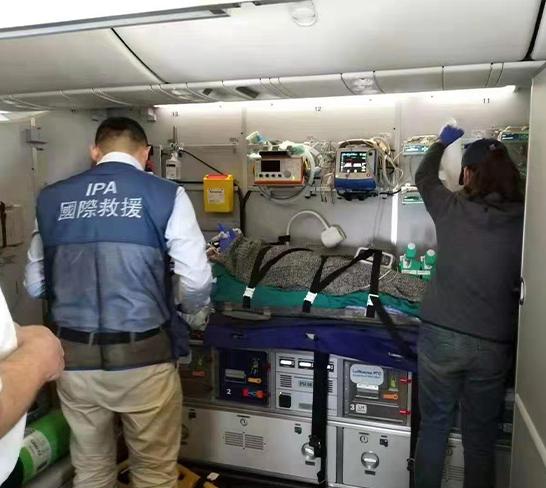
A professionally managed Cardiac Patient Air Transport goes beyond ventilators and monitors. It integrates structured psychological support and clear, empathetic communication from the first phone call to the final handover. This article explains how a well-designed psycho-emotional protocol works, using the expertise of providers like TKP Medical Assistance, which combines advanced life-support systems with genuine human compassion.
Why Psychological Support is Essential in Cardiac Patient Air Transport
For a heart patient, the thought of flying in a medical aircraft — away from familiar surroundings — can be terrifying. Studies show that acute stress increases circulating catecholamines, potentially precipitating tachycardia, hypertension, or even myocardial ischemia. Therefore, every Cardiac Patient Air Transport mission must include:
• Pre-flight anxiety screening
• Continuous emotional assessment during flight
• Post-flight psychological grounding
TKP Medical Assistance understands this link. Their teams are not only certified in ACLS and BLS but also trained to recognise non-verbal distress signals. With over 24 years of frontline experience, they ensure that psychological safety is treated as part of clinical precision.
Pre–Flight Phase: Communication as the First Intervention
1. Honest, Calming Explanations
Before take-off, the medical team explains what the patient will see, hear, and feel. Key elements include:
• The sound of the ventilator and oxygen flow
• The feeling of pressurisation changes
• The purpose of each monitor lead and IV line
TKP’s multilingual staff (EN/CH/CN) provide culturally sensitive explanations, reducing misunderstandings that often fuel anxiety.
2. Involving Family Members
Family presence during pre-flight briefings lowers patient cortisol levels. The team should:
• Clarify where family members can sit (away from the critical care zone)
• Set realistic expectations about in-flight updates
• Provide a simple “communication card” with key phrases
TKP Medical Assistance offers real-time journey tracking and family updates through their 24/7 global coordination centre — a vital reassurance for loved ones on the ground.
3. Preparing for Advanced Devices
Patients on ECMO, IABP, or ventricular assist devices often fear equipment failure at altitude. The team must demonstrate:
• Aviation-certified power backup for all life-sustaining systems
• Redundant monitoring (transport-ready ICU monitors with alarm limits)
• Manual override procedures (explained simply, not technically)
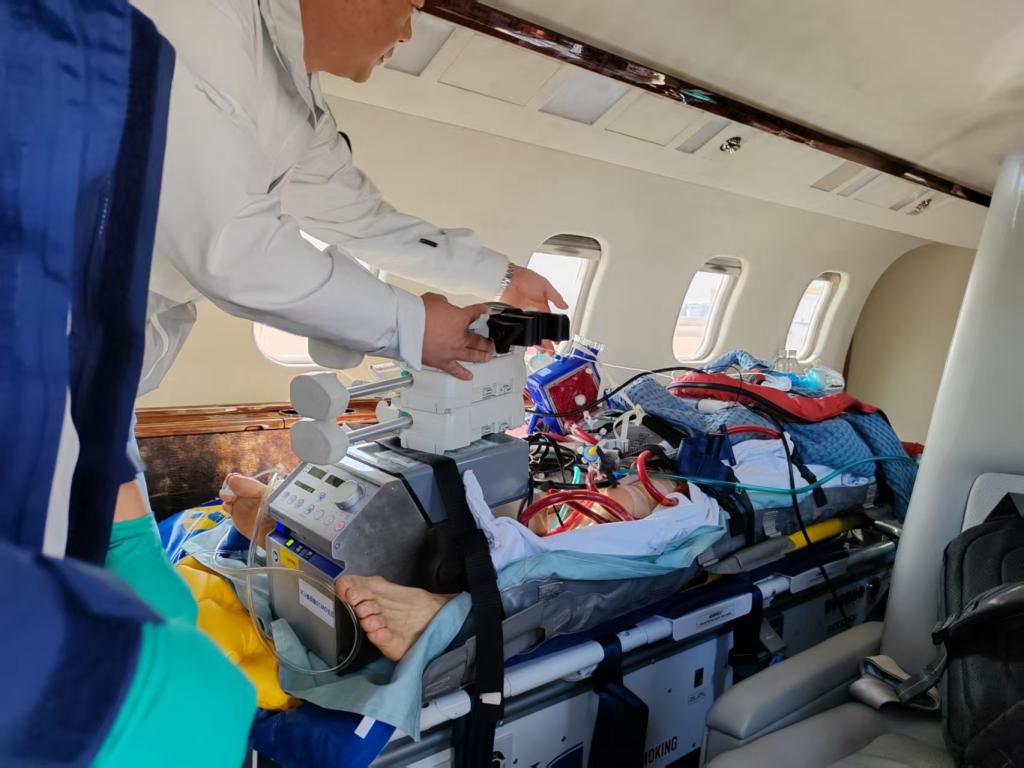
TKP provides full support for ECMO, IABP, and other advanced life-sustaining systems, including during international flights. Every TKP mission is equipped with portable ALS/ACLS systems, transport-ready ICU monitors, oxygen supply, ventilators, and ECMO when required — all aviation-certified for both adult and paediatric patients. Knowing this reduces catastrophic thinking.
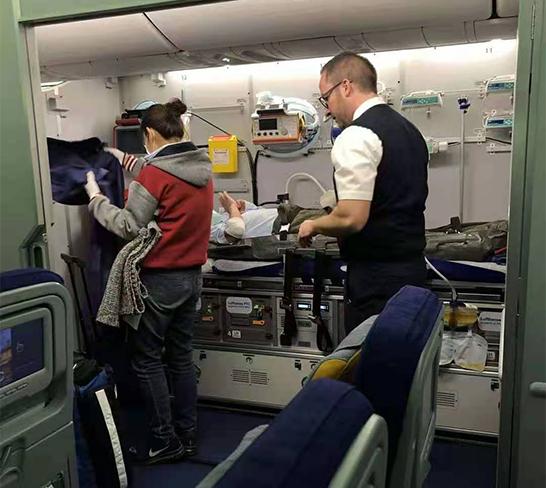
In–Flight Phase: Practical Strategies to Reduce Cardiac Stress
Cabin Environment Modifications
• Dim lighting to simulate night, lowering sympathetic drive
• Noise reduction – using soft headphones with calming music
• Vibration feedback – a weighted lap pad or gentle hand pressure
Emotional Monitoring Protocol
A dedicated crew member checks the patient’s emotional state every 15–30 minutes using a simple traffic-light system:
| Colour | Meaning | Action |
| �� Green | Calm, oriented | Continue standard monitoring |
| �� Yellow | Anxious, questioning | Reassure, adjust position, explain again |
| �� Red | Panic, tachycardia, chest discomfort | Activate acute anxiety management (oxygen, low-dose sedative if cleared) |
For Cardiac Patient Air Transport, even a short panic episode can elevate heart rate by 30–40 bpm. TKP’s zero-major-transfer-incident record is partly due to this structured emotional vigilance.
Managing In–Flight Arrhythmias Without Panic
If a monitor shows new atrial fibrillation or frequent PVCs, the medical team should:
- Stay visibly calm – patients read facial expressions instantly.
- Speak slowly – “Your heart is having a small extra beat. This is why we are here. I am preparing a medication that will smooth it out.”
- Avoid startling alarms – pre-set monitors to non-audible alerts unless critical.
TKP’s crews carry aviation-certified ACLS equipment and are trained to perform any intervention (cardioversion, IV push) while simultaneously offering verbal reassurance — a skill that comes from over two decades of real-world experience.
Post–Flight Phase: From Landing to Long–Term Emotional Recovery
Immediate Handover Communication
Upon arrival at the receiving hospital, a short “psychological handover” is given:
• “The patient was anxious during descent but responded to re-orientation.”
• “He felt short of breath but his SpO₂ never dropped below 94%.”
This helps the next care team avoid re-triggering fear.
Preventing Post–Traumatic Stress
Up to 20% of critically ill patients develop PTSD after an emergency transport. To reduce this, TKP Medical Assistance ensures:
• A follow-up call within 72 hours to answer lingering questions
• A simple written summary of what happened during the flight (demystifying memory gaps)
• Access to a multilingual counsellor if needed
Family Debriefing
Family members who tracked the journey in real time (via TKP’s 24/7 coordination centre) should receive a private 10-minute debrief. The goal is not clinical detail but emotional closure: “He was scared but never alone. We managed everything.”
How TKP Medical Assistance Sets Itself Apart
While many providers focus only on hardware, TKP integrates psychological support into every Cardiac Patient Air Transport:
| Feature | Psychological Benefit |
| Direct operation – no middleman | Consistent communication, no conflicting messages |
| Multilingual staff (EN/CH/CN) | Patient can speak in mother tongue during distress |
| Real-time family updates | Reduces secondary anxiety in loved ones |
| 24/7/365 global coordination | Any time zone, immediate response – no waiting |
| Zero major transfer incidents | Builds trust even before take-off |
“We are not intermediaries — we are the team that plans, coordinates, and delivers each transfer with clinical expertise and compassion. From critical care in the air to bedside support on the ground, we ensure that every patient journey is safe, seamless, and centred on dignity.”
Conclusion
A successful Cardiac Patient Air Transport cannot be measured by monitors alone. It requires a parallel track of psychological support — honest pre-flight communication, in-flight emotional monitoring, and post-flight closure. Providers like TKP Medical Assistance have proven that advanced life-sustaining systems (ECMO, IABP, portable ALS/ACLS, aviation-certified ICU monitors) can work hand-in-hand with empathetic, culturally aware human interaction.
When the heart is fragile, peace of mind is not a luxury — it is a medical necessity. And with the right team on board, even the sky becomes a place of healing.
Frequently Asked Questions (FAQ)
Q1: Can a patient on ECMO or IABP be safely transported by air?
Yes. TKP Medical Assistance supports ECMO, IABP, and other complex life-sustaining systems, inclusive of international flight support. All equipment is aviation-certified, and the medical team is trained to manage these devices at altitude.
Q2: How do you keep a cardiac patient calm during the flight?
We use a structured psycho-emotional protocol: pre-flight explanation, family involvement, in-flight emotional monitoring (traffic-light system), and noise/light reduction. Every TKP mission includes multilingual staff trained to recognise and reduce anxiety non-pharmacologically.
Q3: Can a family member fly with the patient?
Yes – one or two family members may accompany the patient, depending on aircraft configuration. TKP’s team provides clear seating instructions (away from the critical care area) and offers real-time journey tracking and updates so loved ones on the ground stay informed.
Q4: What happens if the patient has a heart rhythm problem mid-flight?
Every TKP aircraft carries portable advanced cardiac life support (ACLS) systems and transport-ready ICU monitors. The medical team can perform defibrillation, cardioversion, and administer antiarrhythmic drugs while simultaneously offering calm, reassuring communication – all within aviation-certified safety protocols.
Q5: Do you provide psychological support after landing?
Yes. Post-flight care includes a psychological handover to the receiving hospital, a follow-up call within 72 hours, and a simple written summary of the flight to reduce potential PTSD. Family debriefing is also available upon request.
Submit Your Request
Recent Posts
Tags
- Air Ambulance
- Bedside To Bedside
- Cross Border Aid
- Emergency Evacuation
- Global Medical Rescue
- How can I ensure the patient's stability while in the air?
- How do I request an air medical transport?
- How is it different from an air ambulance
- how to activate emergency aircraft service
- how to request an air ambulance
- Is air medical transport safe
- Is international transport possible
- Medical Rescue
- Medical Transport
- Patient Repatriation
- Remote Rescue
- Seamless Coordination
- Telemedicine Support
- Tourists And Expats Medical Escort
- What are the benefits of a cross-border medical transfer
- What are the different types of transfers
- What are typical use cases
- What documents do I need to prepare for a transfer?
- What does high-speed rail patient transfer stands for
- What is air ambulance
- What is air medical transport?
- What is cross-border medical transfer
- What is emergency aircraft
- what is high-speed rail patient transfer
- What is medical charter flight
- what is neonatal ICU transfer
- What is patient air transfer
- What medical equipment is available on board the aircraft
- What situations shouldn't use air medical transport?
- What types of air ambulance are there?
- What types of air ambulance exist
- What's the difference between international and domestic transfers?
- what’s the difference between air medical transport and regular ambulance?
- When is emergency air transport necessary
- Which patients require air medical transport?
- who is included in the medical team
- who needs an air ambulance