


The 24-Hour Life Bridge: A Complete Timeline of International Patient Air Transfer


When a critical patient lies thousands of miles from home – after a traumatic brain injury, major surgery, or sudden organ failure – every minute feels like an eternity. Moving that patient safely across continents is not just a medical flight; it is a precisely orchestrated International Patient Air Transfer operation. But what actually happens during those 24 hours between the first call and bedside handover?

Below, we walk through a real International Patient Air Transfer timeline, using a landmark case completed by TKP Medical Assistance. On September 14, 2017, TKP moved a comatose post-cranial surgery patient from Abidjan (Ivory Coast) to Beijing, with a critical layover in Paris. This is the story of those 24 hours – told as a practical, hour-by-hour roadmap.
Phase 1: The First 2 Hours – Activation & Medical Triage
Goal: Decide if air transfer is safe and which configuration is needed.
The clock starts the moment a family member or hospital calls TKP Medical Assistance’s 24/7/365 coordination center. Unlike standard travel agencies, TKP is a direct medical provider – no middlemen. Multilingual staff (English, Chinese, Cantonese) immediately collect:
•Patient’s diagnosis, Glasgow Coma Scale (GCS), ventilator settings, and current medications
•Recent imaging (CT/MRI) and surgical reports
•Passport validity and destination hospital confirmation
Within 30 minutes, an ICU-level physician performs a remote risk assessment. For the Abidjan patient – comatose after cranial surgery – the team identified two challenges: (1) the need for continuous ICP (intracranial pressure) monitoring during takeoff/landing, and (2) a mandatory technical stop where the patient could not be left unattended.
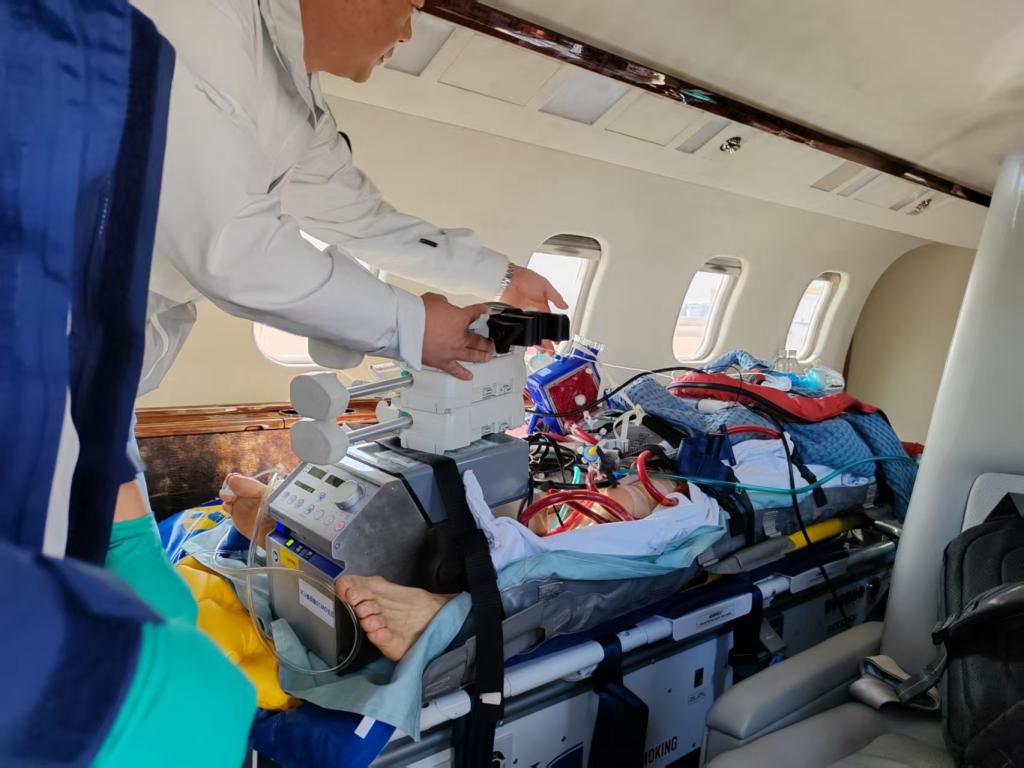
TKP‘s edge: Our medical directors decide not only the medical team size (ACLS/BLS certified nurses + a neuro-trained doctor) but also which aviation-certified ICU devices to pack – portable ventilators, dual oxygen sources, and a transport monitor with invasive pressure modules.
Phase 2: Hours 2–6 – Logistics & International Clearance
Now the real puzzle begins. An International Patient Air Transfer requires three separate layers of permission: departure country (Ivory Coast), transit country (France), and arrival country (China). Meanwhile, commercial airlines rarely accept stretcher patients on ordinary seats – a dedicated stretcher berth must be pre-installed.
TKP‘s checklist during this window:
•Stretcher reservation on two long-haul flights (Abidjan → Paris, Paris → Beijing) with medical escort seats
•French overflight & landing clearance – for the 10-hour layover at CDG airport
•Ground ambulance booking at both ends, plus a specialized ICU room inside CDG airport for the layover
•Real-time family updates – every 90 minutes via phone or encrypted messaging
For the Abidjan–Beijing mission, a unique hurdle appeared: the Paris layover would last 10 hours – too long for a patient to remain on the aircraft but too short to transfer to a local hospital. TKP Medical Assistance negotiated with CDG airport’s medical service to set up a temporary ICU in a quiet lounge area, complete with a hospital bed, infusion pumps, and a standby French-licensed nurse. This kind of “airport ICU” is almost impossible for non-specialist providers to arrange.
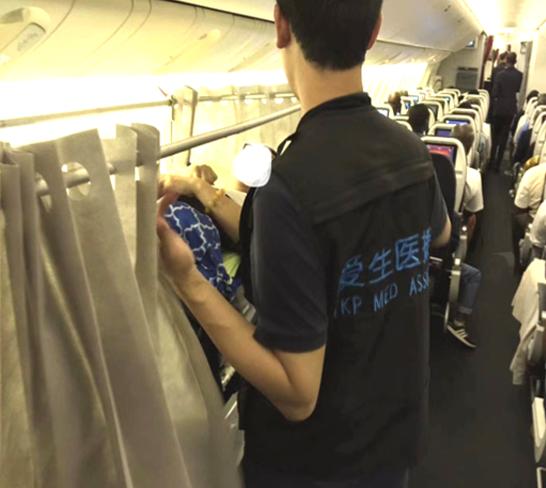
Phase 3: Hours 6–12 – Bedside to Boarding (Abidjan)
By Hour 6, the ground ambulance arrives at the Abidjan hospital. The TKP team performs a final bedside assessment – the “wheels-up” decision.
Key pre-departure steps:
•Convert the patient from the hospital bed to the special transfer stretcher (anti-decubitus, full spinal immobilization if needed)
•Transfer all IV lines, the ventilator circuit, and the urinary catheter without interrupting sedation
•Load portable devices: BIS monitor (for sedation depth), point-of-care blood gas analyzer, and emergency drug kit for seizures or intracranial hypertension
•Share a handover report with the airline’s cabin crew – explaining what an alarm sounds like and who to call if the medical team needs extra space
At Abidjan’s airport, a dedicated lift vehicle raises the stretcher into the passenger cabin. The stretcher is locked onto specially engineered mounts that absorb 9G forces. From this moment, the patient is essentially in a flying ICU.
Phase 4: Hours 12–22 – In-Flight Critical Care & Paris Layover
During the first leg (Abidjan → Paris), the TKP team faces three physiological enemies: low cabin humidity (thickening secretions), cabin pressure equivalent to 8,000 feet (lowering oxygen saturation), and prolonged immobility (DVT risk).
What the TKP nurses do every 30 minutes:
•Check ETT cuff pressure and suction the airway
•Reposition the patient slightly (using a specialized turning sheet)
•Monitor for skin breakdown and signs of autonomic storming (common in brain-injured patients)
•Record vital signs in a flight log that will become part of the legal medical record
After landing in Paris, the 10-hour layover begins. Instead of waiting on the tarmac in an ambulance, the patient is moved to the pre-arranged CDG airport ICU suite. TKP’s team uses this window to:
•Replenish oxygen cylinders and IV fluids
•Perform a full neurological exam (GCS unchanged – good sign)
•Exchange shift reports with a fresh TKP nurse flown from Europe to ensure no fatigue-related errors
Finally, the patient is re-loaded onto the Beijing-bound flight. The second leg is even longer – the team now monitors for circadian rhythm disruption and adjusts sedation to match Beijing time.
Phase 5: Hour 22–24 – Landing & Hospital Handover in Beijing
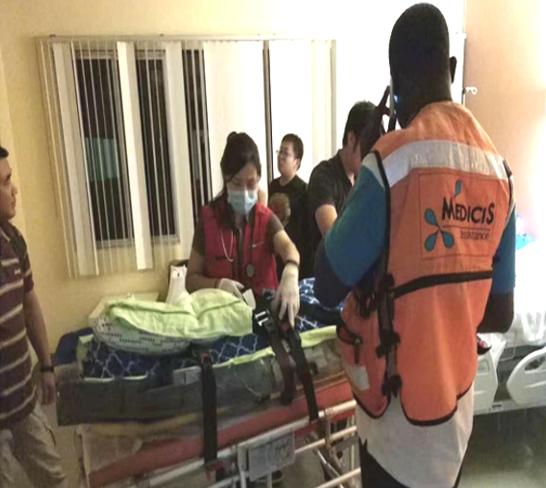
As the wheels touch down, the mission is not over. The final hour is the most dangerous because of transition errors – handing over a patient from the flight stretcher to a new ambulance and then to a Chinese ICU bed.
TKP‘s standardized handover protocol:
•Ambulance-to-aircraft ramp transfer – the Chinese ground team confirms equipment compatibility (ventilator fittings, electrical plugs)
•Accompanied ambulance ride – TKP’s ICU doctor stays inside the ambulance, continuously monitoring; no handover is done mid-transit
•Bedside report at Beijing hospital – structured using the “SBAR” format (Situation, Background, Assessment, Recommendation), including a written flight record and trended vital signs
•The patient – still comatose but stable – is safely admitted. Two weeks later, he begins to show signs of neurological recovery. The International Patient Air Transfer saved his life not by miracle, but by method.
Why TKP Medical Assistance Delivers Zero Major Transfer Incidents
With over 24 years of front-line experience, TKP has developed a system that leaves nothing to chance. Here’s what sets them apart:
•Clinical precision & safety – Each mission is led by practicing ICU teams, not logistics agents. All equipment (ECMO-ready, aviation-certified) is tested before every flight.
•Direct operation – No middleman – From the coordination center to the bedside, TKP controls every link. This reduces errors and cuts unnecessary costs.
•24/7 worldwide coordination – multilingual employees (English, Chinese, Cantonese), and real-time journey tracking eliminate concerns for families.
•Zero major transfer incidents – In thousands of missions, including neonatal, bariatric, and highly infectious cases, TKP has never lost a patient due to a transfer-related complication.
Final Takeaway: The 24-Hour Timeline in Retrospect
An International Patient Air Transfer is not merely a flight with a stretcher. It is a dense chain of medical decisions, cross-border permits, and human empathy – compressed into one day. The Abidjan–Paris–Beijing case shows how a comatose, post-cranial surgery patient can cross three continents safely when the provider has:
•ICU-trained crews (not just basic EMTs)
•Airport-level negotiation skills (e.g., an ICU suite inside CDG)
•A relentless checklist for every hour, from airway suction to legal handover
If you or your family ever require such a transfer, remember: the first call matters. Choose a provider that builds the ICU into the aircraft – and into every hour of the journey.
TKP Medical Assistance operates that life bridge 365 days a year. No intermediaries. No shortcuts. Only clinically precise, compassionate care at 30,000 feet.
*Need a customized transfer plan? Contact TKP‘s global coordination center – available in English, Chinese, and Cantonese, 24/7.*
Frequently Asked Questions (FAQ)
- What is an International Patient Air Transfer?
It is the medically supervised movement of a critically ill or injured patient from one country to another using specially equipped aircraft (commercial stretcher seats or dedicated air ambulances), with continuous ICU-level care during the entire journey.
- Can any patient be flown internationally?
No. An International Patient Air Transfer requires a pre-flight medical assessment. Absolute contraindications include untreated pneumothorax, unstable spinal fractures without immobilization, and certain conditions worsened by cabin pressure. TKP’s ICU physicians evaluate each case individually.
- What makes TKP different from other medical escort services?
TKP is a direct provider – not a broker. They operate their own global coordination center, employ ACLS/BLS-certified ICU teams, and carry aviation-certified advanced equipment (ventilators, monitors, even ECMO when required). With over 24 years of experience and zero major transfer incidents, they deliver clinical precision without middlemen.
- What do I need to do to receive a quote or start a transfer?
To access a transfer quote or booking, reach out to TKP’s multilingual (English/Chinese/Cantonese) 24/7 support team by calling the provided number or completing the online form. They’ll ask you for the patient’s diagnosis, where they are currently, where they are being transferred to, and will give you a breakdown of the costs which includes, but is not limited to, the aircraft, medical staff, ambulances, and appropriate permits.
Submit Your Request
Recent Posts
Tags
- Air Ambulance
- Bedside To Bedside
- Cross Border Aid
- Emergency Evacuation
- Global Medical Rescue
- How can I ensure the patient's stability while in the air?
- How do I request an air medical transport?
- How is it different from an air ambulance
- how to activate emergency aircraft service
- how to request an air ambulance
- Is air medical transport safe
- Is international transport possible
- Medical Rescue
- Medical Transport
- Patient Repatriation
- Remote Rescue
- Seamless Coordination
- Telemedicine Support
- Tourists And Expats Medical Escort
- What are the benefits of a cross-border medical transfer
- What are the different types of transfers
- What are typical use cases
- What documents do I need to prepare for a transfer?
- What does high-speed rail patient transfer stands for
- What is air ambulance
- What is air medical transport?
- What is cross-border medical transfer
- What is emergency aircraft
- what is high-speed rail patient transfer
- What is medical charter flight
- what is neonatal ICU transfer
- What is patient air transfer
- What medical equipment is available on board the aircraft
- What situations shouldn't use air medical transport?
- What types of air ambulance are there?
- What types of air ambulance exist
- What's the difference between international and domestic transfers?
- what’s the difference between air medical transport and regular ambulance?
- When is emergency air transport necessary
- Which patients require air medical transport?
- who is included in the medical team
- who needs an air ambulance