


Overseas Patient Transfer: How Faster Document Coordination Prevents Critical Delays


Overseas Patient Transfer can become much more difficult when a patient is medically ready to travel, but missing, delayed, or inconsistent documents slow the process down. For families, the challenge is not only the patient’s condition.

It is also the need to align medical records, airline clearance, insurance approval, and receiving hospital requirements without losing time. This is where TKP Medical Assistance adds value. With advance document preparation, TKP provides better document coordination and communication, leading to safer cross-border transfers through improved ease of communication and smoother clinical handoffs.
The Real Delay Often Starts Before Departure.
Many families believe the main delay in transports is the securing of an aircraft and ambulance, but in fact, the delay can happen much sooner.
Some common bottlenecks are:
• Missing or outdated medical summaries
• Unclear medication/ treatment lists
• Untranslated documents requiring external reviews
• Incomplete ID, passport, or visa documentation
• Insurance approval/ financial authorization delay
• Missing documents and/or signature of consent
• Pending airline fitness-to-fly review
Each of these is an obstacle to the next step not completing the transfer.
The receiving physician relies on complete, accurate clinical documentation to assess the patient’s condition and prepare for admission.
The airline has medical documentation requirements to grant special assistance, stretcher service, and fitness-to-fly clearance.
The insurer will not confirm coverage without medical necessity documentation, treatment description, and cost information.
The family needs an understanding of forthcoming steps, timelines, and roles.
According to IATA, medical clearance may be requested from the passenger or treating doctor in certain cases, and travel or health document requirements can vary based on the route and individual circumstances.
Why Document Coordination Affects Patient Safety
For medically vulnerable patients, delays are not simply inconvenient. They can affect care continuity, treatment timing, and family decision-making.
WHO patient-safety resources have repeatedly identified communication during handovers and transitions of care as a high-risk point in healthcare delivery. When information is incomplete, inconsistent, or delayed, the chance of misunderstanding rises. WHO also highlights medication safety during transitions of care as a major area where preventable harm can occur if records and treatment details are not transferred accurately.
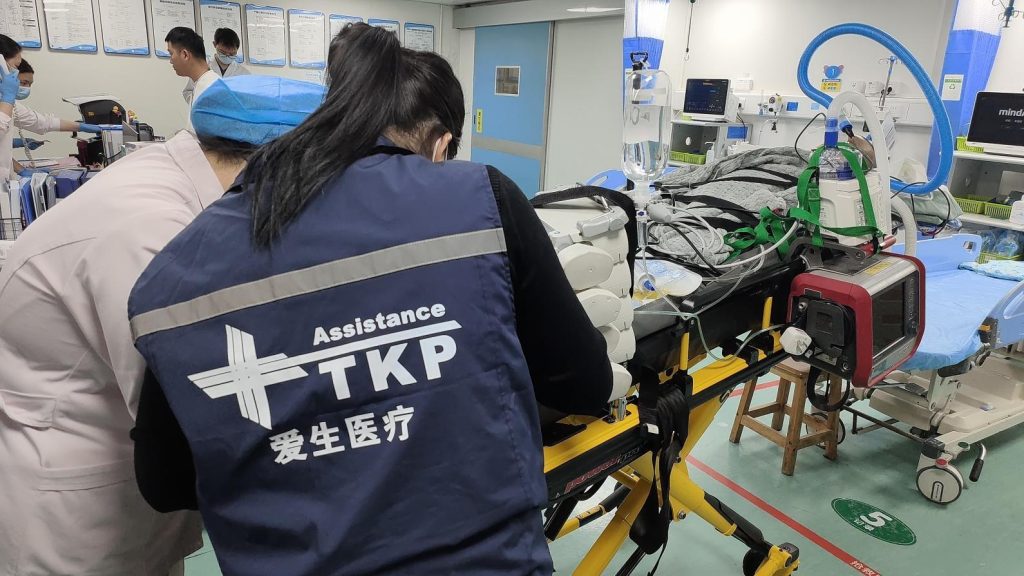
That is why document handling should never be treated as a paperwork formality. In a strong Overseas Patient Transfer system, documentation supports clinical safety in at least three ways:
• It helps the receiving team prepare before the patient arrives
• It reduces the risk of medication or treatment miscommunication
• It speeds approvals that directly affect travel timing
For patient families, this is one of the clearest differences between a basic transport booking and a professionally coordinated medical transfer.
How TKP Medical Assistance Reduces Paperwork Delays
TKP Medical Assistance builds document coordination into the service activation process, instead of leaving it until the route is already fixed.
Early Medical Record Collection
At the first stage, the team gathers recent medical records, diagnosis details, treatment plans, medication information, and attending physician contacts. This allows the clinical review to begin quickly and gives the receiving side a clearer picture of patient status.
Practical Family Guidance
Families under pressure often do not know which papers matter most. TKP Medical Assistance helps organize the essential set, including:
• Medical records and discharge summaries
• Passport and identification documents
• Visa-related paperwork where required
• Insurance policy details and contact information
• Consent forms and authorized representative details
• Preferred receiving hospital information
That guidance reduces back-and-forth and helps families act in the right order.
Coordination Across Hospitals, Insurers, and Travel Partners
A transfer can move only as fast as the slowest approval point. TKP Medical Assistance helps connect the current hospital, receiving hospital, insurer, escort team, and transport partners so that documents are shared in a usable format and reviewed by the right people at the right time.
This matters because CDC guidance for travelers receiving care abroad recommends carrying copies of medical records, lab results, medication information, and related health documents. CDC also advises travelers to keep both print and digital copies of important documents when possible.
The Documents Families Should Prepare First
A faster transfer usually begins with better preparation. For most cases, families can help prevent avoidable delay by preparing the following items as early as possible:
• Recent diagnosis and treatment summary
• List of current medicines, allergies, and key medical history
• Attending doctor and hospital contact details
• Passport for the patient and accompanying relatives
• Visa or residence documents, if applicable
• Insurance policy copy and claims contact
• Signed consent forms and payment responsibility details
• Digital scans of all major documents
CDC specifically notes that travelers with ongoing health needs should carry a provider letter listing active medical problems, current medications, and allergies, and that travelers with chronic illness should bring a medication list written in English.
For international medical transfers, that same principle becomes even more important because multiple parties may need to review the case quickly.
Why This Matters More in Today‘s Cross-Border Healthcare Environment
International patient movement is becoming more complex, not less. Families are dealing with different hospital systems, border rules, insurance requirements, and airline procedures at the same time. Meanwhile, global patient-safety guidance continues to stress better communication across care transitions, including referrals and transfers. WHO’s broader patient-safety action framework also treats continuity of care and safe communication during transitions as core priorities across health systems.
This is why TKP Medical Assistance’s document-first coordination model fits current needs. Families do not just need transport. They need a provider that can turn medical information, travel requirements, and approval steps into one organized process.
A Better Transfer Starts With Faster Coordination
For many families, the most painful part of an international medical transfer is waiting without clarity. When the patient is vulnerable, every missing form or delayed review can feel heavier than it should.
TKP Medical Assistance addresses that problem by making document coordination part of the medical transfer strategy itself. That means earlier record collection, clearer family guidance, smoother communication with hospitals and insurers, and faster progress toward actual transport.
In today’s market, that is what makes Overseas Patient Transfer more reliable for families: not just moving a patient across borders, but removing the paperwork delays that can stand in the way of timely care.
Submit Your Request
Recent Posts
Tags
- Air Ambulance
- Bedside To Bedside
- Cross Border Aid
- Emergency Evacuation
- Global Medical Rescue
- How can I ensure the patient's stability while in the air?
- How do I request an air medical transport?
- How is it different from an air ambulance
- how to activate emergency aircraft service
- how to request an air ambulance
- Is air medical transport safe
- Is international transport possible
- Medical Rescue
- Medical Transport
- Patient Repatriation
- Remote Rescue
- Seamless Coordination
- Telemedicine Support
- Tourists And Expats Medical Escort
- What are the benefits of a cross-border medical transfer
- What are the different types of transfers
- What are typical use cases
- What documents do I need to prepare for a transfer?
- What does high-speed rail patient transfer stands for
- What is air ambulance
- What is air medical transport?
- What is cross-border medical transfer
- What is emergency aircraft
- what is high-speed rail patient transfer
- What is medical charter flight
- what is neonatal ICU transfer
- What is patient air transfer
- What medical equipment is available on board the aircraft
- What situations shouldn't use air medical transport?
- What types of air ambulance are there?
- What types of air ambulance exist
- What's the difference between international and domestic transfers?
- what’s the difference between air medical transport and regular ambulance?
- When is emergency air transport necessary
- Which patients require air medical transport?
- who is included in the medical team
- who needs an air ambulance