


Why Patient Air Transfer Demands Seamless Team Coordination?


Patient Air Transfer may sound like a simple trip on a plane, but in real life it is a time-critical medical mission where every handover, every message, and every small decision can change how the story ends.
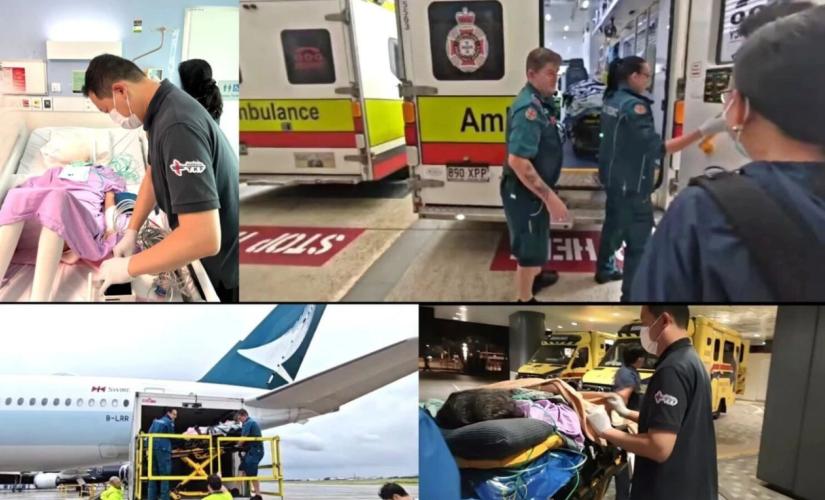
The Real Story Behind a “Simple Flight“
When most people hear air transfer, they imagine a stretcher, a doctor, and a quick flight home. For a critical patient, though, Patient Air Transfer is much closer to moving an intensive care unit into the sky.
Take Mr. Wang, a Taiwanese businessman travelling in Guangdong. During a business visit, he suddenly developed severe chest pain and then went into cardiac arrest. On-site staff started CPR immediately. An emergency ambulance rushed him to a nearby hospital, where the medical team intubated him, placed him on a ventilator, and initiated V-A ECMO to support his heart and lungs.
He survived the initial crisis. His vital signs became more stable. But his family knew his treatment would be long and complex, and they hoped to bring him back to Taiwan for further care.
That wish opened up the true difficulty of international Patient Air Transfer. As they started exploring Patient Air Transfer options, a new set of challenges appeared:
✅ Too few properly equipped general aviation aircraft available
✅ Tight cross-border rules on who could enter as medical personnel
✅ Complicated, multi-party coordination between hospitals, airlines, and regulators
For relatives already dealing with a medical emergency, it felt like too much to handle. They were trying to make life-saving decisions while facing paperwork, policies, and technical medical requirements. Without a specialized coordinator, even a well-intentioned transfer plan can collapse at any step.
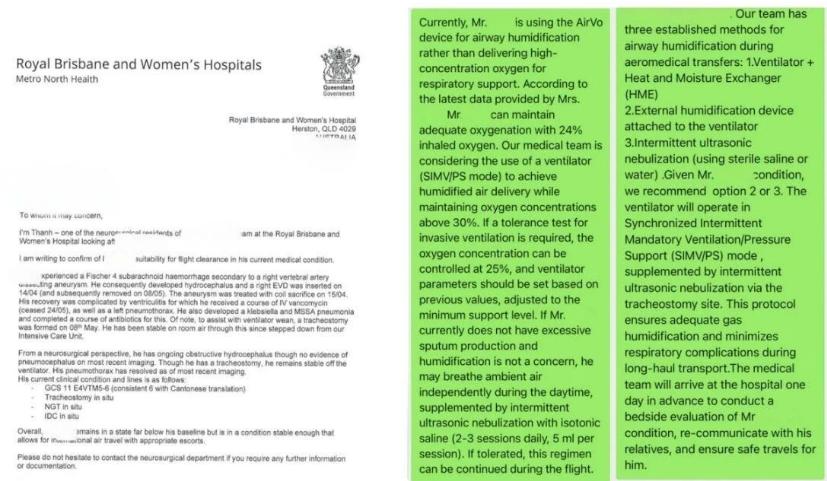
At this point, the need for seamless team coordination in Patient Air Transfer becomes very clear. It is not a “nice extra” – it is what keeps the patient safe from bedside to bedside.
How TKP Medical Assistance Turned a Crisis into a Plan
After searching through multiple channels, Mr. Wang’s family finally connected with TKP Medical Assistance. From our side, the first task was not booking a plane – it was understanding the patient.
Our medical team carefully reviewed Mr. Wang’s condition, treatment so far, and the risks of moving a patient on ECMO. The conclusion: Patient Air Transfer was possible, but only with tight control, clear protocols, and strong cooperation across regions.
Within about 24 hours, key pieces were in place:
✅ A specialized rescue team from a leading hospital in Taichung was mobilized to fly to mainland China.
✅ A business jet capable of operating the Shenzhen – Taipei route – one of the very few humanitarian air corridors still available – was secured.
✅ An ECMO expert drove overnight, more than 1,000 kilometers, to Shenzhen so that the same ECMO system could be used throughout the transfer.
✅ A Hong Kong – based nurse with international transfer experience joined the mission to handle on-board coordination, documentation, and communication.
This is what Patient Air Transfer looks like from the inside: not one big decision, but many small, precise moves that all have to match.
From Guangdong to Taipei: a Cross-Border ICU in the Air
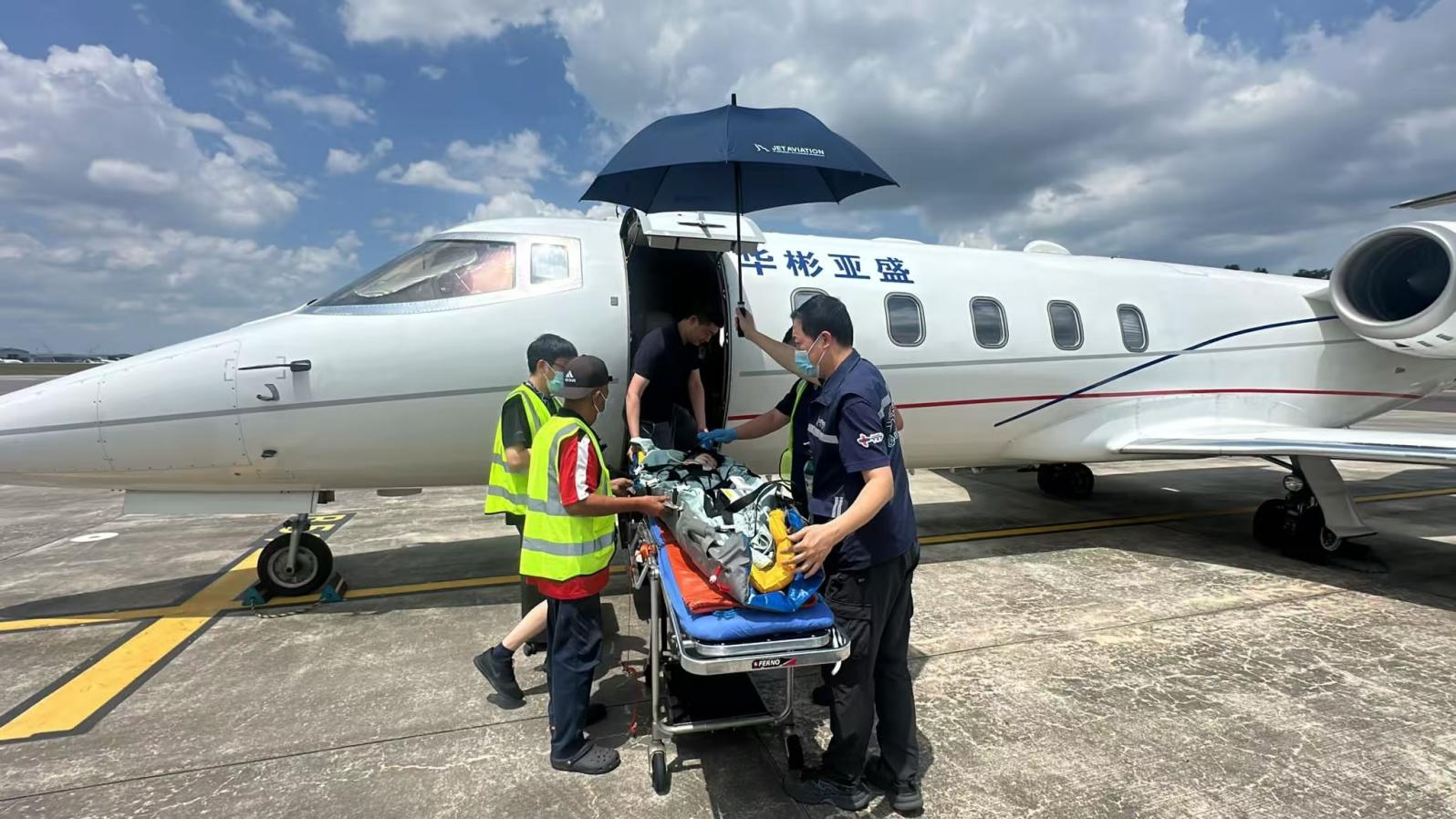
The joint medical team from mainland China, Hong Kong, and Taiwan assembled in Shenzhen before going to the patient. At Shenzhen Bao’an International Airport, TKP supervised one of the most critical moments of any Patient Air Transfer: the handover.
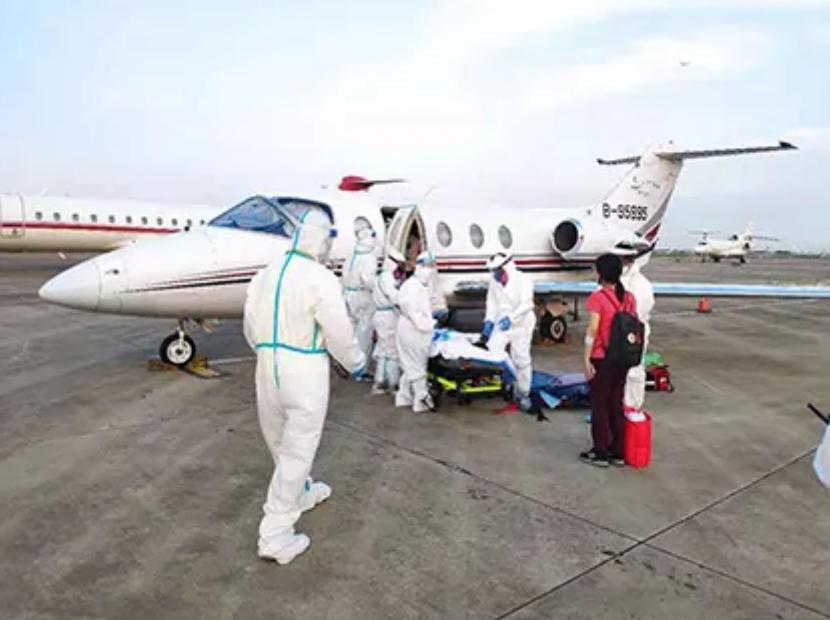
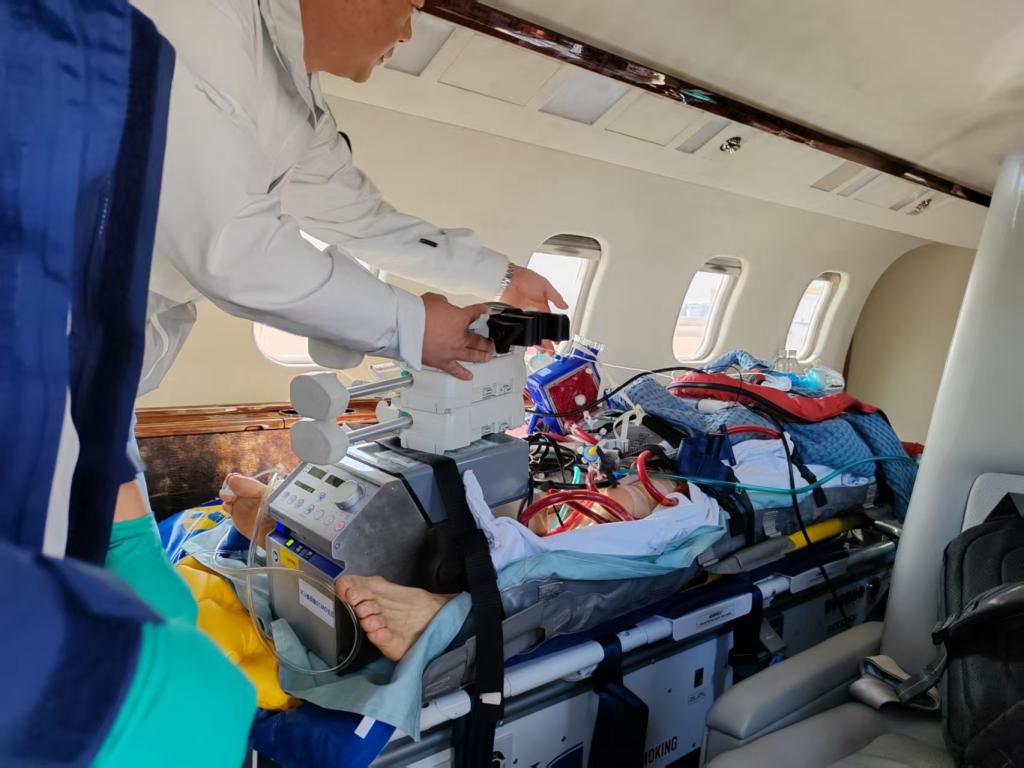
Our guiding rule was simple: change the people, not the equipment. Instead of swapping to a new ECMO device at the airport – which would have increased risk – the incoming team took over the existing machine. That kept blood flow, parameters, and tubing configuration stable. The focus was on continuous monitoring, not switching hardware.
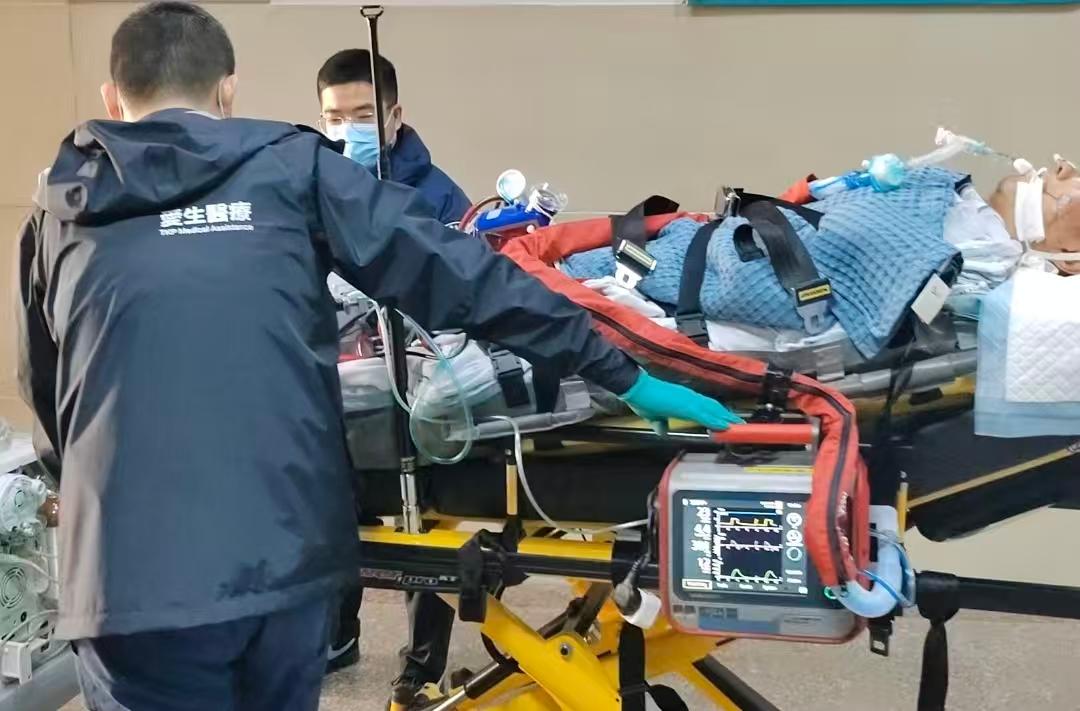
During the roughly two-hour flight to Taipei Songshan Airport, the cabin functioned as a mini ICU. Ventilator, ECMO, and other supports were running under constant observation. On landing, Mr. Wang was transferred smoothly to a top hospital in Taipei for further treatment.
For TKP Medical Assistance, transfers combining invasive ventilation, ECMO, and other advanced life support are now a regular part of our work, both within China and internationally. But “routine” never means “easy.” Each mission still requires:
- Careful risk assessment
- Detailed planning and backup plans
- Trust and open communication across multiple teams
This is where experience truly matters in Patient Air Transfer.
Why Seamless Coordination Matters More than New Equipment
One of the most underestimated dangers in Patient Air Transfer is unnecessary equipment change. Every switch from one machine to another increases the chance of:
✅ Brief interruption of blood flow or oxygen delivery
✅ Connection errors with lines and tubing under stress
✅ Wrong settings entered in a hurry
To reduce these risks, TKP designs transfers around seamless handover instead of constant equipment swapping. Whenever possible, the same devices stay with the patient from hospital bed to aircraft and from aircraft to the receiving ICU. This approach demands close coordination between hospitals, manufacturers, and flight teams – but it pays off in safety and stability.
At the same time, Patient Air Transfer is evolving. Advanced life support technologies like ECMO are used more often outside traditional ICU walls. High-profile cases, including long-distance transfers of children on ECMO, highlight two key facts:
- The demand for mobile critical care is real and growing.
- Existing rules and systems were not built with these complex transfers in mind.
Companies like TKP Medical Assistance help fill gaps that public emergency systems cannot always cover alone. But such work needs a clear legal and professional framework. Rather than blocking new models, regulators can:
✅ Define realistic safety and quality benchmarks for high-risk transfers
✅ Support carefully supervised innovation instead of blanket bans
✅ Work with experienced operators to turn field experience into practical standards
When regulation, medical expertise, and operational practice are aligned, Patient Air Transfer becomes not only safer, but also more efficient and more humane.
When to Reach Out to TKP Medical Assistance
Founded in 2001 and headquartered in Shenzhen, TKP Medical Assistance has grown into a trusted partner for hospitals, insurers, assistance companies, and families who require dependable Patient Air Transfer solutions. Our network covers both domestic and international routes, using:
- Commercial stretcher transport with airline approval
- Dedicated air ambulance missions with full medical escort
- Combined high-speed rail and ambulance links for door-to-door continuity
We focus on post-stabilization transfers and urgent medical evacuations, always aiming to maintain a consistent level of care throughout the journey, rather than treating each leg of the route as a separate event.
You may need TKP Medical Assistance if you are:
✅ A hospital managing a critically ill patient who requires cross-border transfer
✅ An insurer or assistance provider looking for a reliable operations partner
✅ A family searching for clear guidance on how to bring a loved one home safely
In every case, we help design a clinically guided transfer plan, coordinate all moving parts, and keep the patient at the center of each decision.
If you are facing a complex case – or simply want to be prepared before an emergency happens – get in touch with TKP Medical Assistance. The most successful Patient Air Transfer does not begin at the airport or on the runway. It starts earlier: with a conversation, a realistic plan, and a well-coordinated team that knows how to move as one.
Submit Your Request
Recent Posts
Tags
- Air Ambulance
- Bedside To Bedside
- Cross Border Aid
- Emergency Evacuation
- Global Medical Rescue
- How can I ensure the patient's stability while in the air?
- How do I request an air medical transport?
- How is it different from an air ambulance
- how to activate emergency aircraft service
- how to request an air ambulance
- Is air medical transport safe
- Is international transport possible
- Medical Rescue
- Medical Transport
- Patient Repatriation
- Remote Rescue
- Seamless Coordination
- Telemedicine Support
- Tourists And Expats Medical Escort
- What are the benefits of a cross-border medical transfer
- What are the different types of transfers
- What are typical use cases
- What documents do I need to prepare for a transfer?
- What does high-speed rail patient transfer stands for
- What is air ambulance
- What is air medical transport?
- What is cross-border medical transfer
- What is emergency aircraft
- what is high-speed rail patient transfer
- What is medical charter flight
- what is neonatal ICU transfer
- What is patient air transfer
- What medical equipment is available on board the aircraft
- What situations shouldn't use air medical transport?
- What types of air ambulance are there?
- What types of air ambulance exist
- What's the difference between international and domestic transfers?
- what’s the difference between air medical transport and regular ambulance?
- When is emergency air transport necessary
- Which patients require air medical transport?
- who is included in the medical team
- who needs an air ambulance