


Severe Pneumonia Patient Airlifted for Lung Transplant: TKP Executes High-Risk Medical Charter


In late October 2025, a male patient in Kunming with severe viral pneumonia and rapidly worsening respiratory failure was assessed as a candidate for lung transplantation. Following multidisciplinary consultation, TKP Medical Assistance deployed a medical charter flight to transfer the patient to the Second Affiliated Hospital of Zhejiang University. Despite high-altitude transport risks due to unrelieved mediastinal emphysema, the transfer was completed safely with continuous ECMO and in-flight emergency interventions.
Rapid Deterioration in Kunming: From Viral Pneumonia to ECMO
Mr. Yang developed acute respiratory distress one morning in Kunming and was admitted to the ICU at Kunming Medical University First Affiliated Hospital. His condition deteriorated within 48 hours, requiring intubation and mechanical ventilation. CT scans revealed viral pneumonia with secondary pneumothorax due to ruptured bullae.
Despite chest drainage and intensive care, oxygenation index remained critically low (70–80%). He developed mediastinal emphysema and subcutaneous air leaks. ECMO (veno-venous) was initiated. Pathogen testing confirmed Aspergillus fumigatus, Influenza A, and Rhinovirus C, but antimicrobial therapy failed to reverse the decline. A lung transplant consultation was urgently arranged with the Zhejiang University Hospital transplant team (Dr. Chen Jingyu’s team).
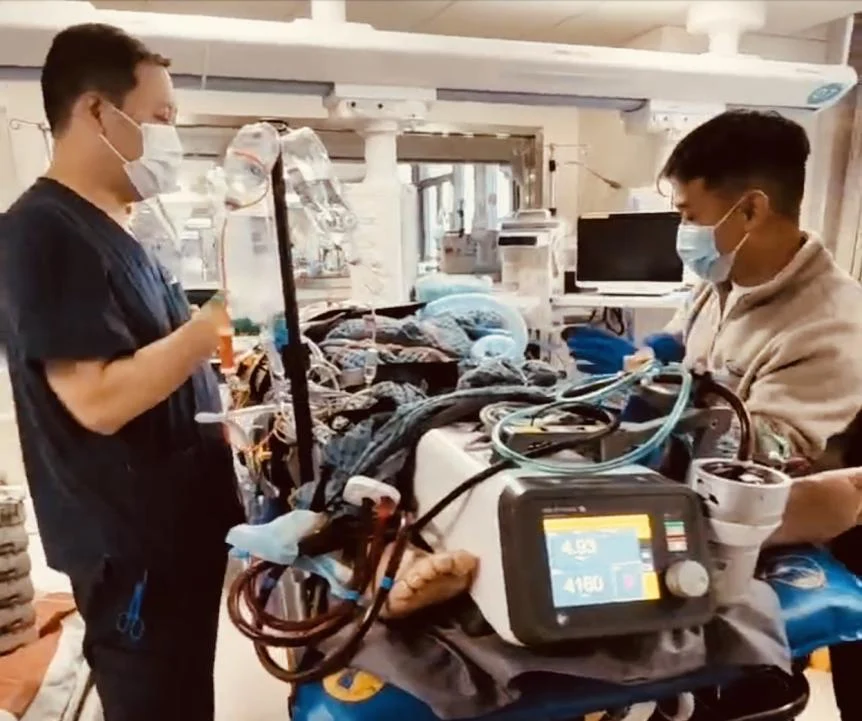
TKP team arrives at Kunming Medical University Hospital and completes ECMO circuit adjustments before initiating transfer.
Medical Charter Activated: TKP Assesses Air Pressure Risk from Unrelieved Gas
Following the transplant team’s acceptance, TKP was contacted to execute the transfer via air ambulance. After clinical review, TKP warned the family of high-altitude pressure-related risks: although cabin pressure is regulated, the equivalent altitude (~8000 ft) could cause trapped gases in mediastinum to expand by ~38%, potentially compressing the heart and worsening oxygenation.
Though the existing pneumothorax had been drained, mediastinal emphysema remained untreated. TKP advised of possible complications during ascent and descent. The family understood the risks and requested immediate transfer.
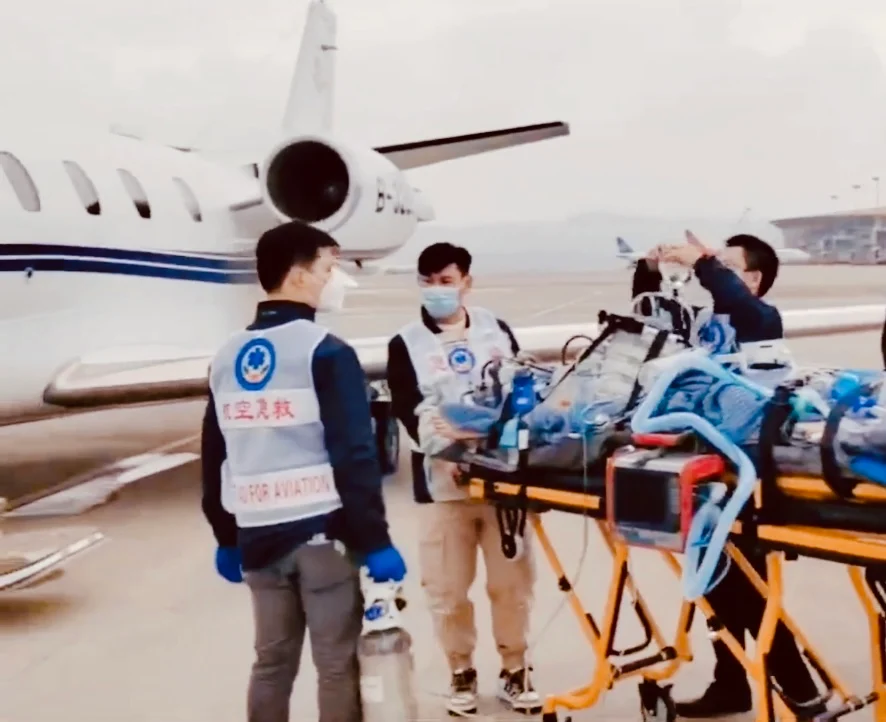
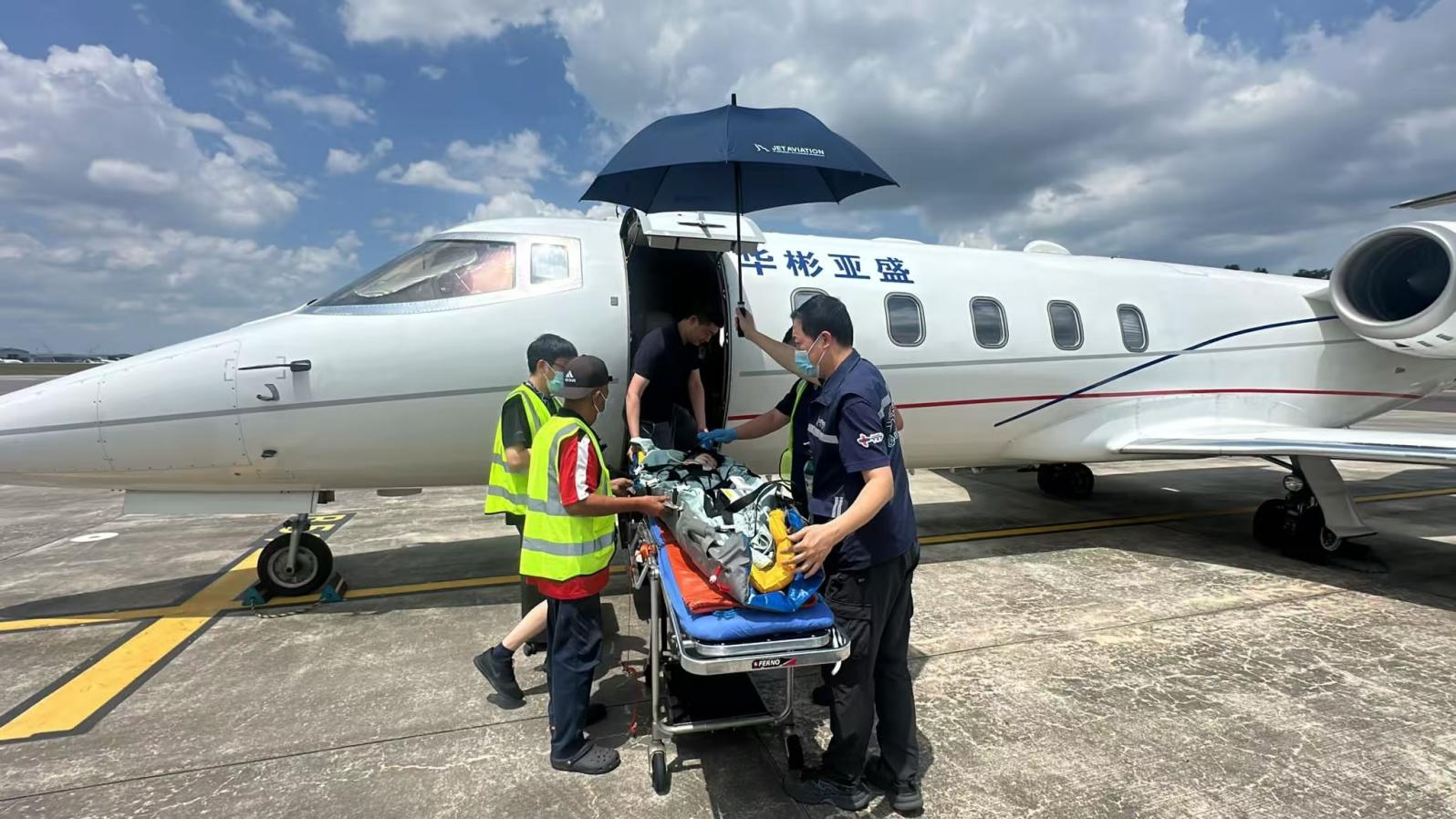
The ambulance arrives at Kunming Changshui International Airport, where the medical aircraft awaits on standby.
In-Flight Emergency Managed: Rapid Response Stabilizes Patient
During ascent, Mr. Yang’s SpO₂ dropped and airway pressure rose. The TKP team responded rapidly:
The nurse increased chest drainage suction;
The perfusionist adjusted ECMO flow and RPM;
Dopamine dosage was increased and ventilator settings fine-tuned.
Within minutes, oxygen saturation rebounded, airway pressure stabilized, and vital signs returned to safe parameters.
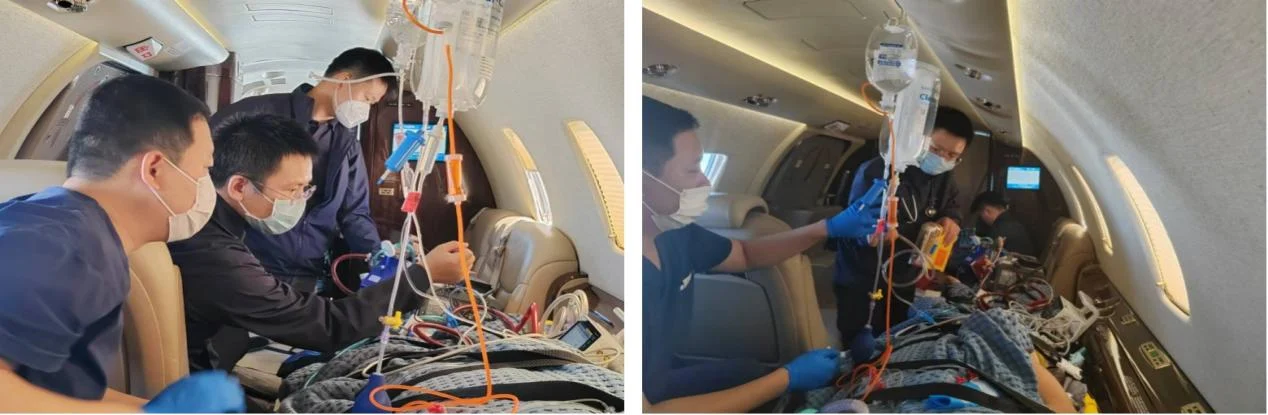
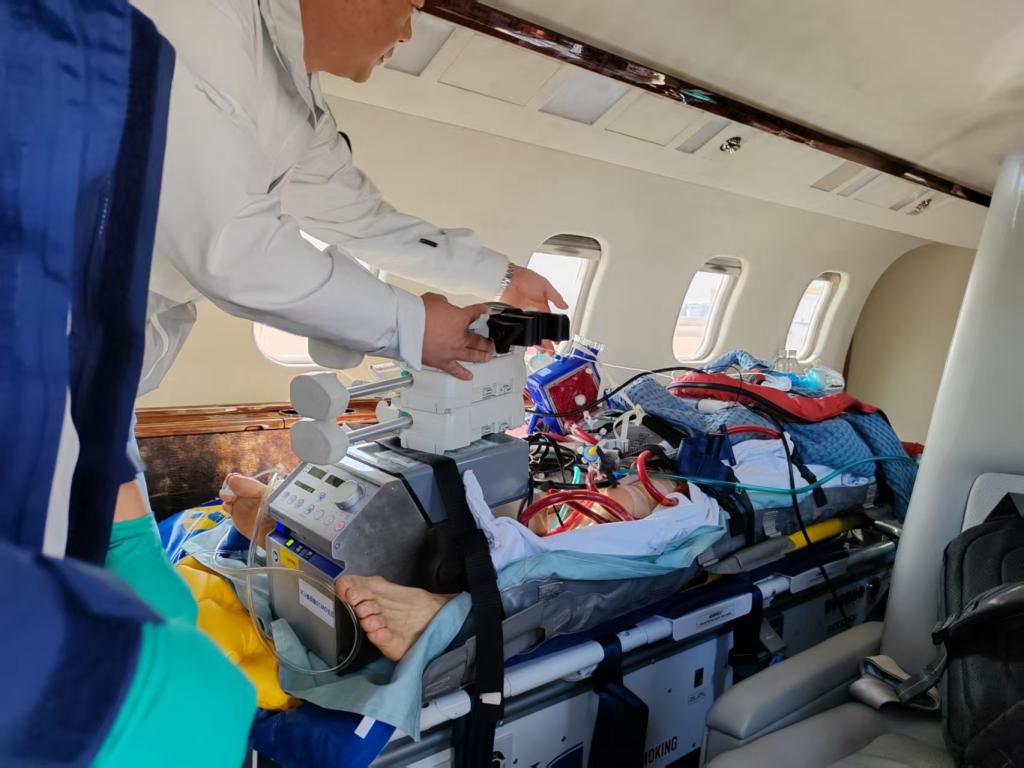
In-flight, the TKP team fine-tunes ECMO settings and ventilator parameters to stabilize the patient.
Safe Arrival and Handover in Hangzhou
After a 2-hour flight, the medical aircraft landed at Hangzhou Xiaoshan International Airport. Mr. Yang was transferred to a waiting ambulance and arrived at Zhejiang University Second Affiliated Hospital – Binjiang Campus within 40 minutes. The receiving medical team performed immediate chest CT and admitted him to ICU for transplant planning.
The next day, Mr. Yang’s family informed TKP that his condition remained stable post-transfer and expressed sincere gratitude for the team’s professionalism and critical in-flight care.
TKP: Delivering Life-Saving Transfers for Critical Organ Candidates
This case highlights TKP’s capability to handle complex air medical transfers involving ECMO, ventilators, and pressure-sensitive thoracic conditions. For patients awaiting life-saving procedures like organ transplants, timing, coordination, and in-flight critical care expertise can mean the difference between life and death.
TKP Medical Assistance remains dedicated to providing safe, responsive, and technically advanced aeromedical solutions across regions, enabling access to definitive care for the most vulnerable patients.
Frequently Asked Questions
Need help understanding how international medical rescue works? Browse our most common questions to learn about service coverage, response times, documentation requirements, and more. We’re here to support you every step of the way.
Q: Which countries are covered by the cross-border medical rescue service?
A: We cover major countries and regions worldwide to ensure timely rescue
Q: How can I request cross-border medical rescue?
A: Please submit an emergency rescue request through our official website or customer service.
Q: What documents are needed for medical rescue?
A: Patient ID, medical diagnosis report, and emergency contact information are required.
Q: How is the rescue service fee settled?
A: Fees can be paid via insurance claims or direct payment for the service.
Q: How quickly does the rescue response start?
A: In emergencies, rescue operations typically begin within a few hours.
Submit Your Request
Recent Posts
Tags
- Air Ambulance
- Bedside To Bedside
- Cross Border Aid
- Emergency Evacuation
- Global Medical Rescue
- How can I ensure the patient's stability while in the air?
- How do I request an air medical transport?
- How is it different from an air ambulance
- how to activate emergency aircraft service
- how to request an air ambulance
- Is air medical transport safe
- Is international transport possible
- Medical Rescue
- Medical Transport
- Patient Repatriation
- Remote Rescue
- Seamless Coordination
- Telemedicine Support
- Tourists And Expats Medical Escort
- What are the benefits of a cross-border medical transfer
- What are the different types of transfers
- What are typical use cases
- What documents do I need to prepare for a transfer?
- What does high-speed rail patient transfer stands for
- What is air ambulance
- What is air medical transport?
- What is cross-border medical transfer
- What is emergency aircraft
- what is high-speed rail patient transfer
- What is medical charter flight
- what is neonatal ICU transfer
- What is patient air transfer
- What medical equipment is available on board the aircraft
- What situations shouldn't use air medical transport?
- What types of air ambulance are there?
- What types of air ambulance exist
- What's the difference between international and domestic transfers?
- what’s the difference between air medical transport and regular ambulance?
- When is emergency air transport necessary
- Which patients require air medical transport?
- who is included in the medical team
- who needs an air ambulance