


Ventilator & Life-Support Air Transport: ICU-Grade Basics


Ventilator & Life-Support Air Transport is often the safest option when a critically ill patient cannot tolerate a long ground journey, when roads are unreliable, or when the nearest suitable ICU is simply too far away. For families, hospitals, and insurers, the real question is rarely “Can we fly?” It is “Can we keep ICU-level stability from door to door—without losing clinical control during altitude changes, tight timelines, or cross-border steps?”
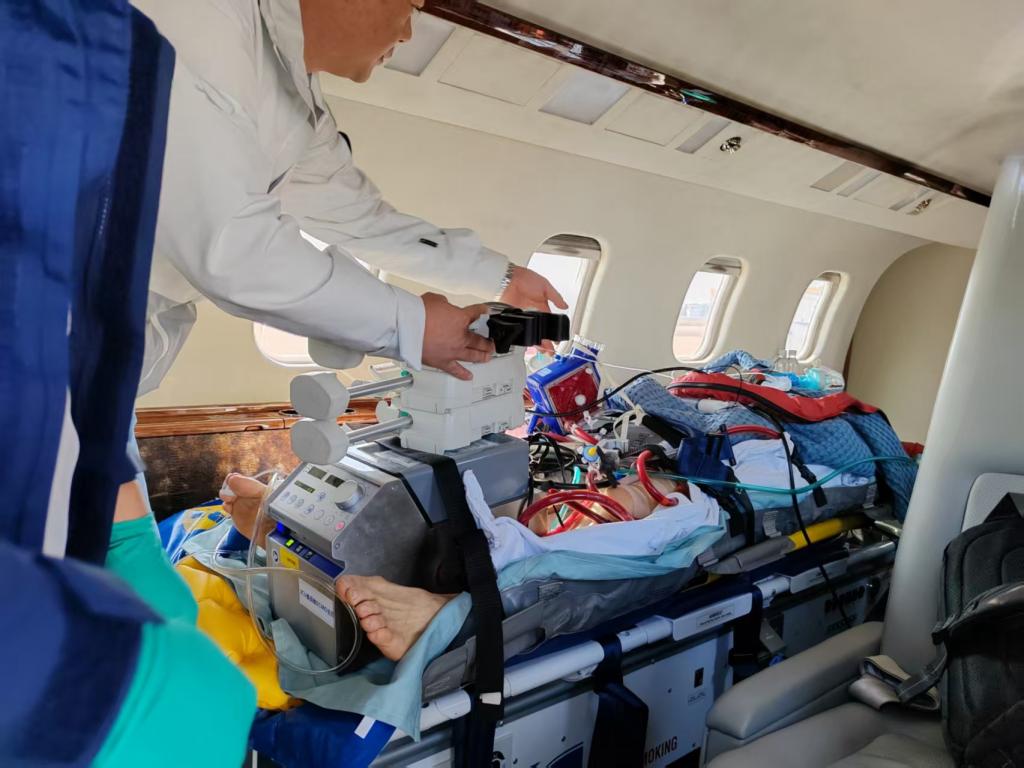
At TKP Medical Assistance, we build air ambulance missions around ICU-grade monitoring, ventilators, and life-support capability, supported by intensive care doctors and flight-trained nurses. This guide is for first-time patient’s family and coordinators who want clear, practical logic. You will learn what “ICU-grade” means in the air, why route design matters, and what to confirm before you approve a mission—so decisions are based on clinical continuity, not assumptions.
What “ICU-Grade“ Really Means in the Air
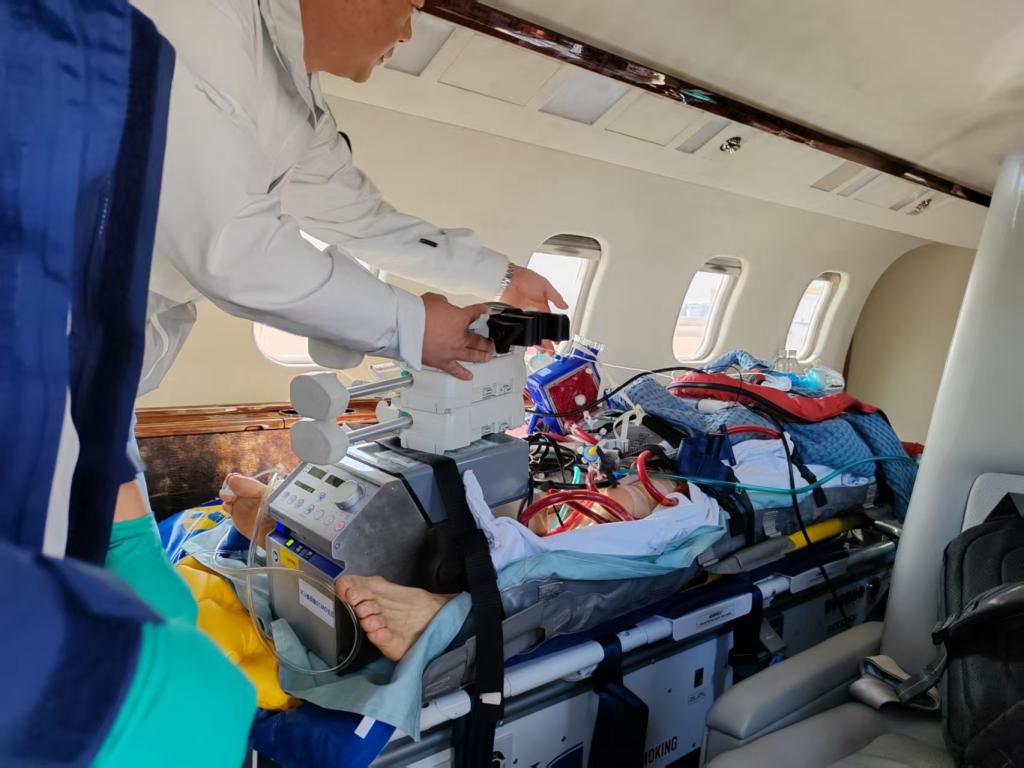
ICU-grade transport is not “a plane with a stretcher.” It is a mobile clinical environment designed to keep life support stable from pickup to handover. When a patient requires ventilation, oxygen support, vasopressors, close neurological observation, or high-risk monitoring, the aircraft must function like an extension of the ICU—because the patient’s condition does not pause during transit.
A helpful client mindset is simple: you are not paying for “air time.” You are paying for clinical continuity.
That continuity depends on three layers working together:
• ICU-grade monitoring for real-time vital tracking and trend observation
• Ventilator & life-support capability matched to the patient’s current risk
• Appropriate clinical staffing (ICU doctor + flight-trained nurse team when required)
These parts do different jobs. Monitoring tells the team what is changing. The ventilator and life support maintain stability. The clinical team makes time-sensitive decisions when the environment is less forgiving than a hospital room.
If one layer is missing or mismatched, risk increases quickly—not because the flight is “dangerous,” but because the margin for error gets smaller at the exact moment the patient cannot afford instability.
Ventilator & Life-Support Air Transport: Who Needs It and Why
Ventilator & Life-Support Air Transport is typically selected when a patient is critical, unstable, or located far from appropriate care. In real cases, the best hospital is often not the closest one. The goal is to reach the right level of care faster, safely, and with minimal disruption to treatment.
A common mistake for patient’s family is judging stability by appearance. A patient can look “quiet” and still be fragile. Transport adds stress: movement, time pressure, position changes, vibration, and evolving clinical status. That is why the decision should be anchored to one question:
What must be continuously supported during the entire journey?
If the answer includes ventilation, ICU-level monitoring, frequent interventions, or rapid escalation readiness, then ICU-grade air transport becomes a practical category—not a luxury upgrade.
Typical situations include:
• The patient needs assisted breathing or ventilator support throughout transfer
• The transfer distance is long, time-sensitive, or cross-region/cross-country
• Local facilities cannot provide the required ICU level or specialist capability
• Remote locations make ground transport too slow or operationally risky
For families, this reduces unknowns. For hospitals, it supports a cleaner handover. For insurers and case managers, it can reduce risk exposure by lowering the chance of avoidable deterioration during transfer.
High-Altitude Clinical Stability: The Risk Often Underestimate
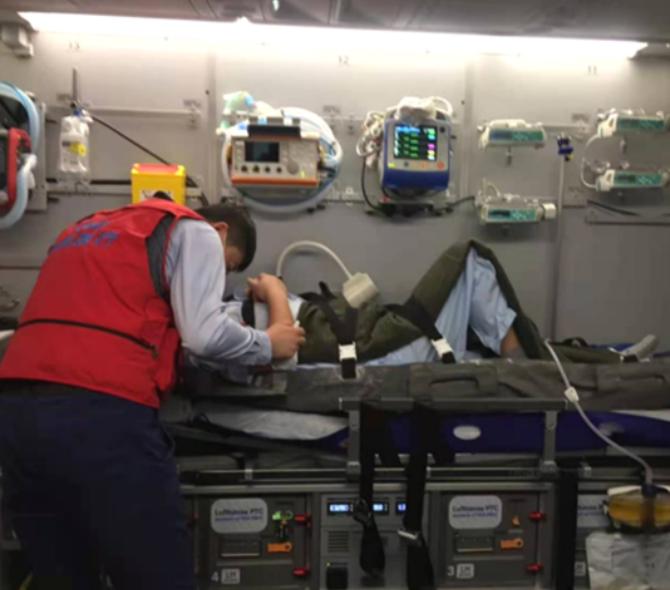
Altitude changes the operating environment. Even with modern aviation standards, flight conditions differ from ground care. Cabin pressure, oxygen dynamics, vibration, noise, limited space, and delayed access to “extra hands” can affect both physiology and workflow. That is why high-altitude clinical stability is not a slogan—it is a mission design requirement.
In an ICU, if a number drifts, you have a full unit behind you. In flight, the team must solve problems with what is on board, under time pressure, with less physical room. This is exactly why staffing and configuration matter.
At TKP Medical Assistance, missions for critically ill patients are managed by intensive care doctors supported by flight-trained nurses. This is not for branding. It is practical: in-flight care requires ICU judgment and aviation adaptation at the same time.
When you evaluate “stability,” look for operational proof, not reassurance:
• Continuous assessment, not only periodic checks
• Trend-based decisions supported by ICU-grade monitoring
• Ventilator and life support managed by clinicians trained for flight conditions
A mission can be “completed” yet still fail the real objective if the patient arrives clinically worse. ICU-grade design aims to protect the patient’s condition so the receiving hospital can act immediately.
Route Planning Basics: Why Airports and Flight Paths Matter
Patient’s family focus on the aircraft and medical equipment first. That is logical—but route planning can be just as decisive, especially when pickup is remote, infrastructure is limited, or international clearance is involved.
A strong route plan is not about showing a big map. It is about building a route that is fast, realistic, and clinically safe. The “nearest major airport” is not always the best option if ground access is slow, if transfer time is unstable, or if local constraints create delay risk.
TKP Medical Assistance uses strategically selected airports, including airports with limited infrastructure, to expand access when standard pathways are not feasible. This is critical in remote regions and urgent transfers, where conventional routing can add hours.
A practical route plan typically includes:
• Dynamic scheduling aligned with urgency and patient condition
• Domestic and international coverage with reliable handover timing
• Remote airport access when major hubs are not viable
• Optimized routing to reduce total transfer time while protecting stability
• Coordination with hospitals and authorities to streamline transfer steps
For patient’s family, the value is clear: fewer route barriers, fewer delays, and a better chance of reaching the right hospital quickly.
Real-Time Operations: What You Are Actually Buying
New patient’s family often confirms equipment and clinicians, then underestimates how much operational control shapes the outcome. But operations control is what keeps a mission resilient when conditions change.
Weather shifts. Airport access updates. Slots and ground windows move. Patient condition evolves. Without real-time oversight, small disruptions can become major delays.
TKP Medical Assistance runs a dedicated operations function that monitors missions in real time and adjusts routing promptly when needed. This capability affects outcomes in three practical ways:
- Better time predictability
When a plan must change, the response is organized and immediate—not improvised.
- Stronger continuity of care
Any aviation adjustments are aligned with the clinical team, keeping the plan matched to the patient’s needs.
- Smoother cross-border execution
International transfers require coordination beyond the aircraft, including:
• Receiving-hospital readiness and handover timing
• Authorities and embassies when documentation is required
• Airport access planning in low-infrastructure areas
For families, this means fewer unknowns. For hospitals, fewer handover interruptions. For insurers and facilitators, fewer reroutes and fewer avoidable cost spikes.
Why TKP Medical Assistance: Experience, Coverage, and a Clear Next Step
TKP Medical Assistance was established in 2001 and is based in Shenzhen, China. With over 24 years of experience in global medical transport, we focus on tailor-made, clinically guided transfer solutions for critically ill or mobility-restricted patients. To support faster local response, we have built six branch offices across major regions in China, including hubs covering South, East, Central, and Southwest regions.
For patient’s family, these are not abstract “company strength” claims. They translate into on-mission benefits:
• Faster response through structured regional presence
• Better coordination across time zones and cross-border steps
• More consistent clinical standards through repeatable mission workflows
When you are authorizing Ventilator & Life-Support Air Transport, clarity matters. The safest transfers are typically the ones designed with the fewest assumptions: the right staffing for the case, the right life-support configuration, and a route plan that protects time and clinical stability.
CTA (Call-to-Action)
If you are evaluating Ventilator & Life-Support Air Transport for a critical transfer—domestic or international—contact TKP Medical Assistance with the patient’s condition summary, current location, urgency level, and destination facility preference. We will recommend a clinically guided transport plan, match ICU-grade monitoring and ventilator support to the case, and propose an efficient route strategy designed for stable, safe arrival.
Submit Your Request
Recent Posts
Tags
- Air Ambulance
- Bedside To Bedside
- Cross Border Aid
- Emergency Evacuation
- Global Medical Rescue
- How can I ensure the patient's stability while in the air?
- How do I request an air medical transport?
- How is it different from an air ambulance
- how to activate emergency aircraft service
- how to request an air ambulance
- Is air medical transport safe
- Is international transport possible
- Medical Rescue
- Medical Transport
- Patient Repatriation
- Remote Rescue
- Seamless Coordination
- Telemedicine Support
- Tourists And Expats Medical Escort
- What are the benefits of a cross-border medical transfer
- What are the different types of transfers
- What are typical use cases
- What documents do I need to prepare for a transfer?
- What does high-speed rail patient transfer stands for
- What is air ambulance
- What is air medical transport?
- What is cross-border medical transfer
- What is emergency aircraft
- what is high-speed rail patient transfer
- What is medical charter flight
- what is neonatal ICU transfer
- What is patient air transfer
- What medical equipment is available on board the aircraft
- What situations shouldn't use air medical transport?
- What types of air ambulance are there?
- What types of air ambulance exist
- What's the difference between international and domestic transfers?
- what’s the difference between air medical transport and regular ambulance?
- When is emergency air transport necessary
- Which patients require air medical transport?
- who is included in the medical team
- who needs an air ambulance