


Critical Care Air Transfer: How In-Flight ECMO Supports High-Risk Missions


Critical Care Air Transfer is no longer measured only by aircraft speed or departure readiness. For hospitals, insurers, assistance companies, and families, the real challenge is whether a provider can maintain ICU-level continuity of care for unstable patients during cross-city or cross-border transfer without interrupting life-sustaining support. This matters even more today as health systems place greater focus on resilient essential services and safer care transitions.
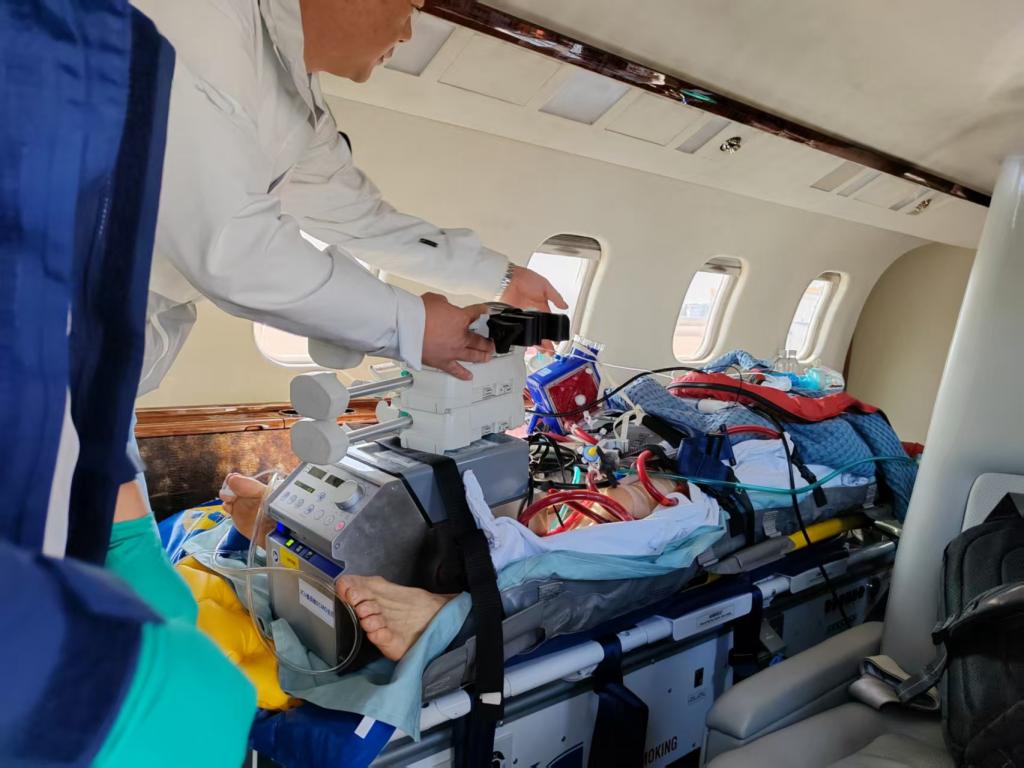
As ECMO transport becomes a recognized specialty, successful missions increasingly depend on trained teams, clear protocols, transport-ready equipment, and real-time operational control.
When Standard Medical Transport Is Not Enough
Many transport discussions still focus on logistics first: aircraft type, airport access, border paperwork, and ground transfer timing. Those issues matter, but for the most fragile patients, the bigger risk is clinical instability during handoffs. A patient on ECMO, IABP, invasive ventilation, or multi-device circulatory support cannot tolerate weak coordination between bedside care, ambulance transfer, airport transition, cabin setup, and receiving-hospital admission.
This is where many providers are tested. The mission is not simply to move a patient. The mission is to preserve a functioning ICU pathway across multiple environments, each with its own operational and aviation constraints. Published transport guidance for adult, pediatric, and neonatal critical care repeatedly emphasizes the importance of specialized teams, equipment selection, safety planning, and disciplined transfer systems rather than ad hoc arrangements.
The Value of In-Flight ECMO And IABP
For this reason, the strongest differentiator in this market is not simply “air ambulance availability.” It is the ability to operate ECMO, IABP, ventilators, and other advanced life-sustaining systems throughout the entire transfer process, including international flight segments.
That is exactly where TKP Medical Assistance aligns with current market demand. Every mission can be equipped with portable ALS or ACLS systems, transport-ready ICU monitors, oxygen supply, ventilators, and ECMO when required. The equipment is aviation-certified and configured for both adult and pediatric patients. More importantly, TKP’s model is built around uninterrupted support rather than device presence alone.
For overseas referral partners, that creates a clearer procurement value:
• Continuous support for ECMO, IABP, ventilators, and advanced monitoring
• Transfer capability for adult, neonatal, and pediatric critical cases
• Aviation-ready equipment adapted for air medical environments
• ICU-trained escort teams including specialist doctors and ICU nurses
• Real-time route monitoring and dynamic mission adjustment
• Cross-border coordination with hospitals, airports, and embassies when needed
This operational model reflects the direction of ECMO retrieval best practice. ELSO’s transport guidance and related literature make clear that ECMO transport is highly specialized and depends on expert staffing, redundancy planning, safe platform integration, and standardized processes across referral, retrieval, and receiving sites.
Route Flexibility Has Become a Strategic Advantage
Another pain point for international buyers is geography. Not every critically ill patient starts from a major gateway airport with ideal infrastructure. Some cases begin in secondary cities, island regions, remote areas, or hospitals with limited aviation access. That is why transfer route design has become a strategic capability, not a back-office task.
TKP Medical Assistance presents this well through its transfer route model: dynamic scheduling based on patient acuity, global domestic and international coverage, selection of airports that can support faster access even with limited infrastructure, and route optimization aimed at reducing transport time while protecting patient safety. The operations team monitors each mission in real time and can adjust routing when operational conditions change.
For partners, that matters because clinical success often depends on the interface between medicine and aviation. Safe air operations involving medical equipment and mission-specific configurations require structured risk assessment and operational planning, especially when specialized systems, power arrangements, oxygen, or cabin reconfiguration considerations are involved.

A Real Case of High-Level Coordination
A useful example is TKP’s March 14, 2025 Xiamen–Seoul mission, completed by air ambulance for a patient diagnosed with severe pulmonary infection requiring ECMO and IABP support to maintain vital signs.
The value of this case is not only the route itself. It is the continuity achieved across the full chain of transport:
• In the ICU, the team evaluated ECMO flow, secured the airway, and finalized transport preparation
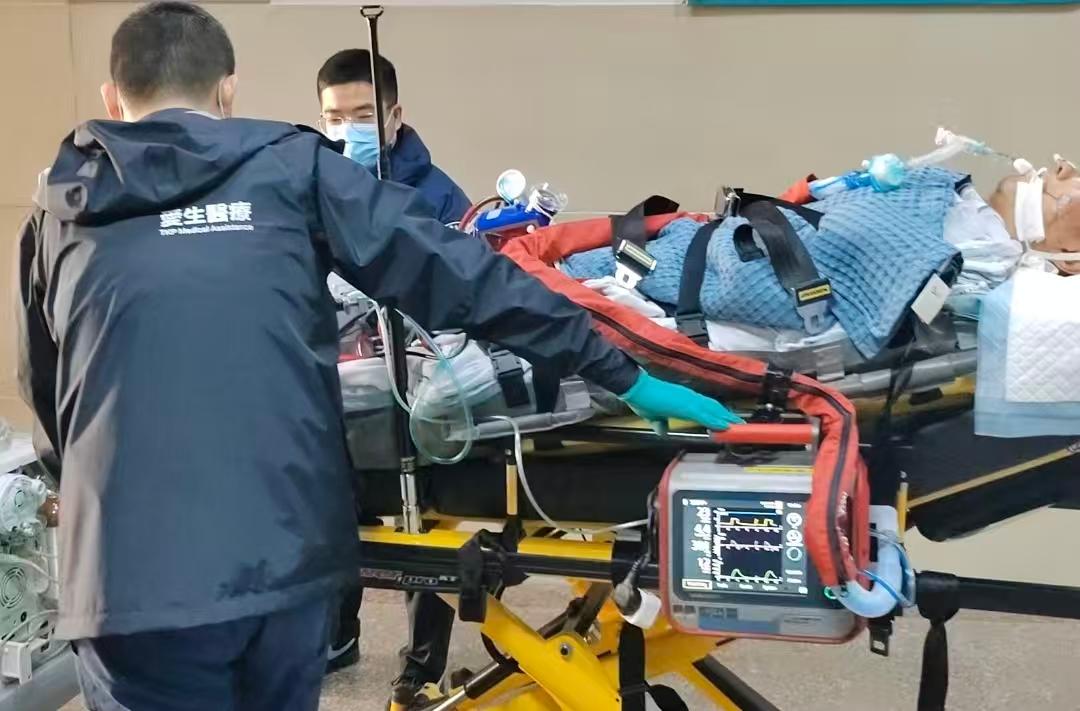
• During the road segment, medical staff continuously monitored ECMO parameters while prioritizing stability
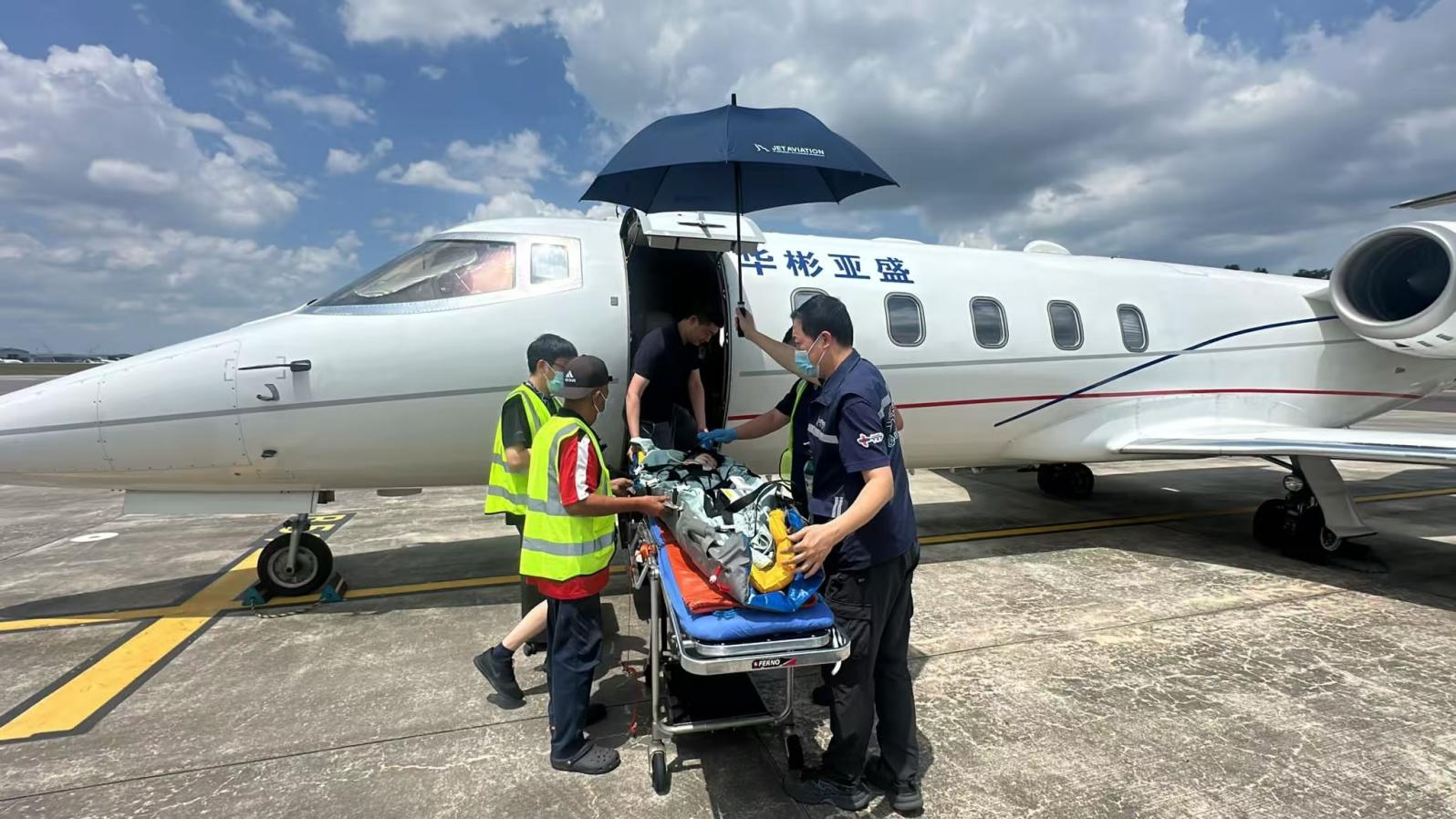
• At the tarmac, ECMO was smoothly transitioned to onboard systems with no interruption during handoff
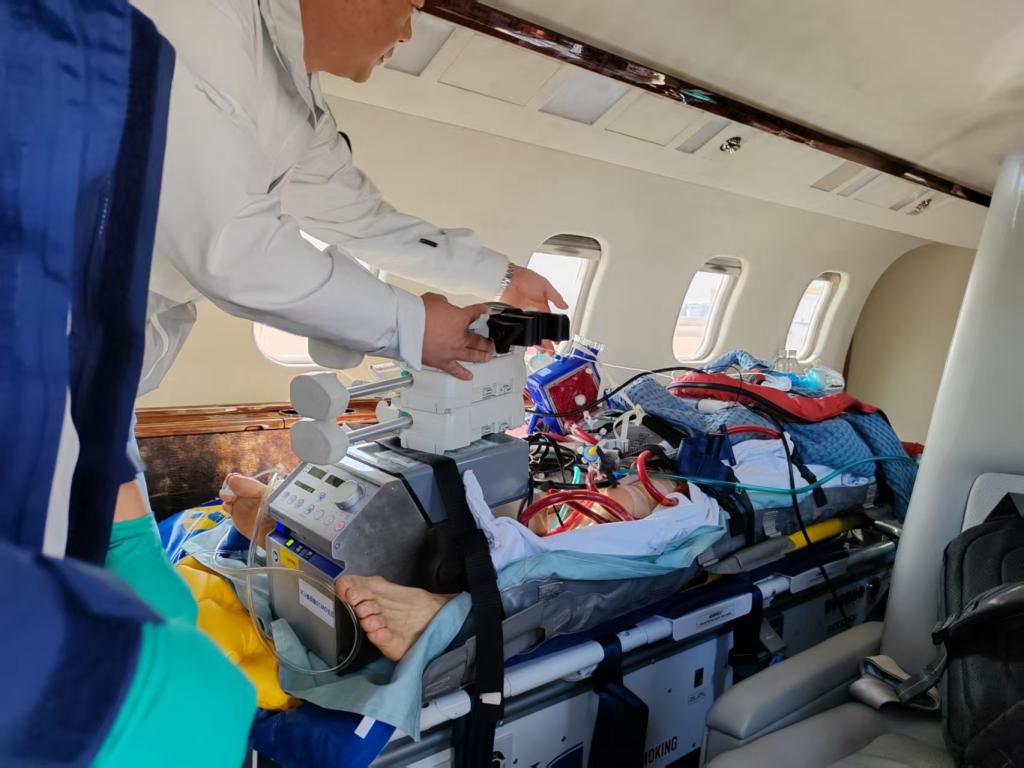
• In the cabin, ECMO support remained active at cruising altitude while the clinical team rotated duties to maintain uninterrupted care
From departure in Xiamen to admission in South Korea, the mission required seamless cross-border coordination while preserving support on two advanced life-sustaining platforms. That is the kind of case overseas partners increasingly look for when assessing whether a provider can handle true high-acuity transfer rather than conventional medical escort work.
What Overseas Partners Are Really Buying
In commercial terms, overseas partners are not only purchasing a flight. They are buying risk control.
They need a provider that can deliver:
• Clinical continuity across handoffs
• Reliable operation of high-acuity devices in air transport conditions
• Strong communication with sending and receiving facilities
• Cross-border administrative execution
• Route agility when time, infrastructure, or patient status changes
That is why TKP Medical Assistance is positioned for where the sector is heading. As critical care transport grows more specialized, the market is rewarding providers that combine ICU-level equipment, aviation readiness, device continuity, and international coordination into one integrated service model.
Final Thought
In today’s high-acuity transfer environment, the strongest promise in Critical Care Air Transfer is not speed alone. It is the ability to keep the sickest patients supported, monitored, and clinically protected from bedside departure to international arrival. With full ECMO, IABP, ventilator, and advanced life-support capability during transport, TKP Medical Assistance offers the type of mission architecture that modern cross-border critical care increasingly demands.
Submit Your Request
Recent Posts
Tags
- Air Ambulance
- Bedside To Bedside
- Cross Border Aid
- Emergency Evacuation
- Global Medical Rescue
- How can I ensure the patient's stability while in the air?
- How do I request an air medical transport?
- How is it different from an air ambulance
- how to activate emergency aircraft service
- how to request an air ambulance
- Is air medical transport safe
- Is international transport possible
- Medical Rescue
- Medical Transport
- Patient Repatriation
- Remote Rescue
- Seamless Coordination
- Telemedicine Support
- Tourists And Expats Medical Escort
- What are the benefits of a cross-border medical transfer
- What are the different types of transfers
- What are typical use cases
- What documents do I need to prepare for a transfer?
- What does high-speed rail patient transfer stands for
- What is air ambulance
- What is air medical transport?
- What is cross-border medical transfer
- What is emergency aircraft
- what is high-speed rail patient transfer
- What is medical charter flight
- what is neonatal ICU transfer
- What is patient air transfer
- What medical equipment is available on board the aircraft
- What situations shouldn't use air medical transport?
- What types of air ambulance are there?
- What types of air ambulance exist
- What's the difference between international and domestic transfers?
- what’s the difference between air medical transport and regular ambulance?
- When is emergency air transport necessary
- Which patients require air medical transport?
- who is included in the medical team
- who needs an air ambulance