


Transfer Patient By Business Class: How Monitored In-Flight Care Bridges The Gap


Transfer Patient By Business Class offers a practical solution for stable patients who need medical support during domestic or international travel. It helps hospitals, insurers, and families balance patient safety, continuity of care, and transport cost without using a full air ambulance when it is not required. As more patients travel across borders for treatment, rehabilitation, or repatriation, this model has become a more efficient and flexible option.
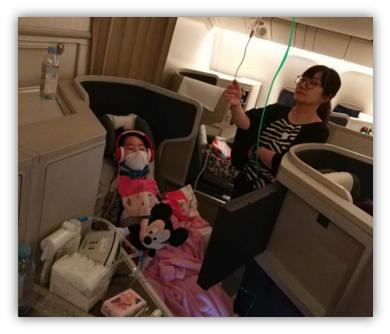
Stable Patients Still Need More Than Standard Air Travel
Many international transfers do not fit neatly into two categories. A patient may be hemodynamically stable, able to sit upright for at least 40 minutes, and not in need of a full ICU air ambulance cabin. At the same time, that same patient may still require:
•Clinical monitoring during the journey
•Medication administration
•Oxygen inhalation
•Medical procedures during transit
•Professional escort and condition-based travel planning
This is where standard commercial travel often becomes inadequate. Airline accessibility and assistance protocols have improved, and IATA has continued to standardize support communication between passengers, travel professionals, airports, and carriers. But assistance alone is not the same as a medically managed transfer. For patients who need active observation and clinical support, the question is not only whether a seat is available. The question is whether the journey can be medically organized from bedside to destination facility.
Why Business Class Medical Transfer Is a Stronger Operational Fit
The strongest feature in this service model is not luxury. It is monitored in-flight care in a more practical transport format.
For the right patient profile, Business Class medical transfer offers a useful balance between clinical control and transport efficiency. Compared with ordinary passenger travel, it provides more room for positioning, easier caregiver access, and a better environment for observation and intervention. Compared with a dedicated air ambulance, it can be more cost-efficient and more widely deployable on routes where scheduled airline connectivity is strong.
For procurement teams and medical coordinators, that creates several advantages:
•Better alignment between patient condition and transport intensity
•More efficient use of commercial aviation networks
•Lower logistical burden than chartering a dedicated aircraft for every case
•Improved patient comfort on longer international sectors
•Easier integration with airport, embassy, and receiving-hospital coordination
This matters in a global aviation system that carried just under 5 billion passengers across 38.7 million flights in 2025, according to IATA. In other words, commercial aviation already provides the route density and international connectivity that medical assistance providers can build on, as long as the clinical layer is handled correctly.
How TKP Medical Assistance Builds a Safer Business Class Transfer Model

TKP Medical Assistance positions this service around a point many buyers care about most: continuity of care across borders without unnecessary escalation to full air ambulance deployment.
Founded in 2001, TKP Medical Assistance has completed more than 10,000 missions, including air ambulance, commercial stretcher, and high-speed rail transfers. The company’s experience across ICU transport, ECMO, pediatric care, and VIP medical evacuation gives it a broader operational base than a provider focused on a single transport format. Headquartered in Shenzhen, with six branch offices across China and coordination capability across Hong Kong, Southeast Asia, and Europe, TKP is structured for 24/7 response and multi-party case management.
Its Business Class transfer workflow is built around four operational pillars.
• Clinical Suitability Screening
Not every patient should fly Business Class, and that is exactly why proper screening matters. TKP’s model is most suitable for patients who are hemodynamically stable and able to remain seated upright for a meaningful period, but who still need medical oversight during the journey. That condition-based selection supports safer utilization and better cost control.
• Aviation-Ready Medical Equipment
Every mission can be equipped with portable ALS or ACLS systems, transport-ready ICU monitors, oxygen supply, ventilators, and ECMO when clinically required. The aviation-certified nature of this equipment is important because airborne transport demands devices and workflows designed for the flight environment rather than ground-only assumptions. IATA’s medical guidance continues to emphasize the importance of medically informed operational planning for sick passengers and crisis situations in aviation.
Dynamic Route Planning Across Challenging Locations
One of TKP’s more valuable strengths is its transfer route planning. The route map outlines an itinerary that allows people from remote, underserved, or urgent-care situations to reach advanced medical facilities worldwide. Patients can choose flexible departure points based on their conditions and travel to different advanced care facilities.
Some key features are:
•Real-time patient status and need based flight itinerary.
•International and domestic network coverage.
•Ability to use less busy and lower class airports.
•Less overall transport stress.
•Pre and post border crossing seamless processes with partner hospitals and embassies.
•Route flexibility based on new operational conditions.
For overseas partners, patient transport is much more than booking a flight. It is a complex coordination process involving air transport, medical care, relevant documentation, timing the handover, and readiness at the destination.
Cross-Border Continuity Of Care
WHO guidance on health service provision highlights the importance of maintaining safe, effective, quality care before, during, and after emergencies or service disruptions. In cross-border patient movement, that principle applies directly to transport. A successful mission is not only measured by departure and arrival. It is measured by whether the patient remains clinically supported through every handoff.
Why This Service Model Fits Current Market Demand
Today’s buyers are under pressure to control transfer cost, reduce unnecessary delays, and maintain higher standards of patient safety documentation. They also need solutions that work across mixed geographies, from major international hubs to airports serving less-developed regions.
That is why the market increasingly values providers that can combine:
•Commercial network access
•Medical escort capability
•Aviation-ready equipment
•Cross-border coordination
•Fast operational response
TKP Medical Assistance fits this direction well. Its Business Class transport service is not positioned as a substitute for every air ambulance mission. Instead, it addresses a very real operational gap in modern medical mobility: patients who need more than travel assistance, but less than a full dedicated aircraft.
Submit Your Request
Recent Posts
Tags
- Air Ambulance
- Bedside To Bedside
- Cross Border Aid
- Emergency Evacuation
- Global Medical Rescue
- How can I ensure the patient's stability while in the air?
- How do I request an air medical transport?
- How is it different from an air ambulance
- how to activate emergency aircraft service
- how to request an air ambulance
- Is air medical transport safe
- Is international transport possible
- Medical Rescue
- Medical Transport
- Patient Repatriation
- Remote Rescue
- Seamless Coordination
- Telemedicine Support
- Tourists And Expats Medical Escort
- What are the benefits of a cross-border medical transfer
- What are the different types of transfers
- What are typical use cases
- What documents do I need to prepare for a transfer?
- What does high-speed rail patient transfer stands for
- What is air ambulance
- What is air medical transport?
- What is cross-border medical transfer
- What is emergency aircraft
- what is high-speed rail patient transfer
- What is medical charter flight
- what is neonatal ICU transfer
- What is patient air transfer
- What medical equipment is available on board the aircraft
- What situations shouldn't use air medical transport?
- What types of air ambulance are there?
- What types of air ambulance exist
- What's the difference between international and domestic transfers?
- what’s the difference between air medical transport and regular ambulance?
- When is emergency air transport necessary
- Which patients require air medical transport?
- who is included in the medical team
- who needs an air ambulance