


Transfer Patient By Commercial Stretcher: A Reliable Choice For International Medical Transfers


Transfer Patient By Commercial Stretcher is becoming a more relevant solution for families, hospitals, insurers, assistance companies, and international case managers who need safe cross-border patient movement without defaulting to a full air ambulance in every case. As medical travel, ageing populations, and long-distance continuity-of-care needs continue to grow, the market is asking for a transfer model that is clinically sound, operationally flexible, and more cost-efficient for stable patients. That is where TKP Medical Assistance has built a strong service position through medically guided commercial stretcher transfers backed by route planning, real-time coordination, and aviation-ready equipment.
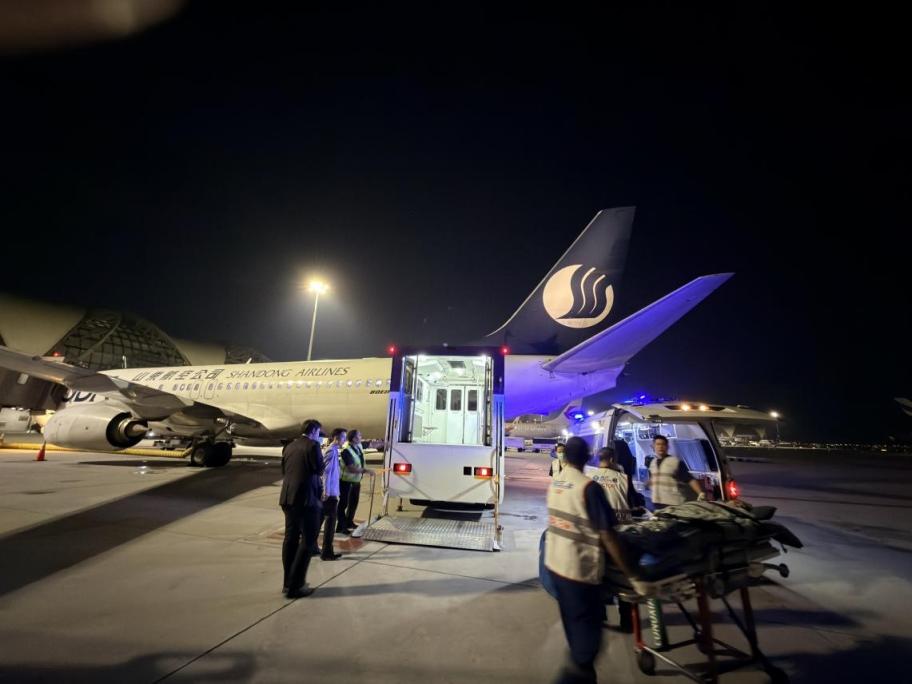
Rising Challenges in Cross-Border Patient Transfer
For overseas partners, the challenge is no longer just moving a patient from one city to another. The real issue is how to move that patient across borders while balancing medical stability, airline approvals, airport limitations, handover quality, and cost control. This matters more now because the global population is ageing quickly, and the number of people living with disability or mobility limitations is already substantial. The World Health Organization says about 1.3 billion people, or 16% of the world’s population, experience significant disability, while the United Nations projects the population aged 65 and older to rise sharply in the coming decades.
At the same time, cross-border healthcare demand is expanding. Market researchers project continued growth in medical tourism and international treatment pathways, which means more patients need organized transport not only for emergency evacuation, but also for repatriation, step-down transfer, post-surgical return, and continuity of specialist care. In that environment, buyers are looking for transfer services that can bridge hospital care and commercial aviation without unnecessary complexity.
How Commercial Stretcher Transfer Supports Stable Patient Transport
A full private air ambulance remains essential in many high-acuity situations, but it is not always the most practical choice. For stable patients who are bedridden, mobility-restricted, or medically supervised yet fit for scheduled transport, a commercial stretcher transfer can offer a more economical and scalable option. U.S. government guidance notes that even stretcher transport on a commercial airline is expensive, but it is still generally positioned as the least expensive aviation option compared with more specialized evacuation modes.
That is why this model is increasingly relevant for:
•Insurance and assistance companies managing cost-sensitive cases
•Hospitals arranging repatriation or inter-facility transfer
•Families seeking supervised long-distance transport
•International patient coordinators handling post-treatment returns
•Employers and embassies supporting staff or citizens abroad
The value is not simply lower cost. The value is better fit-for-purpose transport. A commercial stretcher transfer can match the needs of a clinically stable patient while preserving professional escort support, structured documentation, and coordinated airport-to-hospital logistics.
How TKP Medical Assistance Aligns With Today‘s Market Expectations
Founded in 2001 and headquartered in Shenzhen, TKP Medical Assistance has positioned its service around a market reality that many buyers already understand: cross-border transport is no longer only about aircraft access. It is about response speed, regional coordination, medical preparation, and the ability to adapt a route to the patient rather than forcing the patient into a rigid transport template.

This is where TKP Medical Assistance stands out. Its service model is designed around several practical needs that matter to overseas partners:
•Commercial Stretcher Expertise for stable patients requiring airline-approved stretcher compartments
•Clinically Guided Transfers with medical escorts accompanying the patient throughout the journey
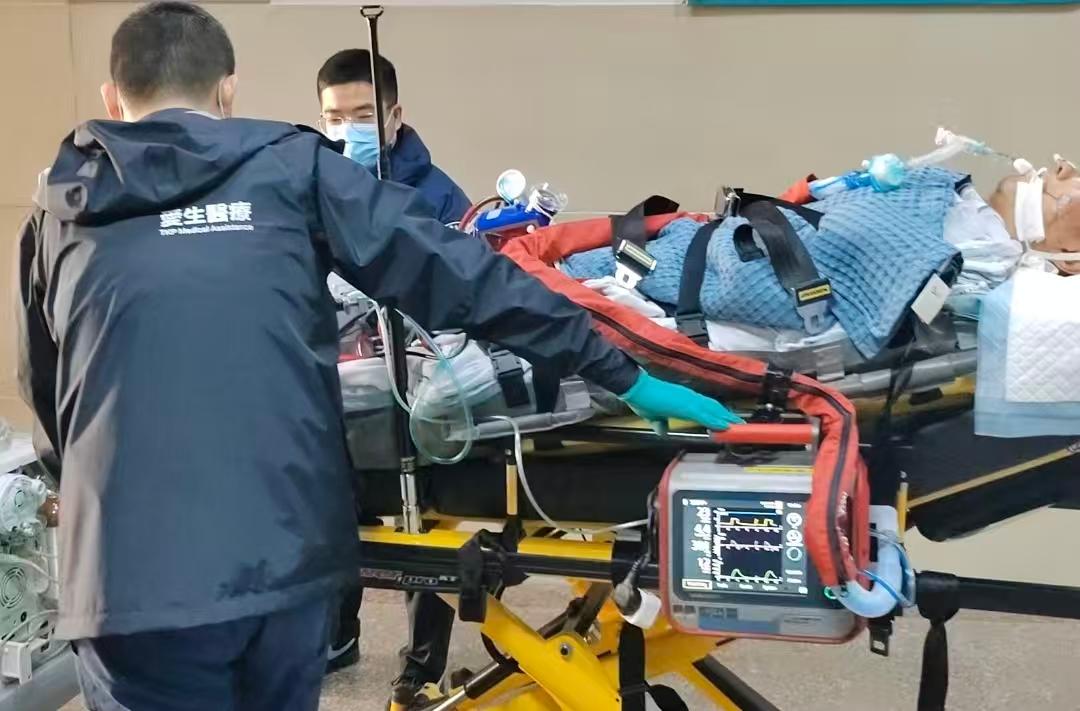
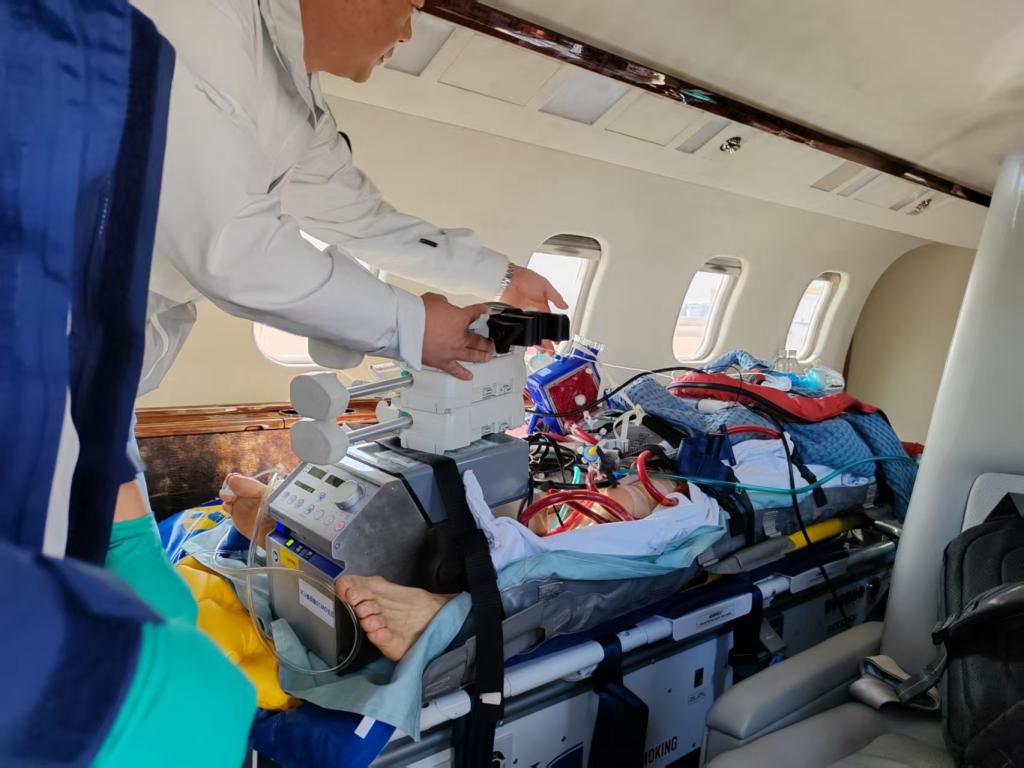
•Advanced Transport Equipment including aviation-certified ALS or ACLS systems, ICU monitors, oxygen, ventilators, and ECMO support when required
•Coverage Across China through six branch offices that support faster local mobilization and case coordination
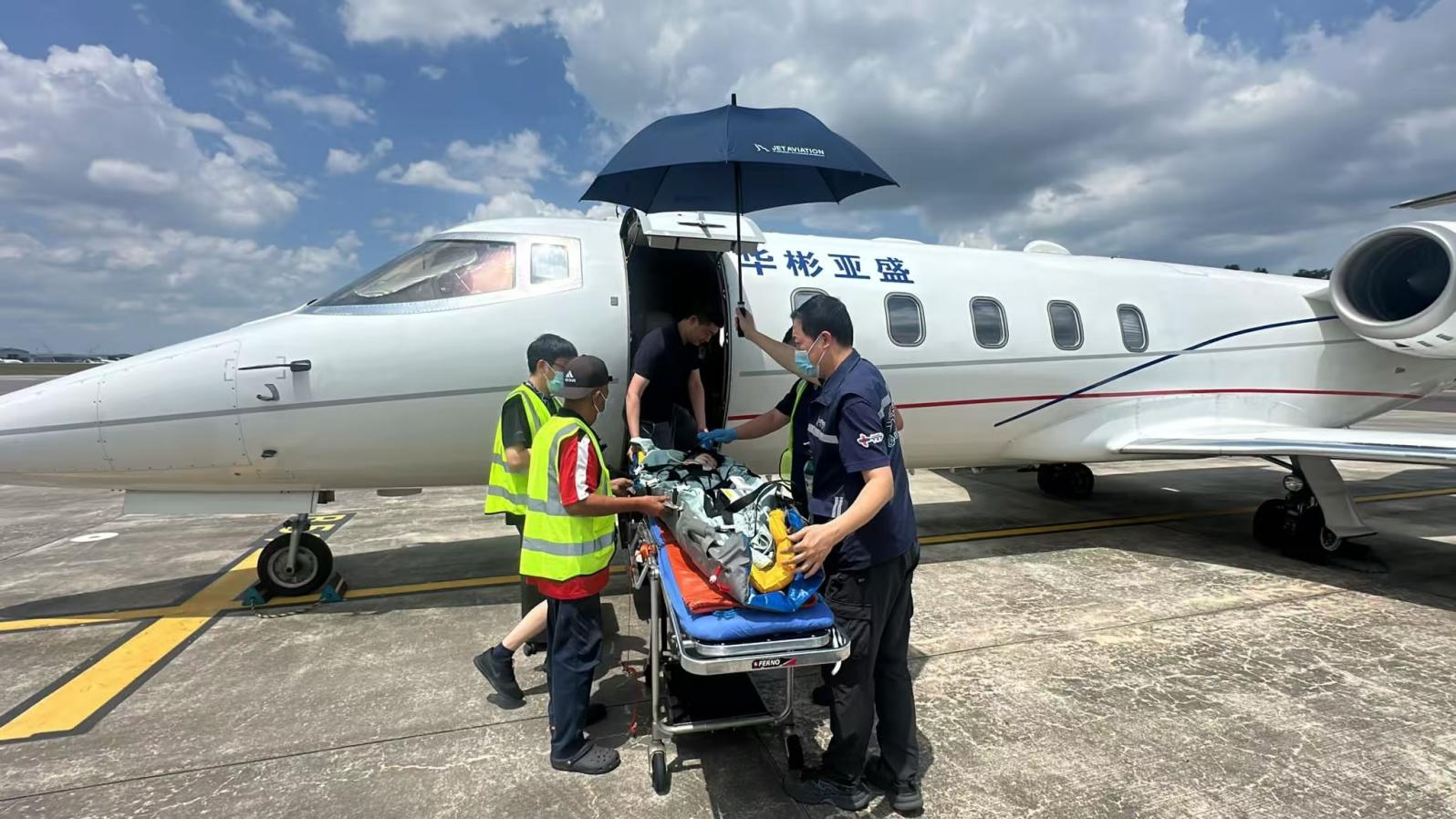
•Cross-Border Route Planning that connects remote or infrastructure-limited departure points with destination hospitals worldwide
For procurement teams and referral partners, this combination supports a more modern service expectation: one provider that can coordinate medical, operational, and geographic complexity in one workflow.
Route Planning Has Become a Competitive Advantage in Medical Evacuation
One of the strongest service themes in modern global medical evacuation is not only bedside care, but network design. A transfer can fail to remain efficient when the route is too rigid, the airport choice is poor, or the flight window does not match the patient’s condition. Aeromedical literature consistently emphasizes that preflight planning is one of the most important parts of safe patient transport, especially when critically ill or medically supervised patients are moved over long distances.
TKP Medical Assistance addresses this through a transfer route network built for flexibility. Based on the service profile you shared, the operations team supports:
•Flight bookings based on urgency and clinical condition
•Coverage both domestically and internationally
•Use of less developed airports for remote and access needed
•Transport time and patient safety focused route optimization
•Transfer execution support through hospital and embassy coordination
•Flight status and reroute in real time
For international customers, the relevance of route intelligence is linked to clinical continuity, communication to the family, predictability of arrival and total case cost.
Why Equipment Readiness Still Shapes Trust in 2026
Airline medical transport is not just a booking exercise. Industry guidance from IATA shows that passenger medical clearance, onboard support, and medical risk management remain central parts of aviation operations. In other words, commercial stretcher service only works well when the operator understands both the clinical side and the airline side.
TKP Medical Assistance strengthens that trust point by equipping each mission with aviation-certified transport equipment and configuring support for adult and pediatric cases. That is especially important in an era when patients, hospitals, and payers expect smoother transfers for higher-dependency cases, not only basic point-to-point movement. When an operator can integrate monitoring, oxygen support, ventilator capability, and advanced escort protocols into a commercial stretcher mission, the service becomes more aligned with present-day expectations for continuity of care.
What Overseas Partners Are Really Buying
For many overseas partners, the purchasing decision is not only about transport. It is about risk reduction. They are asking:
•Can the provider coordinate airline approval efficiently?
•Can the patient be monitored properly in transit?
•Can the route adapt if the case changes?
•Can remote departure points still be served?
•Can cost stay more manageable than a private air ambulance when the patient is stable?
TKP Medical Assistance answers those questions with a service model built around cost-efficient commercial stretcher transfer, clinically guided escort care, advanced equipment readiness, and flexible international routing. That is exactly the kind of positioning that fits current healthcare mobility trends.
Final Thought
In today’s cross-border healthcare environment, Transfer Patient By Commercial Stretcher is no longer a niche option. It is an increasingly strategic service for stable patients who need professional medical supervision, strong coordination, and better cost control across long-distance journeys. With more than two decades of experience, a broader China response network, advanced onboard medical capability, and flexible global route planning, TKP Medical Assistance is well aligned with the way modern medical evacuation is evolving: more connected, more responsive, and more tailored to real patient needs.
Submit Your Request
Recent Posts
Tags
- Air Ambulance
- Bedside To Bedside
- Cross Border Aid
- Emergency Evacuation
- Global Medical Rescue
- How can I ensure the patient's stability while in the air?
- How do I request an air medical transport?
- How is it different from an air ambulance
- how to activate emergency aircraft service
- how to request an air ambulance
- Is air medical transport safe
- Is international transport possible
- Medical Rescue
- Medical Transport
- Patient Repatriation
- Remote Rescue
- Seamless Coordination
- Telemedicine Support
- Tourists And Expats Medical Escort
- What are the benefits of a cross-border medical transfer
- What are the different types of transfers
- What are typical use cases
- What documents do I need to prepare for a transfer?
- What does high-speed rail patient transfer stands for
- What is air ambulance
- What is air medical transport?
- What is cross-border medical transfer
- What is emergency aircraft
- what is high-speed rail patient transfer
- What is medical charter flight
- what is neonatal ICU transfer
- What is patient air transfer
- What medical equipment is available on board the aircraft
- What situations shouldn't use air medical transport?
- What types of air ambulance are there?
- What types of air ambulance exist
- What's the difference between international and domestic transfers?
- what’s the difference between air medical transport and regular ambulance?
- When is emergency air transport necessary
- Which patients require air medical transport?
- who is included in the medical team
- who needs an air ambulance