


Ventilator & Life-Support Air Transport: The Advantage Of Continuous Critical Care In Global Patient Transfer


Ventilator & Life-Support Air Transport is becoming more important in cross-border medical transfer because many critically ill patients need stable respiratory support, monitoring, and advanced life-support throughout the journey. For hospitals, insurers, assistance companies, and families, the main value is not speed alone, but continuous medical protection from departure to destination.
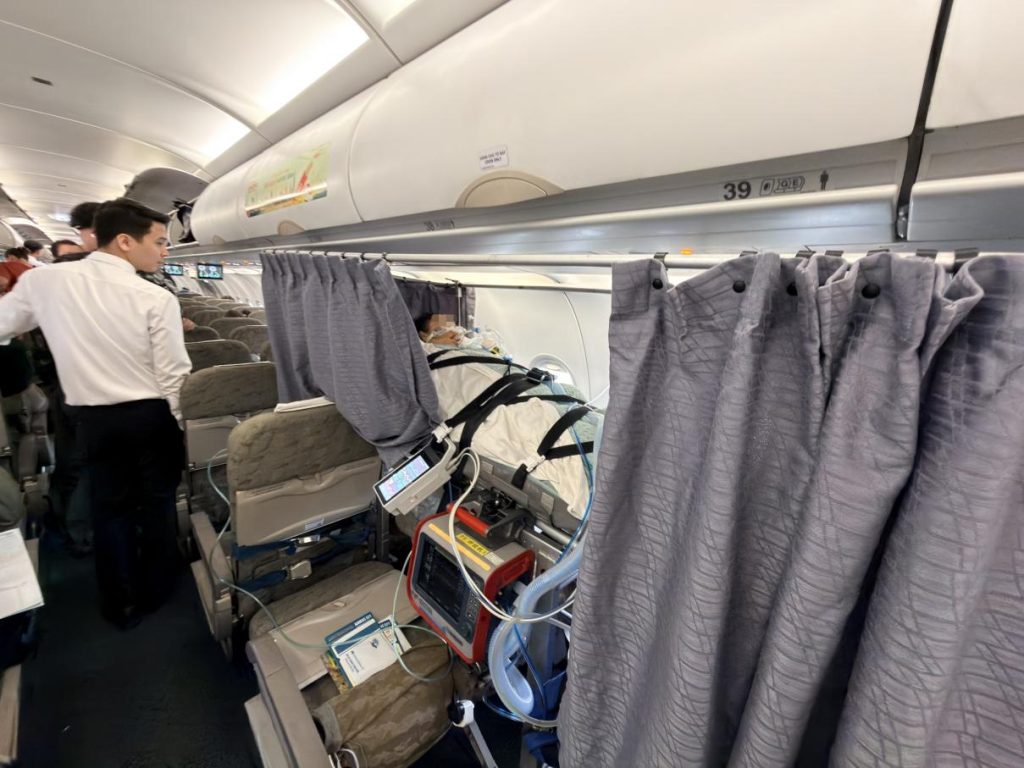
As demand grows for repatriation and specialist transfer, buyers are focusing more on ICU-level care continuity, flexible routing, and smooth coordination across air and ground segments—areas where TKP Medical Assistance shows clear strength.
Continuous Life-Support Is the Core Advantage
The biggest advantage of Ventilator & Life-Support Air Transport is continuity. A patient with tracheostomy, ventilator dependence, severe respiratory compromise, or advanced cardiac support needs more than a seat on an aircraft. That patient needs a transfer environment where airway management, oxygen delivery, monitoring, and emergency response are maintained without interruption.
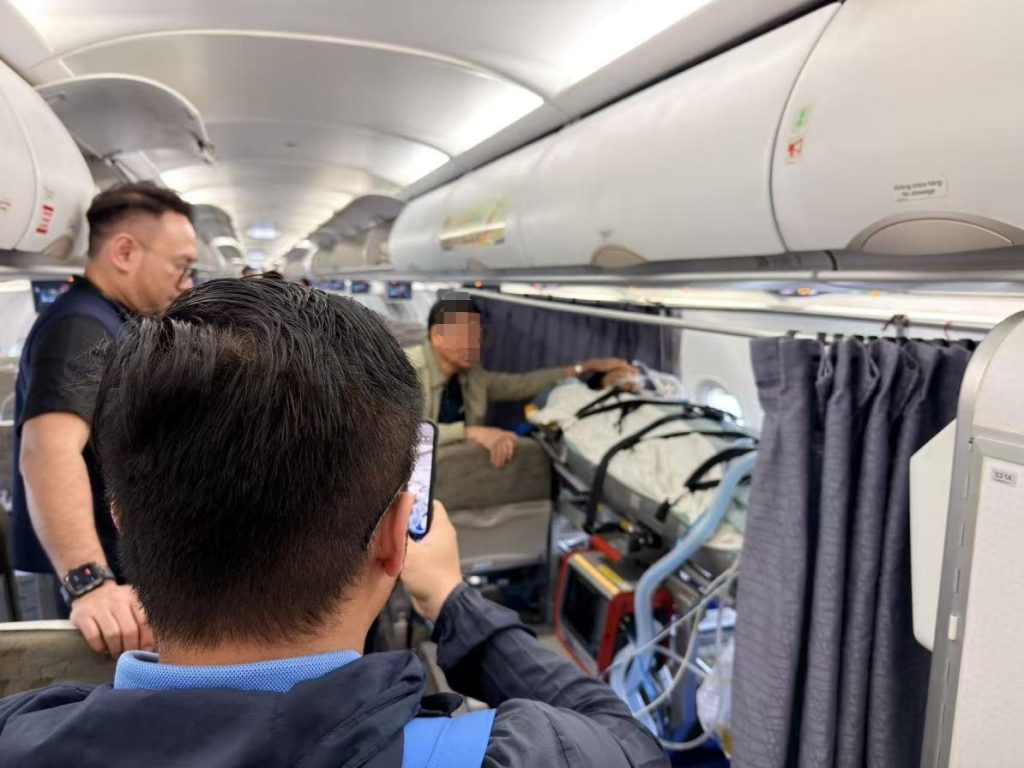
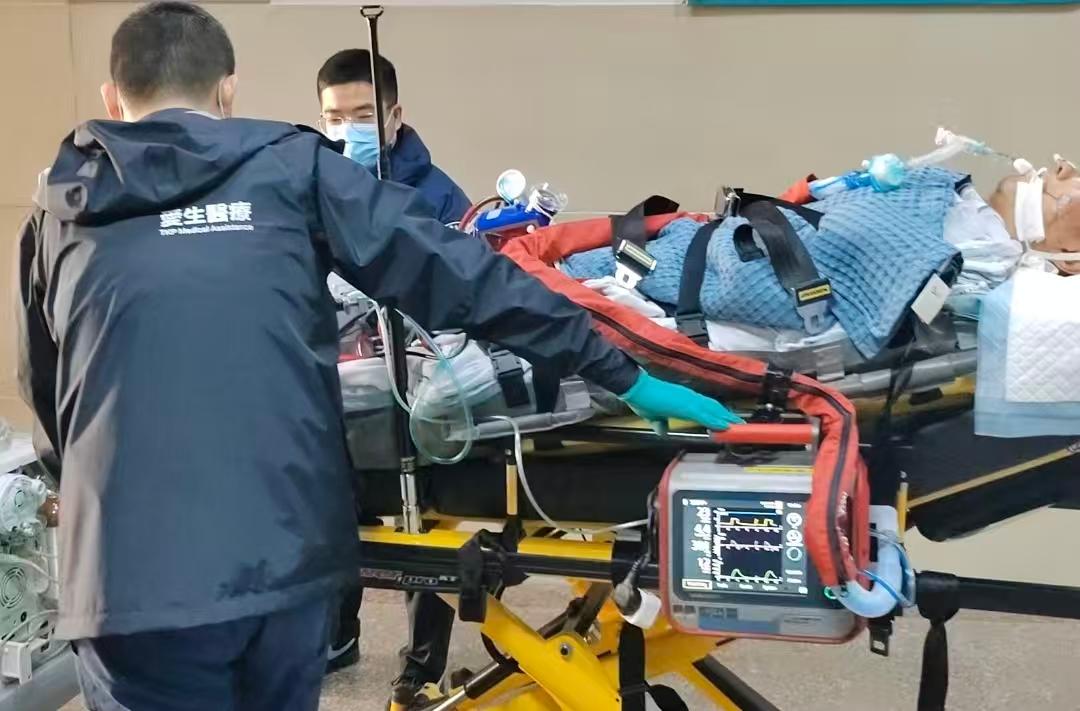
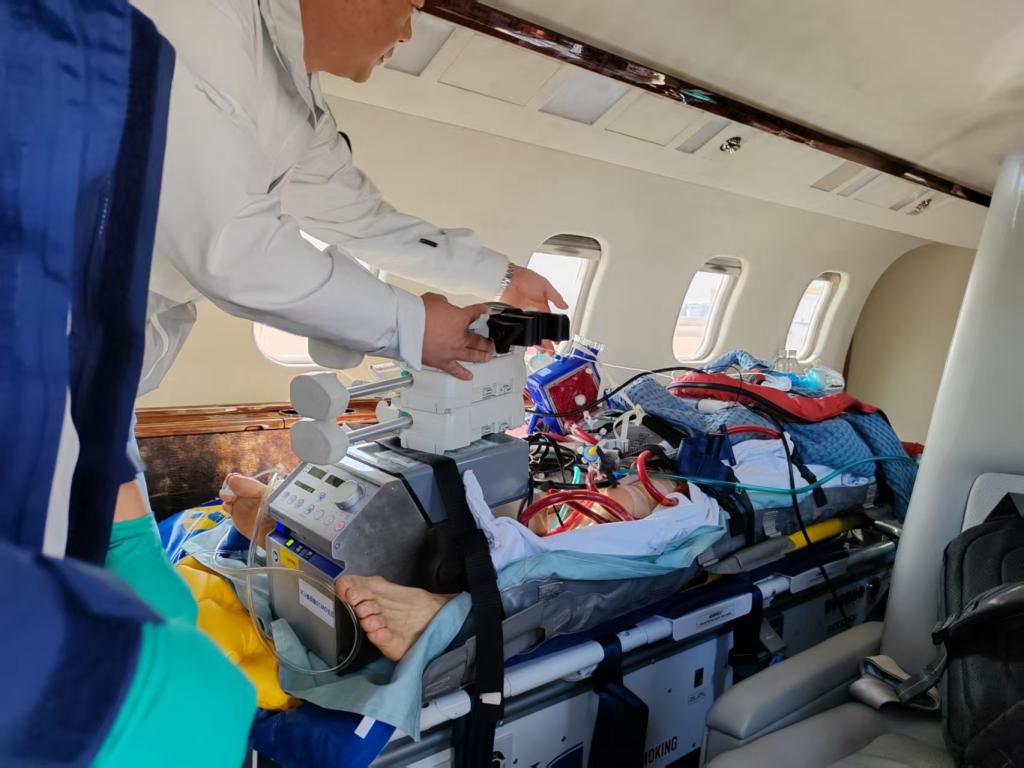
TKP Medical Assistance builds its service around that principle. Every mission can be equipped with portable advanced life support or advanced cardiac life support systems, transport ICU monitors, oxygen supply, and ventilators. When required, the team can also support ECMO, IABP, and other advanced life-sustaining systems, including during international flights.
For patient’s family, this creates several clear advantages:
• Better respiratory and hemodynamic stability during long-distance transfer
• Lower interruption risk during airport, ambulance, and flight handovers
• More suitable support for high-acuity post-stabilization patients
• Greater confidence for hospitals and medical partners receiving the patient
This is what separates a specialized life-support transfer from a standard medical escort arrangement.
Advanced Equipment Strengthens Transfer Safety
Another major advantage is the use of aviation-certified advanced medical equipment designed for transport conditions. In critical care transfer, equipment capability directly affects patient safety. Devices must remain reliable in confined cabin environments, support continuous monitoring, and adapt to both adult and pediatric cases.
TKP Medical Assistance equips its missions with transport-ready systems tailored for international movement. This includes not only ventilators and oxygen support, but also ICU monitors and specialized life-support equipment configured for in-flight use. That gives overseas partners stronger assurance that the patient is not entering a lower-care environment simply because the treatment setting has shifted from hospital to aircraft.
From a practical procurement perspective, this equipment advantage means:
• More stable monitoring throughout the mission
• Faster clinical response if the patient’s condition changes
• Better support for complex airway and critical care needs
• Greater suitability for both emergency and non-emergency medical transfers
In international transfer work, the reliability of onboard systems is not an extra benefit. It is part of the core service value.
Global Route Flexibility Expands Real Access
Ventilator & Life-Support Air Transport is also valuable because it extends access to treatment beyond local limits. In many cases, the goal is to move a patient from a remote area, a secondary hospital, or an underserved region to a more appropriate medical facility. That only works if the provider can build efficient routes and adapt them to the patient’s urgency and clinical condition.
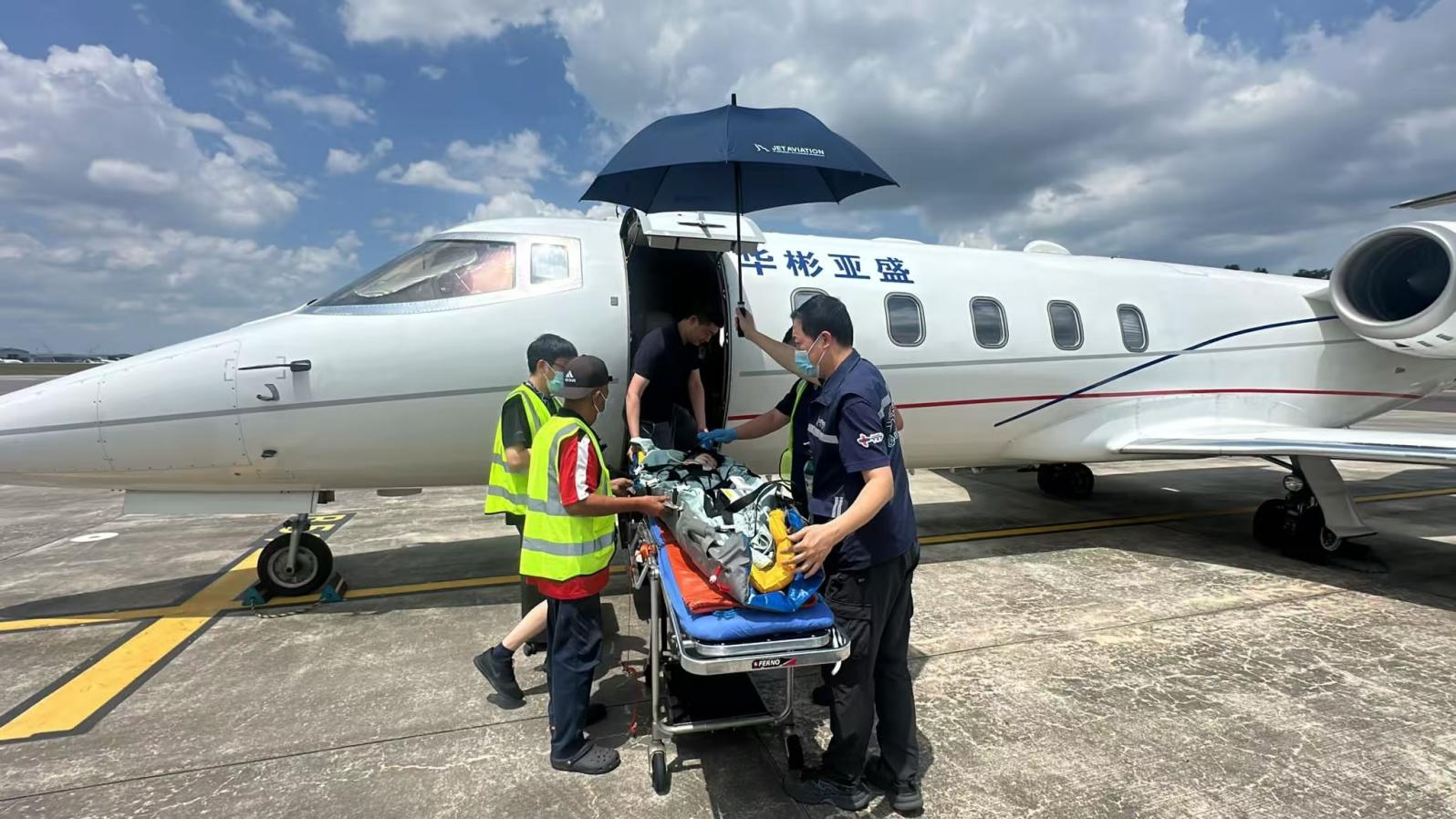
TKP Medical Assistance supports this through a flexible transfer route map that covers both domestic and international pathways. By using strategically selected airports, including those with limited infrastructure, the team can connect patients from difficult starting points to leading medical institutions worldwide.
This route-planning capability brings several operational advantages:
• Faster access from remote or less-developed locations
• Shorter total transfer time where route efficiency matters most
• Safer transport planning based on patient condition
• Better coordination with hospitals, customs teams, and embassies
• Real-time route adjustment if conditions change during the mission
For overseas case managers and healthcare partners, this kind of route flexibility is highly valuable because it turns medical transport into a coordinated clinical pathway rather than an isolated flight booking.
Multi-Modal Integration Improves Service Practicality
One more important advantage is service flexibility across multiple transport modes. Not every patient needs a dedicated air ambulance, and not every case can be handled through ordinary commercial travel. The best providers are able to match the transport model to the patient’s clinical needs and logistical realities.
TKP Medical Assistance offers:
• Commercial stretcher transport with airline approval
• Air ambulance service with full onboard medical escort
• High-speed rail and ambulance integration
• Ground ambulance coordination for complete bedside-to-bedside transfer
This gives buyers more practical options. It allows hospitals, insurers, and assistance companies to choose a transfer model that balances acuity, timing, route conditions, and cost control. In today’s market, that is a major advantage because procurement teams are looking for solutions that are medically appropriate as well as operationally efficient.
Instead of forcing every case into one expensive or limited format, TKP Medical Assistance provides a broader transfer platform that can respond to different patient needs.
Seamless Handover Protects The Full Journey
A strong medical transport provider is judged not only by what happens in the air, but by how well every handover is managed. For ventilator-dependent and critically supported patients, small disruptions during transfer between departments, ambulances, airports, and receiving facilities can create unnecessary risk.
This is why seamless coordination is one of the most valuable advantages of Ventilator & Life-Support Air Transport. TKP Medical Assistance manages the full mission as one connected process. Its operations team monitors the transfer in real time and supports route changes or coordination needs as they develop.
The case from Chengdu to Eastbourne, England shows this advantage clearly. The patient, who had post-spinal cord injury with tracheostomy and ventilator-assisted breathing, was transferred by commercial flight stretcher service with coordinated ground ambulance support in Europe. Throughout the mission, airway management, humidification, sedation adjustment, and pressure ulcer prevention were maintained to support stability. After landing, the ground ambulance team took over immediately, preserving the continuity of care into the next stage of the medical corridor.
This type of seamless handover offers real benefits:
• Lower transfer friction across multiple care segments
• Better protection for ventilator-supported patients
• More confidence for receiving medical teams
• Stronger documentation and traceability during the journey
For international buyers, smooth execution is often just as important as medical capability.
A Stronger Choice for Modern Cross-Border Medical Transfer
The advantages of Ventilator & Life-Support Air Transport are becoming more relevant as global healthcare systems rely more on specialist referral, repatriation, and critical care movement across borders. Buyers are no longer only asking whether a patient can be moved. They are asking whether the patient can be moved safely, continuously, and with the right level of medical protection throughout the entire journey.
That is where TKP Medical Assistance is well aligned with current market expectations. Its strengths in advanced onboard equipment, continuous respiratory and life-support capability, flexible route planning, multi-modal transport integration, and seamless handover execution make it a strong partner for high-acuity international medical transfer.
For overseas hospitals, insurers, assistance companies, and commercial partners, the value of this service is clear. Ventilator & Life-Support Air Transport is not only a transport solution. It is a higher-standard care pathway for patients who need clinical stability to travel safely across distance and borders.
Submit Your Request
Recent Posts
Tags
- Air Ambulance
- Bedside To Bedside
- Cross Border Aid
- Emergency Evacuation
- Global Medical Rescue
- How can I ensure the patient's stability while in the air?
- How do I request an air medical transport?
- How is it different from an air ambulance
- how to activate emergency aircraft service
- how to request an air ambulance
- Is air medical transport safe
- Is international transport possible
- Medical Rescue
- Medical Transport
- Patient Repatriation
- Remote Rescue
- Seamless Coordination
- Telemedicine Support
- Tourists And Expats Medical Escort
- What are the benefits of a cross-border medical transfer
- What are the different types of transfers
- What are typical use cases
- What documents do I need to prepare for a transfer?
- What does high-speed rail patient transfer stands for
- What is air ambulance
- What is air medical transport?
- What is cross-border medical transfer
- What is emergency aircraft
- what is high-speed rail patient transfer
- What is medical charter flight
- what is neonatal ICU transfer
- What is patient air transfer
- What medical equipment is available on board the aircraft
- What situations shouldn't use air medical transport?
- What types of air ambulance are there?
- What types of air ambulance exist
- What's the difference between international and domestic transfers?
- what’s the difference between air medical transport and regular ambulance?
- When is emergency air transport necessary
- Which patients require air medical transport?
- who is included in the medical team
- who needs an air ambulance