


How Cross-Border Patient Transfer Works: Step-By-Step Explain


Cross-Border Patient Transfer is often the fastest way to reach the right specialist when local care is limited, the facility is under-resourced, or the needed treatment simply is not available where your loved one is currently admitted. But for families, moving a patient across borders can feel like stepping into a maze: medical decisions, paperwork, timing, and safe transport all have to fit into one coordinated timeline.
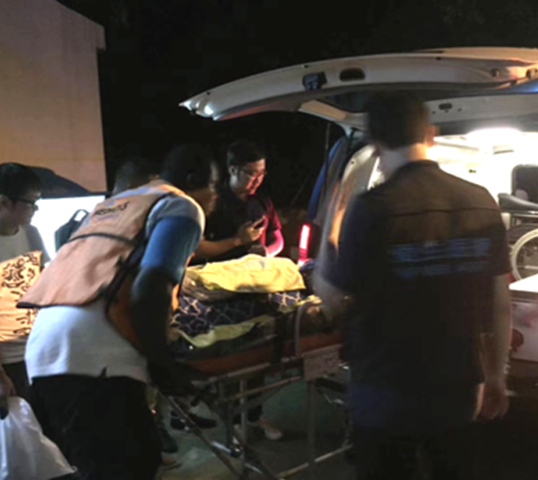
At TKP Medical Assistance, we simplify that maze into a controlled, clinical workflow. With 24+ years of frontline experience and 10,000+ completed missions, we operate as one accountable team—planning the route, building the medical plan, coordinating with hospitals, and managing the handover so the patient remains stable and supervised from bedside to bedside.
Below is a practical, step-by-step explanation of how Cross-Border Patient Transfer works in real life—written for families who need clarity, not jargon.
What Cross-Border Patient Transfer Really Means
A Cross-Border Patient Transfer is not “assisted travel.” It is a medically managed relocation from one facility to another in a different region or country, with a transport plan built around the patient’s clinical condition.
The purpose is simple: move without creating a care gap. When transfers go poorly, it is rarely because of one dramatic event. It is usually small failures that add up—missing documents, unclear responsibility, delayed approvals, or equipment that is not matched to the patient’s current needs.
In practice, Cross-Border Patient Transfer can involve one or more of the following transport modes:
• Ground Ambulance for local pickup and short facility-to-facility legs
• Commercial Flight With Medical Escort for stable patients who still need professional monitoring
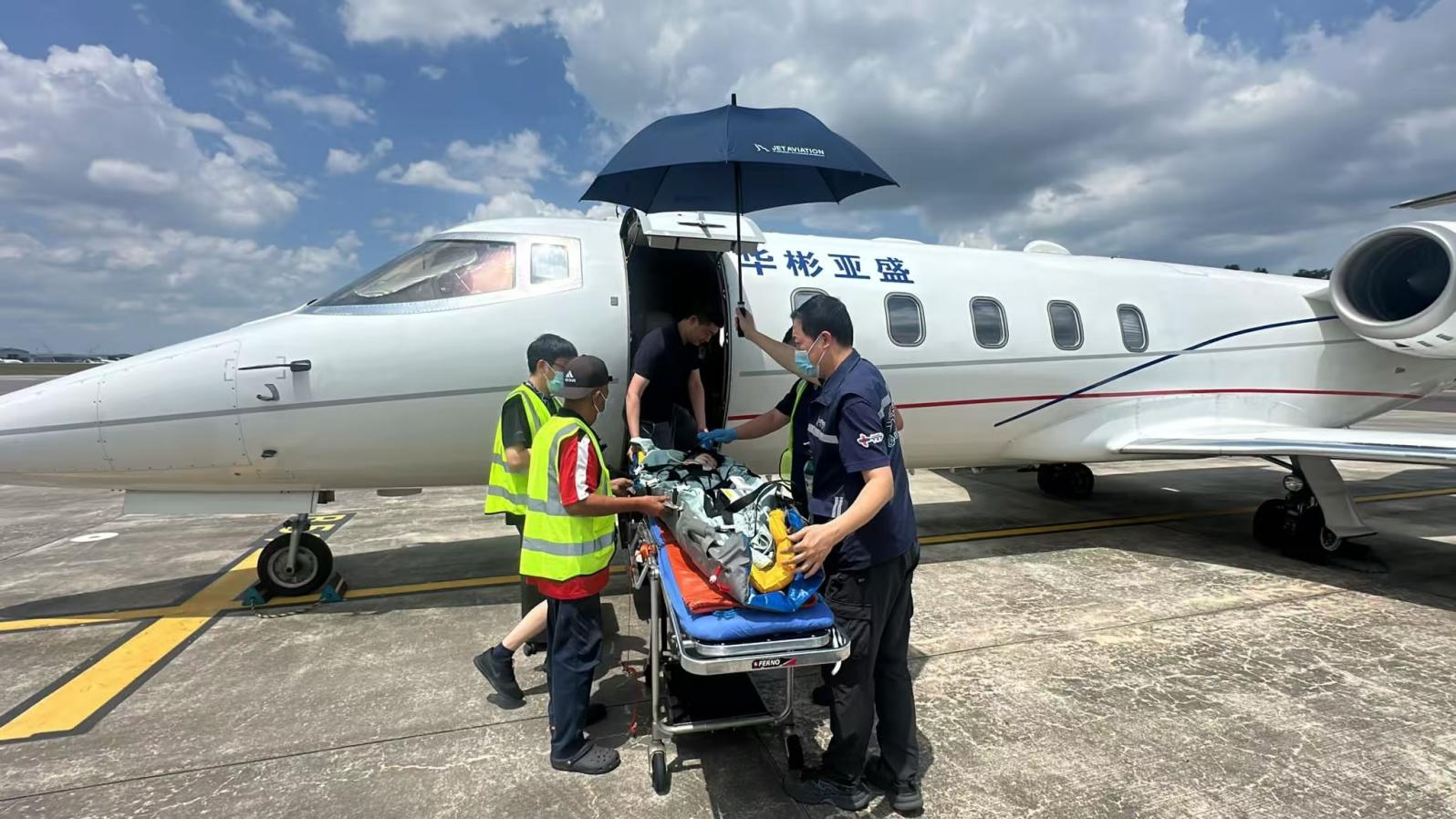
• Air Ambulance (Chartered Medical Jet) for urgent, unstable, high-acuity, or complex cases
A well-managed transfer is designed to reduce uncertainty before the journey begins—because once movement starts, “fixing it later” is rarely safe.
TKP‘s Step-By-Step Transfer Activation Flow
Families often imagine international medical movement as chaos. In reality, safety comes from structure. TKP follows a staged activation flow so decisions happen in the right order and critical steps are not skipped.
Step 1: Intake And Case Capture (24/7/365)
The first call sets the pace for everything that follows. We capture the essentials: diagnosis, current location, treating hospital, stability notes, current support (oxygen/IV/ventilation), and the family’s destination preference if known. If insurance details are available, we record them early to prevent later back-and-forth.
Step 2: Clinical Review And Transport Feasibility
A nurse or physician reviews the case and defines what “safe transport” requires. This is where we confirm the staffing and equipment baseline—monitoring level, oxygen requirement, airway risk, medication needs, and whether the patient can tolerate altitude/time in transit.
Step 3: Route And Mode Planning
Our operations team maps air and ground options and selects a route that fits the medical reality, not just the map distance. Sometimes the “fastest route” includes risky waiting windows or unnecessary handoffs. A safer plan may mean fewer transfers, more predictable timing, and a receiving hospital that is ready on arrival.
Step 4: Quotation, Scope Confirmation, And Consent
We provide a clear estimate and define service scope—who is on the team, what equipment is included, what the timeline looks like, and what the handover process includes. We also support families with the forms and details that insurers commonly request for preauthorization.
Step 5: Resource Activation And Equipment Checks
Once approved, we mobilize the appropriate team (medical escort, flight nurse, critical-care staff) and prepare transport-certified systems. Equipment is checked and configured for the patient’s current condition before movement begins. This is not a formality—it is how avoidable in-transit problems are prevented.
Step 6: Bedside Pickup, In-Transit Care, And Destination Handover
We perform a bedside clinical handover at the current facility, stabilize the patient for travel, monitor continuously during movement, and complete a structured handover at the receiving hospital with documentation and continuity notes.
That is the core logic of Cross-Border Patient Transfer: prepare first, move second, hand over properly.

How to Choose the Right Transport Method
The “best” option is not the most expensive one. The best option is the one that matches the patient’s risk level and medical dependencies. Here is a clear, family-friendly comparison:
• Ground Ambulance (Local)
Best for: short distances, stable patients, low complexity transfers
Trade-off: long road time can increase fatigue; monitoring and intervention capacity may be limited for critical cases
• Commercial Flight With Medical Escort
Best for: stable or improving patients who still require professional support (oxygen, nursing monitoring, medication management)
Trade-off: schedules and boarding rules create fixed constraints; onboard flexibility is limited
• Air Ambulance (Chartered Medical Jet)
Best for: urgent transfers, unstable patients, complex respiratory/cardiac monitoring needs, time-sensitive treatment windows
Practical value: controlled medical environment, fewer unknowns, and a route built around the patient—not public timetables
For many families, the air ambulance decision is not about comfort. It is about predictability: fewer handoffs, tighter control of time, and a clinical environment designed for transport.
What Happens During the Journey: Care, Monitoring, and Communication
A common fear is: “What if the patient gets worse in transit?” That is exactly why Cross-Border Patient Transfer must be designed as a clinical operation, not a logistics booking.
TKP teams are BLS & ACLS certified, and our model is built on 24/7 medical readiness. That means clinical decisions do not pause because it is midnight, a weekend, or a holiday. During transport, we focus on three priorities:
• Continuous monitoring (so changes are detected early)
• Immediate intervention capability (so deterioration is managed without delay)
• Stable handoffs (so care continuity does not break at borders, airports, or facility transitions)
Typical mission equipment may include:
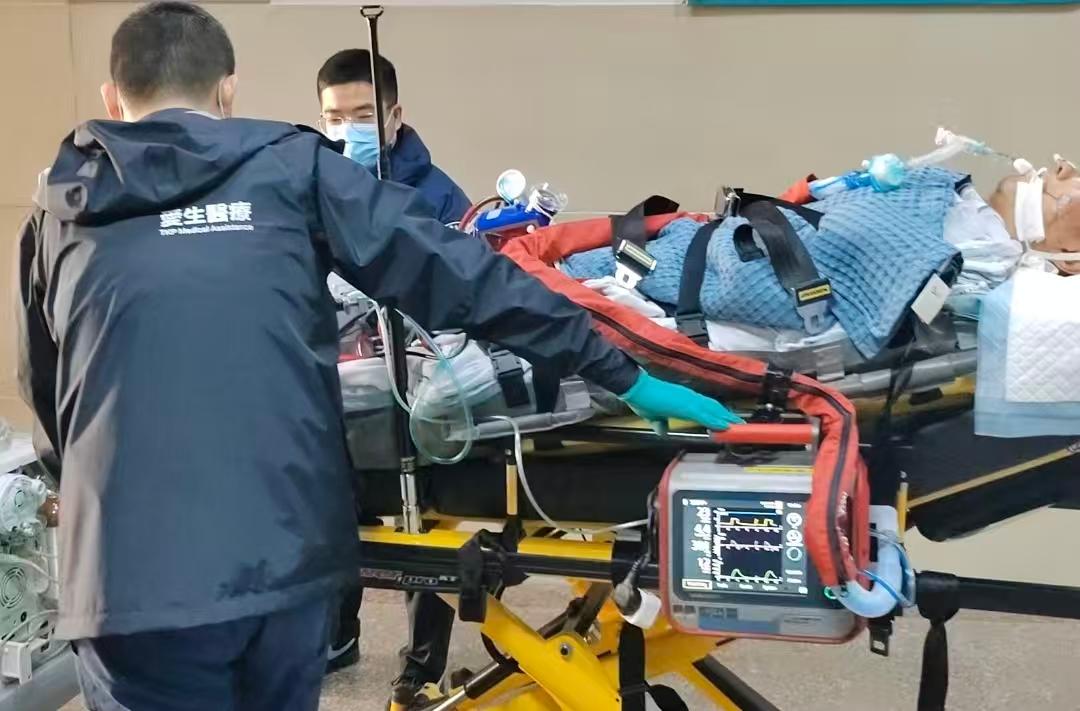
• Transport-ready monitoring (vitals, ECG, oxygen saturation as needed)
• Oxygen supply and ventilators when indicated
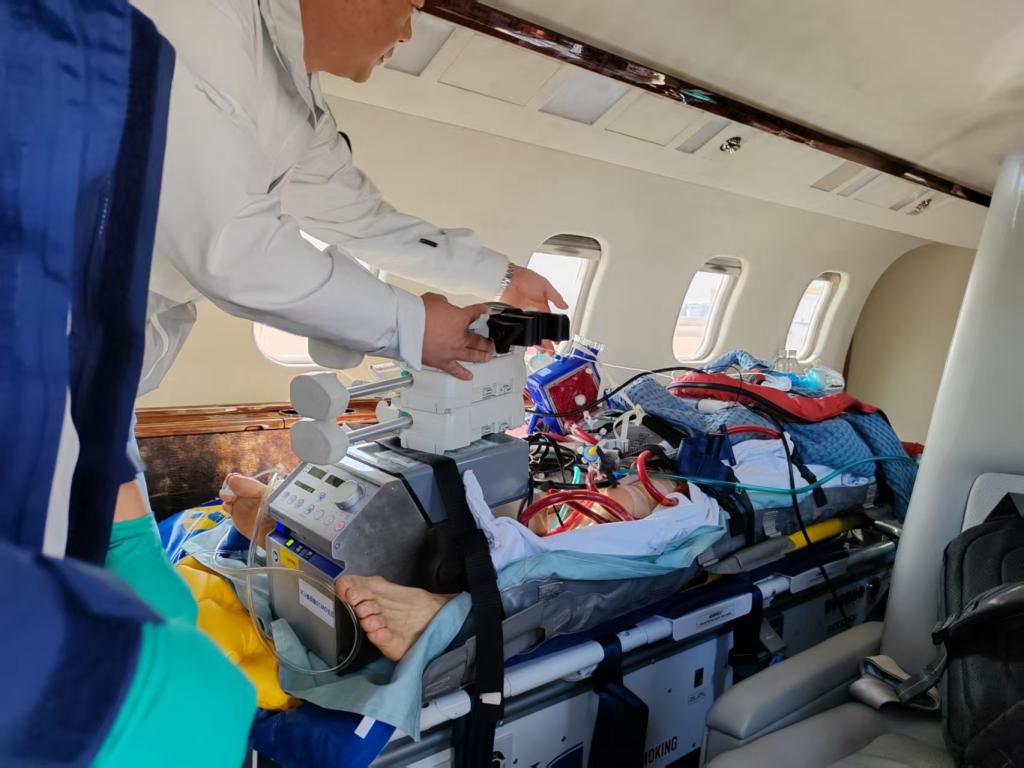
• Aviation-certified medical systems designed for transport conditions
• Adult and pediatric configurations based on patient profile
• ECMO coordination when required for extremely critical cases (case-dependent)
Just as important, families need communication, not silence. We support structured updates so the family understands where the patient is, what the next step is, and when arrival is expected—because calm decisions are easier when you are informed.
Family Checklist That Prevents Delays
Many delays in Cross-Border Patient Transfer are not medical. They are administrative. Preparing the right items early can save hours—and in urgent cases, hours matter.
• Medical Documents
Recent records, diagnosis notes, discharge summary (if available), medication list, current treatment plan, imaging/lab highlights
If possible, prepare key items in English to support international coordination.
• Hospital Contacts
Attending physician name and direct contact details (or ward contact) so clinical questions can be resolved quickly.
• Identification And Travel Documents
Patient passport and ID; IDs for accompanying family when relevant; any required visa materials.
• Insurance Or Payment Details
Policy copy (if applicable), insurer contact, claim/preauth requirements, and the responsible payer details if insurance is not used.
• Authorized Decision-Maker
One primary representative who can sign forms and approve changes, plus a secondary contact for backup.
Visa reality check: Some destinations require medical or humanitarian visa support, and processing time can vary widely. In many cases it may take 24–72 hours depending on nationality and destination. TKP can support with invitation letters and embassy communication, but early preparation is still the fastest path to clearance.
Why Families Choose TKP Medical Assistance
When time is critical, families do not need a long list of vendors. They need a team that can execute. TKP is chosen because we combine clinical decision-making and operational delivery in one coordinated service.
• Experience That Reduces Uncertainty
24+ years and 10,000+ missions means repeatable decisions under pressure—not improvisation.
• Safety Culture Built For Transport Medicine
A transfer is not a routine shift; it is a high-responsibility movement. Our workflows emphasize prevention: correct staffing, correct equipment, correct handovers.
• Direct Operation, Not “Middleman Messaging”
One responsible team runs the transfer from start to finish, reducing handoff errors and accelerating approvals.
• 24/7 Global Coordination With Multilingual Support
Our 24/7 coordination center and multilingual staff (EN/CH/CN) keep communication smooth across hospitals, insurers, and family decision-makers.
• Route Flexibility For Real-World Geography
Borders, infrastructure limits, and last-minute changes are normal in real missions. We plan for them and adapt quickly to keep care continuous.
CTA (Call-to-Action)
If your family needs a Cross-Border Patient Transfer, contact TKP Medical Assistance with the patient’s condition, current location, and preferred receiving hospital (if known). Our 24/7 coordination center will recommend the safest transport mode, outline the documents that prevent delays, and deliver a clear action plan—so you can move forward with calm decisions and reliable medical support.
Submit Your Request
Recent Posts
Tags
- Air Ambulance
- Bedside To Bedside
- Cross Border Aid
- Emergency Evacuation
- Global Medical Rescue
- How can I ensure the patient's stability while in the air?
- How do I request an air medical transport?
- How is it different from an air ambulance
- how to activate emergency aircraft service
- how to request an air ambulance
- Is air medical transport safe
- Is international transport possible
- Medical Rescue
- Medical Transport
- Patient Repatriation
- Remote Rescue
- Seamless Coordination
- Telemedicine Support
- Tourists And Expats Medical Escort
- What are the benefits of a cross-border medical transfer
- What are the different types of transfers
- What are typical use cases
- What documents do I need to prepare for a transfer?
- What does high-speed rail patient transfer stands for
- What is air ambulance
- What is air medical transport?
- What is cross-border medical transfer
- What is emergency aircraft
- what is high-speed rail patient transfer
- What is medical charter flight
- what is neonatal ICU transfer
- What is patient air transfer
- What medical equipment is available on board the aircraft
- What situations shouldn't use air medical transport?
- What types of air ambulance are there?
- What types of air ambulance exist
- What's the difference between international and domestic transfers?
- what’s the difference between air medical transport and regular ambulance?
- When is emergency air transport necessary
- Which patients require air medical transport?
- who is included in the medical team
- who needs an air ambulance