


How To Arrange A Medical Emergency Transfer: A Step-By-Step Guide For Families In Crisis


Medical emergencies abroad are terrifying. A loved one lies in a foreign hospital, unable to speak the language and desperate to return home. Understanding How To Arrange A Medical Emergency Transfer before a crisis hits can mean the difference between chaos and a coordinated lifesaving operation.

The global healthcare transportation market is projected to reach USD 158.40 billion by 2032, reflecting rising demand for safe medical repatriation. But how does the process actually work? Keep reading.
Understand the Four-Step Medical Evacuation Process
Any provider’s workflow starts with understanding the inner workings of a Medical Emergency Transfer. Here is a simplified procedure:
Step 1 – Initial Clinical Assessment: Before any transfers are made, local practitioners assess the patient’s ability to ensure they are in a safe and secure position to be moved. The first stage of the medical retreat and evacuation process is a thorough clinical check to assess the condition of the patient.
Step 2 – Communications with a Medical Assistance Provider: The family, or the insurer, liaise with a provider such as TKP Medical Assistance, with which the family or insurer has a contract. These providers are the primary contact and the main organizer to assemble the medical staff, the means of medical transport, and the clearance and admission of the hospital.
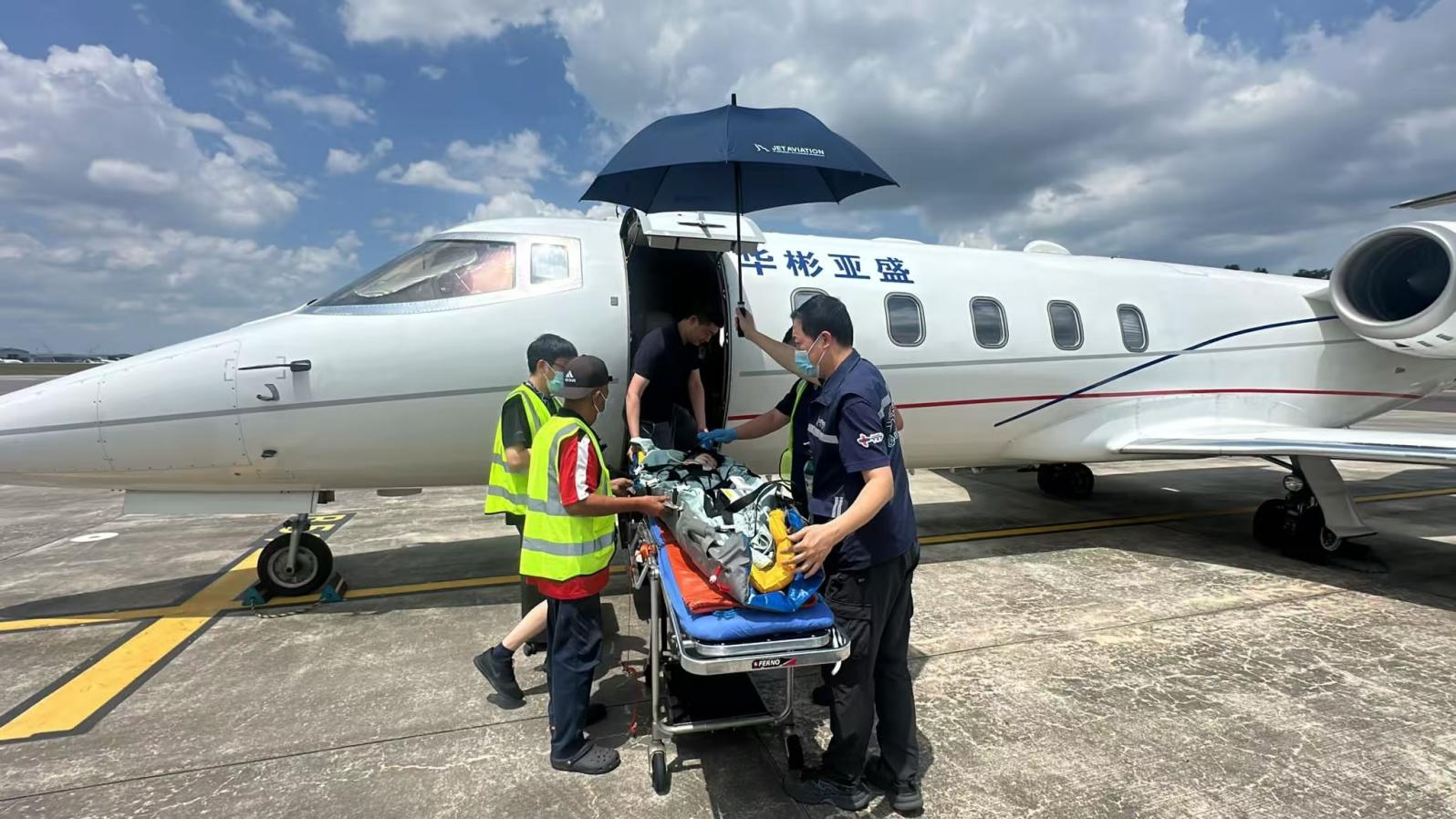
Step 3 – Coordination And Planning: The team decides whether the patient requires the transport of a medical air ambulance , a commercial stretcher, a ground ambulance , or high-speed rail to the next stage. They arrange the patient’s visas, flight clearance for the medical transport, and medical escorts and equipment.
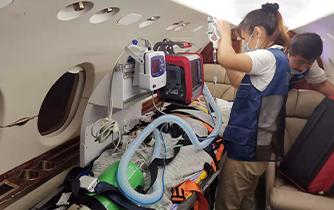
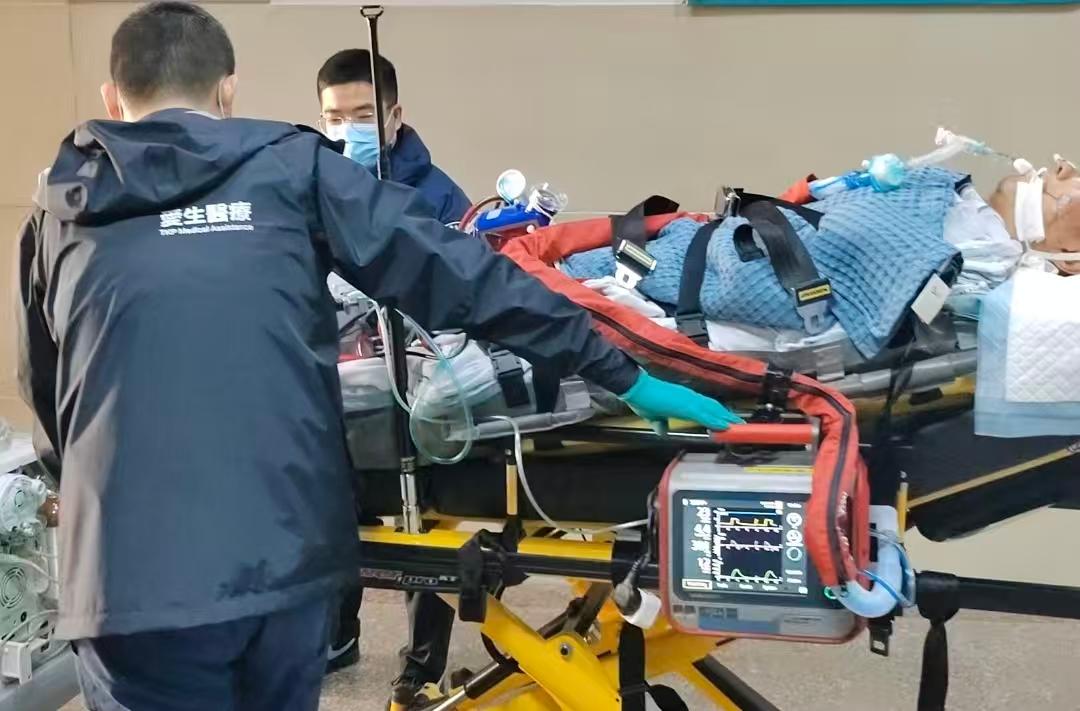
Step 4 – Medical Preparation And Transfer: The medical team prepares the patient by stabilizing them, placing secure IV lines, monitors to observe and track the vitals, and ensuring the patient’s safety throughout the transfer. An ICU level medical support service is available in the transport to cater to the needs of the patient throughout the transfer.
Know the Costs and Financial Reality
One of the biggest fears families face is financial devastation. A single international medical evacuation can range dramatically depending on distance and medical requirements:
• Short-distance helicopter medevac: 12,000–25,000 USD
• International commercial stretcher transport:20,000-90,000+ USD
• International air ambulance: 150,000–300,000 USD or more
Few realize that a single medevac flight can exceed $200,000, and not every insurance policy covers that amount. This is why working with a provider like TKP Medical Assistance, which directly coordinates with insurers to secure pre-authorizations, is essential. Many international travel insurance plans include emergency evacuation benefits, but the devil is in the details—some insurers only cover “medically necessary” transfers, and approval often requires documentation from both local and receiving physicians.
• Always verify coverage limits before traveling.
• Keep insurer contact numbers and policy documents accessible.
• Ask your medical assistance provider to handle all insurance coordination.
Assess Risk and Transport Mode Before Takeoff
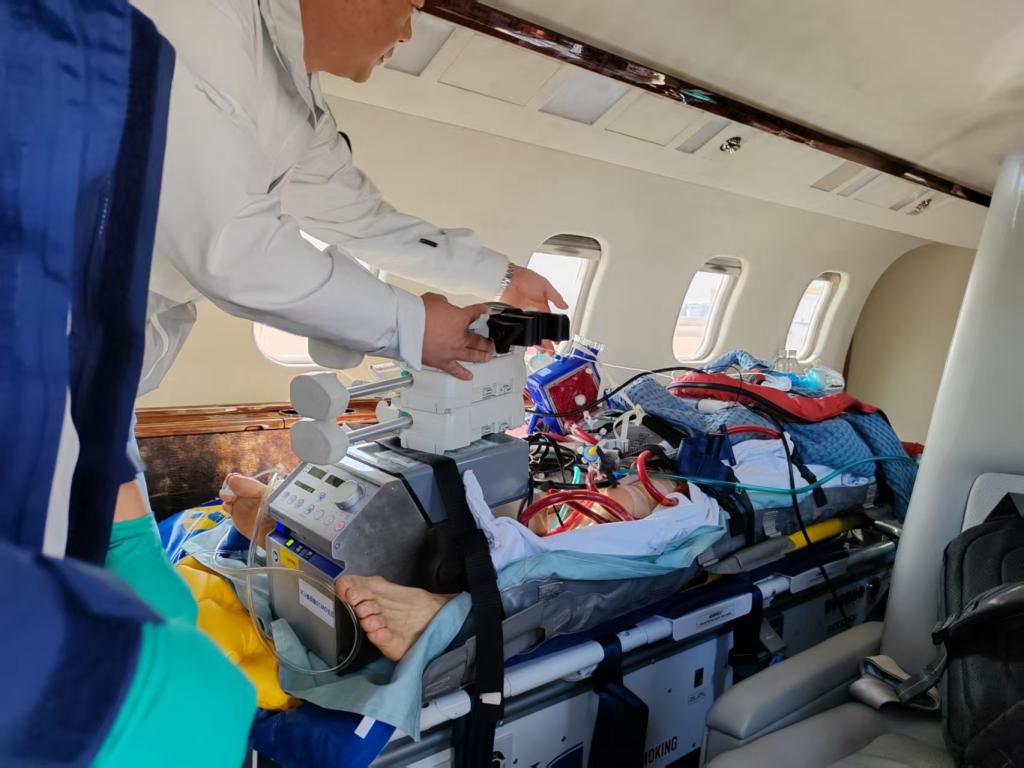
The first question any medical team asks is whether transport is safe. For critically ill patients, especially those on ventilators or ECMO (extracorporeal membrane oxygenation), air transport requires specialized expertise. TKP Medical Assistance has completed approximately 100 ECMO-assisted air ambulance missions—a globally leading figure that demonstrates their capability for the most complex transfers.
• Patient stability is critical for inter-hospital transport: Movement can only occur after the patient is stabilized.
• Transporting an individual by air suggests safety and protection. However, safety can be compromised by high altitudes and changes in air pressure.
• Careful planning optimizes transport mode, distance, and patient care: Rigid and flexible configurations can be accommodated, as well as high- and low-urgency patient care.
since its establishment in 2001, TKP Medical Assistance has been completing flights to/from Asia, Europe, and North America. For the past 20 years, TK is the only one completing and drafting international Medical-National Assistance flights authored by agents using flexible, flexible, and rigid modes.
Technology Investments for Intelligent Transfers
The latest 2026 META technologies: AI-assisted END, AI-assisted Predictive Composition META, and END Integrated Digital Operation Systems. SireD types, Logicules, Logicules, and LynPilot2 to END, TKP achieves/passeths to END 35.75% more Intelligent ENDs.
• During transport, and/or transports “hospital-to-patient.”
• Transport and crew predictively, and/or Transport and crew predictively, and/or proposes transport and crew in smaller blocks.
• “Real-Time Protection” provides transport updates
TKP optimizes digital communication to balance transport utilization and client relations and ML banks, and to create client relations to avoid. k. the transport of the client. Within the transport, our team. Our team. Our team. Our team. Our team. Our team. Our team. Our team. Our team. Our team. Our team. Our team. Our team. Our.
The Difficulties with Insurance Paperwork
Families face other challenges besides the insurance barriers:
• An evacuation process may be interrupted if claims are pending for approval.
• You may incur a significant financial burden if the doctor is out-of-network.
• The documentation required may be different in each country and lead to confusion.
This is where a reliable medical assistance company is useful. With TKP, you can efficiently process the claims with the international insurance company and get approvals, and reduce economic losses. Their one-stop case oversight model—from pre-assessment to final arrival—ensures no detail is missed.
Pick a Provider With Direct Control, Not Middlemen
When you need How To Arrange A Medical Emergency Transfer answered quickly, the quality of your provider determines everything. Here is what separates an industry leader from a fragmented broker:
• Direct fleet and crew ownership, not subcontracting: Eliminates communication gaps and quality variance.
• 24/7 global coordination centers with multilingual support: Someone always answers when an emergency happens.
• Bed-to-bed clinical responsibility from departure to destination: The same team stays with the patient throughout.
• Transparent pricing with no hidden charges mid-journey: Peace of mind when you can least afford surprises.
TKP Medical Assistance is a designated unit within China’s National Health Commission’s foreign-related emergency rescue network—a standing proof of their clinical credibility and regulatory recognition. In an emergency, we can initiate a transfer within 12–24 hours, a critical advantage when time is the most precious resource.
Final Takeaway
Medical emergencies do not announce themselves. They come without notice, in strange places, leaving families grasping in the dark. But How To Arrange A Medical Emergency Transfer can be simple. The process becomes predictable and clinical when you have the proper partner.
By 2032, the medical transportation industry is expected to become USD 182 billion as the population ages, more people travel internationally, and the industry starts to offer specially tailored services. In this fast growing industry, the correct option is not to choose a partner. You need a provider who offers direct services with the latest technology, and has more than 20 years of experience.
In a medical emergency overseas, TKP Medical Assistance is the best option. How To Arrange A Medical Emergency Transfer with TKP Medical Assistance is 24/7. If you want immediate assistance, then email us at info@tkpma.cn and you will receive a free case review. Because in an emergency, every minute counts—and so does every choice you make.
A safe journey is not just about moving a patient. It is about restoring hope.
Frequently Asked Questions (FAQ)
Q: How fast can a medical transfer occur?
A: With a trusted provider like TKP Medical Assistance, an emergency transfer can happen within a specific time frame of 12–24 hours, and can begin from the first call, depending on the patient and how they are stabilized, as well as international clearance.
Q: Are medical evacuations covered on my insurance?
A: Most international travel and health insurance plans cover emergency evacuations. Although, the maximum reimbursement available as a “benefit” does vary. TKP collaborates with your insurance company to gain advanced payment and to reduce the cost to the patient as much as possible.
Q: What is the distinction between an air ambulance and a commercial stretcher transfer?
A: With an air ambulance, the patient is placed in a mobile, fully functional ICU, which is required if a patient is in critical condition. A commercial stretcher, on the other hand, usually involves a medical attendant in a commercial flight as this is safe for stable patients and is far less expensive.
Q: Will TKP assist if a patient is on a ventilator or if they are on ECMO?
A: Yes. TKP is a leader on the market in having led approximately 100 missions on ECMO assisted Air Ambulations, as well as routinely providing the service for patients on vents that also required care of an ICU level on a plane during your journey.
Q: What do I have to do to get this started?
A: There are no details too small that can be communicated to TKP Medical Assistance at all hours at the email of info@tkpma.cn or go to the case review website at www.tkp-assistance.net with no obligations.
Submit Your Request
Recent Posts
Tags
- Air Ambulance
- Bedside To Bedside
- Cross Border Aid
- Emergency Evacuation
- Global Medical Rescue
- How can I ensure the patient's stability while in the air?
- How do I request an air medical transport?
- How is it different from an air ambulance
- how to activate emergency aircraft service
- how to request an air ambulance
- Is air medical transport safe
- Is international transport possible
- Medical Rescue
- Medical Transport
- Patient Repatriation
- Remote Rescue
- Seamless Coordination
- Telemedicine Support
- Tourists And Expats Medical Escort
- What are the benefits of a cross-border medical transfer
- What are the different types of transfers
- What are typical use cases
- What documents do I need to prepare for a transfer?
- What does high-speed rail patient transfer stands for
- What is air ambulance
- What is air medical transport?
- What is cross-border medical transfer
- What is emergency aircraft
- what is high-speed rail patient transfer
- What is medical charter flight
- what is neonatal ICU transfer
- What is patient air transfer
- What medical equipment is available on board the aircraft
- What situations shouldn't use air medical transport?
- What types of air ambulance are there?
- What types of air ambulance exist
- What's the difference between international and domestic transfers?
- what’s the difference between air medical transport and regular ambulance?
- When is emergency air transport necessary
- Which patients require air medical transport?
- who is included in the medical team
- who needs an air ambulance