


How to Arrange Patient Air Transfer: A Complete Step-by-Step Guide


Crossing state lines or borders is only part of the challenge when trying to deal with a medical emergency away from home. You could even be in a remote enough location that you struggle to find out how to arrange patient air transfer—the right provider, the right aircraft, and the right clinical support. However, with the right partner and resources, the process can be simplified to the most appropriate means of transfer.

Here, we break down the steps involved in air transfer for patients and include tips from your first phone call to the transfer of the patient to the receiving hospital.
What Is Patient Air Transfer?
Using specially designed aircraft to transport a patient from one location to a distant hospital is not a flight. The transfer of a patient using air travel is an involved medical process that is highly coordinated and controlled.
Air transfer of a patient is typically necessary for:
•Disasters requiring the patient to be evacuated from a remote location
•Transport of time-sensitive organs required for a transplant
•Patient repatriation
•Transfer of a patient requiring long-distance transport and a specialized Intensive Care Unit (ICU)
•Transfer requiring use of specialized medical care.
Step 1: The Initial Call and Intake
Patient air transfer starts with one call. The call can be made by family, the case manager, or the insurance company. The call should be made to a known and reputable air ambulance company.
During this early stage of communication, you will need to present:
•Patient demographic data: name, age, and a summary of their medical history
•Current diagnosis and clinical condition
•Current location and destination hospital
•Urgent needs (e.g., requires oxygen, needs cardiac monitoring, needs pain control)
One of the trained professionals will ask you specific questions related to your case, and will explain the difference between the options, and assist you in determining whether a dedicated air ambulance or a medically escorted flight on a commercial airline is the best choice.
Step 2: Medical Assessment and Documentation
After the initial contact, a medical professional examines the report and determines whether it is safe for the patient to be transported by air and identifies the level of care needed during the flight.
Assessment of the patient involved determining:
•Stability and the ability to participate in the flight
•Mobility and need for supplemental oxygen
•Risk of infection during flight and Patient’s tolerance of the pressure changes
•Special equipment needs (e.g., a stretcher)
Vital documents will be created including:
•Recent medical records and discharge summary
•Results of laboratory tests and imaging
•Medication lists and details of infusions
•Identification, passports, and visas for international travel
•Insurance details and authorization
A physician’s letter of certification is required to assure the patient is “fit to fly.” This certification is a requirement for international medical transport especially when there are crossings to countries with differing health regulations.
Step 3: Selecting the Appropriate Method of Transport
Patient air transfers vary. The method to be used depends on the patient’s situation, distance, and urgency, in addition to the clinical needs.
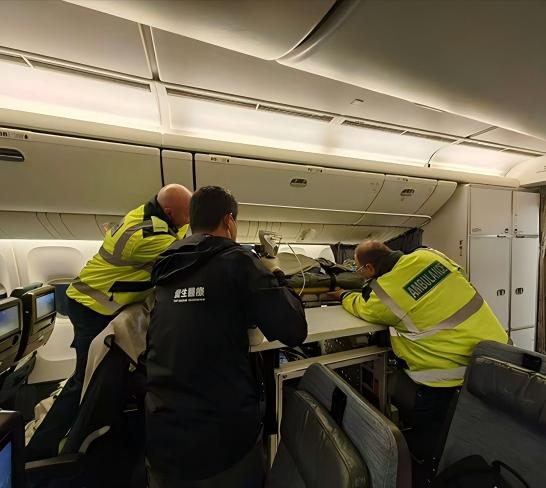
•Stretcher transfer: Airlines convert stretchers to help bedridden patients with a medical escort. This service is more cost-efficient for stable patients on cross-border flights.
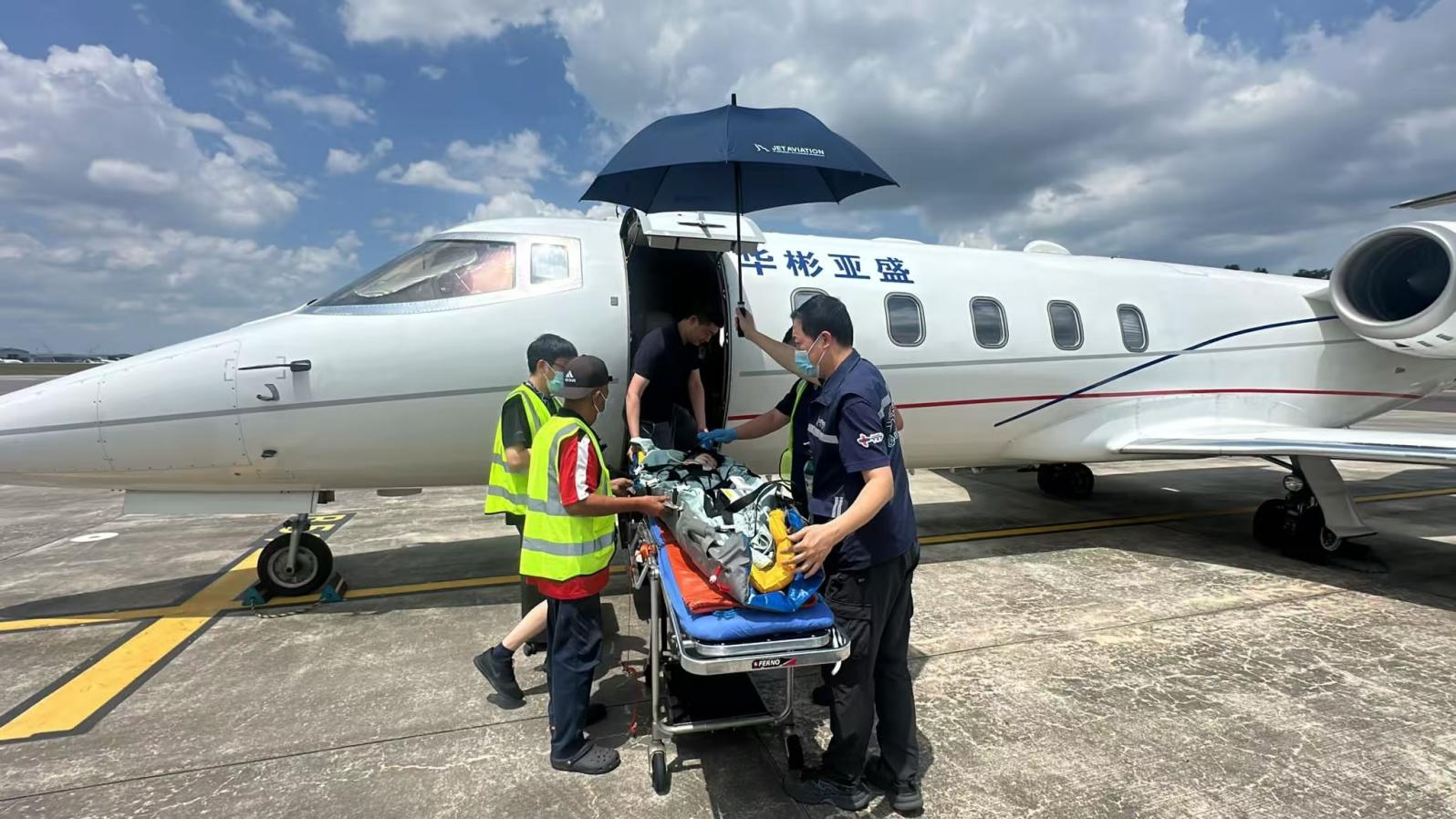
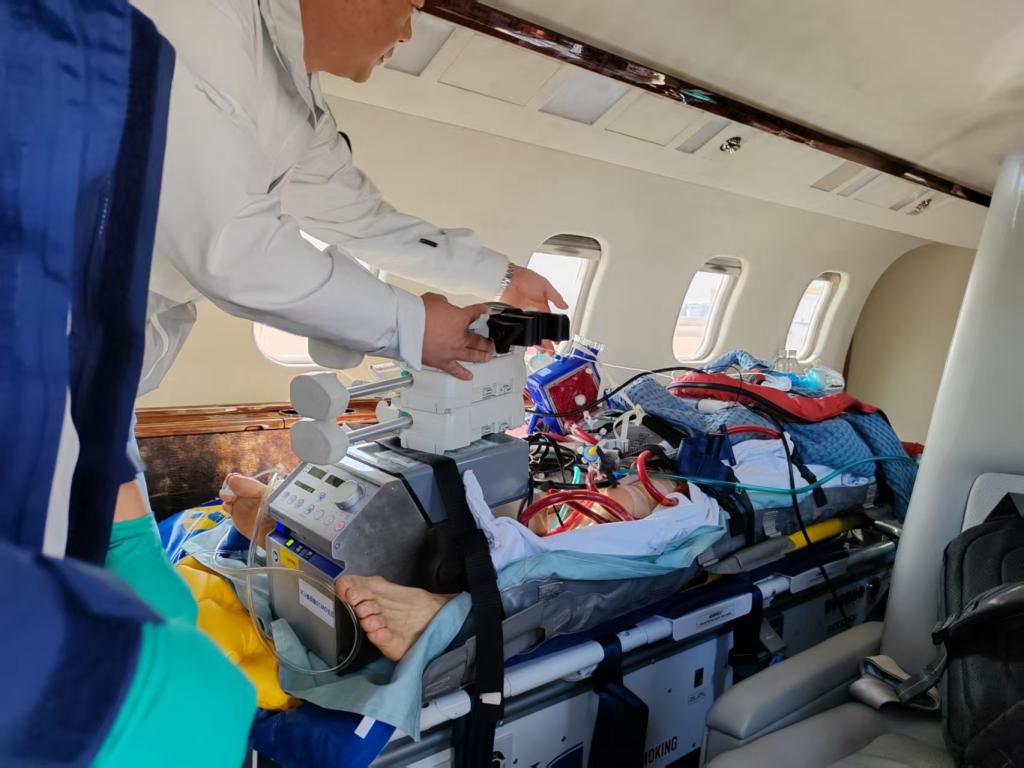
•Air Ambulance with ICU Level Care: Air ambulances with ICU capabilities are appropriate for patients who are critically ill. In addition to the ICU level support of ventilators and life support, air ambulances with ICU capabilities have trained flight ICU nurses and physicians.
•Medical Escort with Commercial Flights: A stable patient flying on a commercial flight is accompanied by a medical escort. This option works for patients who have been cleared to fly commercially and require an escort.
Step 4: Coordination of Flight and Logistics
After selecting and approving the method of transport, the coordination team is responsible for the complete transport logistics.
Coordination of transport logistics includes:
•The appropriate aircraft with an assigned crew (pilots and medical) is booked.
•Ground ambulances provide true “bed-to-bed” transport.
•The sending and receiving medical facilities are prepared for the transport.
•The medical facility granted permission for the transport.
•Customs and immigration are arrange and approved.
A transport with the utmost level of care and consideration is for “bedside-to-bedside” transfer and “bedside” hand off with the accompanying medical documentation and personnel.
Step 5: The Bed-to-Bed Patient Journey
On the day of transport, the process is carefully choreographed so the patient is never without medical supervision.
The journey unfolds as:
•Ground ambulance transports the patient from the sending hospital to the airport
•Medical team accompanies the patient through check-in and boarding
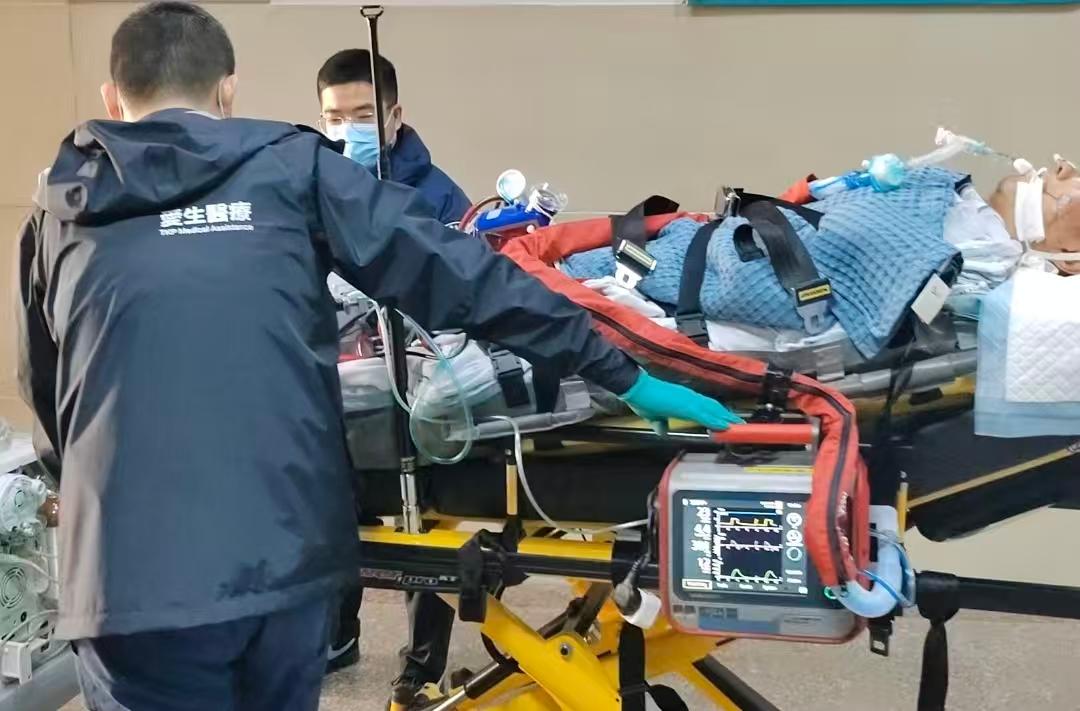
•In-flight, the medical team continuously monitors vital signs and provides life support
•Upon landing, ground ambulance meets the aircraft for transport to the receiving hospital
•A handover report is provided to guarantee smooth admission
Clinical capability in the air is not a marketing phrase—it is a real safety layer. Every mission should be equipped with portable advanced life support systems, transport-ready ICU monitors, oxygen supply, ventilators, and when required, ECMO. Aviation certification is necessary for all equipment, and it must be adaptable for adults and children.
Step 6: After Transfer Follow-Up
Once the aircraft has landed, the work of the provider does not end. Care doesn’t stop after the transfer is complete.
After Transfer Care includes:
•Ongoing support for the hospital and assistance with translation
•Help with insurance and claims
•Submission of a detailed patient transfer report to the receiving hospital
•Regular updates to the family throughout the entire process
Why Choose TKP Medical Assistance?
The transfer of a patient via air requires coordination of clinical skills, knowledge of the aviation system as well as the regulations. A specialized provider turns this complexity into a safe, seamless pathway.
TKP Medical Assistance – founded in 2001, with over 10,000 missions across China and globally – offers:
•ICU/ER-trained teams: Every escort has 5+ years critical care experience, ACLS/BLS certified.
•ICU-level escort care: Matched with doctors, nurses, and critical meds; handles ECMO, neonatal/infant transports.
•Global Integration: With our headquarters in Shenzhen and branches throughout China, combined with our partners located in Hong Kong, Southeast Asia, Europe, and North America.
•Diverse Language offerings: Staff members can communicate in Mandarin, English, Spanish, Cantonese, and Russian.
•Rapid deployment: Air ambulance ready within ~2 hours after final go-ahead.
•One-stop oversight: Direct provider managing assessment, documentation, logistics, and handover – reducing gaps and delays.
Final Thoughts
Patient air transfer is a clinical and operational pathway, not just a flight. With an experienced partner like TKP, the challenge becomes a clear, compassionate journey home.
Frequently Asked Questions
Q1: What are air ambulances and commercial stretcher transfers?
Commercial stretcher transfers modify a standard plane with a medical escort for stable patients. Air ambulances are a fully equipped medical aircraft.
Q2: How are patients monitored on a flight?
Medical staff uses aviation-certified equipment to monitor a patient’s vitals, oxygen saturation, and cardiac rhythm.
Q3: Is It possible to transport an infectious patient?
Yes, however specific isolation and infection control measures must be used. Tell your provider at the beginning of the assessment.
Q4: What is done if a patient’s condition worsens on a flight?
Our crew, who are all trained in the ICU, are able to make any necessary interventions and can divert to the closest suitable airport.
Q5: Are there any size or weight restrictions for stretcher transfers?
There is a weight restriction for commercial flights, typically around 300 lbs (136 kg). While air ambulances have a higher capacity, always check with your provider.
Submit Your Request
Recent Posts
Tags
- Air Ambulance
- Bedside To Bedside
- Cross Border Aid
- Emergency Evacuation
- Global Medical Rescue
- How can I ensure the patient's stability while in the air?
- How do I request an air medical transport?
- How is it different from an air ambulance
- how to activate emergency aircraft service
- how to request an air ambulance
- Is air medical transport safe
- Is international transport possible
- Medical Rescue
- Medical Transport
- Patient Repatriation
- Remote Rescue
- Seamless Coordination
- Telemedicine Support
- Tourists And Expats Medical Escort
- What are the benefits of a cross-border medical transfer
- What are the different types of transfers
- What are typical use cases
- What documents do I need to prepare for a transfer?
- What does high-speed rail patient transfer stands for
- What is air ambulance
- What is air medical transport?
- What is cross-border medical transfer
- What is emergency aircraft
- what is high-speed rail patient transfer
- What is medical charter flight
- what is neonatal ICU transfer
- What is patient air transfer
- What medical equipment is available on board the aircraft
- What situations shouldn't use air medical transport?
- What types of air ambulance are there?
- What types of air ambulance exist
- What's the difference between international and domestic transfers?
- what’s the difference between air medical transport and regular ambulance?
- When is emergency air transport necessary
- Which patients require air medical transport?
- who is included in the medical team
- who needs an air ambulance