


ICU Patient Air Transfer for Major Trauma: Stabilization Before Departure


An ICU Patient Air Transfer for major trauma begins before the aircraft is selected. Severe trauma can involve ongoing hemorrhage, lung contusion, pneumothorax, unstable fractures and traumatic brain injury at the same time. A patient who appears stable after fluids or vasopressors may still deteriorate during loading, ascent or a prolonged ground-to-air handover.
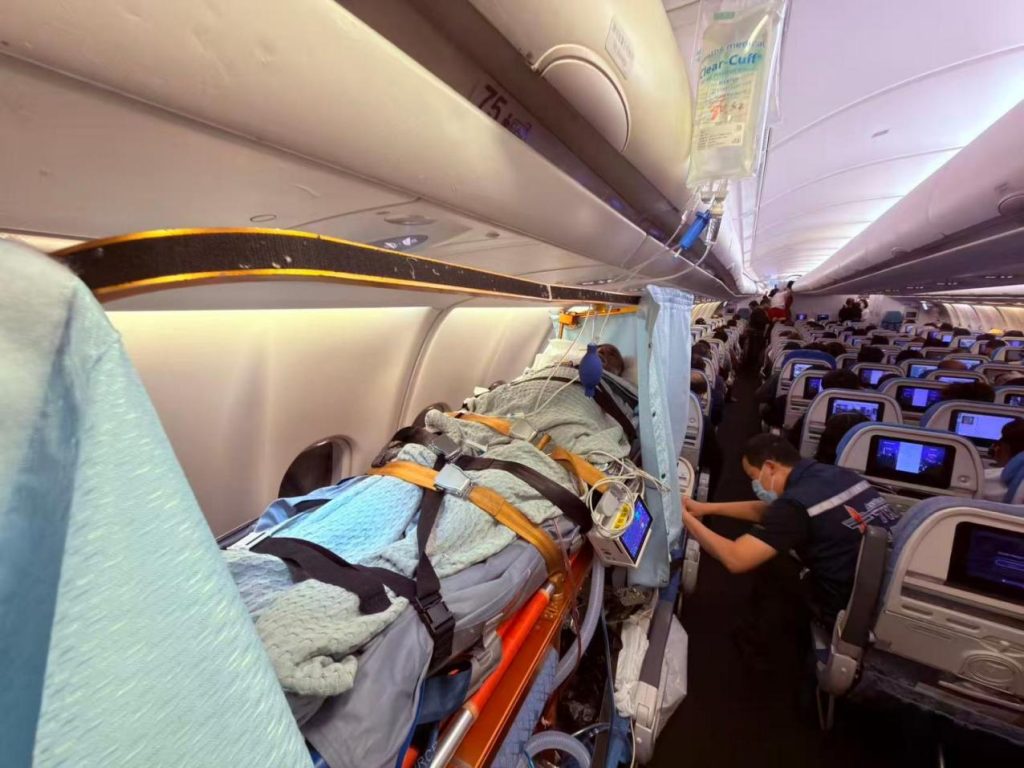
The objective is not to eliminate every risk before departure. It is to control immediately reversible threats, identify what may worsen in flight and configure the transfer around those risks.
Stability Is a Trend, Not a Single Reading
Pre-departure assessment should follow the current xABCDE trauma sequence, with catastrophic hemorrhage addressed before airway, breathing, circulation, disability and exposure.
For an ICU Patient Air Transfer, the team should review trends rather than isolated values:
• Hemorrhage: Bleeding source, transfusion requirement, hemoglobin trend and chest-drain output;
• Airway: tube position, cuff pressure, secretion burden and backup airway plan;
• Breathing: SpO₂, PaO₂, PaCO₂, EtCO₂, PEEP, plateau pressure and lung compliance;
• Circulation: SBP, MAP, heart rate, lactate, urine output and vasopressor dose;
• Neurology: GCS, pupil response, sedation, ICP and seizure risk;
• Temperature: Hypothermia, acidosis and coagulopathy management.
Why Flight Conditions Change the Clinical Risk
A pressurized aircraft does not necessarily maintain sea-level pressure. Lower cabin pressure reduces inspired oxygen partial pressure, leaving less reserve for patients with lung contusion, aspiration or respiratory failure.
Pressure reduction also expands trapped gas. This matters in cases involving:
• Untreated or residual pneumothorax;
• Obstructed or displaced chest drains;
• Air-filled endotracheal-tube cuffs;
• Intracranial or intraocular air following trauma or surgery.
Before ICU Patient Air Transfer, chest-drain position, patency, air leakage and lung re-expansion should therefore be reviewed. A drain that was functioning in the ICU must remain accessible and unobstructed after the patient is secured inside the aircraft.
SpO₂ alone is insufficient. A patient with anemia or low cardiac output may have acceptable saturation but poor tissue oxygen delivery. Hemoglobin, circulation, acid-base status and perfusion trends must be interpreted together.
Stabilize Locally or Transfer to Definitive Care?
Waiting is not automatically safer. A referring hospital may temporarily support blood pressure and ventilation but still lack interventional radiology, neurosurgery, thoracic surgery or definitive hemorrhage control. The decision should balance correctable pre-flight risks against the harm of delaying specialist treatment.
| Decision | Appropriate Context | Main Limitation |
| Stabilize before departure | A reversible airway, chest or circulatory threat can be treated locally | Nonessential testing may delay definitive care |
| Proceed with urgent transfer | Required surgery or intervention is unavailable locally | Inadequate in-transit support may allow deterioration |
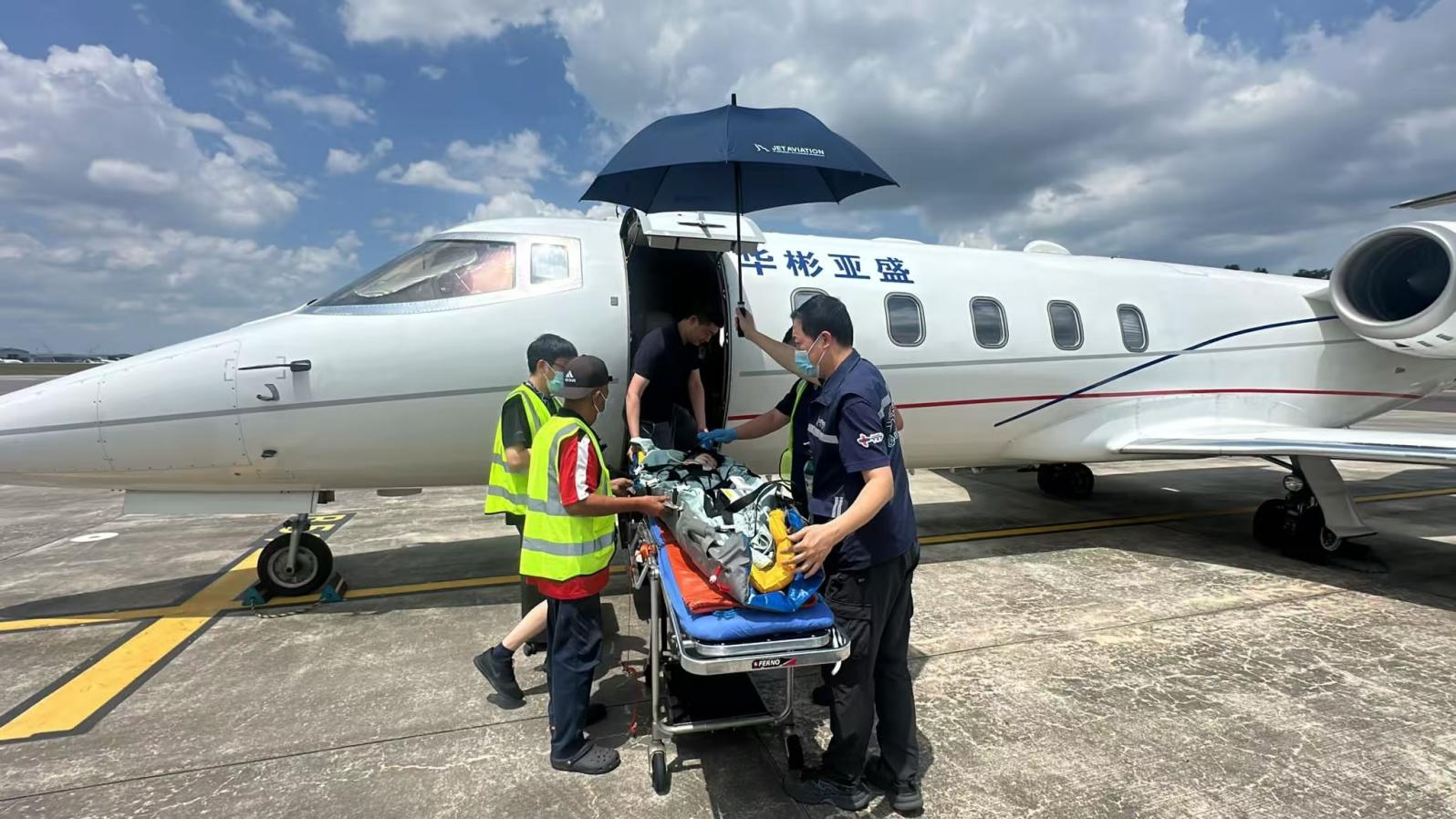
| Fixed-wing air ambulance | Long-distance ICU Patient Air Transfer requiring continuous monitoring and life support | Airport transfers introduce additional time and handovers |
| Ground critical care transport | The receiving center is reachable within an acceptable clinical timeframe | Traffic, distance and prolonged journey time may reduce suitability |
| Direct flight | Aircraft range, oxygen, power and medical reserves are sufficient | A longer-range aircraft may increase cost |
| Technical stop | Fuel, crew-duty or aircraft-range limits require a stop | Extends mission time and adds another critical transition |
The final plan should compare total bed-to-bed time—not flight duration alone—and confirm that each stage can maintain the patient’s required level of critical care.
Airway strategy also requires comparison. Supplemental oxygen or non-invasive support may avoid intubation in a suitable patient, but it provides less protection if consciousness or ventilation worsens. Invasive ventilation offers controlled support but introduces sedation, hemodynamic and equipment-related risks.
Matching the Patient, Team and Aircraft
At TKP Medical Assistance, we plan ICU Patient Air Transfer around the injury pattern rather than applying one standard equipment list.
| Injury Pattern | Required Transfer Capability |
| Chest trauma | Mechanical ventilation, capnography and chest-drain management |
| Active or recent hemorrhage | Invasive monitoring, reliable access, fluid warming and planned blood support |
| Traumatic brain injury | Controlled oxygenation, ventilation, sedation and neurological reassessment |
| Pelvic or spinal injury | Immobilization, pressure protection and suitable loading geometry |
| Multisystem trauma | ICU team capable of managing simultaneous respiratory and circulatory failure |
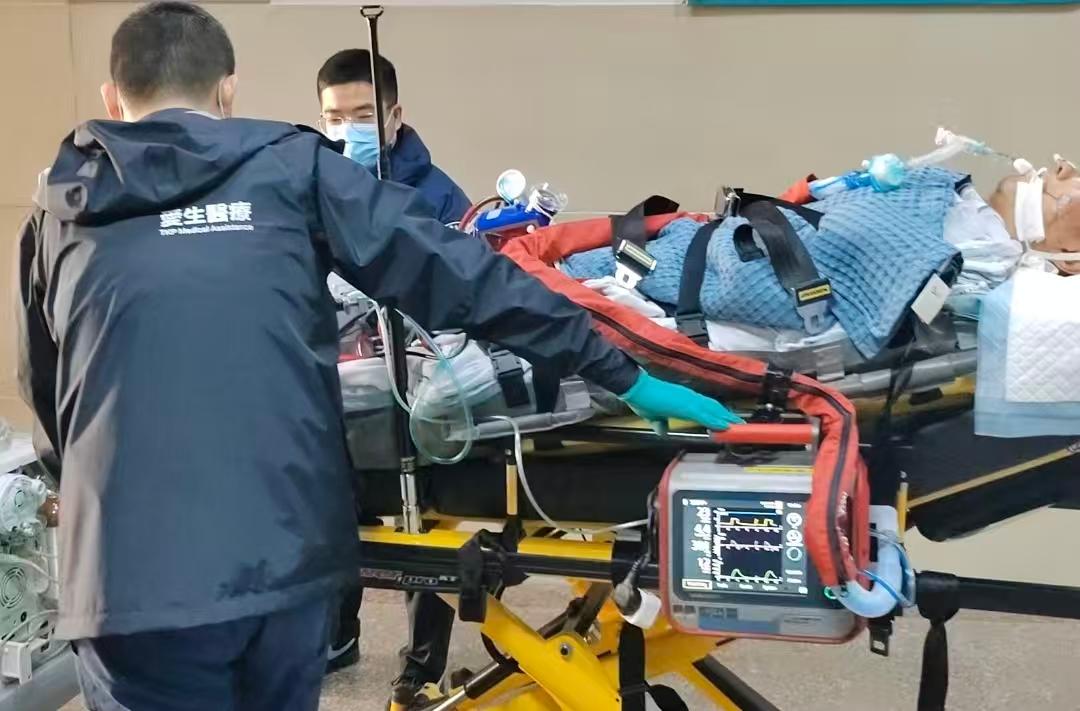
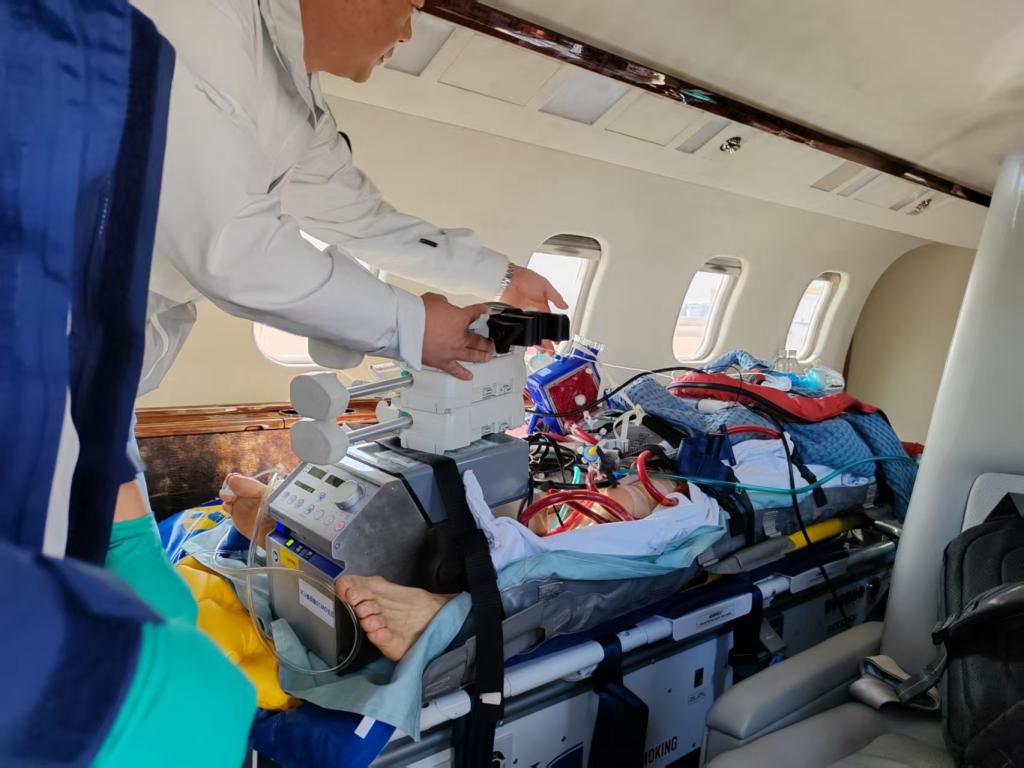
TKP Medical Assistance assigns ICU-trained doctors and nurses according to clinical requirements. Our published capabilities include ventilator, ECMO and IABP-supported transport, although advanced systems should only be included when justified by the patient’s condition.
The destination must also be clinically matched. Confirming a hospital name is not enough; the required trauma surgeon, operating room, blood bank, interventional radiology or neurosurgical service must be available on arrival.
Case Example: Comatose Patient Transfer From West Africa to China
TKP’s mission involved a post-cranial-surgery patient in a comatose condition who required continuous support across several transport stages.
• Route: Abidjan → Paris → Beijing
• Mode: Two international stretcher flights plus ground ambulance segments
• Key challenge: Maintaining care during a 10-hour layover at Paris Charles de Gaulle Airport
| Stage | Clinical Arrangement |
| Before departure | Bedside assessment and transfer preparation |
| Paris layover | Temporary ICU setup for monitoring and stabilization |
| Flight and arrival | Ongoing vital-sign monitoring followed by ground ambulance handover |
The case shows why long-distance ICU transport must be planned as one continuous care pathway—not as separate flights and ambulance journeys.

TKP Medical Assistance has coordinated cross-border medical transfers since 2001 and reports more than 10,000 completed missions. Hospitals, insurers and families can send the latest medical report, current treatment requirements and proposed destination to our coordination team. We can then develop a case-specific ICU Patient Air Transfer plan for joint clinical review, with stabilization, transport configuration and destination readiness considered as one continuous care pathway.
FAQs
Q1. What information does TKP need to assess an ICU Patient Air Transfer?
TKP normally requires the latest medical report, diagnosis, recent vital signs, imaging findings, current medications, ventilator settings, vascular access, drains and receiving-hospital details. Clear information allows the medical team to evaluate risks and prepare a case-specific transfer plan.
Q2. Can TKP transfer mechanically ventilated trauma patients?
Yes, subject to medical assessment. TKP can arrange ICU-trained personnel, transport ventilators, monitoring, oxygen and infusion support. The final configuration depends on respiratory status, airway security, oxygen requirements, flight duration and the risk of deterioration.
Q3. What medical equipment can TKP arrange?
Depending on the case, equipment may include a transport ventilator, multiparameter monitor, capnography, infusion pumps, suction, oxygen and emergency airway supplies. TKP also reports capabilities for ECMO and IABP-supported transport when clinically indicated.
Q4. Does TKP provide bed-to-bed ICU Patient Air Transfer?
TKP can coordinate the transfer pathway from the referring hospital to the receiving facility, including medical review, ground ambulances, airport handling, flight arrangements and clinical handovers. The exact scope should be confirmed in the mission proposal.
Q5. Who accompanies the patient during transport?
The medical team is selected according to patient acuity and treatment requirements. TKP reports using ICU-trained doctors and critical-care nurses for high-acuity transfers, with additional specialist support considered when advanced systems or complex injuries are involved.
Submit Your Request
Recent Posts
Tags
- Air Ambulance
- Bedside To Bedside
- Cross Border Aid
- Emergency Evacuation
- Global Medical Rescue
- How can I ensure the patient's stability while in the air?
- How do I request an air medical transport?
- How is it different from an air ambulance
- how to activate emergency aircraft service
- how to request an air ambulance
- Is air medical transport safe
- Is international transport possible
- Medical Rescue
- Medical Transport
- Patient Repatriation
- Remote Rescue
- Seamless Coordination
- Telemedicine Support
- Tourists And Expats Medical Escort
- What are the benefits of a cross-border medical transfer
- What are the different types of transfers
- What are typical use cases
- What documents do I need to prepare for a transfer?
- What does high-speed rail patient transfer stands for
- What is air ambulance
- What is air medical transport?
- What is cross-border medical transfer
- What is emergency aircraft
- what is high-speed rail patient transfer
- What is medical charter flight
- what is neonatal ICU transfer
- What is patient air transfer
- What medical equipment is available on board the aircraft
- What situations shouldn't use air medical transport?
- What types of air ambulance are there?
- What types of air ambulance exist
- What's the difference between international and domestic transfers?
- what’s the difference between air medical transport and regular ambulance?
- When is emergency air transport necessary
- Which patients require air medical transport?
- who is included in the medical team
- who needs an air ambulance