


ECMO on the Move: Facilitating ICU Patient Transfer for Long-Haul Air Ambulance Flights


When a critically ill patient requires life support that only a specialized center can provide, distance becomes more than a logistical barrier—it becomes a clinical challenge. ICU patient transfer on extracorporeal membrane oxygenation (ECMO) represents the highest tier of mobile critical care. Yet in 2026, long-haul air transport of ECMO patients is no longer experimental. With documented missions exceeding 10,000 km and flight durations over 20 hours, the industry has proven that a properly engineered flying ICU can safely bridge patients to life-saving therapies across continents. At TKP Medical Assistance, we have spent 24 years refining precisely this capability—moving the most fragile patients while maintaining hospital-grade support from bedside to bedside.
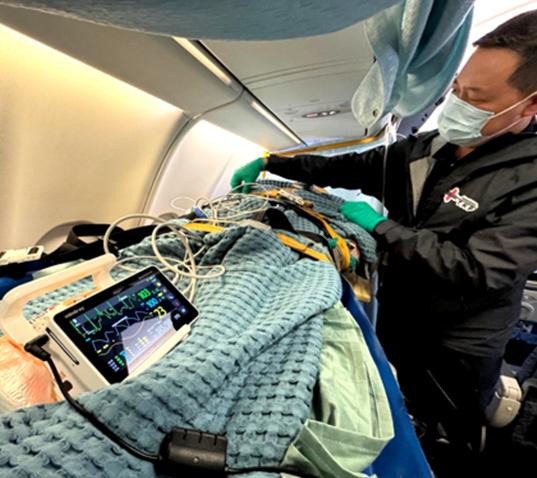
The Aircraft: From Passenger Cabin to Flying Intensive Care Unit
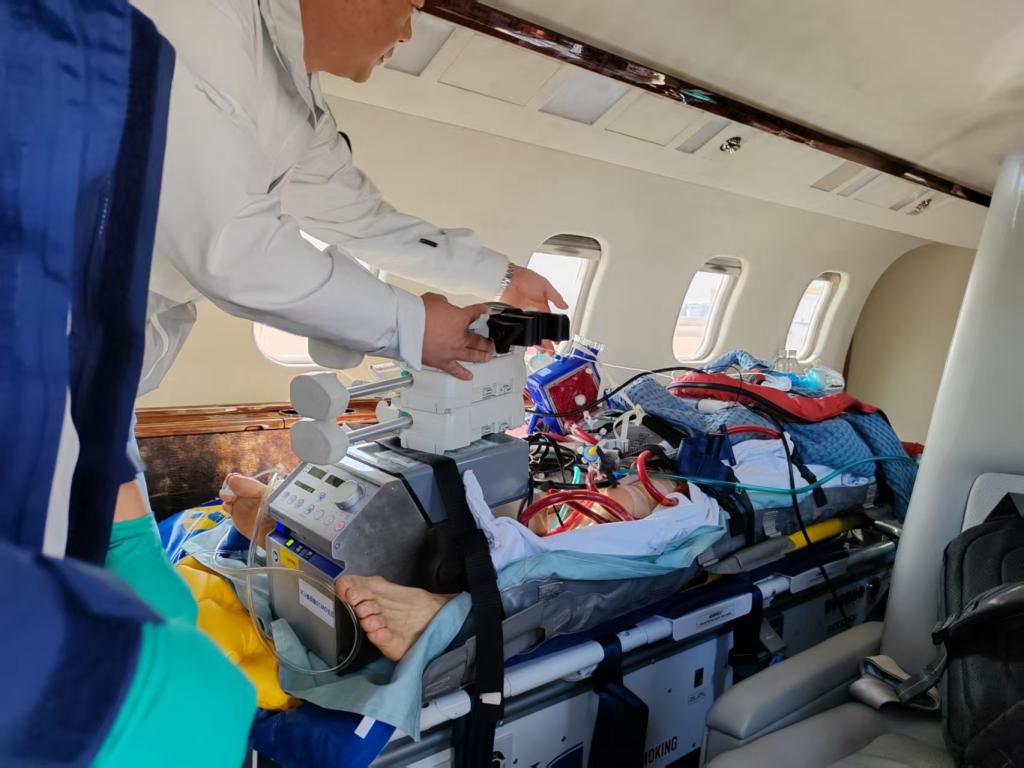
A standard air ambulance is not enough for ECMO transport. An aircraft must be able to transform into a mobile ICU for safe, stable transport of all ICU equipment.
• Space and fixation: ECMO consoles, backup oxygenators, ECMO transport ventilators, and ECMO monitors all need to be custom mounted bedded. Some companies utilize aircraft modified with custom ECMO trolleys costing £100,000–£110,000. All equipment must be properly stored during turbulence and unexpected G-forces of the aircraft during take off and landing.
• Power and gas management: Portable ECMO systems, such as Cardiohelp, run on battery but long haul flights need back up power and oxygen is a demand. A relatively new mission from Seattle to Mumbai needed oxygen replenishing from four different oxygen to gas supply points, as only specific areas have a supply for oxygen used for medical purposes. As a part of our mission services, TKP integrates into fuel services and gas replenishing.
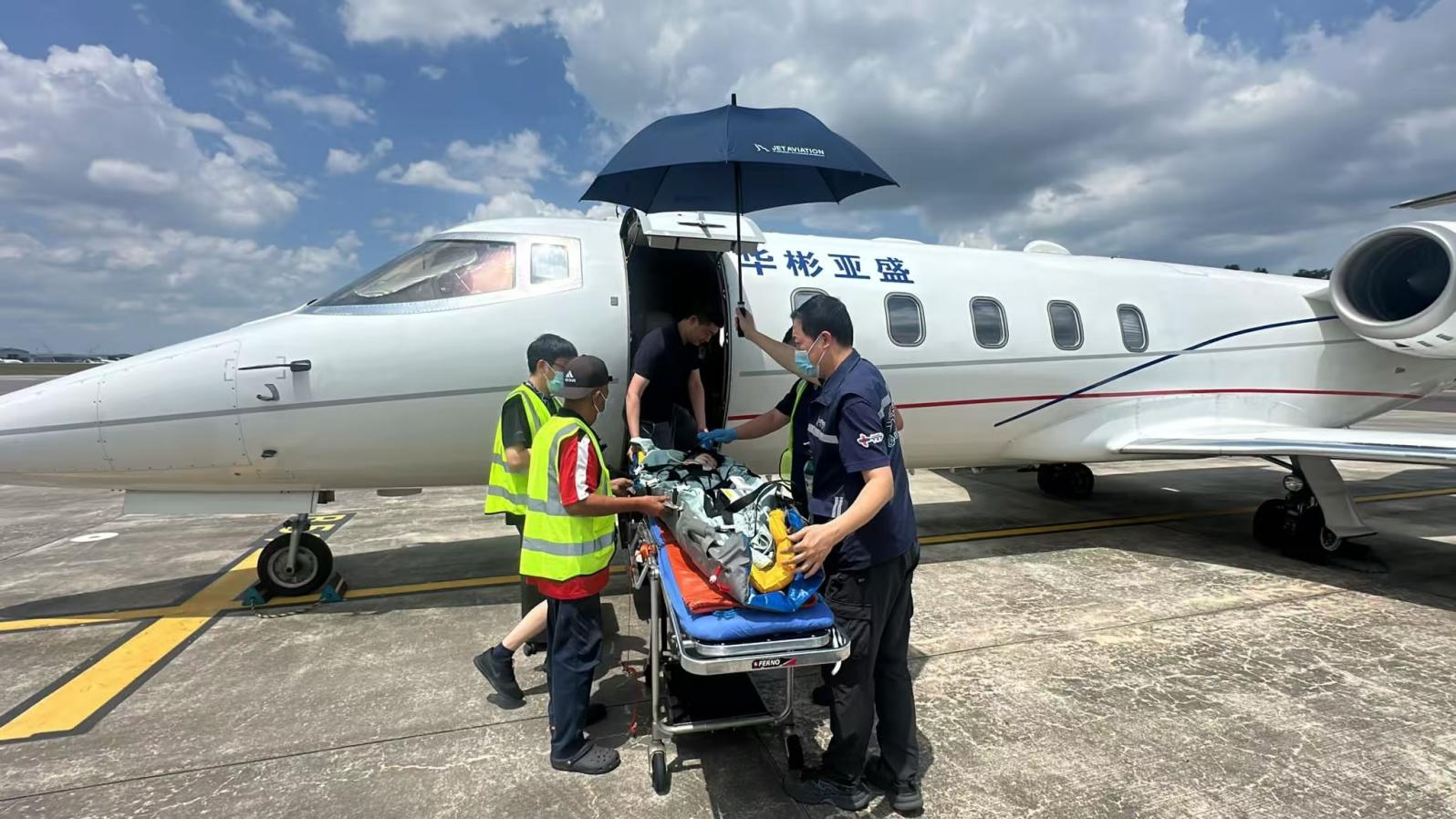
• Environmental control: Gas exchange, circuit pressure, and patient physiology all need to be considered during transport. Cabin pressure needs to be even with that of a ground ICU. Circuit dislodgement and air emboli needs to be considered and variable levels of noise and vibration disintegrated. For transport of patients over 500km, the use of a fixed wing aircraft is encouraged, and the use of a Learjet is commonplace.
Portable ECMO Systems: Engineering for Mobility
Traditional ECMO consoles are designed for stationary ICU use—heavy, power-dependent, and space-consuming. Modern portable systems have transformed what is possible in the air.
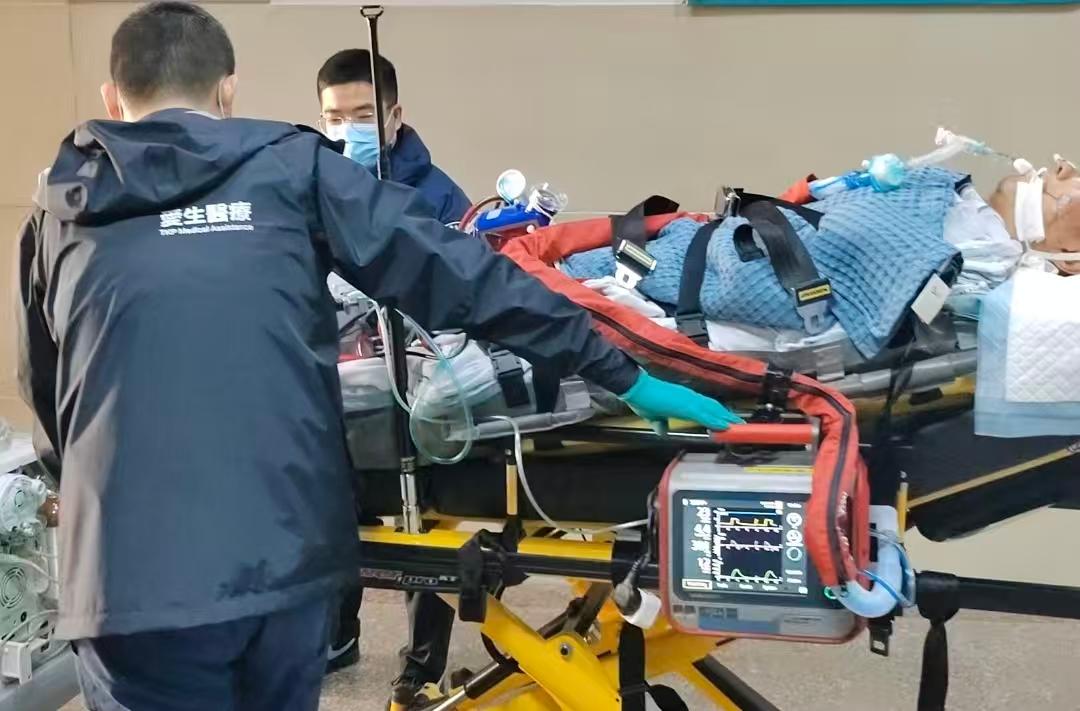
• Cardiohelp and similar platforms: Designed specifically for transport, the Cardiohelp system is small, lightweight, and battery-powered. Its convenience allows retrieval teams to carry it directly to the patient’s bedside, initiate ECMO support, and transition seamlessly to the aircraft.
• FAA-approved transport systems: The ECMO Transport System (ETS) from Elliott Aviation is an FAA-approved medical platform functional in both ambulances and fixed-wing aircraft. Certification means that all applicable items adhere to strict acceptance criteria for in-flight items.
• Backup Redundancy: Transport units are outfitted with spare oxygenators and other troubleshooting items. Every circuit is pressure-tested prior to flight to remove micro air bubbles, as the smallest air bubble can cause catastrophic embolism.
To ensure the uninterrupted operation of ECMO, TKP Medical Assistance uses portable advanced life support systems for all long-haul ICU patient transfer missions.
The Team: Specialists in the Sky
Although Equipment is vital for transfer, the most important aspect still remains the human element.
• Core team composition: For ECMO transport, the team size is almost three medical crew + the perfusionist to oversee the circuit and the patient.
• Pre-transport stabilization: For many missions, it is the continuous team duty to go to the sending hospital, evaluate the patient, and establish bedside ECMO prior to the patient transport. The stabilization phase is vital in minimizing in-flight adverse outcome events.
• Communication and leadership: The route transfer specialist maintains focus throughout the transport by ensuring that checklists are adhered to and transfers are done in order, from ICU to ambulance, from ambulance to aircraft, and finally from aircraft to the receiving ICU.
Experience matters because of the studies showing significantly higher 28-day survival rates after ECMO patient transport (>72% vs 65% for non-transport cohorts). This indicates patient ECMO transport does not increase patient mortality, provided that the ECMO transport team is proficient. After 24 years in global medical transport and 100+ ECMO-capable missions, TKP ensures the transport of your beloved is to the ECMO-proficient team for expert care.
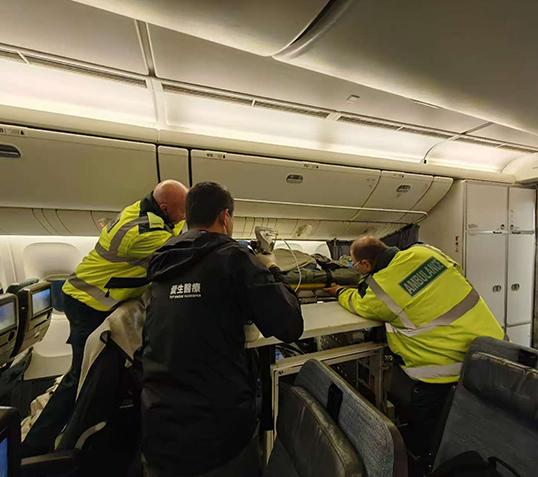
The Invisible Lifeline: Oxygen Planning
Oxygen is the backbone of the mission when ICU patients on ECMO are to be transported.
• Multi-leg refueling: Oxygen cannot be refueled from just anywhere along the long-haul transport. Medical-grade oxygen is not readily available at every international airport along the transport. Just recently, our team had to transport patients for 8,810 nautical miles with refueling stops at Gander, Shannon, Abu Dhabi, and Rome. Our only option to obtain the medical-grade oxygen was at Gander. Our team utilized this operational disadvantage and gained an operational advantage by training crew members on oxygen fill procedures and standardizing oxygen procedures for all missions.
• Battery Backup: We are exceeding this standard along with the Aviation Authority with dual system backup batteries and real-time consumption.
• Adverse Event Methods: Meticulous planning cannot prevent adverse events. Some documented events have included a drop in the passengers’ heart rate with concurrent drops in the cabin’s oxygen pressure. Our methods allow for interventions to be guided from the ground by our intensivists during flight.
Clinical Outcomes: Safety Beyond the Statistics
No evidence is as persuasive as peer-reviewed studies. A 2025 study published in the Journal of Intensive Medicine examined ECMO support in 303 patients, 111 of whom were transported. The results were stand-out: there were no serious events such as death or mechanical failure.
Transported patients had a 28-day survival rate of 72.1%, compared to 64.7% for patients that were not transported. The argument is simple: transportation of patients on ECMO in this study is safe and does not increase mortality.
In 2026, the first reported case of a patient on ECMO and in-flight dialysis, and the first of a 10,000km flight of medical ECMO transport, was documented. The patient was a 27-year-old, successfully transported from Bangkok to Paris. Such missions demonstrate that the limits of ICU patient transfer are expanding, and TKP is at the forefront.
TKP Medical Assistance: Your Partner in Critical Care Transport
For over 24 years, TKP Medical Assistance has been a trusted provider of cross-border medical evacuation, with 71,000+ global consults and 10,000+ successful missions. Our six branch offices across Southern, Eastern, Central, and Southwestern China enable rapid local response while maintaining global coordination. We operate ECMO-capable air ambulances with dedicated perfusionists and ICU-level teams on every flight.
When your family member requires the highest level of ICU patient transfer, choose a partner with the engineering, clinical experience, and global infrastructure to deliver care without compromise.
Contact TKP Medical Assistance today for a free clinical case assessment. Email: info@tkp-assistance.net | Web: www.tkp-assistance.net
Frequently Asked Questions (FAQ)
Q1: Is th ECMO enabled long haul transport of the patient destined for the ICU, risky?
A: Out of the hands of the untrained, the use of aviation-grade devices used for ECMO, and the transport of patient ECMO system, there is no increased risk of mortality. About 72% of ECMO patients survive even after the transport, as demonstrated in the studies.
Q2: During the transfer of the patient to the ICU, how many staff members in the ECMO system are there?
A: At least one transport trained perfusionist, one critical care nurse, and one member of respiratory therapy. To honor its commitment, TKP does provide for staffing at all levels.
Q3: What’s the contingency if there is a ECMO circuit failure during the flight?
A: During an ECMO, backup oxygenators, the perfusion circuit, and the other synthesis circuit along with protocols are utilized. All TKP staff receive specialized training in emergency circuit management.
Q4: How fast can the transport be organized?
A: For transport units operating in an emergency, the buy-in signed transport declaration is sufficient to provide assistance within 6 to 12 hours from the TKP’s command post, which operates 24 hours a day, as quickly as possible , in order to provide the necessary transportation corridor as quickly as possible.
Q5: Does TKP Medical Assistance handle international insurance and hospital coordination?
A: Absolutely. From visa assistance to insurer communication and receiving hospital confirmation, non-clinical logistics are managed so that families can devote all their energy to the patient.
Submit Your Request
Recent Posts
Tags
- Air Ambulance
- Bedside To Bedside
- Cross Border Aid
- Emergency Evacuation
- Global Medical Rescue
- How can I ensure the patient's stability while in the air?
- How do I request an air medical transport?
- How is it different from an air ambulance
- how to activate emergency aircraft service
- how to request an air ambulance
- Is air medical transport safe
- Is international transport possible
- Medical Rescue
- Medical Transport
- Patient Repatriation
- Remote Rescue
- Seamless Coordination
- Telemedicine Support
- Tourists And Expats Medical Escort
- What are the benefits of a cross-border medical transfer
- What are the different types of transfers
- What are typical use cases
- What documents do I need to prepare for a transfer?
- What does high-speed rail patient transfer stands for
- What is air ambulance
- What is air medical transport?
- What is cross-border medical transfer
- What is emergency aircraft
- what is high-speed rail patient transfer
- What is medical charter flight
- what is neonatal ICU transfer
- What is patient air transfer
- What medical equipment is available on board the aircraft
- What situations shouldn't use air medical transport?
- What types of air ambulance are there?
- What types of air ambulance exist
- What's the difference between international and domestic transfers?
- what’s the difference between air medical transport and regular ambulance?
- When is emergency air transport necessary
- Which patients require air medical transport?
- who is included in the medical team
- who needs an air ambulance