


International Patient Transfer Without Limits: Multi-Modal Care From Bedside to Bedside


International Patient Transfer is evolving. Over 20 million people cross borders for care annually, and the global medical tourism market is set to reach $272.7 billion by 2027. Yet many families still face fragmented experiences—logistical delays, inconsistent support, and stressful care gaps.

Traditional single-mode transport no longer works. The industry now demands a multi-modal approach: an integrated system that moves patients from bedside to bedside, using the right vehicle at the right time—without any break in clinical oversight.
Why One-Size-Fits-All Transport Fails
The most vulnerable patients cannot afford gaps in care. Evidence from critical care transfer guidelines shows that carefully planned transfers improve outcomes and reduce adverse events. Yet many providers still rely on a single vehicle type for every situation — forcing critically ill patients into air ambulances when a commercial stretcher would be safer and more cost-effective, or sending stable patients on grueling ground journeys that could be completed in hours via high-speed rail.
•The clinical risk of handover gaps: Every time a patient switches vehicles or care teams, critical information can be lost. Structured handover protocols — combining verbal, written, and bedside communication — are essential for clinical safety.
•The financial reality: A chartered medical jet can be necessary for unstable patients, but for those who have been stabilized, commercial air ambulance stretcher solutions reduce costs dramatically — often by 60–80% — without compromising medical support.
•The logistics challenge: Many providers lack the operational reach to coordinate across air, rail, and ground networks, leaving patients stranded in areas with limited infrastructure.
Multi-Modal Care: The 2026 Standard
TKP Medical Assistance has revolutionized International Patient Transfer with a fully integrated multi-modal transport system. Rather than standardizing every case, we assess each patient’s condition, location, urgency, and budget — and design a custom route using the best options available.
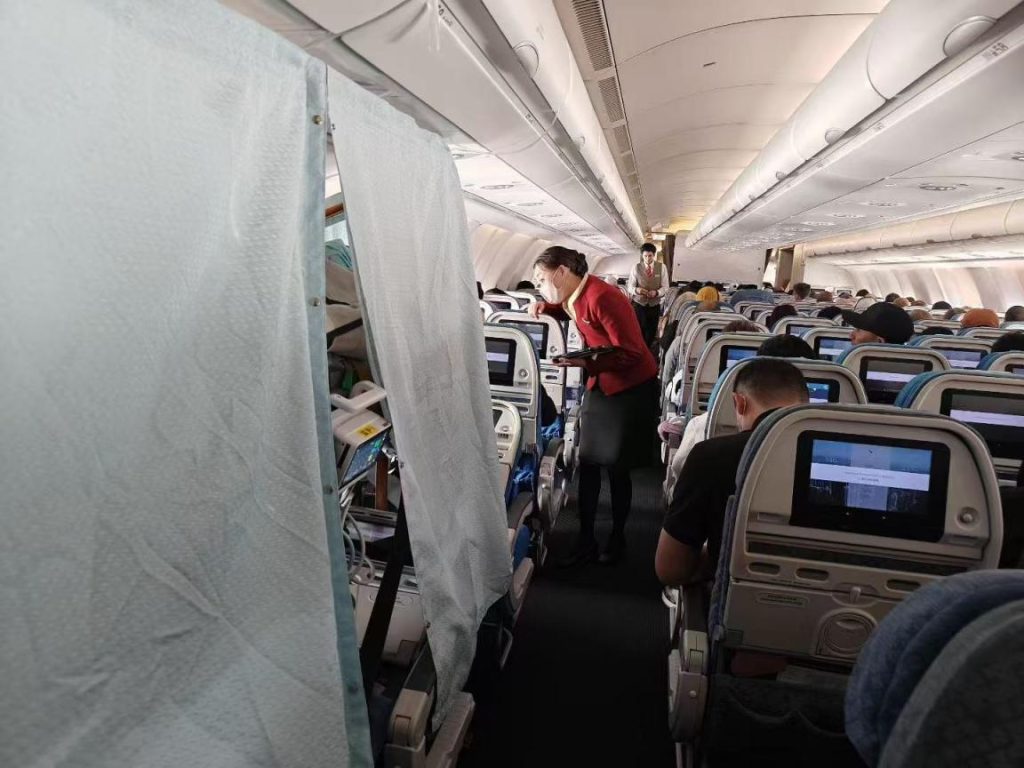
Commercial Stretcher Flights: Cost-Effective Without Compromise
For patients who are stable and require long-distance repatriation or transfer, commercial stretcher transport best fits the mold. Hainan airline,Cathay Pacific airlines; Emirates, Lufthansa, Qatar Airways, British Airways, Turkish Airlines, and Singapore Airlines all technically and operationally are able to carry stretcher compartments, as these carriers use proxy feeder service providers to build and manage your AA/AWIC partner hospitable in-flight environment while providing ICU grade monitored service.
•A Medical Escort remains in the seat next to the stretcher compartment, and monitors the patient’s vitals and responds proactively and reactively to any needs or situations that may arise.
•This care, at a minimum, costs 30% less than a dedicated air ambulance, but with all the same engagement and oversight that comes with a dedicated air ambulance.
•In-flight medical support is primarily for patients who are clinically stable.
Air Ambulance: A Flying ICU for Critical Care
The only option is a fully-loaded medical jet.
Modern air ambulance fleets are equipped as a Flying ICU, and fully loaded with advanced ICU configurations, to include mechanical ventilators, multi-parameter monitors, infusion pumps and all critical care medications. air ambulance staff are available with a qualified physician-led critical care transport staff systems and equipped to in-flight emergency management. In cases of critical patients where each passing second is a timing issue, a medical air transport system with an air evacuation transit level of aeromedical supported care is the best option.
High-Speed Rail: Fast and Reliable Across Continents
High-speed rail is an appealing choice in countries with developed rail systems when it comes to intercity and regional travel. High-speed rail will reduce travel time via ground ambulance by 50% and provide a smoother and more stable environment, with an estimated time savings of 150% by 2026. A number of documented cases show successful high-speed rail transfers for critically ill patients, even with infants, as young as 47 days, for distances close to 1,000 km. The integration of “railway clinics” and pre-boarding medical assessments further enhances the safety and efficiency of this emerging mode.
Ground Ambulance: The Bedside-to-Bedside Connector: No multi-modal transfer is complete without reliable ground transport. From the originating hospital bed to the airport or rail terminal — and from the destination terminal to the receiving facility — ground ambulances provide the essential linkage. TKP coordinates both basic life support (BLS) units for stable discharges and fully equipped mobile ICU ambulances for critical care handoffs.
From Bedside to Bedside: No Gaps, No Surprises
“Bedside to bedside” represents our promise for clinical continuity, starting with us when a patient is at their current bedside, until we hand them off at their new bedside. To achieve true bedside to bedside clinical continuity, we need more than the use of multiple vehicles. We also need to standardize our handovers, provide real-time connected communication across our networks, and designate a single point of responsibility.
This is how we achieve continuity of care:
•Single case coordinator: Accountability doesn’t get lost with a case coordinator. They are the only contact person for every step of the patient transfer.
•Pre-transfer clinical assessment: Our concerned medical team will assess every patient before they leave our care to determine the transfer mode.
•Structured bedside handover: To leave no gap or surprise at each handover, we offer a verbal and written handoff. The follow-up care team is informed of the patients’ vital signs during transit, new medication(s), and the patient’s condition change, if any.
•Continuous monitoring en route: Our medical escorts will monitor the patient during the entire transit and will modify their interventions as necessary.
•Destination handover: Upon arrival at the receiving facility, our team delivers a complete clinical report and ensures the local medical team is fully briefed before departing.
This integrated architecture is the only way to guarantee that patients receive the right care at the right time at the right place.
The Financial Reality: Insurance, Pre–authorization, and Transparent Pricing
Medical transfers are expensive — but surprises don’t have to be part of the experience. Starting in 2026, prior authorization requirements will have insurers giving decisions for urgent requests in 72 hours. This will accelerate the approvals for emergency transport requests. The dedicated insurance team at TKP manages all pre-authorizations to avoid delays.
Here are some of the ways we have simplified the process:
•Direct billing to the most significant global insurers, eliminating the out-of-pocket costs for the family’s patients.
•Cost transparency through detailed quotations that include every possible cost, so there are no surprises at departure.
•Insurance verification before the transport to prevent a payment dispute and claim denial.
•Most families don’t expect financial concerns to add to the stress of a medical emergency.
The Necessity of Multi-Modal International Patient Transfer
The global medical marketplace has started to transform. More hospital systems are developing networks of referrals across national boundaries. Patients are starting to opt for travel for specialized care. However, the world’s best care is useless without the ability to access it.
Because of the economic bounds and the world’s geography, TKP combines commercial flights with stretchers, air ambulances, ground ambulances, and high-speed rails, to ensure no patient is left behind. Our Unlimited promise is to provide the best International Patient Transfer services that are safe, seamless and clinically driven.
When you need to move a patient across borders — with continuity, clinical rigor, and compassion — choose the system built for the complexity of 2026 and beyond.
*For immediate assistance or to discuss a specific transfer case, contact our 24/7 Coordination Center.*
Most Common Questions
Q: What’s the difference between an air ambulance and a commercial stretcher transfer?
A: Air ambulances (flying ICUs) transfer critical and unstable patients. Commercial stretcher transfers book patients on regular flights for 60–80% less with medical escorts for stable patients.
Q: How quickly is an International Patient Transfer organized?
A: Emergency transfers take 6–24 hours. Non-emergency moves ICUs take 48–72 hours for clinical assessment, planning, and insurance review.
Q: Are family members allowed to accompany the patient?
A: Yes. Normal stretcher flights and high speed trains allow one traveling companion. Each air ambulance has an open space for a family member, that space is typically limited.
Q: Is insurance applicable to multi-modal transfers?
A: Yes. Most international travel insurance and healthcare insurance policies cover medically required transfers. We have direct agreements with major insurance companies to cover the required amount, and we make the insurance requests on your behalf.
Q: What happens if the patient is in a place where there are no travel services?
A: We include land ambulances and high speed trains to cover the distance to any point de board and connect the patient to the leap, creating a no patient left behind policy.
Submit Your Request
Recent Posts


Tags
- Air Ambulance
- Bedside To Bedside
- Cross Border Aid
- Emergency Evacuation
- Global Medical Rescue
- How can I ensure the patient's stability while in the air?
- How do I request an air medical transport?
- How is it different from an air ambulance
- how to activate emergency aircraft service
- how to request an air ambulance
- Is air medical transport safe
- Is international transport possible
- Medical Rescue
- Medical Transport
- Patient Repatriation
- Remote Rescue
- Seamless Coordination
- Telemedicine Support
- Tourists And Expats Medical Escort
- What are the benefits of a cross-border medical transfer
- What are the different types of transfers
- What are typical use cases
- What documents do I need to prepare for a transfer?
- What does high-speed rail patient transfer stands for
- What is air ambulance
- What is air medical transport?
- What is cross-border medical transfer
- What is emergency aircraft
- what is high-speed rail patient transfer
- What is medical charter flight
- what is neonatal ICU transfer
- What is patient air transfer
- What medical equipment is available on board the aircraft
- What situations shouldn't use air medical transport?
- What types of air ambulance are there?
- What types of air ambulance exist
- What's the difference between international and domestic transfers?
- what’s the difference between air medical transport and regular ambulance?
- When is emergency air transport necessary
- Which patients require air medical transport?
- who is included in the medical team
- who needs an air ambulance